
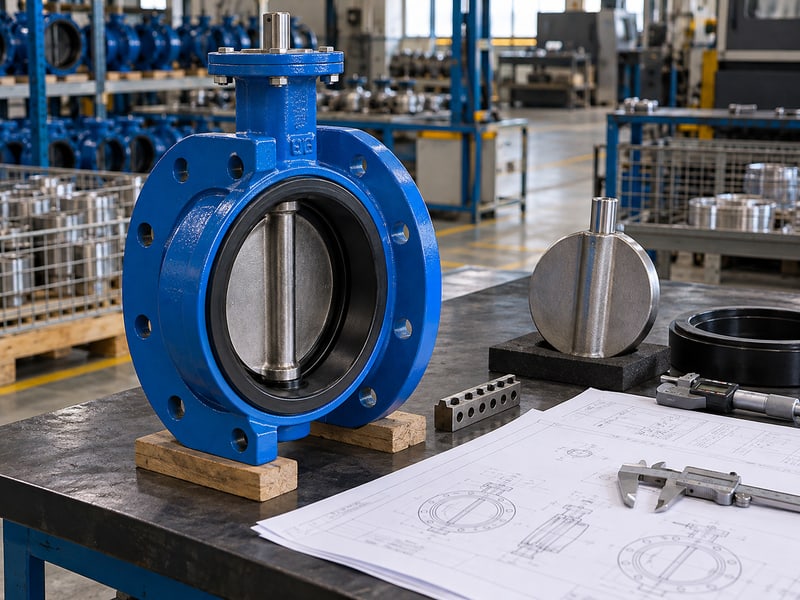
Fix U section butterfly valve manufacturer selection mistakes by checking the offered U-body drawings, materials, inspection evidence, and repeat-order controls. A low quotation becomes expensive when flange holes miss the pipework or replacement seats arrive in another compound. Qualify the supplier against your actual configuration before releasing production.
1. How do you qualify a U section butterfly valve manufacturer?
Qualify a U section butterfly valve manufacturer by verifying the exact body structure, service limits, and manufacturing scope before comparing price. RUITO's U-type configuration uses an integral short body with flange connection portions on both sides. The accepted configuration should remain identifiable through quotation, production, inspection, and delivery.
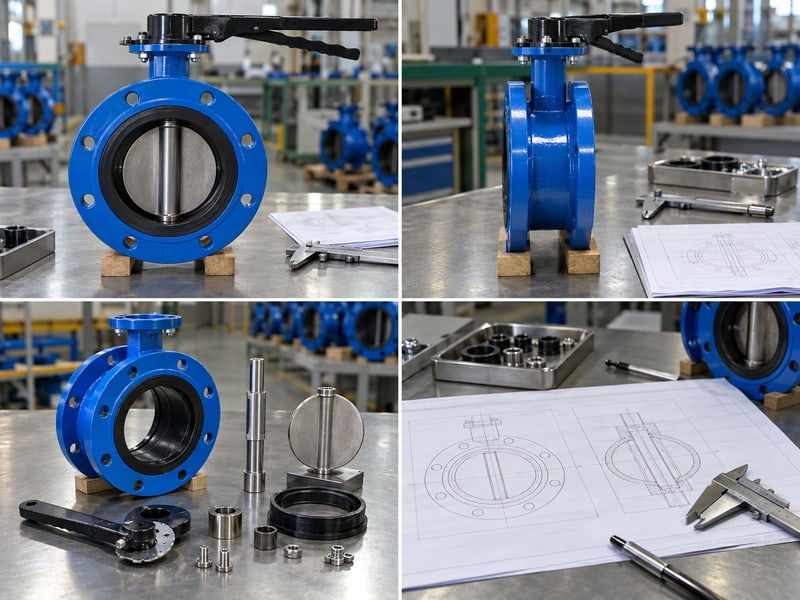
Which evidence belongs in your supplier file?
Match the factory evidence to your ordered configuration. A workshop photograph cannot prove who machines flange holes, fits seats, or releases finished valves. Ask for an order-specific process route and distinguish internal operations from purchased components or external processes. Review RUITO's manufacturing organization against your proposed inspection scope.
- Request the U-body drawing for the offered size.
- Ask who controls castings, coating, and seat batches.
- Confirm responsibility for assembly, inspection, and release.
Does the drawing identify the requested body?
Compare the offered construction with RUITO's defined U-type butterfly valve configuration. A wafer body or threaded-lug arrangement needs separate interface review if proposed as a substitute. Key takeaway: qualify a documented integral short flanged body and its responsible production route.
| Supplier evidence | Buyer response |
|---|---|
| Matching U-body records | Continue qualification |
| Different connection architecture | Review proposed substitute |
| Unclear release responsibility | Hold affected approval |
Retain enough evidence for another buyer to reconstruct the approval.
2. What should a U section butterfly valve manufacturer quote?
A U section butterfly valve manufacturer should quote a defined configuration against fluid, working limits, interfaces, operation, quantity, and acceptance requirements. Size and nominal class alone leave other choices unresolved. Ask for a completed datasheet and a deviation list alongside the price.
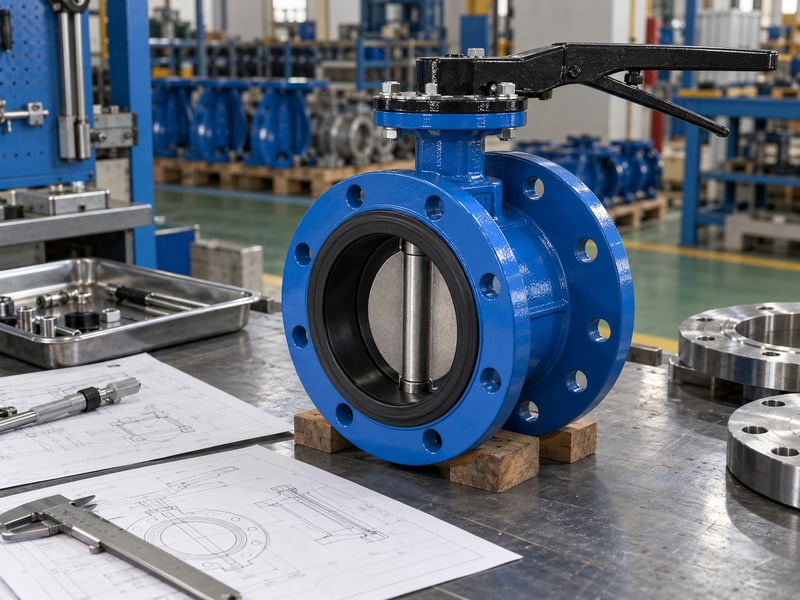
How can competing quotations be made comparable?
Give every supplier the same acceptance inputs. Include fluid composition, simultaneous temperature and pressure, maximum closed differential in each required direction, and the maintenance arrangement. A valve's working envelope and directional seat differential can impose different limits. Require the supplier to identify those conditions explicitly.
- Attach companion flange drawings and the required installed gap.
- State operator function, duty, and available utilities.
- List required documents and inspection points.
How should quantities and revisions be stated?
Specify quantities by size and configuration instead of a single total. For repeat OEM orders, identify the approved part description and revision; for project packages, include valve tags and document dates. Key takeaway: comparable offers need the same U-body interfaces, service conditions, and release scope.
| Missing RFQ input | Open issue |
|---|---|
| Closed differential | Seat and drive selection |
| Companion interfaces | U-body dimensional fit |
| Acceptance documents | Inspection scope and price |
Resolve deviations before treating quotations as equivalent offers.
3. What drawings must a U section butterfly valve manufacturer supply?
A U section butterfly valve manufacturer must supply the agreed body, connection, materials, and assembled operator information before production approval. The U-body length and hole arrangement follow its own accepted drawing. A wafer drawing or familiar series number cannot establish interchangeability.
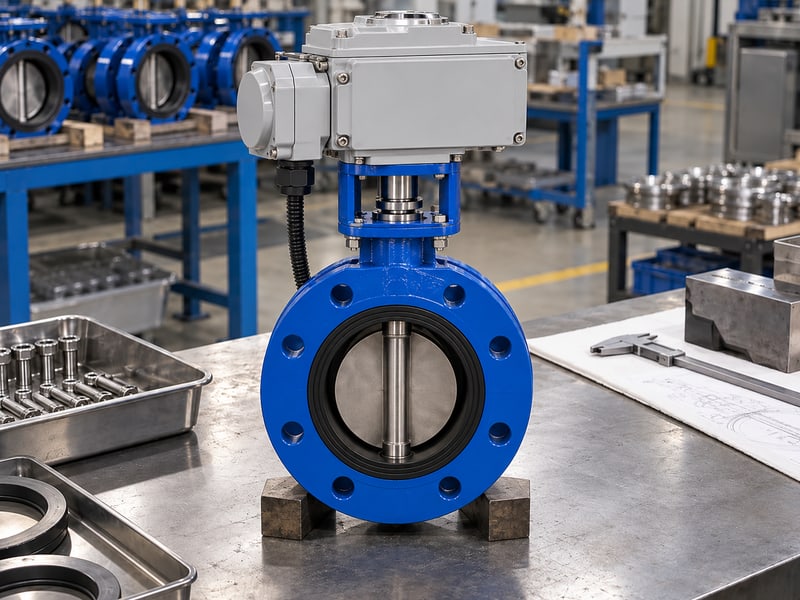
What should engineering measure on a sample?
Freeze the interfaces your installers will use. Check face-to-face length, flange faces, drilling, hole type, internal opening, and operator envelope. Confirm whether each connection uses clearance holes, tapped holes, or another specified arrangement. Check disc movement against the actual pipe bore, lining, and adjacent equipment.
- Record the sample's agreed dimensional checks.
- Identify the formal revision on purchase documents.
- Require review before changing interfaces or tolerances.
How should a different flanged body be handled?
RUITO's flanged butterfly valve options include constructions with separate installed dimensions. Require engineering review of a proposed body change even when nominal bore matches. Key takeaway: approve size-specific U-body interfaces and the actual disc envelope before authorizing production.
| Drawing condition | Release decision |
|---|---|
| Accepted interfaces match piping | Release defined configuration |
| Length copied from another style | Return for dimensional review |
| Missing hole or bore details | Hold interface approval |
Keep dimensional acceptance separate from pressure acceptance.
4. What materials must a U section butterfly valve manufacturer list?
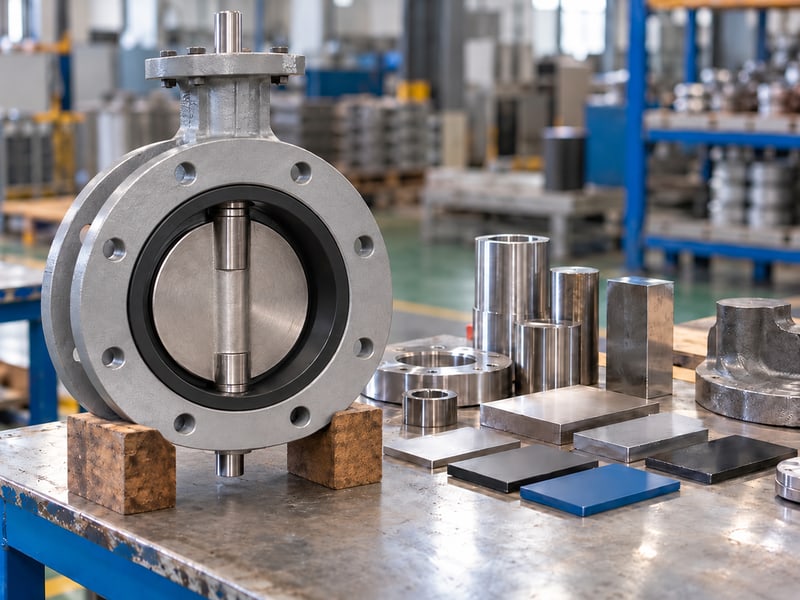
A U section butterfly valve manufacturer should record the complete material configuration against the actual fluid conditions. RUITO's stated ordinary water configuration includes a ductile iron body, CF8M disc, approved stainless shaft, and EPDM seat. Confirm exact grades and compounds for the offered U-body rather than inferring them from its geometry.
Which records support repeat orders?
Trace the seat compound alongside the casting heat. A replacement seat carrying only “EPDM” may have a different formulation from the approved component. Connect body heat, disc material, shaft specification, seat batch, coating system and batch, and configuration revision with product identification. Specify the required material records and incoming checks.
- Review the fluid and any cleaning chemicals.
- Match material and coating records with product identifiers.
- Identify spare seals by the approved configuration.
What does drinking-water qualification add?
Verify applicable contact documentation for the exact wetted materials, size coverage, intended market, and service conditions. Ordinary clean-water capability cannot establish that approval. Key takeaway: qualify the full material and coating configuration, including any separately required contact evidence.
| Material proposal | Required review |
|---|---|
| Accepted water-service configuration | Confirm actual fluid and limits |
| Changed seat or coating | Review compatibility and evidence |
| Drinking-water duty | Verify applicable contact coverage |
Hold substitutions that your materials reviewer cannot evaluate.
5. What tests must a U section butterfly valve manufacturer document?
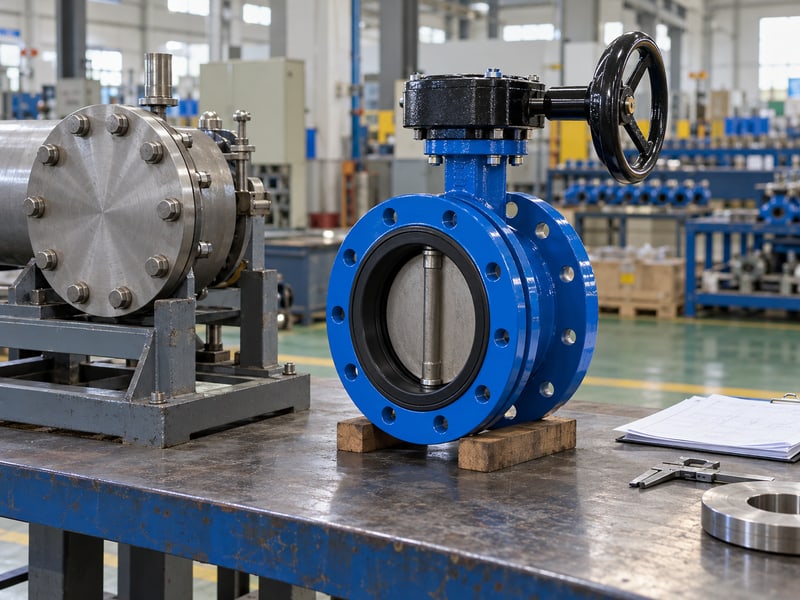
A U section butterfly valve manufacturer should document the dimensional, pressure, leakage, and functional checks required for the supplied configuration. Agree the inspection and test plan, or ITP, before production. Test conditions and acceptance criteria must identify the actual model, seat, direction, and operating package.
How should factory pressure records be read?
Separate proof tests from operating and retention limits. Use the agreed ISO 5208 or other specified method when reading shell and closure reports. They do not authorize working at the proof pressure or demonstrate an unapproved end-of-line arrangement. Obtain the model's pressure-temperature limits, directional closed differential, and any required retention permission separately.
- Check product ID, direction, pressure, duration, and result.
- Review instrument identification and calibration evidence.
- Arrange witness points before testing occurs.
What should remain open before release?
Track missing reports, unresolved test deviations, and incomplete agreed checks as release items. Match delivered records with the ordered U-body and operator configuration. Key takeaway: factory evidence is useful when its procedure and acceptance basis match the approved purchase scope.
| Evidence | What it verifies |
|---|---|
| Dimensional report | Agreed interface checks |
| Pressure/leakage record | Defined test result |
| Function record | Required travel and operator response |
Close inspection exceptions through the agreed release procedure.
6. Can a U section butterfly valve manufacturer meet your schedule?
A U section butterfly valve manufacturer can support a credible schedule when the proposed dates match the actual production route and available resources. Confirm start conditions, including drawing acceptance, materials, commercial release, and witnessing. Manufacturing readiness and arrival at your site are different milestones.
What belongs in an order-specific production plan?
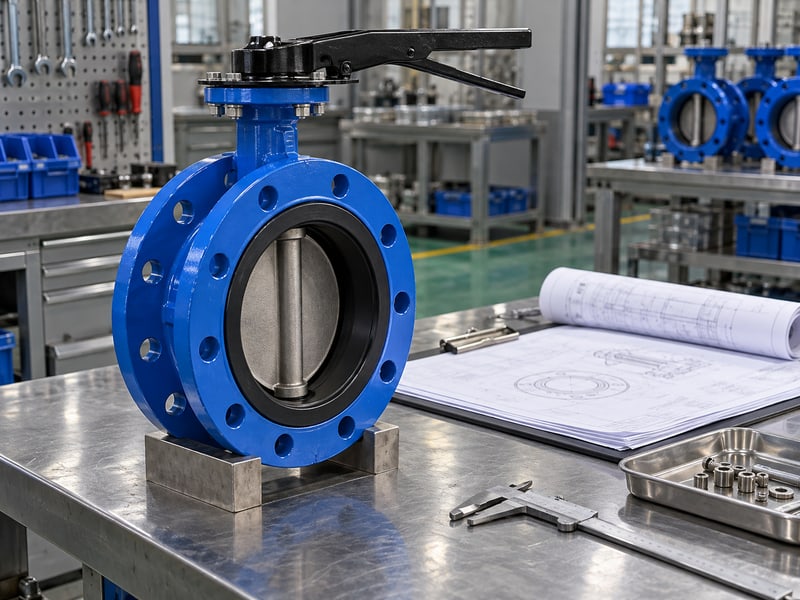
Ask for milestones the factory can report against. Casting availability, U-body machining, coating, seat preparation, assembly, inspection, and packing need identifiable completion points. An annual production total cannot show whether your body size fits the next machining window. It also cannot reveal a delayed purchased operator or missing seat compound.
- Separate finished exact configurations from work in progress.
- Record drawing freeze and inspection-release conditions.
- Add transport and clearance outside manufacturing time.
What should a changed date explain?
Ask which operation or purchased component changed the plan, who owns recovery, and when an updated milestone becomes available. Retain revised dates against the same approved configuration. Key takeaway: assess lead time through order-specific material, machining, assembly, and inspection commitments.
| Supply condition | Schedule evidence |
|---|---|
| Exact finished configuration | Identification and release plan |
| Mature production batch | Material and resource allocation |
| New interface or tooling | Development and validation milestones |
Define delay reporting and revision responsibility in the order.
7. How should a U section butterfly valve manufacturer pack valves?
A U section butterfly valve manufacturer should protect flange faces, seats, operators, and identification through the agreed handling route. Integral short flanged bodies still need appropriate restraints and support. Define packing requirements before freight scope and price are finalized.
Which details reduce receiving errors?
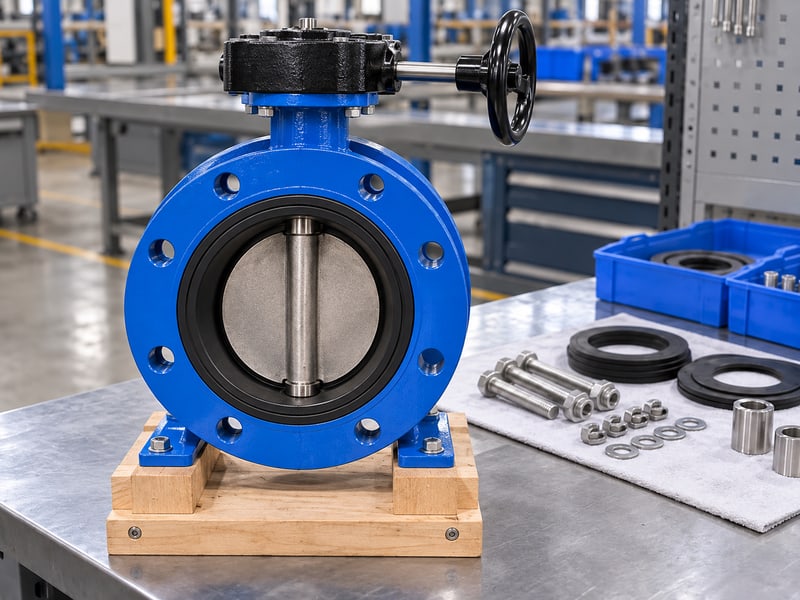
Link every product identifier with its box number. Distinguish size, rating, operator, material configuration, project tag, and quantity on the packing list. Photograph protected faces and completed restraints before closing crates. Identify loose accessories, approved spare seats, and document packages separately.
- Protect contact faces from impact and contamination.
- Follow the model's approved shipping disc position.
- Identify handling provisions and packed mass.
How should mixed body styles be separated?
Mark each item by connection architecture and approved drawing when an order includes other valve styles. Similar paint and nominal diameter can hide different U-body, wafer, or lug interfaces. Key takeaway: packing identification must preserve the exact configuration approved by engineering.
| Shipment concern | Control |
|---|---|
| Face damage | Protective covers and restraints |
| Mixed configurations | Tag, drawing, and box mapping |
| Missing accessories | Separate inventory and identification |
Record transit damage separately from manufacturing discrepancies at receipt.
8. How must a U section butterfly valve manufacturer control changes?
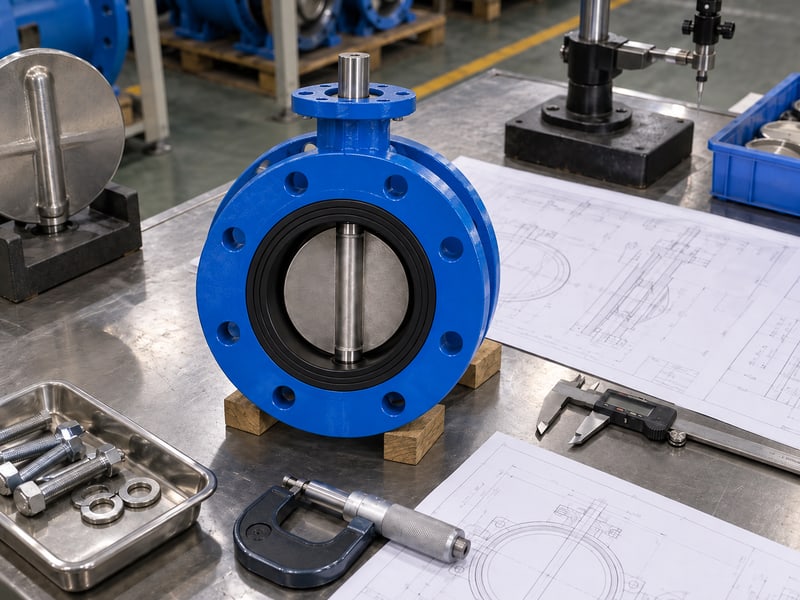
A U section butterfly valve manufacturer should notify and obtain the required approval before changing the accepted configuration. Seat formulation, drilling, body material, coating, or operator substitutions can affect fit and service. Identify affected product IDs or batches so the approved change remains traceable.
What should a change notice contain?
Define the effective batch before accepting a revision. Reference existing and proposed drawings, configuration revisions, qualification evidence, and spare-parts consequences. Ask whether the change alters working limits, pressure direction, dimensional fit, operating torque, or inspection scope. Route the proposal to the people responsible for those requirements.
- Record approval authority and notification timing.
- Identify reinspection or sample-validation requirements.
- Update spares information when interchangeability changes.
How should repeat orders be checked?
Retain the accepted sample or its inspection record alongside the controlled technical package. Specify configuration and batch-linked records and your required approval process in the order. Key takeaway: release changed U-body product only when its revision and actual production scope agree.
| Proposed change | Buyer response |
|---|---|
| Seat or coating change | Review fluid/contact suitability |
| Flange machining change | Recheck interfaces and clearance |
| Operator change | Review torque, duty, and envelope |
Close the change against its effective production batch.
9. When can a U section butterfly valve manufacturer receive approval?
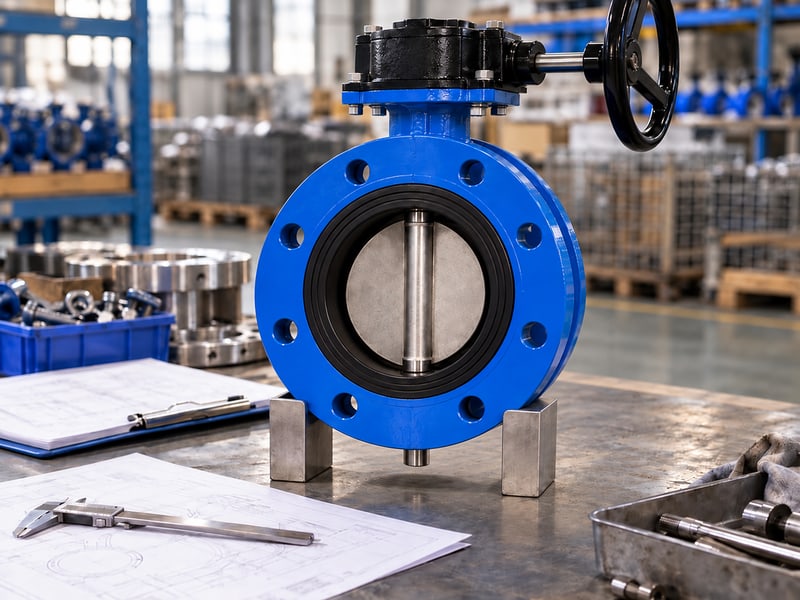
A U section butterfly valve manufacturer can receive order approval when technical deviations, required evidence, and production commitments are resolved for the defined scope. Each ordered item needs one identifiable configuration. An outstanding exception must remain assigned before the affected manufacturing operation begins.
What should remain visible after placement?
Keep one revision-controlled order baseline. Store the accepted datasheet, U-body drawing, material configuration, ITP, deviation register, and packing instructions together. Use that package during production reporting and receiving inspection. Later correspondence should reference an approved revision rather than silently replacing it.
- Obtain engineering acceptance for interfaces and service.
- Obtain quality acceptance for inspection and records.
- Confirm assembly scope and shipment-readiness conditions.
How should partial approval be handled?
If sample validation remains pending, define which sample-stage work may proceed. Keep affected batch items on hold until the required approval arrives. Key takeaway: supplier approval releases a stated U-body production scope with accepted technical and quality requirements.
| Approval state | Purchasing action |
|---|---|
| Defined package accepted | Release agreed scope |
| Sample review pending | Release authorized sample stage |
| Unresolved interface/material issue | Hold affected items |
Keep the baseline available to receiving and maintenance teams.
10. What spares must a U section butterfly valve manufacturer supply?
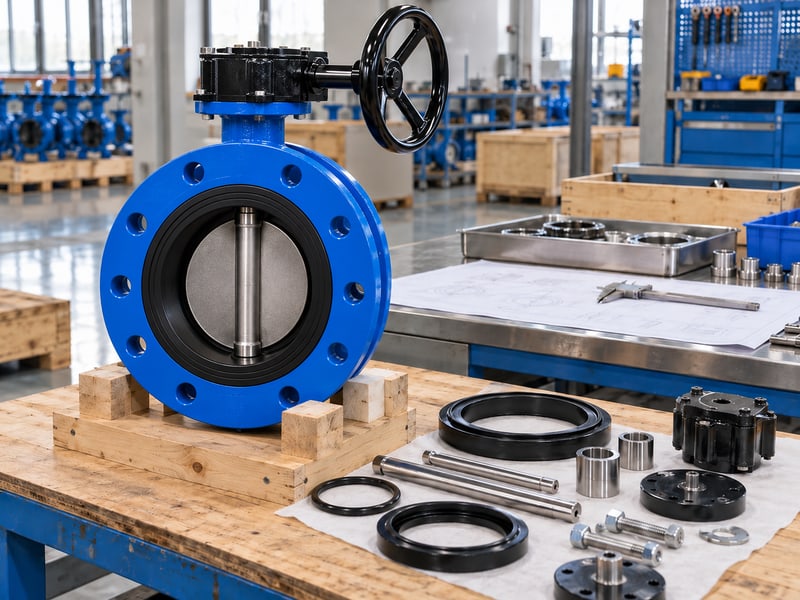
A U section butterfly valve manufacturer should supply or identify the agreed spares for the approved body, sealing arrangement, and operator package. Size and generic material names cannot establish interchangeability. Define spare scope and repeat-order references before the original configuration changes or leaves production.
What belongs in the spare-parts record?
Identify spares against the accepted configuration. Record applicable part descriptions, material or compound details, revision, and service instructions. Ask whether the offered spare is service-replaceable in the supplied construction. Include any dimensional, compatibility, or functional checks required after replacement.
- Match seat and seal compounds with the approved record.
- Retain operator and accessory identification.
- Document reviewed substitutions and effective revisions.
What should you send for supplier review?
Send RUITO the U-body drawing, operating conditions, companion interfaces, required ITP, drive scope, and spare needs. Request an offer that identifies the configuration and any deviations. Key takeaway: qualify a repeatable U-body supply package with traceable spares; contact us today with the approved requirements and quantities.
| Spare requirement | Evidence |
|---|---|
| Correct component | Configuration and revision |
| Suitable materials | Accepted compound/grade details |
| Service compatibility | Model instructions and checks |
Store the confirmed spare references with the order baseline.
Frequently asked questions
Q1: Can I approve a U-body supplier from factory photographs?
No. Match process responsibility, drawings, inspection records, and release scope with the offered configuration.
Q2: Can a U-body replace a wafer valve of the same size?
Only after actual length, flange architecture, bore clearance, support, and service conditions are reviewed.
Q3: Do higher factory test pressures raise working limits?
No. Working pressure, directional shutoff, temperature, and retention conditions require their own model approval.
Q4: How do I know a drinking-water approval covers the order?
Check exact wetted configuration, size, temperature, market coverage, validity, and applicable restrictions.
Q5: What protects repeat orders from changed seats or drilling?
A controlled configuration and written change approval tied to effective batches, inspection, and updated spares records.