
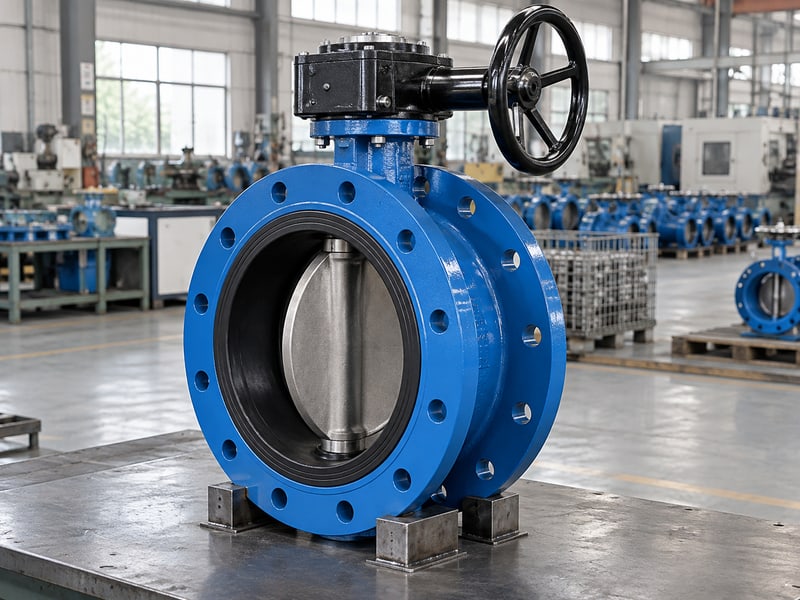
Fix U section butterfly valve mistakes by confirming the offered body geometry, short flanged interfaces, service limits, and approved drawing together. A familiar product name can conceal a different installed length or material configuration. Compare the actual valve with the piping and operating requirements before accepting a substitute or releasing an order.
1. What identifies a U section butterfly valve?
A U section butterfly valve is identified through the supplier's body description and model drawing, rather than the name alone. Suppliers may use the term for compact U-profile flanged construction. Confirm the offered connection arrangement before treating names from different sources as equivalent.
What does RUITO's body description specify?
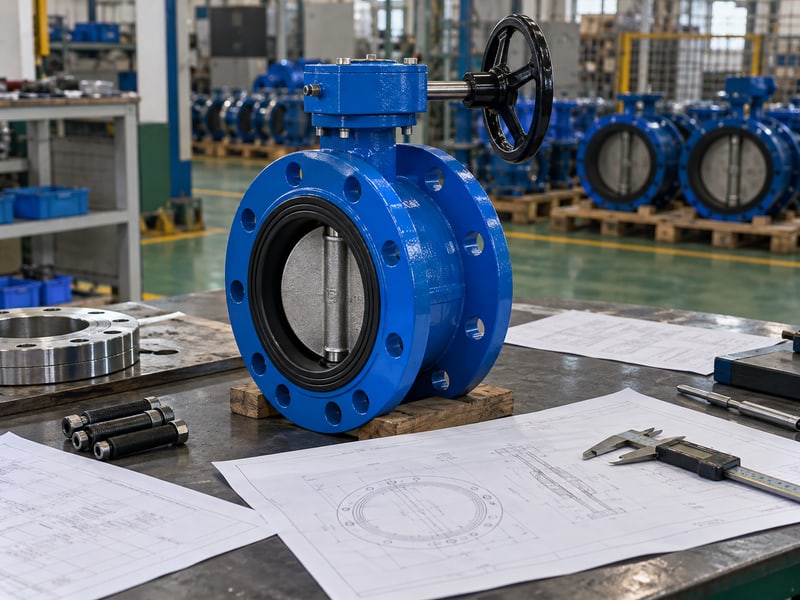
RUITO's U-type butterfly valve uses an integral short body with flange connection portions on both sides. Its stated configuration scope includes DN150–600 and PN10/16. Those details describe the offered product range; they do not make “U section” a universal size, material, or pressure designation.
- Request the offered body and connection drawing.
- Confirm nominal size and exact configuration.
- Match the description with the quotation and nameplate.
Identify the construction before approving the name. A “U-shaped” catalogue label can be useful for finding a product, but it cannot replace a controlled specification. Record the actual body architecture and interfaces in the purchase description.
What should an unclear quotation trigger?
Ask the supplier to identify the proposed geometry, connection form, and dimensional drawing. Retain the answer with any technical deviations. Key takeaway: use the product name as a starting point, then approve an identifiable short flanged body.
| Identification item | Confirm |
|---|---|
| Catalogue name | Supplier's defined construction |
| Offered configuration | Size, materials, and rating |
| Drawing reference | Exact body and interfaces |
Attach the proposed drawing to the technical comparison.
2. How does a U section butterfly valve differ?
A U section butterfly valve differs from another body style through its documented connection architecture and installed dimensions. RUITO's short integral flanged construction connects directly to companion flanges at both ends. Do not transfer wafer, lug, or other double-flanged dimensions to it without a drawing comparison.
Which connection differences should you compare?
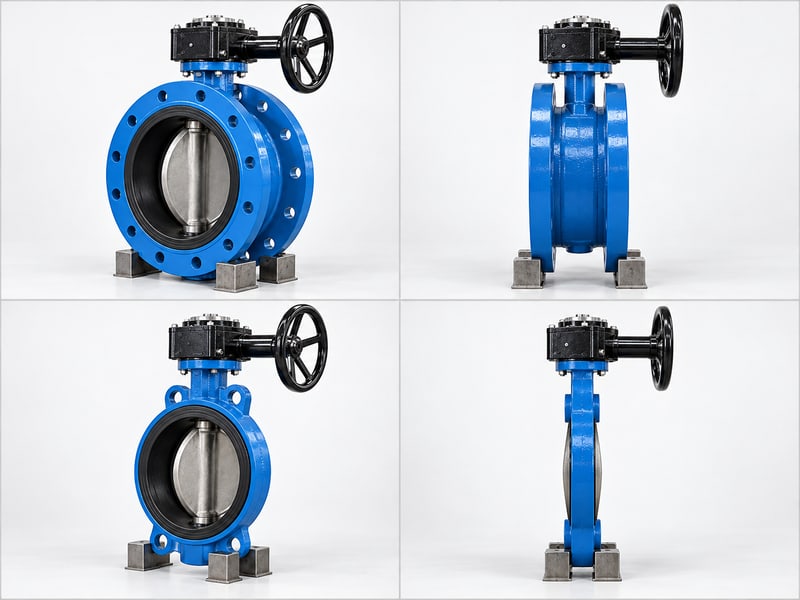
A wafer butterfly valve commonly sits between companion flanges within a spanning-bolt arrangement. Lug bodies use specified lug connections; flanged bodies provide their own flange interfaces. The short U-profile needs its own documented installation envelope.
- Compare how each body joins the pipe flanges.
- Check installed length and connection details.
- Identify the maintenance condition the project requires.
Compare interfaces with drawings side by side. RUITO's flanged butterfly valve options include other constructions with their own face-to-face and body geometry. Matching nominal bore does not establish an interchangeable replacement.
Does flange form establish maintenance permission?
No; end-of-line or one-sided maintenance duty needs explicit approval for the actual retained configuration and pressure conditions. Independent bolting or a U-shaped body cannot establish that rating. Key takeaway: select the connection style and permitted maintenance arrangement as separate requirements.
| Body comparison | Review |
|---|---|
| Pipe connection | Defined fastening arrangement |
| Installed envelope | Actual drawing dimensions |
| Maintenance duty | Configuration-specific permission |
Record interface differences before choosing the replacement body.
3. Which drawing defines a U section butterfly valve?
A U section butterfly valve is defined for procurement by the approved drawing of its exact body and supplied assembly. The U designation does not establish a face-to-face series, flange specification, or material grade. Those requirements must appear explicitly in the submittal.
What should the dimensional drawing show?
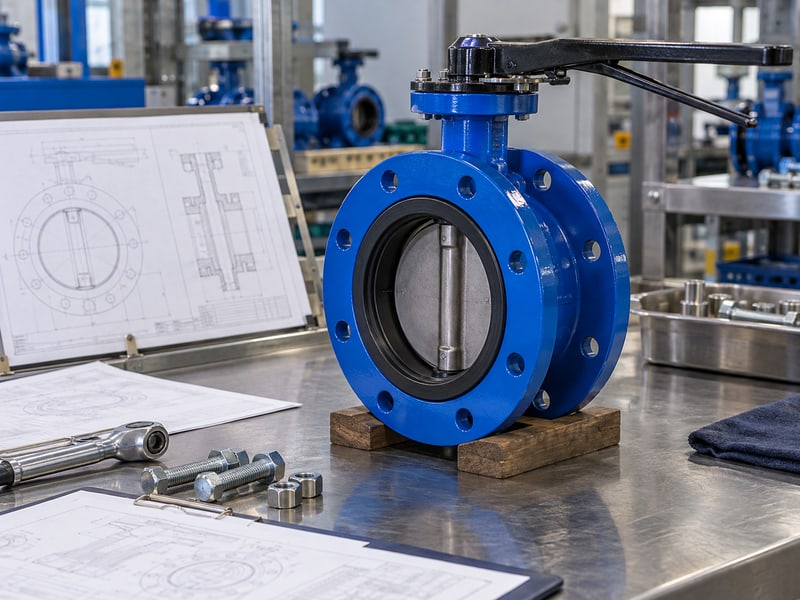
Request face-to-face length, flange drilling, face form, internal opening, and disc travel envelope. Add operator dimensions and support information where they affect the installed package. A generic section sketch can explain the concept but cannot settle fabrication or replacement interfaces.
- Identify the drawing number and revision.
- Confirm both companion flange interfaces.
- Review disc projection and external assembly clearance.
Specify standards independently of body geometry. Where a project requires a particular design, dimension, flange, or test standard, state that requirement separately. Ask the supplier to identify compliance and deviations for the offered configuration rather than assuming the letter U settles them.
How should drawings be controlled during purchase?
Link the accepted configuration with the quotation, tag, and inspection scope. Review changed dimensions or materials before substitution. Key takeaway: an approved model drawing provides a reproducible interface and controlled revision.
| Drawing detail | Purchase purpose |
|---|---|
| Face-to-face | Match the installed gap |
| Drilling and faces | Match companion flanges |
| Revision and identity | Control the offered configuration |
List the approved drawing revision in the purchase specification.
4. How does a U section butterfly valve operate?
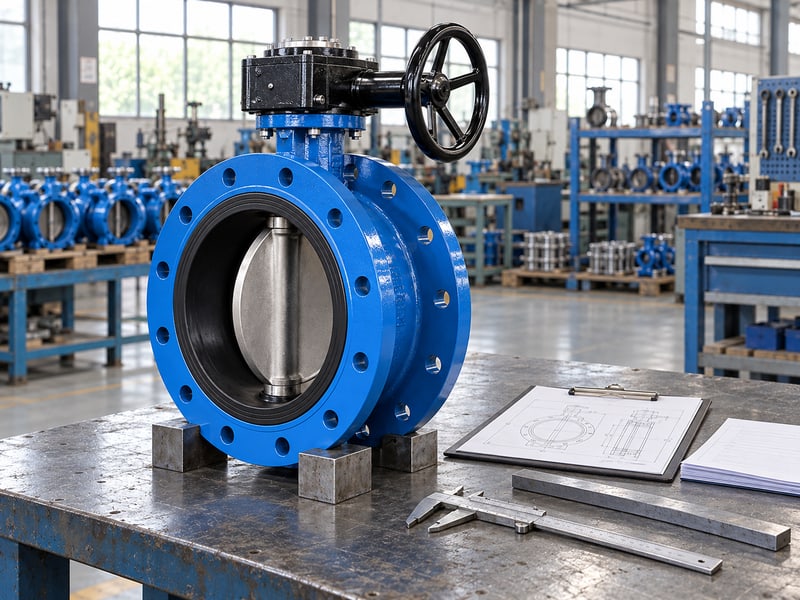
A U section butterfly valve operates by rotating its disc through the specified travel to open or close the flow passage. Body shape changes the installation architecture rather than the basic butterfly mechanism. The selected disc, seat, shaft, and operator determine its permitted operating duty.
What remains in the flow path?
The disc and related internal geometry remain relevant to flow resistance even when the valve is open. Pressure drop depends on the actual configuration, flow rate, and fluid properties. Request applicable flow data instead of assuming that body compactness establishes low head loss.
- State design and maximum flow.
- Identify isolation or positioning duty.
- Request model-specific flow and torque data.
Select the operating duty with the process conditions. A quarter-turn mechanism does not authorize every throttling angle or continuous regulating service. Check the valve's permitted range and the operator's duty against the required task.
What should an operating check demonstrate?
Confirm travel, indication, stopping, and movement under agreed conditions. Assess leakage separately. Key takeaway: the U-body interface and disc operation need distinct evidence for the same package.
| Operating requirement | Evidence |
|---|---|
| Flow capacity | Applicable model data |
| Movement | Required travel and torque |
| Shutoff | Defined leakage acceptance |
Add the process duty and flow requirement to the datasheet.
5. What service suits a U section butterfly valve?
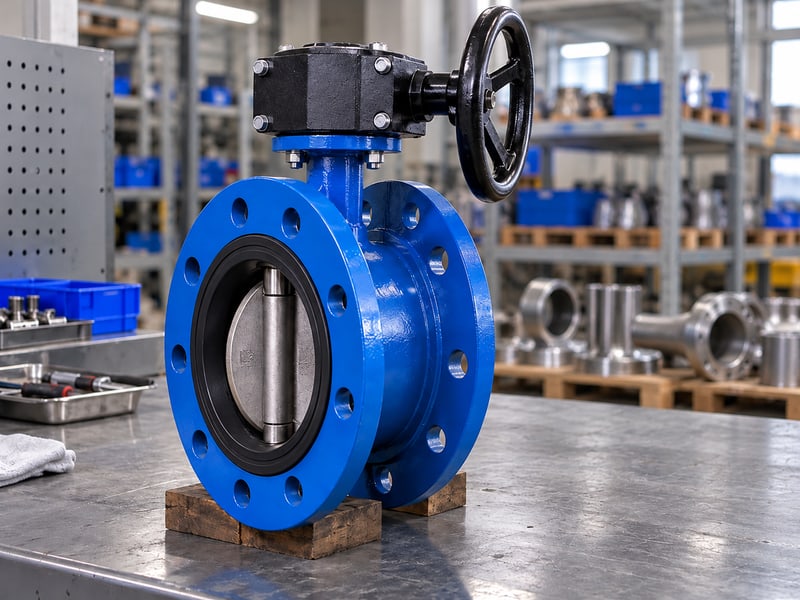
A U section butterfly valve suits service within the selected model's fluid, pressure-temperature, and directional shutoff limits. Its body name does not authorize petroleum, steam, chemicals, or every wastewater duty. Define the complete operating conditions before choosing the configuration.
Which operating conditions need separate entries?
Record fluid composition, phase, normal and maximum temperature, working pressure, and maximum closed differential. Include reverse pressure and transients where the system can produce them. Line class alone cannot determine the disc load during isolation or reopening.
- Describe additives, solids, and cleaning conditions.
- State temperature and pressure together.
- Specify forward and reverse closed differentials.
Check the working envelope for the exact configuration. RUITO's stated U-type water and inhibited-glycol circulation configurations have defined service boundaries. Do not combine a temperature from one option with a pressure or material claim from another.
What should the pressure review distinguish?
Separate working conditions, directional shutoff differential, and proof-test conditions. Higher inspection pressure does not increase the working limit. Key takeaway: approve simultaneous service conditions and pressure direction using model-specific evidence.
| Pressure record | Meaning |
|---|---|
| Working curve | Permitted service conditions |
| Closed differential | Directional disc/seat load |
| Proof-test report | Inspection condition and result |
Attach both directional shutoff requirements to the enquiry.
6. What materials suit a U section butterfly valve?
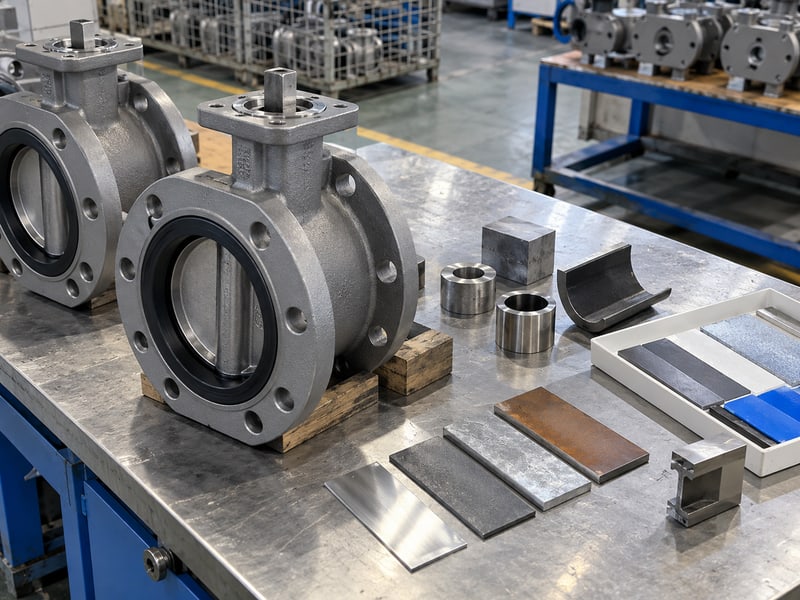
A U section butterfly valve needs materials compatible with the actual fluid and working conditions throughout the wetted assembly. The U-profile does not establish ductile iron grade, disc alloy, seat compound, or shaft-seal material. Confirm each offered component through the approved materials record.
Which material descriptions need detail?
Specify body material separately from disc, shaft, seat, and other wetted seals. Generic stainless-steel or rubber descriptions leave material choices unresolved. Potable-water documentation must cover the actual wetted configuration and intended market.
- Identify materials for every wetted component.
- Provide fluid concentration, additives, and contaminants.
- Review any required contact approvals for the exact configuration.
Keep the geometry name separate from the material specification. EPDM water-service seating should not be generalized to mineral oil or steam. A corrosion-resistant disc alone cannot establish compatibility of the body lining, shaft seals, and complete fluid contact path.
How should repeated orders be protected?
Retain the approved material list with the drawing and operating envelope. Require review of substitutions that change service suitability or applicable acceptance evidence. Key takeaway: specify and preserve the complete material configuration rather than buying against a U-body description alone.
| Component group | Confirm |
|---|---|
| Pressure body | Exact material and working limit |
| Disc and shaft | Fluid and mechanical suitability |
| Seat and seals | Compound and service conditions |
Close material descriptions before approving the quotation.
7. What drive suits a U section butterfly valve?
A U section butterfly valve needs an operator matched to required shaft torque, operating frequency, travel behavior, and site utilities. Manual gear, electric, and pneumatic options each need their own selection review. The body name cannot establish operator capacity or failure behavior.

What should operator selection start with?
Request valve torque data for the selected seat, temperature, pressure direction, and maximum closed differential. State whether the task involves occasional isolation or repeated positioning. Include required travel time, available supply, feedback, and defined failure response where applicable.
- Identify breakaway, running, and seating requirements.
- Describe actual cycling and control duty.
- Verify operator output and approved mechanical limits.
Match the operator to the supplied U-body configuration. Adding a motor does not increase the body's pressure or media rating. An electric operator also does not establish automatic fail-close operation without the specified assembly and supporting controls or stored energy.
What belongs in the layout review?
Review operator weight, clearance, support, and access on the assembly drawing. Recheck them when the drive changes. Key takeaway: approve operator capability and installed envelope against the same valve configuration.
| Operator input | Selection purpose |
|---|---|
| Required shaft torque | Output capacity |
| Cycle and travel | Duty and process response |
| Weight and envelope | Support and service access |
Send the operating task alongside the dimensional requirements.
8. What fit checks suit a U section butterfly valve?
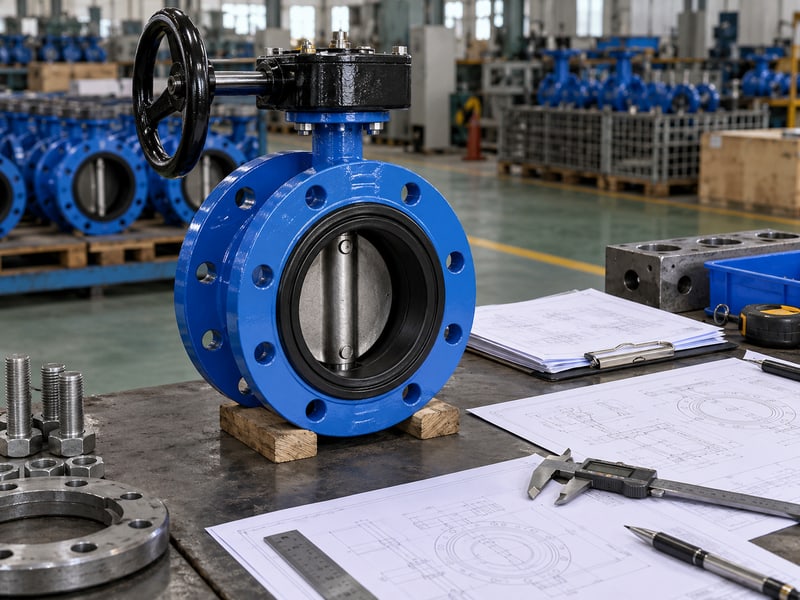
A U section butterfly valve needs fit checks against its own short flanged body drawing and companion piping. Confirm flange faces, bolt arrangements, installed length, bore clearance, and support. A previous wafer or other flanged valve can supply measurements, but its interfaces must not become the new specification by assumption.
What should be measured before delivery acceptance?
Compare the delivered identification and dimensions with the approved submittal. Check that the internal pipe opening clears the required disc sweep, including any lining or adjacent fitting. Keep the selected model's sealing and fastener instructions with the installation work pack.
- Match both flange interfaces and body length.
- Verify internal and external clearance.
- Confirm specified gaskets and joint instructions.
Check the U-body drawing before reusing installation details. Its short integral flanged structure has its own connection geometry. A bolt arrangement, face-to-face value, or gasket practice from another style needs explicit compatibility review before reuse.
What should the installation review protect?
Use approved support load paths and model assembly instructions. Verify required unobstructed movement before commissioning. Key takeaway: accept the delivered interfaces against controlled dimensions and actual piping conditions.
| Fit requirement | Verify |
|---|---|
| Flanged interfaces | Faces, drilling, and fasteners |
| Short body length | Approved installed dimensions |
| Disc and drive | Clearance and support |
Retain the dimensional acceptance record with the valve tag.
9. How is a U section butterfly valve accepted?
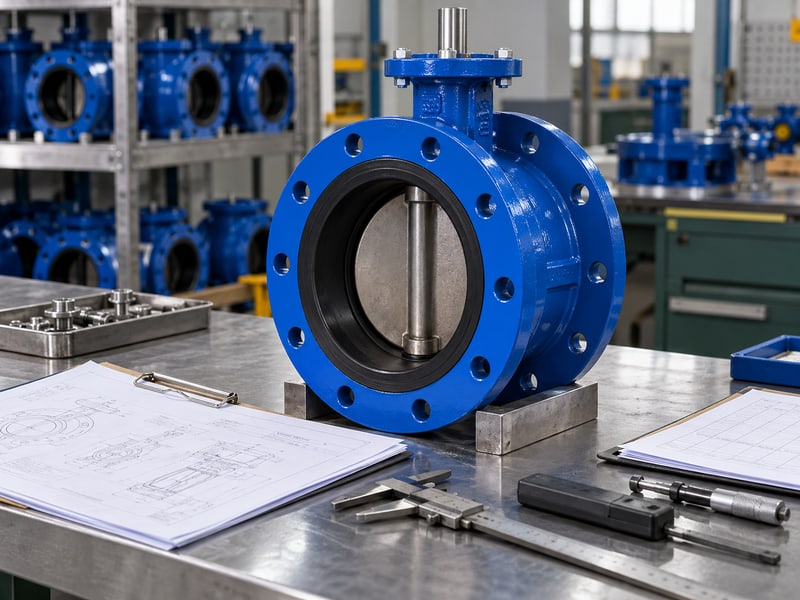
A U section butterfly valve is accepted through the project's agreed document, dimensional, pressure, and functional requirements for the exact configuration. A product label or catalogue photograph cannot replace those records. Define acceptance evidence before the order reaches manufacture or inspection.
Which factory evidence should correspond to the valve?
Request the required materials, dimensions, pressure results, and functional records linked to product identification. State any witnessing or document approval points in the inspection plan. Leakage criteria, test medium, pressure direction, and conditions should follow the selected model and agreed procedure.
- Match identification across reports and drawings.
- Verify the specified inspection and acceptance criteria.
- Retain approved deviations and their disposition.
Approve the inspection conditions before reviewing results. A test report is useful when its configuration, procedure, and acceptance basis match the purchase requirement. Avoid treating a pressure test as evidence of every application approval or long-term operating condition.
What should field handover retain?
Retain model instructions, working limits, final layout, and commissioning results. Record approved field changes. Key takeaway: acceptance connects a specific U-body configuration with traceable requirements and completed checks.
| Acceptance evidence | Match with |
|---|---|
| Dimensional record | Approved drawing revision |
| Pressure/function results | Agreed procedure and conditions |
| Handover package | Installed valve identity |
Define the required records in the inspection and delivery scope.
10. What should a U section butterfly valve RFQ include?
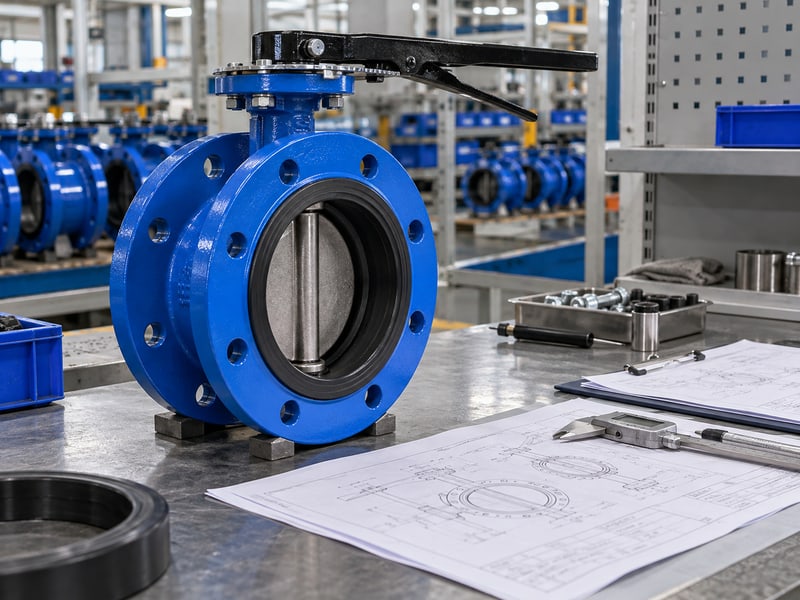
A U section butterfly valve RFQ should identify the required body architecture, pipe interfaces, service conditions, drive function, and acceptance documents. Include the reason a short flanged body is needed. These inputs let suppliers address the actual configuration instead of quoting from a similar product name.
What should accompany the enquiry?
Send the valve schedule, fluid description, operating envelope, closed differentials, and companion flange information. Add required installed length, disc and operator clearances, maintenance scenario, and drive duty. Submit the body and service requirements together. A replacement enquiry should include measured interfaces and the current layout rather than only a photograph.
- Request the offered configuration and dimensional drawing.
- Obtain materials, working limits, and operator selection data.
- List required deviations, inspection evidence, and delivery scope.
What should a comparable proposal provide?
Request a defined U-type assembly, interface compliance, working conditions, operator details, and document list. RUITO can review your inputs against its offered configuration. Key takeaway: compare identifiable short flanged assemblies against one specification; contact us today with your valve schedule and interface requirements.
| RFQ group | Include |
|---|---|
| Body and interfaces | Construction and dimensions |
| Process and drive | Service limits and operating duty |
| Acceptance and supply | Records, deviations, and scope |
Close technical deviations before approving the purchase.
Frequently asked questions
Q1: Does the U designation identify a design standard?
No. Specify applicable design, dimensional, flange, and test requirements separately.
Q2: Can I replace a wafer valve with the same nominal size?
Only after the actual length, flanged interfaces, bore clearance, support, and service conditions match.
Q3: Does a U-shaped body establish its material grade?
No. Confirm the body and complete wetted materials from the approved configuration record.
Q4: Can every U-body valve provide end-of-line isolation?
No. Obtain explicit permission for the retained configuration, pressure direction, temperature, and differential.
Q5: What's the best document for an interface check?
Use the current approved model drawing together with actual companion flange and piping details.