
A butterfly valve isolates a pipe or, with an approved control design, adjusts its flow. If you're asking "what is a butterfly valve used for", start with those two duties. Then check the medium, seat, pressure, temperature and drive against the job before you compare prices.
1. What is a butterfly valve used for in industry?
A butterfly valve is used for pipeline isolation, equipment isolation and selected flow-control duties. Its disc rotates across the bore instead of moving along a rising stem, so the installed assembly can be comparatively short. You will encounter it in water plants, circulating-liquid systems and process equipment. However, one approved use does not establish suitability for another medium or a more demanding operating case.
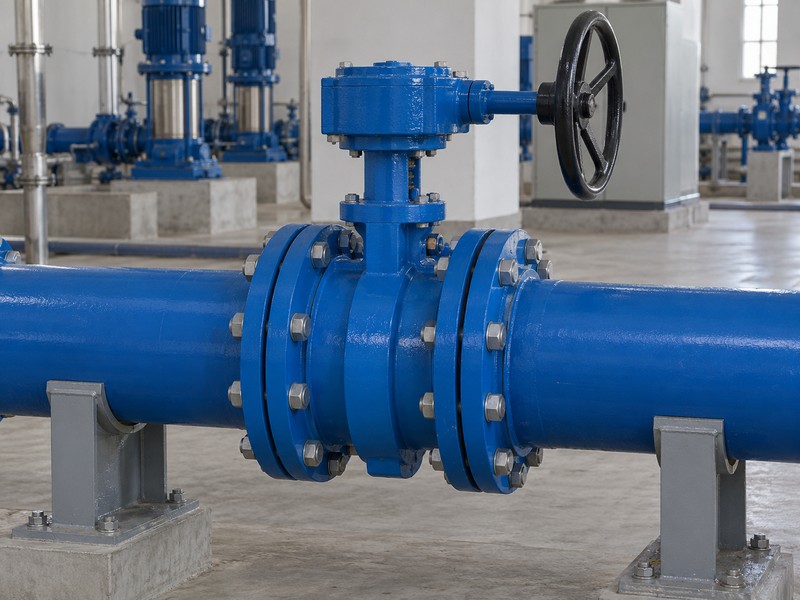
How should you describe the job in an enquiry?
State whether the valve will remain fully open, close for isolation or move repeatedly to regulate flow. Then add the normal and limiting pressure differences, temperature, flow and expected cycle frequency. RUITO supplies several body and seat constructions, each requiring its own selection review. A quotation that lists only size and nominal pressure leaves the duty, material compatibility and drive requirement unresolved.
- Name the medium and complete makeup.
- Separate normal operation from shutdown and upset cases.
- Define the required response when air or power is lost.
| Duty | What the valve does | Input needed |
|---|---|---|
| Line isolation | Starts or stops a pipe section | Closing differential and leakage requirement |
| Equipment isolation | Separates a maintainable unit | Isolation arrangement and access |
| Modulation | Changes restriction during operation | Flow range and hydraulic analysis |
2. When does it suit municipal or drinking-water service?
A water-service butterfly valve can isolate distribution lines, pump-station branches or treatment equipment when its materials and pressure rating match the pipe layout. Large pipe sizes can make a compact rotary valve useful where pipe layout length and handling matter. Drinking-water service adds a separate contact-material review. The seat, coating, lubricants and other wetted components must fall within the project's required approval scope.
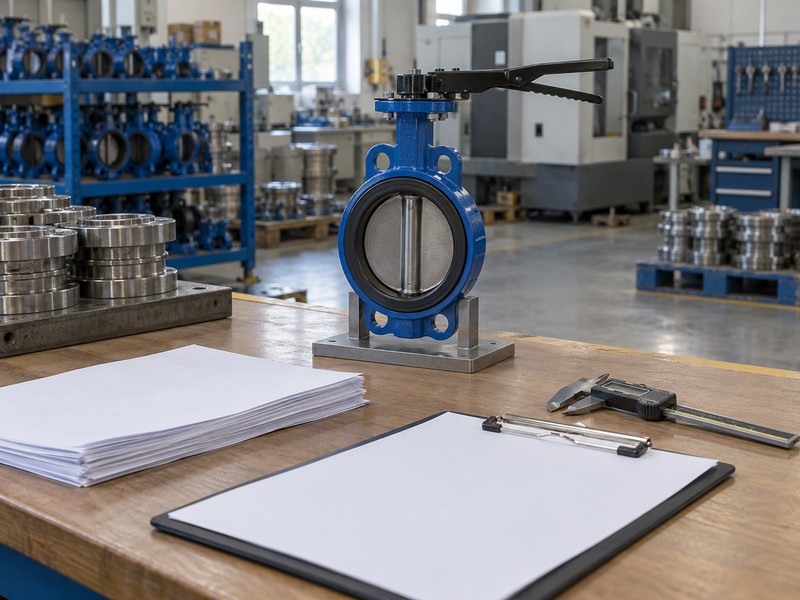
Which water conditions change the selection?
Ask about surge pressure, disinfectants, water temperature, solids and the maximum differential during closure. RUITO's stated drinking-water models have their own approved sizes and a stated working envelope of 5–40°C and up to 10 barg, subject to the lower approved limit. Those values should not be extended to every water valve. For pump discharge duties, coordinate the isolation valve with the check valve and the system's transient analysis rather than assuming rapid closure is desirable.
- Check the destination's required drinking-water documents.
- Record the maximum closing differential and reverse-pressure case.
- Specify closure time from the system review.
| Water duty | Selection concern | Evidence to request |
|---|---|---|
| Municipal isolation | Pressure and transient loads | Rated closure conditions and drawing |
| Drinking-water contact | Complete wetted-material scope | Model-specific contact approval |
| Treated reuse water | Solids and fibres near the disc | Medium review and operating limits |
3. How is it used in HVAC and cooling-water circuits?
Butterfly valves isolate chillers, heat exchangers, cooling branches and other circulation equipment. Some approved packages also regulate flow, although isolation and control require separate checks. In a glycol circuit, the fluid's density and viscosity affect the pressure-drop calculation. The mixture concentration, inhibitor package and temperature also affect material selection, so a water-only data sheet is insufficient for a changed fluid.
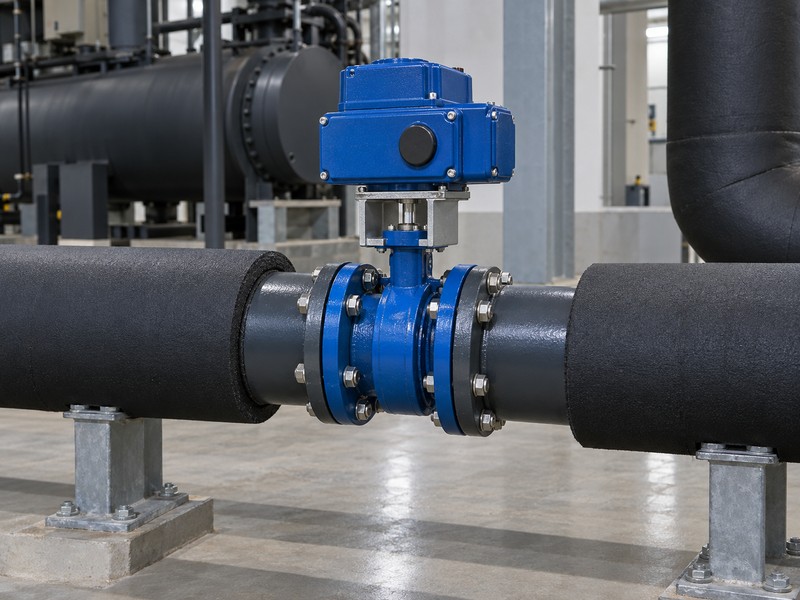
Can one valve cover warm and cold circulation?
Only if the same model covers both service cases. RUITO's stated circulation models for clean water or inhibited ethylene-glycol mixtures up to 40% by volume use a 5–60°C, up-to-10-barg duty envelope within their individual ratings. A subzero circuit needs its separately validated low-temperature model. Our HVAC and district-energy page outlines circulation duties; provide actual mixture properties and service cases for the valve calculation.
- State glycol type and concentration by volume.
- Include cold-start temperature and actual minimum absolute pressure.
- Allow service access around insulated pipes and the drive.
| Circuit condition | Why it changes the review | Required check |
|---|---|---|
| Added glycol | Changes fluid properties | Density, viscosity and compound compatibility |
| Subzero operation | Changes material and sealing behaviour | Approved low-temperature package |
| Modulating branch | Changes installed flow behaviour | Flow range, differential and controllable travel |
4. Can a butterfly valve handle seawater?
A selected butterfly valve can handle a stated seawater duty, but an ordinary stainless disc and blue coating do not establish seawater suitability. Review every wetted surface, crevice, shaft seal and potential galvanic couple. Velocity, chlorination and temperature affect that review. A valve approved for a low-pressure intake or cooling line does not inherit suitability for the high-pressure section of a reverse-osmosis plant.
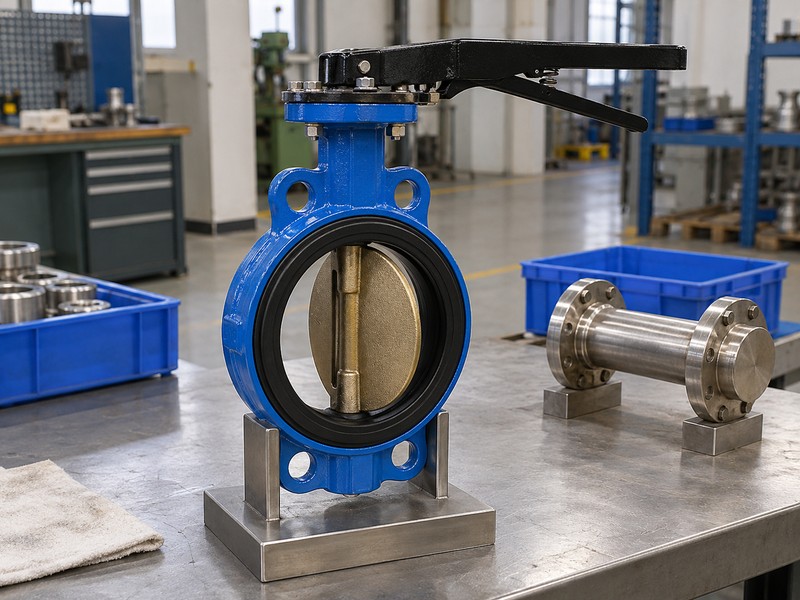
What should a seawater material review include?
Request the exact disc and shaft grades, the extent of body isolation and the coating or lining system. RUITO's stated dedicated wafer and lug seawater models cover DN50–300 within their individual ratings, with a 5–40°C and up-to-10-barg duty boundary. The final review still needs actual velocity, chlorination and corrosion conditions. Keep external marine exposure separate from internal seawater contact because they can require different protective measures.
- List all wetted metals and elastomers.
- Describe chlorination, deposits and expected flow velocity.
- Check internal corrosion and external salt exposure separately.
| Seawater factor | Question for the supplier | Reason |
|---|---|---|
| Wetted metals | Which exact grades contact seawater? | General stainless descriptions are incomplete |
| Flow and treatment | What velocity and chlorination were reviewed? | Corrosion depends on service conditions |
| Pressure location | Is this intake or high-pressure treatment? | Application ratings cannot be transferred |
5. Which chemical duties require a lined valve?
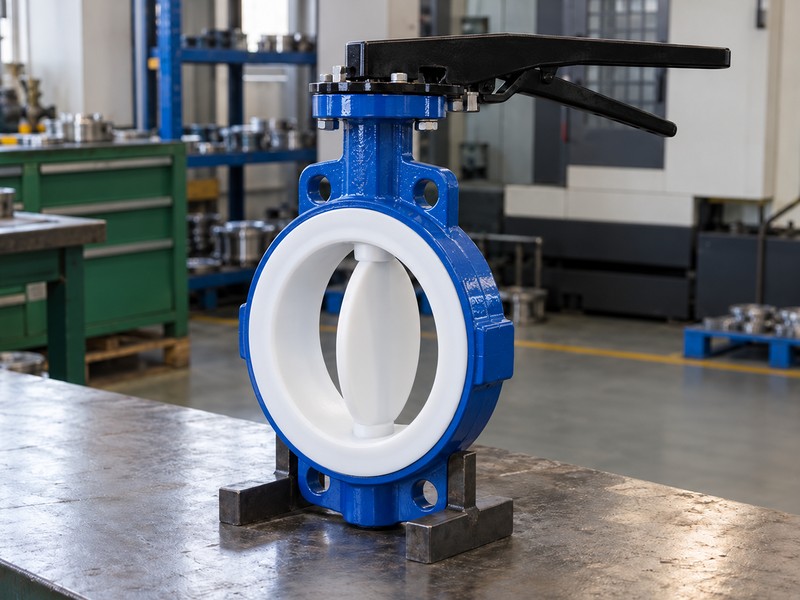
A lined butterfly valve can isolate compatible chemical liquids when the lining, disc covering, backing and shaft seals have been reviewed together. PTFE and PFA models can provide a continuous wetted barrier in selected duties. They are separate material constructions, so a PFA-covered disc with a PTFE seat should not be described as an entirely PFA-lined valve. Confirm what the liquid actually touches.
How specific should the chemical data be?
Specify the chemical, concentration, impurities, normal temperature, cleaning cycle and minimum absolute pressure. As a bounded RUITO selection case, an approved lined assembly for 10–30% by-mass sodium-hydroxide solution uses 20–60°C and up to 6 barg within its exact model limits. Other acids and oxidising liquids need separate material lists and boundaries. Review the PTFE lined butterfly valve model against the complete medium rather than choosing it from the resin name alone.
- Name continuous lining coverage and local minimum thickness.
- Include backing and shaft-seal materials in the approval.
- Request the applicable integrity and thermal-cycle procedures.
| Chemical input | What to state | What it changes |
|---|---|---|
| Composition | Chemical, concentration and impurities | Compatibility of every wetted component |
| Operating cycle | Normal temperature and cleaning exposure | Lining, backing and seal assessment |
| Pressure conditions | Maximum pressure and minimum absolute pressure | Pressure and lining-retention review |
6. Can it isolate mineral oil or lubricating liquids?
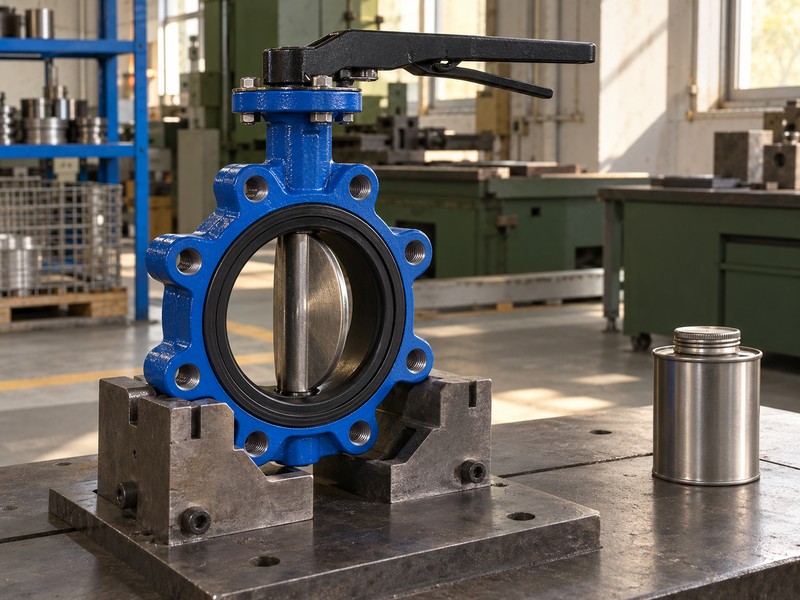
An oil-compatible butterfly valve can isolate selected mineral-oil duties when the approved seat and auxiliary seals match the oil formulation. Do not replace a water-service EPDM seat with an assumed equivalent. Additives, aromatic content, temperature and exposure time can change elastomer behaviour. For viscous liquids, the operating flow and cold-start viscosity also affect pressure drop and actuator selection.
What does an oil-service quotation need?
Provide the exact oil specification, available safety data, viscosity at operating and startup temperatures, pressure and cycle frequency. RUITO's stated NBR wafer and lug mineral-oil models use a bounded 5–70°C and up-to-10-barg duty range, subject to the approved product rating. That range concerns compatible high-flash-point mineral oil and should not be transferred to all fuels, solvents or lubricants. Ask for material-review evidence tied to the proposed compound and actual oil.
- Name the oil and additive package.
- Include cold-start viscosity in the hydraulic calculation.
- Match seat, shaft seals and spare parts to the same approved compound.
| Oil-service item | Data needed | Selection decision |
|---|---|---|
| Fluid identity | Exact oil specification | Elastomer and seal compatibility |
| Temperature cycle | Normal and startup conditions | Rating and operating torque |
| Viscosity | Values at relevant temperatures | Pressure drop and working range |
7. What changes for clean air and nitrogen?
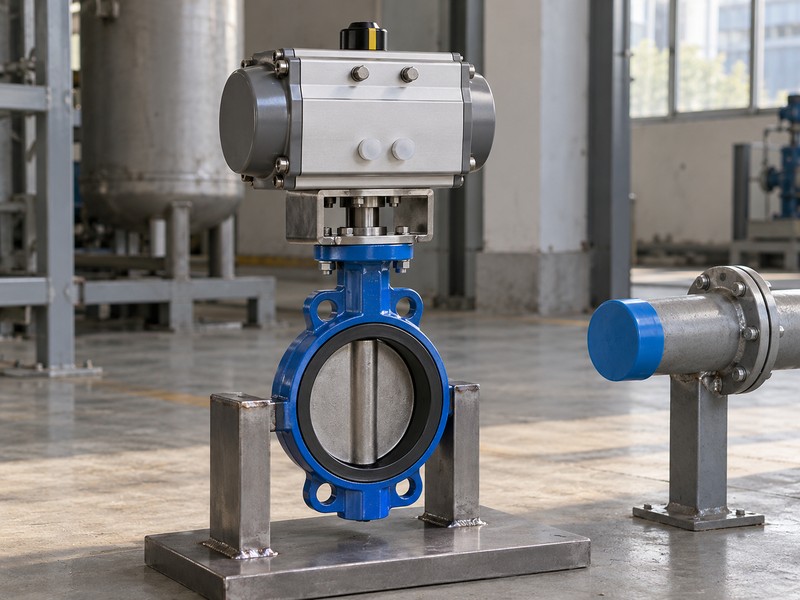
Clean-air and nitrogen isolation require a valve model and leakage inspection suitable for gas service. A water-pressure test checks different conditions and does not establish the assembled valve's gas tightness. State whether the requirement concerns leakage through the closed seat, leakage outside the valve, or both. Gas calculations also need absolute pressures and a clearly defined flow reference state.
Does an air-service valve also qualify for fuel gas?
No. RUITO's stated wafer and lug clean-air or nitrogen models cover DN50–200, 5–40°C and up to 6 barg within their approved ratings. They do not inherit natural-gas, oxygen or hydrogen suitability. Confirm the exact gas makeup, leakage criterion and actuator environment. When comparing reports, check the test medium, product identification and acceptance method instead of treating any bubble-test photograph as proof of the complete service requirement.
- State gas makeup and absolute pressure conditions.
- Separate seat leakage from external leakage.
- Request gas-service inspection evidence for the supplied model.
| Gas question | Required distinction | Buyer action |
|---|---|---|
| Which gas? | Air or nitrogen versus other gases | Review the exact service model |
| Which leakage path? | Seat passage versus external joints | Specify both acceptance requirements |
| Which flow basis? | Actual versus reference-state volume | Give the reference temperature and pressure |
8. When is a grooved valve suitable for fire-water piping?
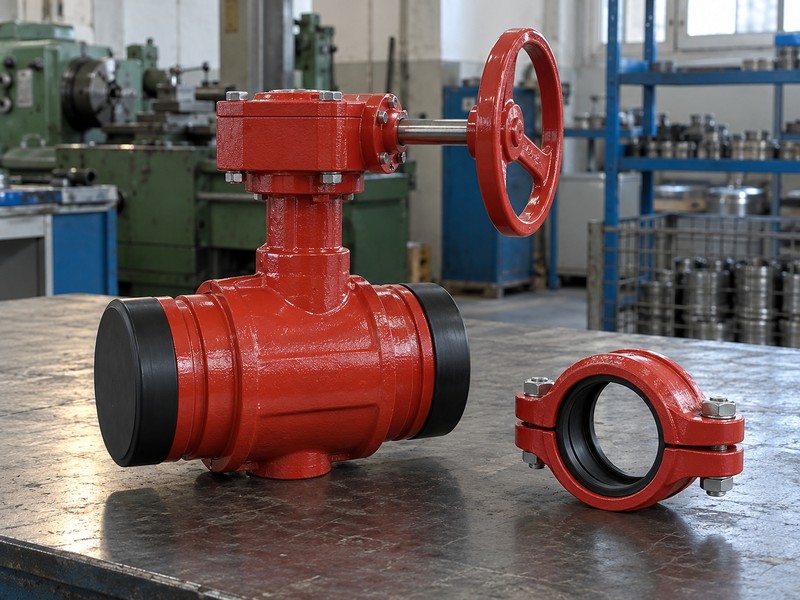
A grooved butterfly valve can serve a stated fire-water pipe layout when the exact valve, connection and supervisory arrangement meet the project's requirements. Grooves change the pipe connection, while the internal disc still turns to control the passage. The coupling, gasket and pipe groove must match. A red coating or a switch mounted on the gearbox does not establish an approval or a complete supervisory function.
What must be checked before substituting a model?
Review the approved model and size range, groove dimensions, pipe outside diameter, coupling and gasket rating, and any required position-supervision documents. The lowest applicable component rating controls the assembled connection. Our grooved-end butterfly valve model needs a model-specific duty review; ordinary water-service pressure records do not establish fire-system approval. Follow the project designer's approved isolation and maintenance arrangement when the valve protects a system that must remain available.
- Match the valve ends to the pipe and coupling system.
- Verify approval coverage for the exact model and accessories.
- Commission the supervisory signal against actual valve travel.
| Fire-water item | Check | Do not infer from |
|---|---|---|
| Grooved connection | Pipe, groove, coupling and gasket compatibility | Nominal size alone |
| Approval scope | Exact model, size and accessories | Paint colour or a generic brochure |
| Position supervision | Signal through commissioned travel | The presence of a switch enclosure |
9. How do you decide whether it can regulate flow?
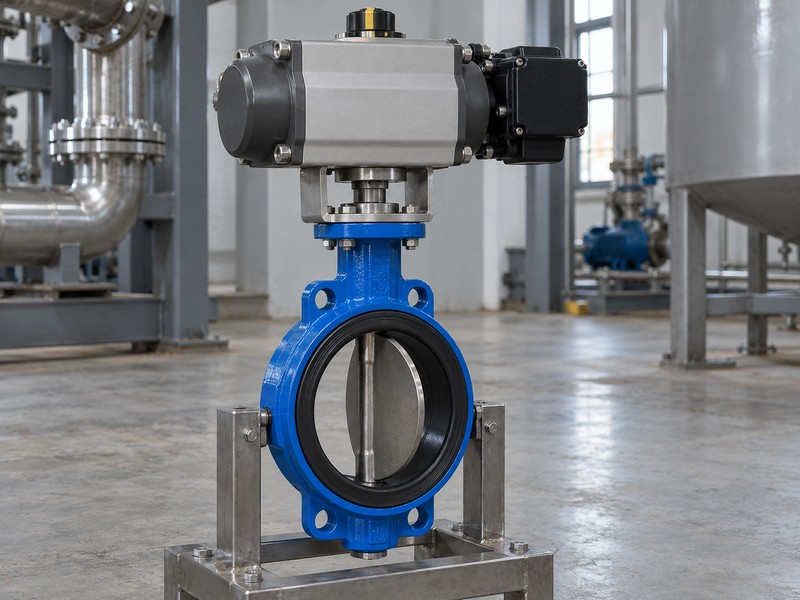
Use a butterfly valve for flow regulation only when the chosen valve and actuator can meet the stated control duty. The available flow characteristic, installed pressure drop and usable disc travel determine the working range. Oversizing can push normal operation into a narrow opening range with poor control. A positioner can improve positioning but cannot remove cavitation, excessive velocity or an unsuitable valve characteristic.
What should the control review compare?
Compare minimum, normal and maximum flow at their corresponding upstream and downstream pressures. Ask for the model's flow-coefficient curve, allowable throttling conditions, torque curve and actuator resolution. ISO's metallic butterfly-valve standard describes a product-standard scope; it does not replace the duty calculation. To review an operating case with RUITO, contact us with the fluid properties, flow cases, interface drawing and required control response.
- Calculate the operating opening at each flow case.
- Check cavitation, noise and minimum downstream pressure.
- Review valve, actuator and positioner as one control assembly.
| Control input | Why you need it | Result to review |
|---|---|---|
| Flow and pressure cases | Shows actual operating demand | Required flow coefficient and opening |
| Hydraulic limits | Checks pressure recovery and velocity effects | Approved throttling envelope |
| Drive characteristics | Determines available movement and resolution | Travel response and repeatability |
10. What do buyers ask about butterfly valve applications?
Q1. Can I use the same butterfly valve for water and oil?
Only if that exact material model is approved for both fluids. Seat compounds and auxiliary seals that suit water may not suit the oil formulation. Review both duties before ordering a shared spare.
Q2. What is the best valve for a high-pressure seawater line?
Choose from a project-specific corrosion and pressure review. A valve suitable for a low-pressure seawater intake does not automatically qualify for a high-pressure treatment stage. Give the supplier actual pressure, temperature, velocity and chlorination data.
Q3. Can I use a butterfly valve for steam?
Only with a design and materials explicitly rated for the steam conditions. Water-service elastomer ratings do not establish steam capability. Check the complete pressure-temperature relationship, leakage requirement, packing and relevant thermal evidence.
Q4. How do I know if a valve can control flow continuously?
Ask for the model's approved throttling envelope and review the installed service cases. Check usable opening range, pressure drop, cavitation, noise and drive resolution. An automatic actuator alone does not establish control suitability.
Q5. Can I select an duty from nominal pressure alone?
No. You also need the medium, combined temperature, closing differential, flow, connection, drive and required approval scope. Put those inputs in the enquiry so the supplier can name a complete model.