
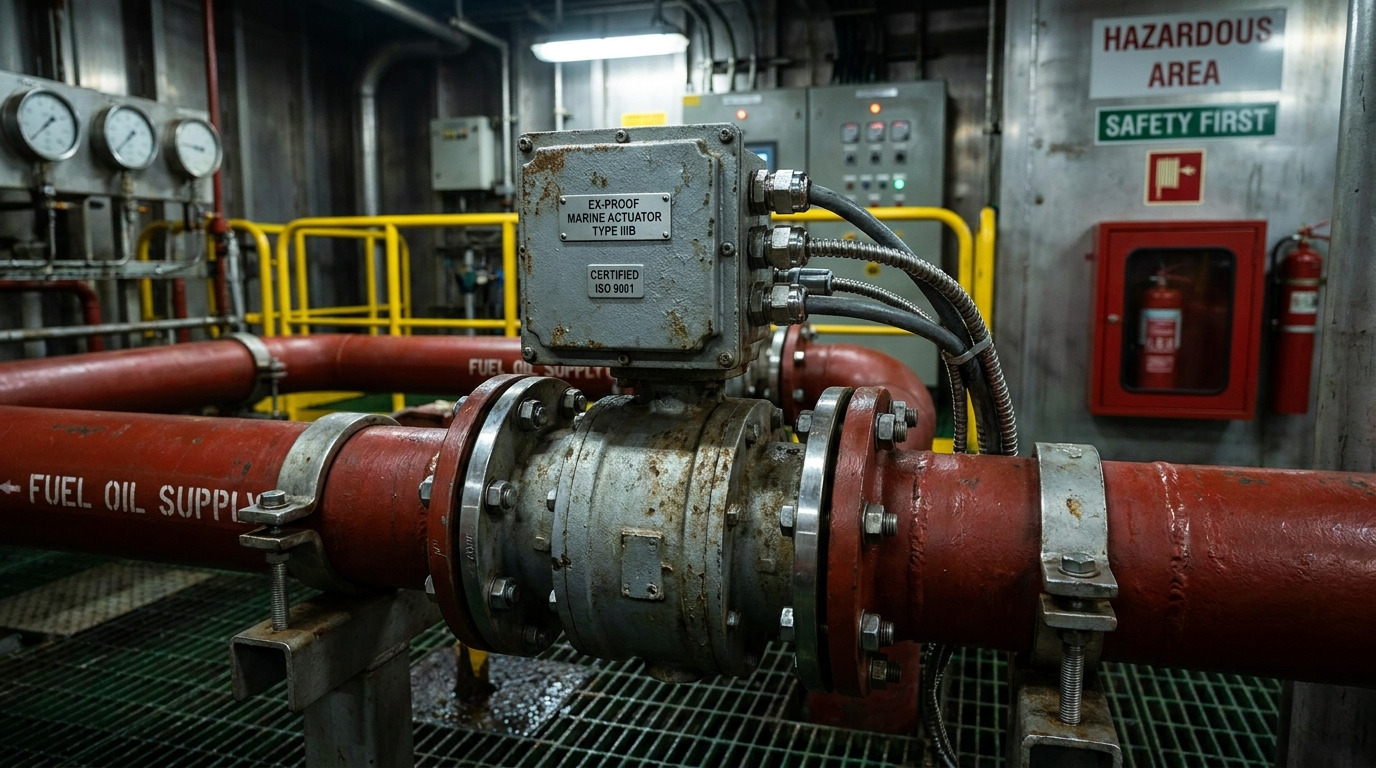
An electric explosion-proof clamp butterfly valve is a critical flow control device designed to safely regulate fluids in hazardous marine and industrial environments by combining a space-saving wafer-style connection with a spark-free, certified electronic actuator. Imagine managing highly volatile fuel systems aboard a cargo vessel or offshore drilling platform. In these highly hazardous environments, a single electrical spark from an uncertified motorized valve actuator can trigger a catastrophic ignition. The consequences are terrifying: devastating explosions that threaten crew lives, massive ecological damage, and millions lost to structural downtime or regulatory penalties. You cannot afford to leave safety to standard hardware that might fail under harsh shipboard conditions. The ultimate safeguard is deploying an explosion-proof marine electric butterfly valve that completely isolates electrical sparks from volatile gases while delivering rapid, space-efficient, and reliable quarter-turn flow control. This elite engineering solution ensures absolute compliance with international maritime laws while giving your team precise fluid management.
What is an explosion-proof marine electric butterfly valve?
This specialized flow control assembly is a robust, quarter-turn industrial valve paired with a certified flameproof electric actuator engineered to handle volatile marine environments safely. By combining a lightweight, space-saving clamp-style body with a spark-containment enclosure, this explosion-proof marine electric butterfly valve provides precise fluid management without risking shipboard ignition.
Core Design Components and Marine Engineering Standards
The physical architecture of this valve is optimized to withstand extreme mechanical stresses and saline environments typical of deep-sea operations. Every aspect, from the high-tensile stem to the disc, is selected to maintain high flow capacity while minimizing structural weight.
Here is what makes this valve unique:
- Flameproof Enclosure: Actuator housings designed to contain internal explosions without propagating flames.
- Resilient Seals: Elastomer or metal-to-metal seats ensuring bubble-tight shutoff.
- Corrosion-Resistant Disc: Typically constructed from duplex stainless steel for seawater durability.
These components work together to deliver reliable performance, isolating electrical contacts to eliminate spark hazards.
| Component / Standard | Technical Specification | Safety Function |
|---|---|---|
| Enclosure Standard | Ex d IIB/IIC T4 | Prevents external ignition |
| Ingress Rating | IP67 / IP68 | Guards against seawater |
| Body Connection | Clamp / Wafer Style | Maximizes space efficiency |
Evaluating these parameters ensures that your fluid systems maintain optimal pressure margins under extreme load conditions.
Key Takeaway: Understanding the core mechanical design of these certified flameproof valves is essential for procurement teams aiming to eliminate ignition risks in cargo spaces.
Why use an explosion-proof marine electric butterfly valve?
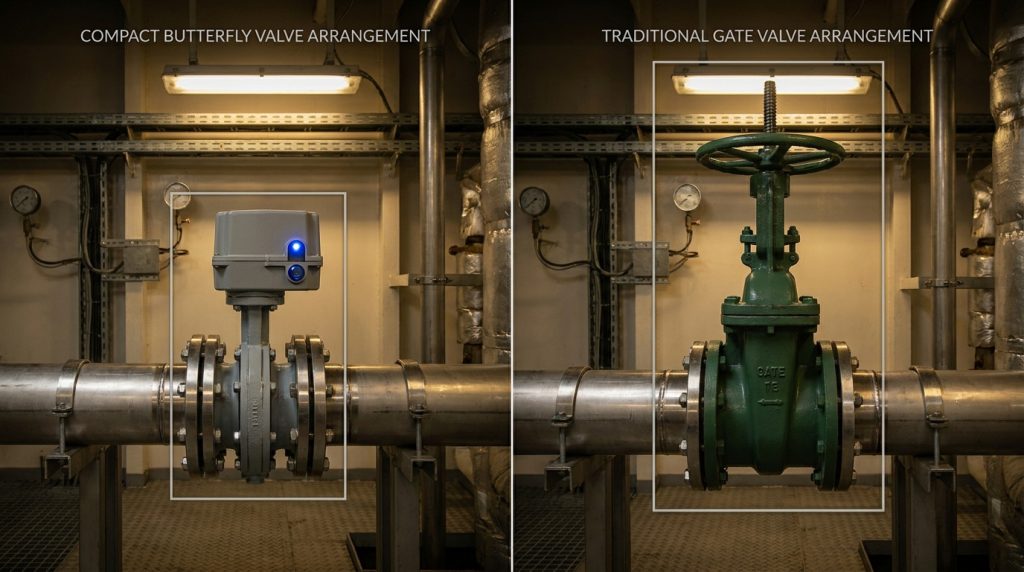
You should utilize an explosion-proof marine electric butterfly valve because it delivers unmatched safety assurance and massive space savings in confined shipboard spaces. It completely eliminates the hazard of localized electrical fires while allowing for rapid, automated emergency shutoffs across your liquid network.
Preventing Ignition and Optimizing Space in Tight Hulls
Standard electric valves can generate small arcs during motor engagement, which can be catastrophic in vapor-heavy environments. This valve isolates electrical activity within a flameproof housing, keeping volatile gases safe from ignition.
Think about the consequences:
- Risk Mitigation: Zero potential for external spark emission.
- Compact Footprint: Clamp design requires minimal face-to-face piping space.
- Weight Reduction: Lighter than bulkier gate or globe valves.
The clamp design is remarkably compact, resolving the spacing issues common in engine rooms. The low profile allows you to install automation where traditional valves cannot fit.
| Design Metric | Butterfly Valve Design | Traditional Gate Valve |
|---|---|---|
| Face-to-Face Space | Minimal | Extremely wide |
| Total Assembly Weight | Lightweight | Very heavy |
| Actuation Mechanism | Quarter-turn | Multi-turn |
Analyzing these weight and space metrics is critical for optimizing the vessel’s deadweight tonnage and structural balance.
Key Takeaway: Choosing a flameproof clamp-style valve gives shipbuilders a double advantage of high-level safety compliance and structural space efficiency.
How does an explosion-proof marine electric butterfly valve work?
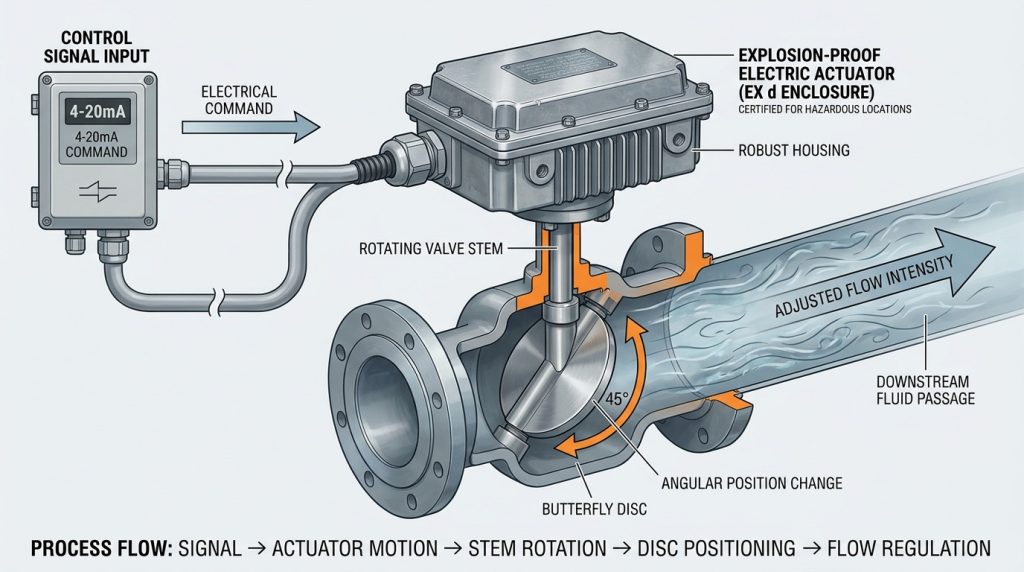
This automated valve operates by translating electric power into quarter-turn mechanical torque to position an internal disc within the fluid stream. Utilizing an explosion-proof marine electric butterfly valve allows for seamless, spark-free remote operation because all switching occurs inside a sealed, flameproof enclosure.
Electric Actuation and Flameproof Safety Mechanisms
When the vessel’s central automation system sends a command signal, the internal motor drives a high-ratio gear train. This mechanical force turns the stem, rotating the disc 90 degrees to either block or permit flow.
Here is the exact mechanical sequence:
- Command Input: Low-voltage control signals trigger the motor.
- Rotary Gear Drive: Gearboxes multiply motor torque for reliable movement.
- Sealing Engagement: Disc presses firmly against the seat for bubble-tight closure.
The flameproof design contains internal electrical faults, making this valve critical for hazardous systems running in the offshore industry.
| Phase of Operation | Actuator Status | Safety Mechanism |
|---|---|---|
| Open/Close Cycle | Motor active | Spark contained within Ex d enclosure |
| Continuous Throttling | Modulating | Thermal overload protection activated |
| Emergency State | Power loss | Fail-safe spring return engages |
Monitoring these operational states ensures that your automated flow loops respond reliably during sudden pressure spikes.
Key Takeaway: The integrated flameproof enclosure works dynamically to contain electrical energy, allowing for safe quarter-turn mechanical control in explosive zones.
Who needs an explosion-proof marine electric butterfly valve?
Marine shipbuilders, offshore platform operators, and fuel terminal managers need an explosion-proof marine electric butterfly valve to protect lives and maintain strict regulatory compliance. These professionals manage highly flammable fluids daily, requiring absolute certainty that their automated flow equipment remains spark-free.
Commercial Shipyards and Petrochemical Fleet Operators
Operating modern cargo vessels or tankers requires compliance with incredibly strict safety guidelines. Installing these heavy-duty valves protects your capital investments and prevents catastrophic regulatory failures that could ground your fleet.
Let’s look at the primary stakeholders:
- Shipyard Engineers: Need lightweight, easy-to-install valves for modular hulls.
- Safety Managers: Demand certified Ex d ratings to lower vessel risk profiles.
- Fleet Owners: Require durable equipment that minimizes dry-dock maintenance.
These valves provide the robust mechanical and electrical performance needed to keep operations running smoothly under harsh, high-vibration oceanic conditions.
| Maritime Stakeholder | Key Operational Need | Essential Valve Feature |
|---|---|---|
| LNG Carrier Builders | Extreme temperature control | Cryogenic-grade metal-to-metal seating |
| Tanker Crew Members | Rapid line isolation | High-torque fast-acting electric actuator |
| Port Facility Managers | Marine environmental safety | Heavy-duty epoxy-coated outdoor actuator |
Matching stakeholder priorities with correct valve specifications ensures maximum safety and prolonged equipment lifespans across your operations.
Key Takeaway: Any professional responsible for managing hazardous marine fluids must invest in type-approved, flameproof valves to secure their vessels against ignition risks.
Where is an explosion-proof marine electric butterfly valve used?
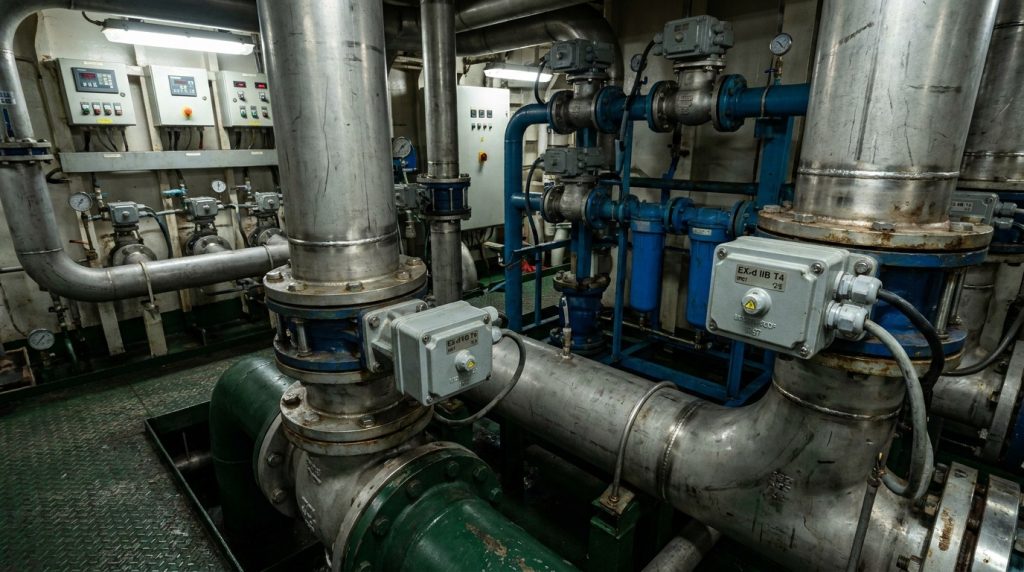
This high-performance valve is deployed in volatile, damp shipboard zones such as bilge spaces, fuel cargo manifolds, and ballast water systems. Utilizing an explosion-proof marine electric butterfly valve in these areas ensures that raw seawater and flammable vapors are managed without risk of ignition.
Heavy Cargo Transfer Lines and Corrosive Bilge Systems
Bilge and ballast systems present a double challenge because they contain corrosive seawater alongside trace oils and explosive fuel fumes. The robust construction of these valves ensures continuous service despite constant exposure to salt spray.
But that’s only the beginning:
- Fuel Storage Manifolds: Safeguards fuel oil transfer systems against electrical ignition.
- Ballast Water Piping: Resists high-salinity corrosion while automating ship stabilization.
- Cargo Pump Rooms: Protects enclosed, vapor-heavy compartments from spark hazards.
These valves manage high-flow lines with absolute precision, making them highly valued in both maritime structures and the global marine industry.
| Vessel Location | Primary Chemical Hazard | Optimal Body Material |
|---|---|---|
| Engine Room Piping | High-temperature fuel vapors | Carbon steel with metal seat |
| Ballast Tank Lines | High-salinity raw seawater | Duplex stainless steel or NAB |
| Fuel Transfer Stations | Flammable vapor concentration | Stainless steel with PTFE seals |
Evaluating these localized chemical profiles helps marine engineers select the correct body alloys to prevent galvanic corrosion.
Key Takeaway: These valves are crucial in highly corrosive and volatile zones where flammable vapours and aggressive fluids must be safely isolated.
Which explosion-proof marine electric butterfly valve is best?
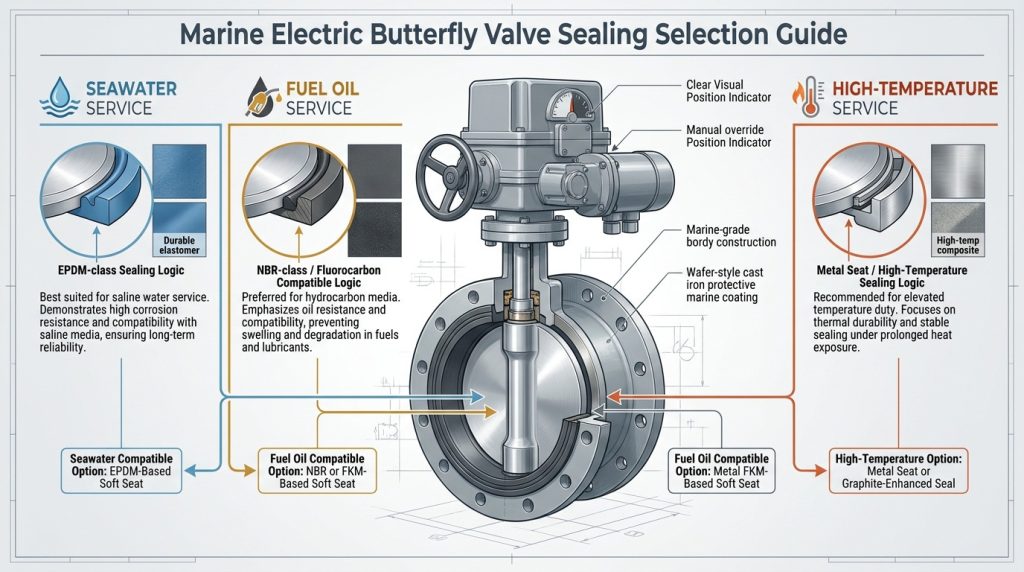
The best explosion-proof marine electric butterfly valve is one that matches your specific system pressures, fluid chemistry, and local hazard classifications perfectly. You must select a valve certified by major classification societies and constructed with materials that resist seawater degradation.
Choosing Between Elastomeric Seals and Triple-Offset Seats
Selecting the right sealing materials is crucial because aggressive chemicals or high temperatures can quickly ruin inferior gaskets. Elastomer seats offer cost-effective, tight sealing for water systems, while metal-to-metal configurations handle heavy hydrocarbons.
The real question is:
- EPDM Seats: Perfect for seawater and ballast lines but degraded by hydrocarbons.
- PTFE/Teflon: Highly resistant to chemicals, solvents, and fuel oils.
- Triple-Offset Metal: Fire-safe construction built for high pressure and temperature.
Additionally, verify that the actuator provides a torque margin of at least twenty to thirty percent above the nominal requirements to ensure tight closure.
| Fluid Medium | Working Temperature Range | Recommended Sealing Option |
|---|---|---|
| Raw Seawater / Ballast | -10°C to 80°C | Resilient EPDM (Zero Leakage) |
| Diesel / Fuel Oils | -20°C to 120°C | Chemical-Resistant PTFE Seat |
| Steam / Hot Exhaust | Up to 450°C | Triple-Offset Metal Seating |
Reviewing these media profiles prevents premature elastomer failures and guarantees long-term system integrity.
Key Takeaway: The ideal valve setup features a chemical-compatible seat and an actuator with ample torque headroom to handle emergency operations.
How to fix an explosion-proof marine electric butterfly valve?
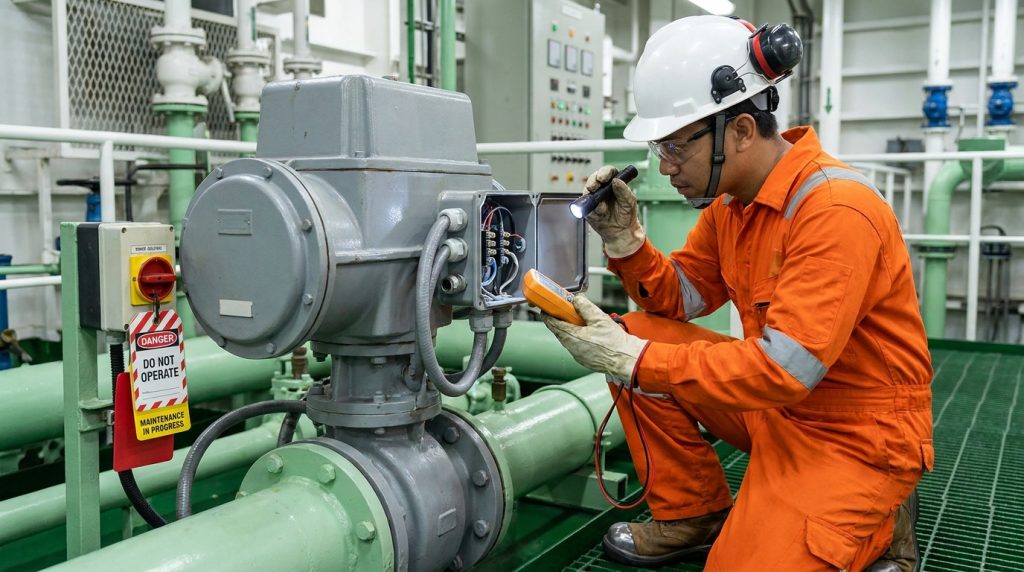
To fix an explosion-proof marine electric butterfly valve, you must systematically diagnose electrical signal faults and check for mechanical wear on the seat or disc. Working on these specialized systems requires strict safety protocols, ensuring power is isolated before opening any flameproof housing.
Diagnosing Actuator Power Faults and Seat Leakage
If your actuator fails to respond, the issue usually lies in a dropped control loop or a misaligned internal limit switch. Meticulously testing the incoming voltage and checking command signals will quickly locate the electrical bottleneck.
If the valve fails to move, check this first:
- Terminal Voltage: Verify the power matches the actuator’s nameplate rating.
- Control Loop Signals: Measure the 4-20mA signal to ensure proper communication.
- Limit Switch Settings: Re-align internal cams if they cut off power prematurely.
When dealing with fluid bypass, the culprit is typically particulate debris, requiring troubleshooting similar to procedures used for an industrial ball-valve.
| Failure Symptom | Probable Cause | Corrective Action |
|---|---|---|
| Motor Hums/No Motion | Mechanical blockage or worn gears | Isolate line, inspect disc rotation |
| Slow Actuator Response | Low voltage or dry bearings | Verify power line, lubricate stem |
| Moisture in Enclosure | Worn O-rings or loose cable glands | Replace seals, dry electronic boards |
Performing these electrical and mechanical tests systematically prevents minor control faults from developing into complete system failures.
Key Takeaway: Most field issues are caused by weak electrical control signals or debris scoring the soft seat, both of which can be resolved with routine maintenance.
How to fit an explosion-proof marine electric butterfly valve?
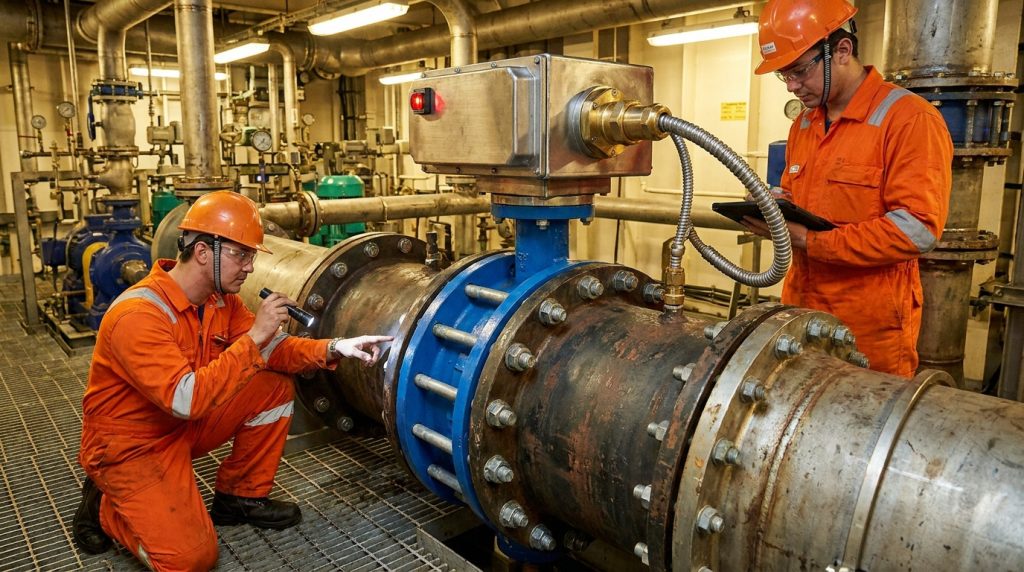
You must fit an explosion-proof marine electric butterfly valve by carefully aligning the adjacent piping flanges and centering the disc to prevent edge damage. Correct alignment is essential because off-center installations can pinch the elastomer seat, creating immediate leakage and motor strain.
Flange Alignment and Flameproof Cable Gland Termination
During installation, always leave the valve disc slightly open to protect the sealing edges from getting crushed against the pipe. Using a progressive, cross-pattern bolt tightening method ensures even seal compression and prevents body warping.
Avoid this common installation blunder:
- Partial Disc Opening: Prevents edge pinching during flange compression.
- Star-Pattern Torquing: Guarantees uniform gasket loading across the flange.
- Cable Gland Sealing: Use certified Ex d barrier glands to seal all wiring ports.
Once the physical valve is bolted, terminating the electrical connections requires certified marine cable glands to prevent flammable gas seepage into the actuator.
| Installation Step | Critical Action | Quality Checkpoint |
|---|---|---|
| Pipe Alignment | Align flanges parallel to valve | Check gap clearance before bolting |
| Bolt Torquing | Tighten in star pattern | Verify uniform torque with wrench |
| Actuator Wiring | Seal conduits with Ex d glands | Inspect gland pour for zero gas gaps |
Following this step-by-step installation method ensures that your physical piping joints remain completely leak-free under high-vibration conditions.
Key Takeaway: Proper mechanical alignment combined with meticulously sealed electrical cable entries is vital to maintaining the valve’s flameproof rating.
Who builds an explosion-proof marine electric butterfly valve?
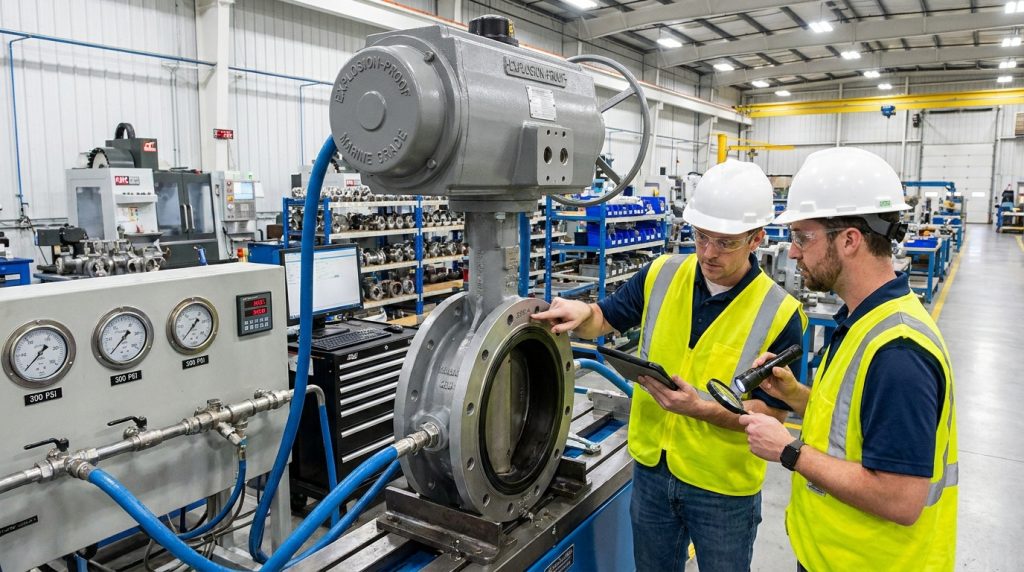
A reputable, type-approved industrial valve manufacturer builds an explosion-proof marine electric butterfly valve to meet strict global maritime standards. When sourcing these safety-critical systems, you should partner with an established brand like Ruitoflow that maintains rigorous testing certifications and material traceability.
Marine Classification Type Approvals and Hydrostatic Tests
Premier manufacturers do not simply assemble parts; they put every casting batch through strict spectroscopic analysis and hydrostatic pressure tests. These evaluations guarantee that the valve body will not crack when subjected to extreme high-pressure fluid surges.
Here is what separates premium builders from the rest:
- Type Approvals: Formally certified designs by agencies like DNV, ABS, or CCS.
- Traceable Casting: Complete chemical and structural history for every metal heat.
- Pressure Testing: Hydrostatic shell and seat tests exceeding operational ratings.
These certifications prove that the valve can handle the harsh realities of sea service, protecting your vessel from sudden structural failures.
| Classification Society | Region of Authority | Maritime Application Focus |
|---|---|---|
| DNV | European & Global | High-performance offshore and cargo vessels |
| ABS | North America | Gulf platforms and international shipping lanes |
| CCS | Asia-Pacific | Large-scale container ships and regional trade |
Verifying these maritime classification credentials guarantees that your equipment will pass strict port state safety inspections.
Key Takeaway: Leading manufacturers ensure absolute vessel safety by obtaining formal type approvals and conducting rigorous mechanical pressure testing.
When to test an explosion-proof marine electric butterfly valve?
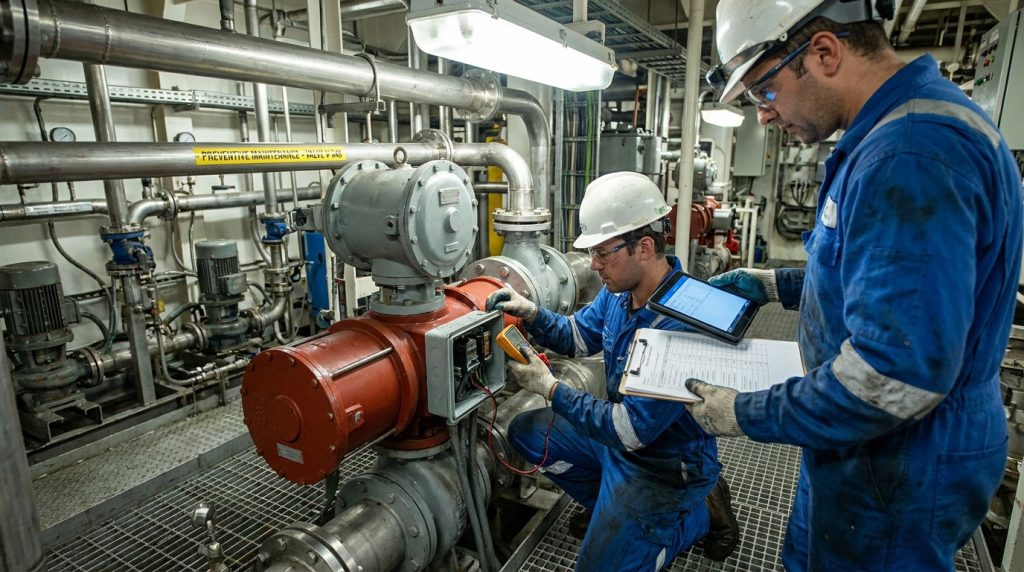
You should test an explosion-proof marine electric butterfly valve during monthly maintenance cycles, prior to major voyages, and during scheduled safety audits. Regular proof-testing ensures that the electric motor, limit switches, and flameproof seals remain fully operational and ready to react.
Scheduled Stroke Cycles and Pre-Voyage Inspection Routines
Letting automated valves sit idle allows marine biological growth and salt crystals to accumulate, potentially locking the disc in place. Cycling the valve fully once a month sweeps away these obstructions and keeps the internal gear trains lubricated.
Don’t wait for an emergency to find out:
- Monthly Stroke Tests: Confirms the motor can move the disc through 90 degrees.
- Semi-Annual Inspections: Check the wiring compartment for moisture and corrosion.
- Pre-Voyage Verification: Manually cycle the valve via handwheel to check mechanical freedom.
Regular testing is required under safety integrity level regulations, verifying that emergency shutdown sequences trigger flawlessly across critical fluid handling lines.
| Maintenance Type | Frequency | Targeted Safety Metric |
|---|---|---|
| Full Cycle Stroke | Every 30 Days | Torque resistance and travel speed |
| Enclosure Inspection | Every 6 Months | Condensation presence and seal integrity |
| Seat Leakage Test | Every 12 Months | Zero-leakage performance under pressure |
Implementing this comprehensive testing regime allows your crew to identify and fix minor mechanical wear before it causes an emergency.
Key Takeaway: Meticulous, regular stroke testing and enclosure inspections are essential to keeping your flameproof automated systems ready for crisis management.
Conclusion & Call to Action
Deploying the wrong valve in hazardous maritime environments is an unacceptable risk that can lead to catastrophic accidents and massive regulatory fines. This article solved the critical challenge of selecting, installing, troubleshooting, and maintaining high-performance flameproof flow control equipment by breaking down complex engineering requirements into actionable insights. At Ruitoflow, we offer world-class, type-approved flow control solutions engineered specifically to withstand the harshest ocean environments and demanding industrial processes. We provide custom-designed valves with advanced, certified flameproof actuators that guarantee absolute safety and zero spark emission. Partner with us to secure your vessel’s liquid distribution networks and achieve complete operational compliance on a global scale. To explore our full product inventory or secure a tailored quote, please contact us today to speak directly with an expert engineer.
Reader-Oriented Frequently Asked Questions (FAQ)
Can I manually operate the valve if the vessel loses electrical power?
Yes, you can. All professional marine butterfly valves are designed with an integrated, declutchable manual override handwheel, allowing operators to fully open or close the valve manually during complete electrical blackouts.
What’s the best way to protect the electric actuator from corrosive salt spray?
Absolutely, that is critical. You must ensure that the actuator housing is rated to IP68 standards and finished with a high-durability marine epoxy coating, which protects the sensitive electronics from moisture ingress and salt corrosion.
How do I know if my valve is certified for Zone 1 hazardous areas on a ship?
Yes, you can check easily. You must look closely at the actuator’s permanently stamped stainless steel nameplate to verify the presence of recognized international certification marks, such as ATEX or IECEx, indicating Ex d IIC T4 compliance.
Can I use a soft-seated valve for high-temperature fuel lines?
No, that is not recommended. Soft-seated elastomers can melt or warp under high-heat or fire conditions, meaning you must select fire-safe metal-to-metal triple-offset butterfly valves for volatile marine fuel applications.
How do I know if my pipeline flanges match the wafer-style clamp design?
Yes, you can verify this quickly. You must measure the bolt circle diameter and nominal pipe size to ensure they align perfectly with international flange dimensions, such as ANSI or DIN, before clamping the valve in place.