
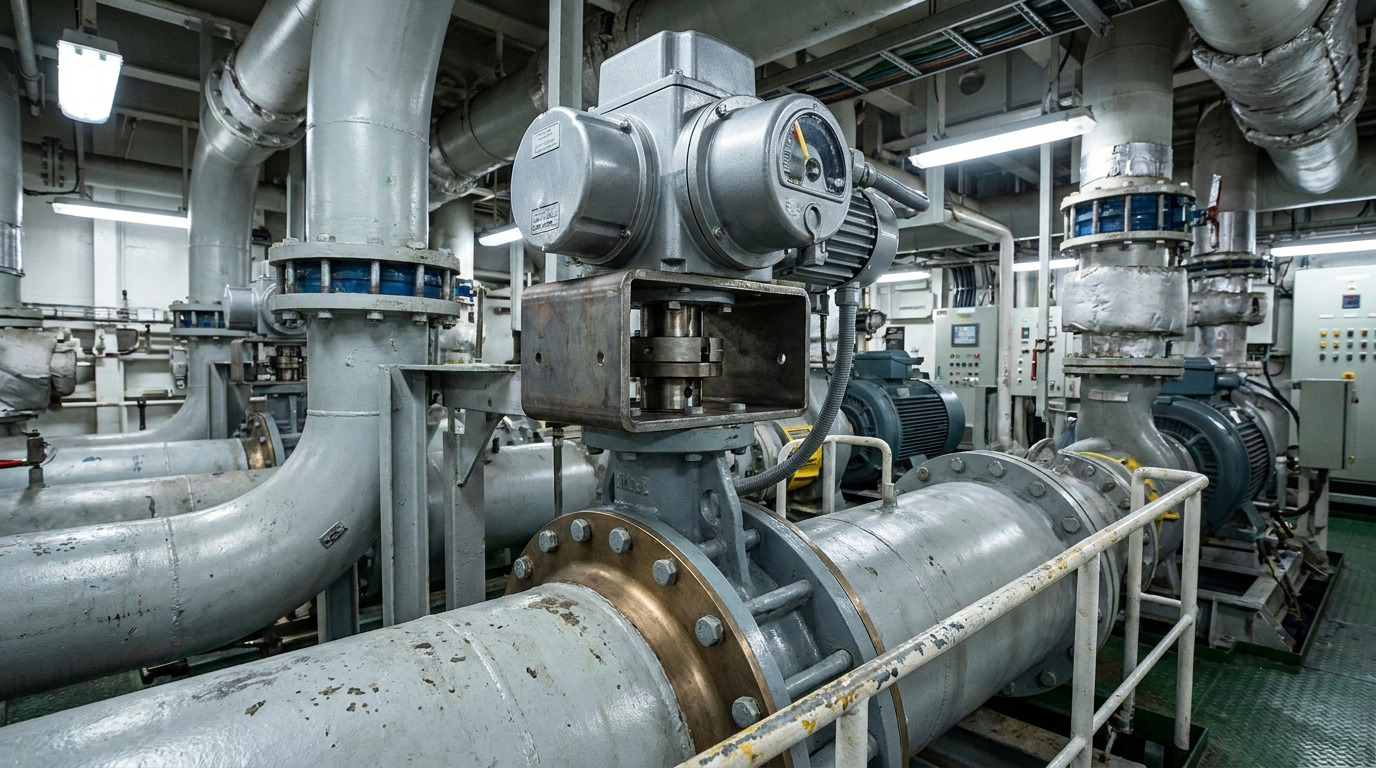
Electric actuators are utilized in marine and offshore engineering to automate critical flow paths, coordinate remote ballast sequences, and control high-pressure subsea machinery in hostile oceanic environments. When you are navigating rough seas, a single manual valve failure can lead to catastrophic cargo damage or engine room flooding. Managing massive fluid lines by hand in wet, cramped ship compartments during a storm is incredibly dangerous and highly prone to human error. Fortunately, integrating automated flow technology solves this vulnerability by providing instant, push-button remote control from your ship’s centralized bridge. By using a reliable marine electric butterfly valve, you gain immediate access to automated safety safeguards, precise throttling control, and long-term durability.
How do electric actuators perform in marine systems?
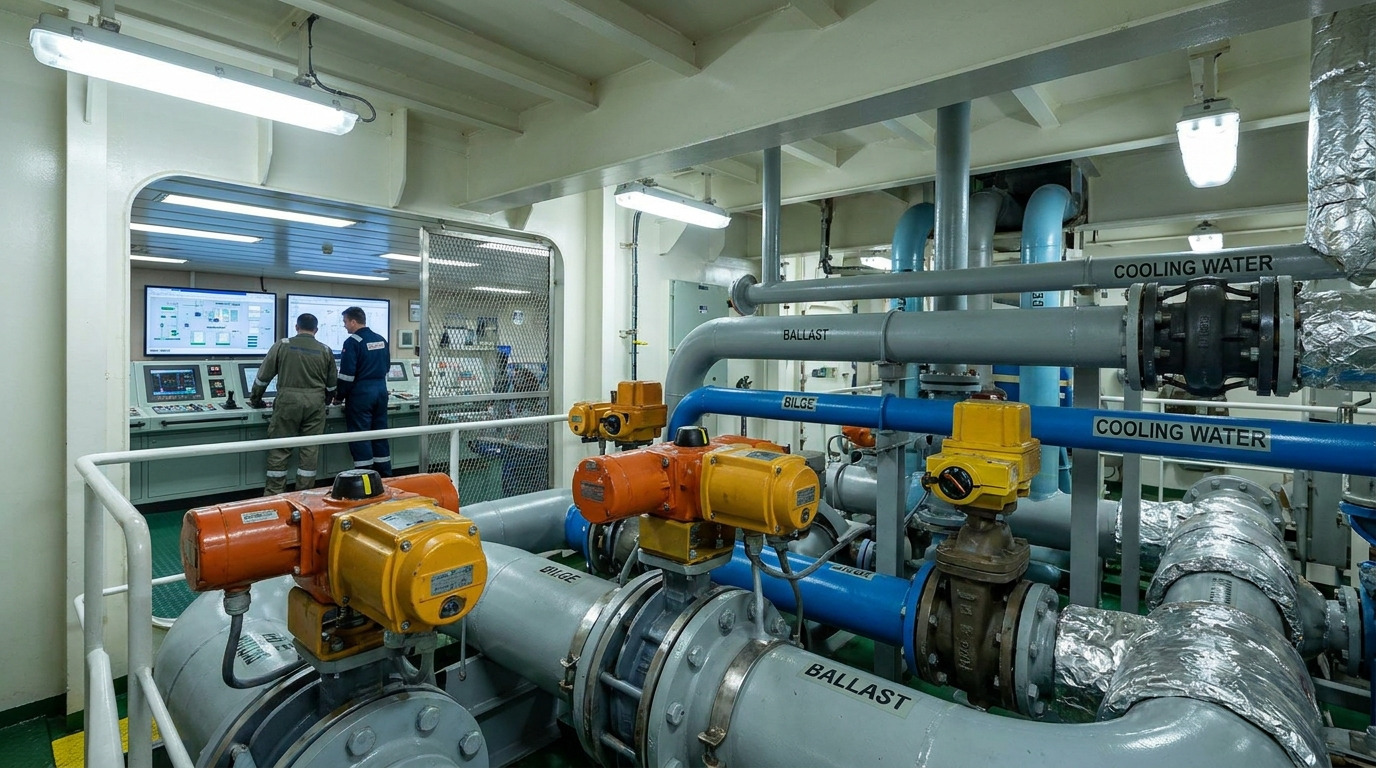
Electric actuators perform exceptionally well in marine systems by providing fast, highly precise quarter-turn and multi-turn rotation that stands up to heavy structural vibrations. If you are operating a modern commercial vessel, these motorized units ensure that your critical fluid lines respond instantly to emergency commands. You can easily integrate these automated devices with a ship’s central control room to coordinate complex flow patterns. For example, utilizing a marine electric butterfly valve allows your crew to manage bilge, ballast, and cooling processes without manual labor.
What makes maritime electric automation reliable?
Maritime electric automation relies on heavy-duty planetary gearboxes and robust ingress-protected casings to maintain peak operational reliability under constant salt exposure. This advanced design ensures that your valves can cycle thousands of times during long transoceanic voyages without mechanical wear.
Think about it:
- High-efficiency brushless motors minimize startup power draw on your electrical grid.
- Built-in travel limit switches protect internal gears from mechanical over-travel damage.
- Advanced analog feedback loops send real-time positioning data to your bridge.
| Component | Main Function | Marine Benefit |
|---|---|---|
| Brushless Motor | Drives stem rotation | Low maintenance |
| Limit Switch | Cuts motor power | Protects gear train |
Analytical Guidance: System designers should verify that the actuator’s internal heater draws continuous current to prevent deck-side condensation.
You will achieve consistent fleet performance by adopting smart electric positioning systems. This proactive technology upgrade protects your piping lines and guarantees that your operations run smoothly in any weather.
Where are marine electric actuators installed?
Marine electric actuators are installed across a wide range of critical shipboard systems, including ballast tanks, auxiliary cooling lines, bilge wells, and offshore drilling platforms. These automated installations allow you to coordinate high-volume liquid movements from a single centralized workstation. By choosing a high-quality marine electric butterfly valve, your engineering team can automate municipal treatment processes and prevent environmental contamination. These versatile units fit perfectly in dense, space-restricted machinery rooms where bulky legacy setups cannot operate.
How do bilge and ballast lines use automation?
Bilge and ballast operations utilize motorized actuators to balance the ship’s hydrodynamic stability and discharge waste safely. These lines require rapid valve isolation to prevent water accumulation or sudden ship listing during heavy cargo loading.
Here is the deal:
- Ballast manifolds shift seawater between holding tanks to counter heavy waves.
- Bilge suction valves open instantly when high-level alarms are triggered.
- Zero-leakage designs prevent hazardous oily bilge water from leaking into clean seas.
| System | Valve Medium | Critical Requirement |
|---|---|---|
| Ballast Control | Corrosive Seawater | High volume, anti-fouling |
| Bilge Dewatering | Oily Sludge / Water | Chemical and oil resistance |
Analytical Guidance: Maintenance teams must periodically check the bilge valve elastomer seats for swelling caused by fuel exposure.
You can easily maintain ship stability by automating your ballast manifolds. This smart control setup eliminates human error and ensures your ship complies with international maritime discharge standards.
Why transition from hydraulic to electric power?
Transitioning to electric power eliminates the high maintenance costs, continuous fluid leaks, and heavy pressure lines associated with legacy hydraulic networks. If you are looking to simplify your shipboard piping, electric units provide clean on-demand operation without the need for massive hydraulic power packs. A modern marine electric butterfly valve draws energy only when actively cycling, which drastically reduces your standby fuel consumption. This clean operational profile also removes the risk of toxic oil spills on your clean passenger or cargo decks.
What are the maintenance and safety advantages?
Electric actuators eliminate complex high-pressure hoses that are prone to bursting, dry-rotting, and spraying flammable oil in hot engine rooms. This major safety upgrade drastically lowers your onboard fire risks and simplifies annual safety audits.
But wait, there is more:
- No hydraulic fluid leaks mean zero risk of deck contamination or slipping.
- Simplified wiring harnesses replace heavy, hard-to-route copper hydraulic lines.
- Instant digital diagnostics help you identify minor electrical issues before failures occur.
| Power Type | Key Disadvantage | Maintenance Profile |
|---|---|---|
| Hydraulic | Continuous fluid leak risk | High (filters, seals, hoses) |
| Electric | Requires stable cable runs | Low (periodic grease checks) |
Analytical Guidance: Electrical engineers must verify that the shipboard power supply is clean and free of voltage spikes before booting new actuators.
You can significantly lower your operational overhead by phasing out high-pressure hydraulics. Embracing electric automation reduces your fire hazards and keeps your machinery spaces clean and dry.
How do submersible actuators survive deep water?
Submersible actuators survive deep water by utilizing specialized double-sealed enclosures, pressurized oil-filled chambers, and corrosion-resistant alloys that withstand intense hydrostatic forces. When you deploy equipment in the ocean depths, these rugged units assist in deep-sea research and offshore resource extraction. Integrating a robust marine electric butterfly valve in subsea lines ensures that you maintain absolute fluid control under thousands of pounds of pressure. These heavy-duty designs prevent seawater from bypassing the primary shaft seals and short-circuiting the internal electronics.
Which engineering seals prevent water pressure?
High-depth submersible units rely on multi-stage rotary shaft seals and pressurized internal chambers to completely block seawater entry. This advanced barrier setup balances the external hydrostatic pressure, allowing your actuator to cycle smoothly.
Think about it:
- Viton O-rings resist deterioration under intense underwater pressures.
- Oil-filled housings equalize pressure differences between the casing and the sea.
- Inconel or titanium shafts prevent pitting corrosion in stagnant deep waters.
| Protection | Mechanism | Depth Rating |
|---|---|---|
| Double O-Rings | Dual elastomeric barriers | IP67 standard |
| Oil Filling | Pressure equalization | IP68 deep subsea |
Analytical Guidance: Offshore engineers should verify that the internal oil density matches the operating depth requirements to avoid casing collapse.
You can protect your deep-sea operations from pressure failures by choosing specialized oil-filled actuators. This advanced design ensures continuous fluid flow control in the most demanding marine depths.
What metallurgical specs resist marine corrosion?
Marine corrosion resistance requires premium metallurgy, such as nickel-aluminum bronze, super duplex stainless steel, and thick fusion-bonded epoxy coatings. If you are running raw seawater lines, standard steel will corrode within weeks due to galvanic action and high salinity. Incorporating a robust marine electric butterfly valve constructed from these corrosion-resistant alloys prevents structural thinning and seal leakage. These specialized metals form a protective oxide layer that resists the constant erosive forces of fast-flowing seawater.
Why are specialized alloys vital for longevity?
High-salinity waters contain active chlorides that quickly penetrate standard metal coatings, initiating rapid pitting and crevice corrosion. Choosing alloys with high mechanical strength prevents biofouling attachment and erosive wear along your wetted flow channels.
But wait, there is more:
- Nickel-aluminum bronze offers natural resistance to marine organism growth.
- Super duplex stainless steel prevents stress corrosion cracking under high pressures.
- Fusion-bonded epoxy coatings protect external actuator casings from salt spray.
| Material | Corrosion Resistance | Best Application |
|---|---|---|
| NAB (Bronze) | Exceptional (biofouling resistant) | Raw seawater intake |
| Duplex Steel | High tensile (pitting resistant) | High-pressure ballast |
Analytical Guidance: Metallurgists should isolate dissimilar piping metals using dielectric flange gaskets to stop galvanic wear.
You will secure your shipboard piping against corrosion by specifying nickel-bronze or duplex stainless steel. This material investment prevents premature leakage and drastically extends the service life of your valves.
How does torque demand change at open sea?
Torque demand changes at open sea due to shifting hydrodynamic fluid forces, marine scaling, and the hardening of elastomeric seats over time. When you are operating a marine electric butterfly valve, your actuator motor must generate sufficient force to overcome both static seal friction and rapid fluid currents. If your motorized actuator is undersized, the drive stem may stall halfway through its cycle, leaving a critical line open. Sizing your electrical drive with a generous safety margin ensures that your valves shut tight under peak flow conditions.
What hydrodynamic forces impact the drive stem?
As rapid sea currents rush past a partially open valve disc, they exert asymmetric hydrodynamic pressures that try to force the valve closed. This fluid leverage puts immense bending stress on your drive stem, requiring high torsional strength to control.
Here is the deal:
- Dynamic flow torque peaks when the valve disc reaches a 45-degree angle.
- High-velocity seawater increases the physical effort needed to throttle the flow.
- Elastic rubber seats require extra breakaway torque after staying closed for weeks.
| Torque Factor | Primary Cause | Mitigation |
|---|---|---|
| Breakaway Torque | Static seat sticking | 30% safety margin |
| Hydrodynamic Torque | High fluid velocity | Robust gear train |
Analytical Guidance: Fluid engineers must calculate hydrodynamic torque at maximum pump runout velocity rather than nominal flows.
You can guarantee complete valve closure during stormy seas by sizing your actuator with a 30% torque safety buffer. This extra power margin prevents motor overheating and avoids dangerous system bypasses.
What fail-safe options protect marine vessels?
Fail-safe options protect marine vessels by automatically driving the valve to a pre-determined safe position during a total loss of shipboard electrical power. If your ship suffers a sudden blackout, these mechanical backups prevent uncontrolled flooding or pressure spikes in critical compartments. Utilizing a high-performance marine electric butterfly valve with built-in spring returns ensures that your hull-penetrating sea chests close instantly. This automated safety layout protects your vessel, cargo, and crew from emergency water intrusion during catastrophic outages.
How do mechanical spring returns prevent flood?
Mechanical spring-return actuators store kinetic energy inside a heavy-duty internal spring assembly during normal powered operations. If your electrical line goes dark, this compressed spring instantly releases to mechanically close or open your valve.
Think about it:
- No electricity is required to execute the emergency mechanical fail-safe stroke.
- Supercapacitor backup banks offer an alternative electronic fail-safe option for modulation.
- Automatic shutdown prevents oily bilge discharge or seawater flooding during blackouts.
| Fail-Safe Type | Energy Source | Best Use Case |
|---|---|---|
| Spring Return | Compressed mechanical spring | Emergency isolation |
| Supercapacitor | Stored electrical charge | Smart modulating loops |
Analytical Guidance: Safety officers should mandate monthly spring-return stroke tests during routine shipboard inspections.
You will protect your ship from catastrophic flooding by installing mechanical fail-safe systems on all hull-penetrating lines. This robust emergency design secures your vessel even during complete electrical blackouts.
How do you calibrate actuators on ship decks?
Calibrating actuators on ship decks requires setting precise electronic travel limits, verifying manual overrides, and sealing all cable entries against salt-spray intrusion. If you are executing a dry-dock commissioning sequence, you must ensure that the electronic shutoff aligns perfectly with the physical seat. Installing a certified marine electric butterfly valve ensures that your calibration parameters remain stable under intense deck-washing and environmental shifts. Taking these precise setup steps prevents mechanical jamming and ensures your automated system responds accurately.
What steps ensure proper travel limit setup?
Calibrating your travel limits prevents the electric motor from driving the valve disc past its elastic rubber seat, which would crush the seal. You must manually cycle the handwheel to verify the mechanical boundaries before applying electric power.
Here is the deal:
- Verify the disc’s physical open and closed positions before powering the unit.
- Adjust the internal limit cams until they click at the exact sealing point.
- Lock down the locking screws to prevent limit drift caused by continuous vibrations.
| Calibration Step | Action | Quality Target |
|---|---|---|
| Manual Sweep | Cycle with handwheel | Check for mechanical friction |
| Cam Alignment | Adjust limit switches | Stop motor at exact seal |
Analytical Guidance: Commissioning teams should always verify that the manual override declutches smoothly before powering the motor.
You can prevent early gear damage by double-checking your limit switch calibrations during routine commissioning. This simple maintenance step guarantees consistent valve seating and protects your electrical motors.
Why do electric systems reduce fuel use?
Electric systems reduce fuel use by drawing power only during active rotation, eliminating the massive energy overhead required to run legacy pneumatic or hydraulic compressors. If you are trying to minimize your vessel’s carbon footprint, motorized valves offer on-demand operation with negligible standby energy draw. A premium marine electric butterfly valve allows you to optimize your auxiliary electrical load and reduce generator wear. This energy-efficient design helps commercial shipping fleets comply with modern international environmental regulations.
Can smart modulation optimize shipboard grid?
Modulating electric actuators allow your ship’s control systems to continuously adjust seawater intake, matching the actual cooling demands of your engines. This active regulation prevents energy waste from constant bypass recirculation.
But wait, there is more:
- High-efficiency gearboxes allow smaller, low-wattage motors to turn heavy valves.
- Variable frequency drives eliminate high current spikes when starting the actuator.
- Low-friction seat liners reduce the mechanical torque and electrical energy required.
| Control Method | Power Consumption | Efficiency Impact |
|---|---|---|
| Constant Flow | High (continuous pump run) | Wastes fuel in cool climates |
| Smart Modulation | Low (adjusts to actual heat) | Optimizes auxiliary fuel burn |
Analytical Guidance: Fleet managers should compare complete lifecycle energy costs of electric setups against legacy pneumatic overheads.
You can easily lower your daily fuel consumption by adopting smart modulating electric valves for engine cooling. This strategic upgrade reduces your operating costs while supporting global green shipping goals.
Which certifications confirm offshore readiness?
Offshore readiness is confirmed by type-approval certifications from leading marine classification societies, including DNV, ABS, and Lloyd’s Register. When you purchase a marine electric butterfly valve, verifying these safety stamps is essential to pass annual safety audits and protect your maritime insurance coverage. These independent organizations conduct rigorous pressure, temperature, and high-amplitude vibration testing to verify seaworthiness in extreme weather. Installing uncertified hardware on your vessel can lead to expensive port detentions and sudden component failures.
What maritime class societies approve designs?
Global classification societies establish strict quality, safety, and metallurgical standards for all pressure-retaining components used at sea. Choosing certified hardware ensures that your valves can survive severe ocean vibrations and salt-spray atmospheres.
Think about it:
- DNV certifies that the electric actuator meets strict environmental and safety rules.
- ABS approval validates the structural integrity of your offshore machinery.
- Lloyd’s Register verifies quality compliance for deep-sea merchant vessels.
| Class Society | Certification Focus | Target Vessels |
|---|---|---|
| DNV | Environmental & safety standards | Global commercial shipping |
| ABS | Structural & mechanical design | Offshore rigs & US vessels |
Analytical Guidance: Procurement managers must verify that the manufacturer’s type approval certificates are current and cover the exact valve sizes.
You will guarantee regulatory compliance and operational safety by choosing type-approved marine valves. This procurement standard protects your capital investments and ensures smooth passage through international waters.
Frequently Asked Questions
Can I manually override a marine electric butterfly valve during an electrical blackout?
Yes, manual override is standard on all marine-certified units. All high-quality actuators are equipped with a physical handwheel or declutchable override system that allows your crew to manually position the valve during electrical emergencies. This local manual control bypasses the electric motor and gear train, ensuring you always maintain physical flow control of your shipboard lines even when the main generators go dark.
What’s the best seat material for raw seawater cooling lines?
EPDM rubber is highly recommended for standard seawater systems. This resilient elastomer offers excellent resistance to continuous saltwater exposure, biofouling, and mild mineral scale, making it the most cost-effective and durable choice for raw seawater intake and ballast lines. However, if your fluid paths contain bilge sludge or oily wastewater residues, you must use Viton (FKM) to prevent seat swelling and chemical degradation.
How do I know if my electric actuator has the correct IP rating for wet weather decks?
Look for a certified IP67 or IP68 ingress protection rating stamped on the nameplate. For exposed weather decks subject to heavy ocean spray, high-pressure deck washing, and temporary flooding, an IP67 rating is the absolute minimum safety requirement. If you are placing the automated valve in a submersed sea chest or deep compartment prone to flooding, you must upgrade to an IP68-submersible enclosure to prevent water from entering the electronics.
Can I install a wafer-style butterfly valve for dead-end pipe service?
No, installing a wafer style for dead-end service is extremely unsafe. Wafer butterfly valves rely on flange compression from both sides to hold them securely in place within the piping grid. Removing the downstream piping releases this crucial clamping force, which will cause immediate line blowout under pressure. If your system requires dead-end capability for downstream maintenance, you must select a lug-style butterfly valve with threaded holes instead.
How do I know if my shipboard piping is experiencing galvanic corrosion?
Look for heavy rust, localized pitting, or scaling at the junction where the valve body meets the pipe flange. Galvanic corrosion occurs when dissimilar metals, such as a bronze valve disc and a steel pipe, are electrically coupled in highly conductive seawater. If you notice structural thinning, early leak paths, or rapid metal loss, you must immediately install non-conductive dielectric flange isolation kits and sacrificial zinc anodes to redirect the electrical current.
Conclusion
Successfully managing critical fluid lines on commercial vessels and offshore platforms requires a delicate balance of safety, precision, and heavy-duty automation. Transitioning from legacy manual handwheels and high-maintenance hydraulic lines to advanced electric actuators solves your major operational headaches—eliminating hazardous manual tasks, stopping toxic fluid leaks, and minimizing fuel consumption. Whether you need to optimize your ship’s ballast manifolds, upgrade your engine’s raw water cooling, or install fail-safe protection on hull penetrations, our engineering team is here to help you select the ideal configuration. We invite you to contact us today to discuss your custom project specifications, request formal quotes, or download our complete industrial valve catalogs. By embracing smart, type-approved electrical automation, your fleet will lead the global maritime industry toward a safer, more sustainable, and highly efficient future.