
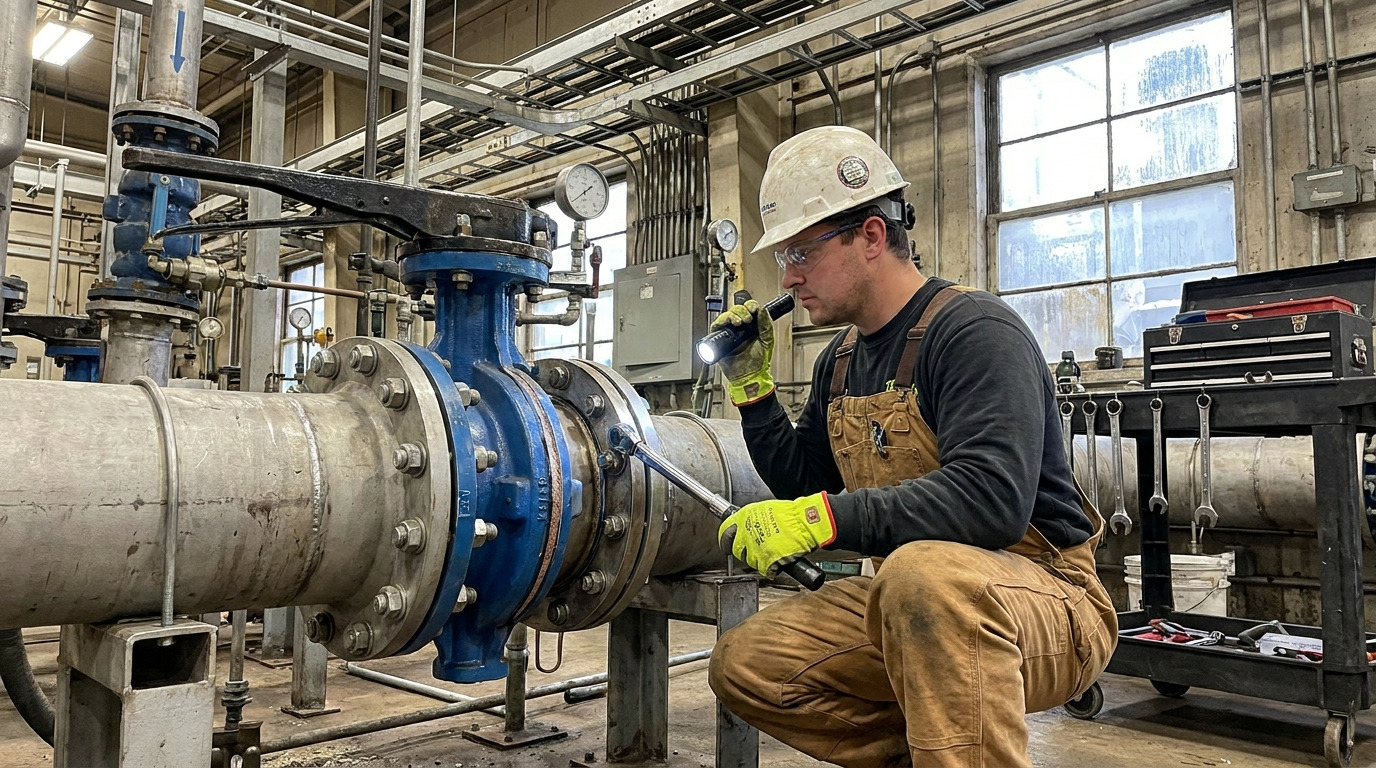
Lug style butterfly valve bolt specifications dictate the precise dimensions, materials, and torque values required to safely secure a valve within a pipeline system. Fluid control systems often suffer from unexpected leaks or catastrophic flange failures due to improper fastener selection. Over time, these minor leaks escalate into major pipeline shutdowns, costing facilities thousands in unscheduled downtime and hazardous spill cleanups. Choosing correct specifications eliminates this guesswork and provides a dependable framework for securing every flange connection tightly.
You need a reliable lug style butterfly valve bolt chart to navigate complex installation requirements and maintain optimal fluid regulation. This guide details everything necessary for mastering fastener parameters. We detail material grades, torque ratings, and specific installation practices. Reviewing these standards ensures your pipeline remains secure against pressure spikes.
What Is a Lug Style Butterfly Valve Bolt Chart and Why Use It?
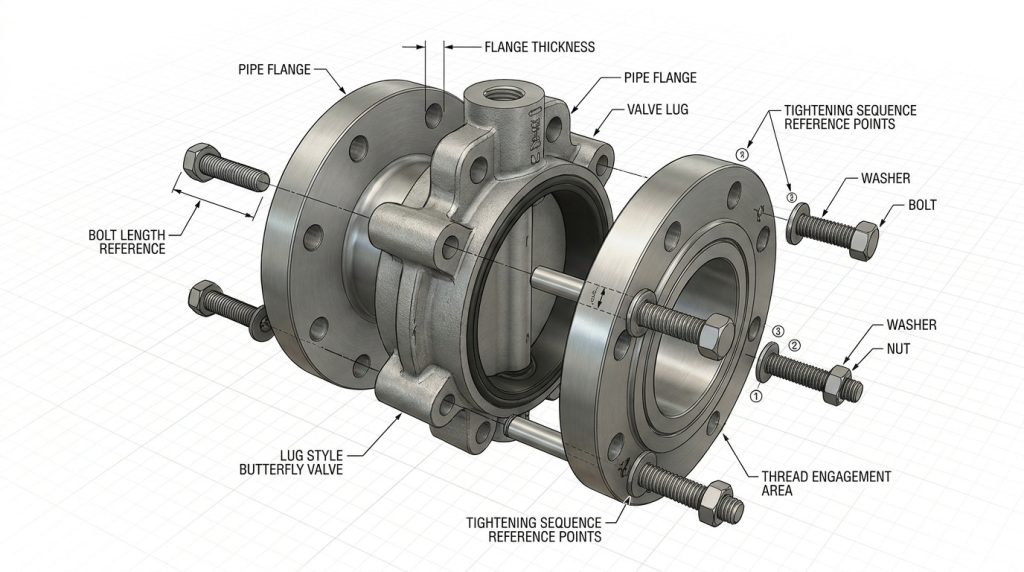
A lug style butterfly valve bolt chart functions as an essential reference table specifying exactly which fasteners secure your specific valve size. This reference document aligns physical valve dimensions with industry-standard flange requirements. Engineers rely heavily on this data for avoiding mismatched threads during critical assemblies. Consulting a lug style butterfly valve bolt chart eliminates dangerous guesswork from your industrial maintenance routines.
Proper fastener selection determines the structural integrity of your entire fluid handling network. Here is the deal… matching fastener lengths against flange thickness prevents uneven gasket compression.
Does a Bolt Chart Prevent Catastrophic Pipeline Failures?
Referencing exact fastener dimensions prevents the mechanical shear forces that cause sudden joint failures. You secure long-term reliability by applying verified engineering tolerances instead of assuming standard hardware fits.
- Verify specific flange pressure classes
- Confirm exact thread pitches
- Match stud lengths against body thickness
Ready for the good part? Operating within designated tolerances shields your equipment from destructive harmonic vibrations.
Key Takeaway: Implementing exact fastener dimensions protects your infrastructure from unexpected pressure blowouts and extends service life significantly.
| Valve Size | Flange Class | Bolt Diameter | Bolt Length |
|---|---|---|---|
| 2 Inch | 150 | 5/8 Inch | 5.5 Inch |
| 4 Inch | 150 | 5/8 Inch | 6.5 Inch |
| 6 Inch | 150 | 3/4 Inch | 7.5 Inch |
Properly sizing your fasteners according to system parameters guarantees a secure seal across all connection points.
How Does a Lug Style Butterfly Valve Bolt Chart Boost Safety?
A lug style butterfly valve bolt chart boosts safety by providing tested parameter limits that prevent dangerous over-torquing or under-tightening. Utilizing these precise measurements guarantees that every flange connection holds firm under maximum operational stress. Your maintenance teams can confidently execute repairs knowing they possess accurate hardware specifications. Every lug style butterfly valve bolt chart serves as a primary defense against industrial accidents.
Ignoring standardized hardware metrics exposes your personnel to extreme chemical or thermal hazards. You might be wondering… how slight dimensional deviations compromise an entire pipeline section.
Can Accurate Charts Mitigate Operator Injury Risks?
Following verified documentation drastically reduces the chances of high-pressure fluid ejections during normal operations. You protect your workforce by eliminating the root causes of mechanical fatigue and joint separation.
- Prevent unexpected chemical spraying
- Reduce vibration-induced loosening
- Maintain structural flange integrity
What is the real story? Consistent application of verified engineering metrics creates a genuinely secure working environment for your operators.
Key Takeaway: Prioritizing documented hardware metrics actively prevents workplace injuries while securing your operational infrastructure against catastrophic mechanical breakdowns.
| Safety Factor | Risk Reduced | Prevention Method |
|---|---|---|
| Over-torquing | Flange cracking | Strict torque limits |
| Under-torquing | Fluid leakage | Standardized tightening |
| Thread mismatch | Fastener stripping | Exact pitch matching |
Implementing standardized safety metrics directly translates into fewer mechanical failures and reduced environmental hazards.
What Materials Are in a Lug Style Butterfly Valve Bolt Chart?
A lug style butterfly valve bolt chart lists specific fastener materials like stainless steel, carbon alloys, and specialized composites suited for distinct environments. Selecting the correct metallic composition ensures your joints resist corrosive elements present inside your pipelines. You must align the hardware material with both external environmental conditions and internal fluid properties. Your chosen lug style butterfly valve bolt chart details exactly which alloys survive your specific chemical exposure limits.
Mismatched metallic components often trigger galvanic corrosion that rapidly destroys expensive flange connections. This is where it gets interesting… utilizing advanced alloys dramatically extends the operational lifespan of your entire system.
Do Material Specifications Alter Overall System Durability?
Deploying correct stainless steel grades prevents premature rusting and dangerous structural weakening over decades of constant use. You achieve massive long-term savings by installing hardware designed specifically for your unique thermal conditions.
- Select 316 stainless for marine environments
- Utilize carbon steel for standard utility lines
- Apply Teflon-coated studs for extreme chemicals
Listen to this… superior material selection directly impacts your ability to maintain uninterrupted fluid processing.
Key Takeaway: Matching fastener metallurgy to your specific processing environment guarantees structural stability and prevents expensive pipeline deterioration.
| Material Type | Best Application | Corrosion Resistance |
|---|---|---|
| Carbon Steel | Standard water lines | Low |
| 304 Stainless | Mild chemicals | Medium |
| 316 Stainless | Harsh acids | High |
Evaluating environmental conditions against material properties ensures long-lasting connections free from unexpected degradation.
How Do You Find Torque via a Lug Style Butterfly Valve Bolt Chart?
You find proper torque values by locating your specific valve diameter and pressure class within a lug style butterfly valve bolt chart. This specific metric dictates exactly how much rotational force technicians must apply during tightening procedures. You risk destroying expensive seating materials if you exceed these carefully calculated engineering limits. Consulting a lug style butterfly valve bolt chart ensures every single fastener receives uniform compression.
Applying uneven pressure distorts the central disc and permanently ruins the elastomeric sealing mechanisms. But wait, there is more… precision tightening sequences prevent the flange faces from warping under extreme stress.
Why Are Exact Torque Values Critical for Sealing?
Following prescribed tightening forces ensures the internal gasket compresses uniformly without tearing or losing its elastic memory. You maintain absolute flow control by preventing microscopic gaps from forming between mating surfaces.
- Use calibrated digital torque wrenches
- Follow a star-pattern tightening sequence
- Apply lubricant for accurate friction coefficients
Here is the deal… achieving perfect compression saves you from battling constant fluid drips across your facility floors.
Key Takeaway: Executing exact tightening forces guarantees a leak-proof seal and protects your internal elastomeric components from permanent crushing damage.
| Valve Diameter | Recommended Torque | Tightening Sequence |
|---|---|---|
| 3 Inch | 35 ft-lbs | Star Pattern |
| 6 Inch | 60 ft-lbs | Star Pattern |
| 10 Inch | 90 ft-lbs | Star Pattern |
Strict adherence to documented tightening metrics prevents seat distortion and guarantees absolute fluid isolation.
Can a Lug Style Butterfly Valve Bolt Chart Verify Proper Sizing?
A lug style butterfly valve bolt chart verifies proper sizing by cross-referencing flange thickness against the required stud lengths for secure engagement. Installing hardware that is too short fails to grip enough threads for maintaining system pressure. You face severe structural risks when relying on estimated measurements instead of verified engineering tables. Reviewing your lug style butterfly valve bolt chart prevents costly hardware mismatches during frantic plant turnarounds.
Fasteners extending too far beyond the nut create dangerous catching hazards and complicate future maintenance efforts. Want to know a secret? Exact length calculations account for washer thickness and necessary thread protrusion.
How Does Proper Sizing Impact Installation Efficiency?
Procuring exact hardware dimensions prior to scheduled maintenance eliminates costly delays caused by missing components. You streamline your assembly processes by staging the exact quantities and lengths required for every connection.
- Measure total flange-to-flange span
- Account for compressed gasket thickness
- Ensure two threads protrude past nuts
Ready for the good part? Streamlined assembly routines drastically reduce your overall facility downtime during major overhauls.
Key Takeaway: Verifying hardware dimensions against standardized tables guarantees a smooth installation process free from frustrating mechanical delays.
| Component | Measurement Factor | Tolerance Limit |
|---|---|---|
| Flange Span | Face to face distance | +/- 1/16 inch |
| Nut Width | Thread engagement | Full depth |
| Protrusion | Exposed threads | 2 to 3 threads |
Accurate dimensional verification prevents assembly bottlenecks and ensures maximum structural integrity across all pipeline joints.
Which Procedures Rely on a Lug Style Butterfly Valve Bolt Chart?
Standardized installation and routine maintenance procedures rely heavily on a lug style butterfly valve bolt chart for accurate mechanical guidance. Technicians utilize these tables for initial equipment commissioning, scheduled pipeline upgrades, and emergency valve replacements. You cannot execute a proper hydrostatic pressure test without first confirming correct hardware usage. Every industrial lug style butterfly valve bolt chart forms the foundation for reliable standard operating procedures.
Attempting complex repairs without verified parameters inevitably leads to destructive mechanical errors. You might be wondering… how documented procedures transform chaotic repairs into predictable engineering tasks.
Do Standardized Procedures Reduce Mechanical Errors?
Following rigorous procedural checklists ensures that novice technicians perform complex assemblies with the same accuracy as seasoned veterans. You build a resilient maintenance culture by demanding strict compliance with published engineering tables.
- Document all hardware replacements
- Verify tightening patterns visually
- Record final torque values applied
What is the real story? Institutionalizing these verification steps permanently eradicates amateur mistakes from your fluid control network.
Key Takeaway: Integrating verified parameter tables into your daily workflows creates a foolproof maintenance system that guarantees consistent mechanical reliability.
| Procedure Type | Chart Dependency | Primary Goal |
|---|---|---|
| Commissioning | High | Establish baseline safety |
| Routine Check | Medium | Prevent loosening |
| Emergency Fix | High | Restore rapid integrity |
Anchoring your maintenance protocols in verified data ensures predictable outcomes and robust system performance.
How Does a Lug Style Butterfly Valve Bolt Chart Aid Maintenance?
A lug style butterfly valve bolt chart aids maintenance by dictating replacement schedules and highlighting wear patterns based on operational conditions. Preventative upkeep requires knowing exactly what hardware specifications originally shipped with your fluid handling equipment. You simplify inventory management by stocking only the exact dimensions listed for your specific infrastructure. Any accurate lug style butterfly valve bolt chart acts as a blueprint for ordering replacement parts efficiently.
Stockpiling incorrect hardware wastes budget resources and delays critical repairs during unexpected outages. This is where it gets interesting… proactive hardware replacement prevents catastrophic failures before they happen.
Can Chart Data Predict Fastener Degradation Rates?
Tracking environmental exposure against specified material limits allows you to schedule replacements long before structural fatigue occurs. You transition from reactive firefighting into a sophisticated predictive maintenance strategy.
- Inspect for thread stretching annually
- Replace corroded nuts immediately
- Re-torque connections post thermal cycling
Listen to this… mastering predictive maintenance drastically lowers your total cost of ownership over the equipment lifespan.
Key Takeaway: Utilizing structural data for routine planning transforms your maintenance department into a highly efficient and cost-effective operation.
| Maintenance Task | Frequency | Chart Usage |
|---|---|---|
| Visual Inspection | Monthly | Verify materials |
| Torque Check | Semi-Annually | Confirm values |
| Hardware Swap | Every 5 Years | Size verification |
Structured maintenance routines driven by accurate hardware metrics prevent unexpected downtime and extend infrastructure longevity.
Why Are Grades Vital in a Lug Style Butterfly Valve Bolt Chart?
Fastener grades listed in a lug style butterfly valve bolt chart dictate the maximum tensile strength and load-bearing capacity of your hardware. Low-grade hardware simply snaps under the intense pressures generated by heavy industrial fluid systems. You must verify that the stamped numbers on your hardware match the required engineering specifications perfectly. An accurate lug style butterfly valve bolt chart categorizes these strength ratings to prevent dangerous structural compromises.
Mixing different grades across a single flange creates uneven stress distribution and eventual catastrophic failure. But wait, there is more… higher grades undergo rigorous heat treatments for surviving extreme mechanical shocks.
Do Hardware Grades Prevent Sudden Pressure Blowouts?
Selecting certified high-tensile fasteners guarantees your joints withstand massive hydraulic water hammers without yielding or stretching. You sleep soundly knowing your pipeline holds together during severe operational anomalies.
- Match ASTM A193 B7 for high pressure
- Use Grade 5 for standard utility
- Avoid unmarked counterfeit hardware
Here is the deal… investing in premium certified hardware costs pennies compared to cleaning up a toxic environmental spill.
Key Takeaway: Strictly matching fastener tensile strengths against system pressures eliminates the risk of sudden mechanical shearing.
| Grade Specification | Tensile Strength | Primary Use Case |
|---|---|---|
| Grade 2 | Low | Light water duty |
| Grade 5 | Medium | General industrial |
| B7 Alloy | High | High pressure steam |
Categorizing hardware by tensile strength ensures you never install weak components in highly critical pipeline sectors.
How Do Conditions Impact a Lug Style Butterfly Valve Bolt Chart?
Extreme temperature fluctuations and aggressive fluid dynamics heavily impact the specifications outlined within a lug style butterfly valve bolt chart. Intense heat causes standard metals to expand rapidly, completely altering the required torque values and structural clearances. You must adjust your fastener selections based on the thermal cycling your specific system undergoes daily. A comprehensive lug style butterfly valve bolt chart accounts for these environmental variables through specialized material recommendations.
Ignoring thermal expansion inevitably leads to crushed gaskets or loose connections once the pipeline cools down. Want to know a secret? Specialized alloys maintain their tensile strength even at cryogenic temperatures.
How Does Thermal Expansion Alter Tightening Strategies?
Hot fluid applications demand specific torque adjustments allowing for metallic expansion without destroying the seating surface. You manage these thermal forces by implementing dynamic tightening strategies tailored to specific operational phases.
- Re-torque after initial system heating
- Utilize thermal-resistant thread lubricants
- Monitor connections during seasonal changes
Ready for the good part? Mastering thermal dynamics ensures your valves remain completely sealed regardless of external weather conditions.
Key Takeaway: Adapting your hardware choices to specific temperature profiles prevents thermal stress from compromising your pipeline integrity.
| Condition | Hardware Effect | Required Adjustment |
|---|---|---|
| High Heat | Metal expansion | Hot re-torquing |
| Deep Cold | Brittleness | Cryogenic alloys |
| Vibration | Loosening | Locking washers |
Accounting for environmental stressors during the design phase eliminates chronic maintenance headaches caused by thermal expansion.
Where to Source an Accurate Lug Style Butterfly Valve Bolt Chart?
You source an accurate lug style butterfly valve bolt chart directly from certified industrial manufacturers and recognized engineering standards organizations. Third-party websites often contain outdated or generic information that completely misrepresents modern fluid control requirements. You should always demand proprietary specification sheets corresponding directly to the exact valve model purchased. An official lug style butterfly valve bolt chart guarantees compliance with international safety regulations and building codes.
Relying on unverified search engine results puts your entire facility at immense risk of mechanical failure. You might be wondering… how to verify the authenticity of a technical document.
Should You Trust Manufacturer Engineering Documents Exclusively?
Factory-issued manuals undergo rigorous quality assurance testing ensuring every dimension listed performs perfectly under real-world conditions. You protect your warranty coverage by exclusively utilizing hardware dimensions sanctioned by the original equipment producer.
- Request original factory PDF manuals
- Cross-reference with ASME standards
- Consult direct factory engineering teams
What is the real story? Utilizing authoritative documentation shields your organization from massive liability during industrial safety audits.
Key Takeaway: Acquiring technical specifications exclusively from verified manufacturing sources ensures absolute mechanical compliance and system safety.
| Source Type | Reliability Level | Best For |
|---|---|---|
| Manufacturer Manual | Highest | Exact installations |
| ASME Standards | High | General compliance |
| Internet Forums | Very Low | Never use |
Depending entirely on verified factory documentation eliminates catastrophic errors and keeps your operations legally compliant.
Advancing Your Fluid Control with Precision
Mastering hardware specifications drastically reduces your facility downtime while fortifying your pipeline against unexpected pressure events. By understanding tensile strengths, precise torque ratings, and material compatibility, you eliminate the dangerous mechanical guesswork that plagues amateur installations. We deliver precision-engineered fluid regulation components designed for seamless integration into your most demanding industrial networks.
When facing complex pipeline challenges, securing expert guidance ensures your infrastructure operates smoothly for decades. If you require verified technical parameters or specialized hardware recommendations, please contact us today for professional engineering support. We engineer industrial solutions that prioritize absolute safety and uncompromising performance across every sector.
FAQ
Q1: Can I use standard hardware store bolts for my industrial valve?
No, you cannot safely substitute industrial fasteners with generic hardware store alternatives. Industrial systems require specific ASTM-graded materials designed to withstand extreme hydraulic pressures and thermal cycling without shearing.
Q2: What’s the best way to determine the exact bolt length I need?
You determine exact lengths by consulting the manufacturer’s verified hardware documentation. This specific calculation accounts for flange thickness, compressed gasket dimensions, and the necessary thread protrusion for maximum safety.
Q3: How do I know if my bolts are properly torqued?
You verify proper torque by utilizing a recently calibrated digital torque wrench during installation. Following a documented star-pattern tightening sequence guarantees uniform compression and prevents gasket distortion.
Q4: Can I reuse old bolts during routine valve maintenance?
No, reusing old hardware severely compromises joint integrity. Fasteners experience microscopic thread stretching and fatigue over time, meaning recycled bolts cannot maintain the required clamping force safely.
Q5: What’s the best material for highly corrosive chemical pipelines?
You should implement specialized stainless steel grades like 316L or exotic alloys for corrosive environments. Standard carbon steel degrades rapidly when exposed to aggressive acids, leading to rapid catastrophic failure.