
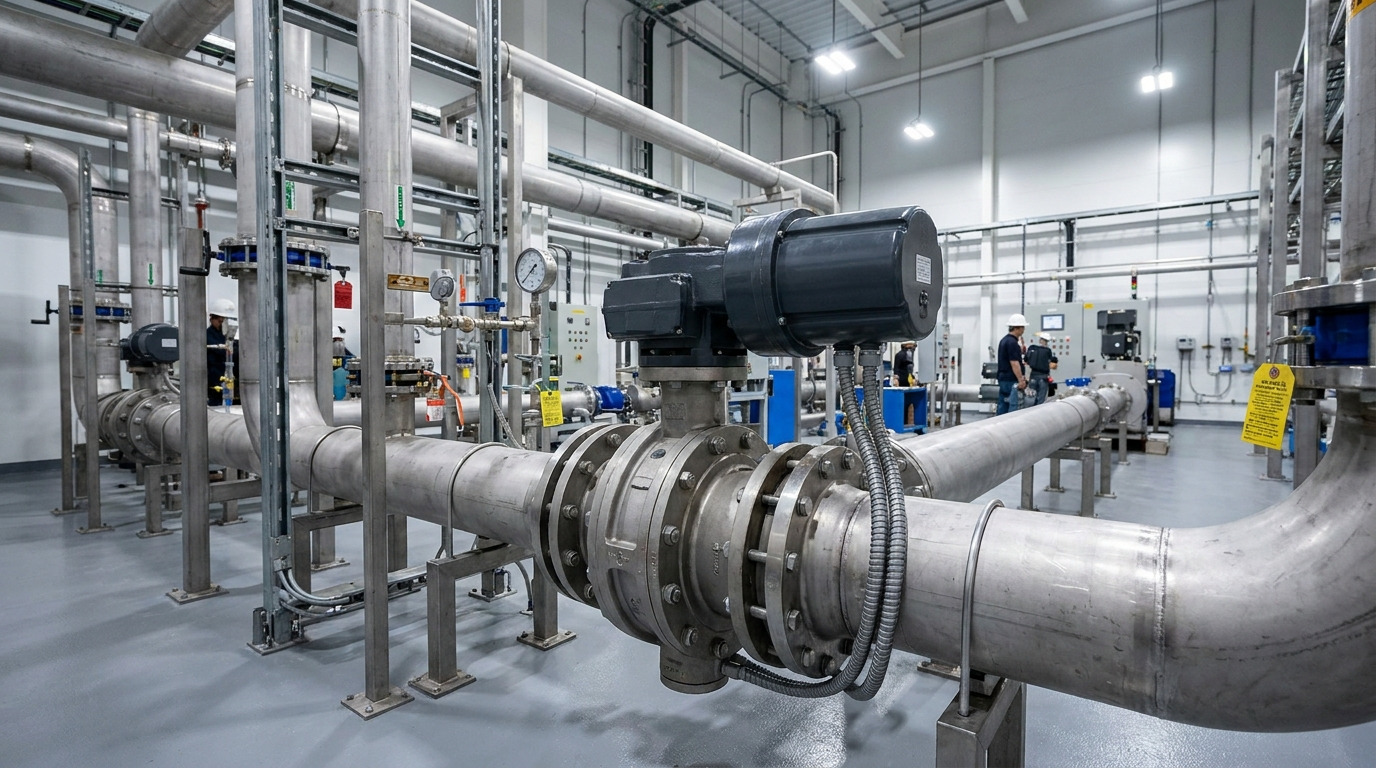
To decide between a butterfly, gate, or plug valve, you must evaluate pipeline pressure, available space, and media type. Leaky pipelines cause unexpected downtime, costing processing facilities thousands of dollars per hour. The wrong valve choice worsens this issue, resulting in constant repairs and safety hazards. Fortunately, implementing the correct butterfly shut off valve provides a reliable, quarter-turn mechanism that seals tight and minimizes maintenance headaches.
Why use a butterfly shut off valve vs gate?
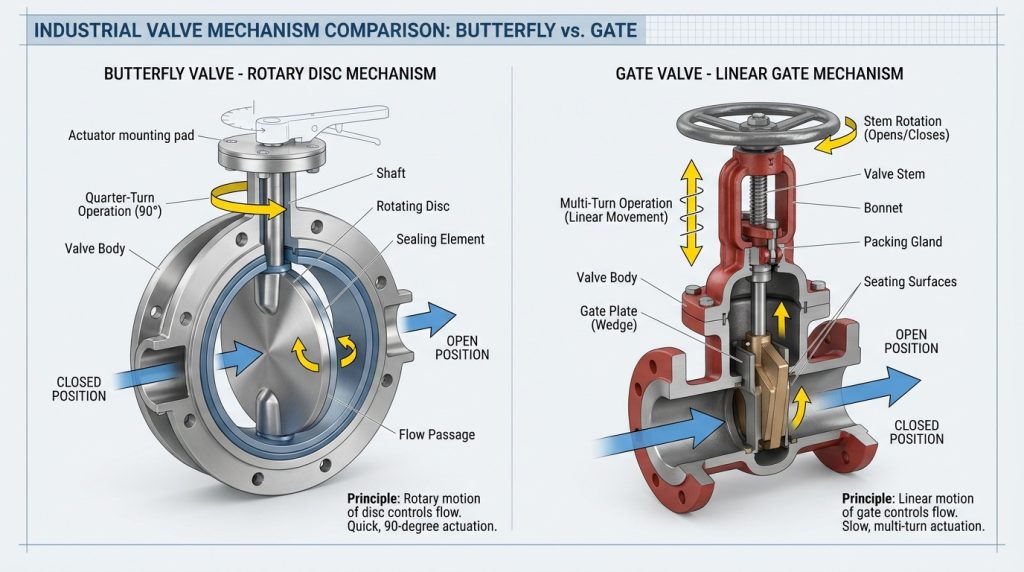
You should select a butterfly shut off valve over a gate valve when you require rapid operation and compact installation. Gate valves are notorious for taking multiple turns to open or close, whereas the butterfly alternative needs only a simple 90-degree motion. This swift actuation makes the butterfly design vastly superior for emergency isolation scenarios. Engineers frequently debate which component serves the application best, but the speed advantage remains undeniable.
Are gate valves too slow?
Gate components demand significant manual effort, frustrating operators who need immediate pipeline control. By comparison, quarter-turn mechanisms provide instant response, saving valuable seconds during process upsets. You might be wondering, how does this impact daily operations?
- Operators spend less time turning handwheels manually.
- Automated actuators require less torque and energy.
- System pressure remains stable during rapid state changes.
Key Takeaway: Selecting a rapid-response quarter-turn mechanism significantly reduces operator fatigue and improves facility safety during emergencies.
| Valve Type | Operation Motion | Speed | Actuation Cost |
|---|---|---|---|
| Gate | Multi-turn | Slow | High |
| Butterfly | Quarter-turn | Fast | Low |
The data confirms that quarter-turn designs drastically cut operation time compared to traditional multi-turn components.
When is a butterfly shut off valve the best?
A butterfly shut off valve excels in large-diameter pipelines handling low to medium pressure water or air. High-pressure steam often requires robust gate designs, but standard utility lines function perfectly with lightweight rotary discs. You save substantial capital by deploying these compact units across sprawling industrial complexes. Their lightweight nature also reduces structural strain on the piping network itself.
What about tight spaces?
Piping galleries are frequently cramped, leaving minimal room for bulky equipment maintenance. Here is the deal, installing compact rotary units frees up significant real estate for other instrumentation.
- Wafer style bodies fit neatly between existing flanges.
- Shorter face-to-face dimensions reduce overall piping footprint.
- Maintenance teams can access adjacent equipment more easily.
Key Takeaway: Utilizing wafer-style rotary mechanisms solves spatial constraints in densely packed processing plants without sacrificing flow control performance.
| Feature | Gate | Plug | Butterfly |
|---|---|---|---|
| Profile | Bulky | Heavy | Slim |
| Weight | High | High | Low |
This comparison highlights how slim profiles dominate when facility space is strictly limited.
How does a butterfly shut off valve stop leaks?
A butterfly shut off valve halts leaks by compressing its central disc against a resilient or metal perimeter seat. This tight interference fit prevents fluid bypass, securing the downstream pipeline from unwanted product contamination. Different seating materials accommodate varying temperatures and chemical compatibilities. You must match the elastomer to the process fluid to guarantee long-term sealing integrity.
Are soft seats reliable?
Resilient seats made from EPDM or PTFE offer exceptional bubble-tight shutoff capabilities for most liquid processes. What is the real story? These polymers resist degradation and maintain their elasticity over thousands of cycles.
- EPDM handles cooling water applications flawlessly.
- PTFE resists aggressive chemical solvents and acids.
- Replaceable liners make field repairs straightforward and cheap.
Key Takeaway: Matching the correct elastomer liner to your specific chemical process guarantees a leak-free environment and extends equipment lifespan.
| Seat Material | Max Temperature | Best Application |
|---|---|---|
| EPDM | 250°F | Water lines |
| PTFE | 400°F | Corrosive chemicals |
This breakdown indicates that proper polymer selection prevents catastrophic seat degradation in aggressive environments.
Can a butterfly shut off valve replace a plug?
A butterfly shut off valve can replace a plug valve in applications where extreme torque and heavy weight are undesirable. Plug components often suffer from severe friction, making them difficult to actuate without massive pneumatic cylinders. Switching to a rotary disc design dramatically lowers torque requirements. You gain smoother operation while maintaining acceptable isolation standards.
What makes plug valves different?
Plug devices utilize a cylindrical or tapered core that can trap fluid inside the body cavity. Let’s look at the facts, rotary disc designs lack internal cavities, eliminating the risk of trapped fluid expansion.
- No cavity means no thermal expansion damage.
- Lighter weight simplifies initial installation procedures.
- Lower friction translates to smaller, cheaper actuators.
Key Takeaway: Replacing heavy plug units with cavity-free rotary discs prevents trapped fluid issues and reduces overall actuation expenses.
| Parameter | Plug | Butterfly |
|---|---|---|
| Cavity | Yes | No |
| Friction | High | Low |
The data proves that eliminating internal cavities drastically reduces maintenance issues related to trapped fluid expansion.
Why pick a butterfly shut off valve for space?
You should pick a butterfly shut off valve for space conservation because its narrow face-to-face dimension is unmatched by other types. Heavy gate setups require extensive vertical clearance to accommodate rising stems during operation. Your facility might lack this overhead space, making slim rotary designs the only viable engineering choice. They fit snugly between pipes, leaving ample room for surrounding infrastructure.
How does face-to-face matter?
Long face-to-face dimensions force piping designers to alter layouts, costing extra materials and engineering hours. This is where it gets interesting, utilizing slim wafer bodies allows for extremely compact piping skids.
- Skid manufacturers can shrink the entire frame size.
- Shipping costs decrease due to reduced overall equipment dimensions.
- Contractors install the piping much faster with lighter parts.
Key Takeaway: Slim face-to-face measurements enable the construction of highly compact piping systems, directly reducing both material and freight expenses.
| Dimension Type | Gate Valve | Butterfly Valve |
|---|---|---|
| Face-to-Face | Long | Extremely Short |
| Vertical Clearance | High | Low |
These metrics illustrate exactly why skid manufacturers heavily favor compact rotary devices for space-constrained modules.
Does a butterfly shut off valve operate fast?
A butterfly shut off valve operates exceedingly fast because it only requires a 90-degree turn from fully open to closed. Multi-turn stems demand constant spinning, delaying the isolation of critical pipeline sectors during a leak. You need equipment that reacts instantly to automated signals. Quarter-turn components provide that immediate response, protecting your facility from extensive spills.
What does quarter-turn mean?
Quarter-turn signifies that the internal closure member rotates exactly one-fourth of a full circle. Ready for the good part? This short travel distance minimizes wear on the packing gland and stem seals.
- Fewer stem movements decrease fugitive emission risks.
- Actuators stroke rapidly without overheating their motors.
- Emergency shutdown systems rely on this specific geometry.
Key Takeaway: Quarter-turn geometry provides the fastest possible mechanical response time while simultaneously reducing stem friction and wear.
| Valve Style | Rotation Needed | Emergency Speed |
|---|---|---|
| Multi-turn | 360° x Many | Dangerously Slow |
| Quarter-turn | 90° Only | Instantaneous |
This comparison highlights why emergency shutdown protocols explicitly mandate quarter-turn mechanisms over traditional spinning stems.
Will a butterfly shut off valve block solids?
A butterfly shut off valve will block certain solids, but heavy abrasive slurries can prematurely damage the seating surface. Clean liquids and gases represent the ideal media for this particular closure mechanism. If your process involves jagged particulates, you might need a specialized knife gate instead. However, for moderate suspended solids, specialized rubber-lined discs perform adequately.
How do abrasive media act?
Abrasive particles scrape against the disc edge at high velocities, eroding the metal over time. But here is the kicker, installing a polyurethane liner absorbs the impact of these destructive particles.
- Polyurethane resists tearing from sharp suspended solids.
- Thicker disc edges withstand erosion better than thin ones.
- Flushing the line periodically extends the seat life.
Key Takeaway: Handling solids requires specific resilient liners to absorb particulate impact, preventing premature erosion of the metallic sealing components.
| Media Type | Standard Disc | Polyurethane Lined |
|---|---|---|
| Clean Water | Excellent | Overkill |
| Light Slurry | Poor | Good |
The table clarifies that specialized liners are absolutely mandatory when introducing abrasive slurries into a rotary isolation setup.
Is a butterfly shut off valve cost-effective?
A butterfly shut off valve is highly cost-effective due to its minimal material usage and simplistic internal design. Heavy cast iron gate units require massive amounts of raw metal, driving up the initial purchase price significantly. You can outfit an entire water treatment plant with rotary discs for a fraction of the budget. Maintenance costs remain low because field repairs require very few specialized tools.
Does initial price matter?
Initial capital expenditure dictates whether a large-scale project receives funding approval from corporate management. Now pay attention, specifying economical rotary devices frees up capital for better instrumentation and sensors.
- Less raw material equals lower manufacturing costs.
- Lighter shipping weights drastically cut freight invoices.
- Installation takes fewer man-hours, lowering contractor bills.
Key Takeaway: Opting for material-efficient rotary designs slashes initial project costs, allowing budget reallocation toward advanced automation technologies.
| Cost Factor | Gate | Butterfly |
|---|---|---|
| Material Cost | High | Low |
| Freight Cost | High | Low |
These financial indicators demonstrate the massive budget advantages gained by selecting material-efficient isolation equipment.
How to size a butterfly shut off valve right?
You size a butterfly shut off valve right by calculating the required flow coefficient against the system’s maximum allowable pressure drop. Oversizing leads to poor flow control, while undersizing causes destructive cavitation and severe pipeline vibration. You must analyze the fluid velocity and vapor pressure before making a final selection. Proper sizing ensures the disc operates smoothly without fluttering in the fluid stream.
What is the flow coefficient?
The flow coefficient represents the volume of water at sixty degrees Fahrenheit that passes through per minute with a one psi drop. Let’s dig deeper, matching this value to your pump output prevents the system from choking.
- High coefficients mean less resistance to fluid passage.
- Consult manufacturer charts to find exact performance curves.
- Account for fluid viscosity when calculating the final value.
Key Takeaway: Accurate flow coefficient calculations prevent pipeline choking and eliminate destructive turbulence that ruins internal piping structures.
| Sizing Error | Consequence | Repair Difficulty |
|---|---|---|
| Oversized | Poor control | Moderate |
| Undersized | Cavitation | High |
This breakdown emphasizes that rigorous sizing calculations are strictly required to avoid severe mechanical damage from fluid turbulence.
Where fails a butterfly shut off valve setup?
A butterfly shut off valve setup fails when exposed to extreme temperature fluctuations that warp the central shaft. Improper actuator alignment also causes the disc to scrape against the seat unevenly, destroying the seal. You should verify that piping flanges are perfectly parallel during the initial installation phase. Forcing a mismatched flange connection inevitably leads to premature mechanical breakdown.
Can extreme heat cause damage?
Thermal expansion forces internal metal components to bind, preventing the actuator from turning the shaft. You have to understand, high-temperature environments require specialized metal seats and extended bonnets.
- Graphite seals withstand intense heat without melting.
- Extended stems move the actuator away from the hot pipe.
- Thermal cycling requires periodic retightening of flange bolts.
KeyTakeaway: High-temperature applications demand specialized metallic sealing structures and proper thermal isolation to prevent catastrophic mechanical binding.
| Failure Cause | Prevention Method |
|---|---|
| Flange Misalignment | Proper pipe fitting |
| Thermal Expansion | Use metal seats |
The failure data shows that proactive engineering modifications easily mitigate the risks associated with extreme thermal environments.
Which valve should you select today?
Selecting the correct isolation equipment eliminates costly downtime and keeps your facility running smoothly. This article resolved the confusion surrounding pipeline component selection by comparing flow characteristics, spatial requirements, and operational speeds. We provide precision-engineered solutions tailored specifically to your exact pressure and media requirements. We believe that robust flow control infrastructure forms the backbone of every successful industrial operation worldwide. Are you ready to upgrade your pipeline reliability? contact us today to discuss your technical specifications.
FAQ
Q1: Can I use a butterfly valve for high-pressure steam?
No, you should not use standard rubber-lined models for high-pressure steam. Extreme temperatures and pressures will melt resilient seats, so a metal-seated gate or specialized high-performance model is required.
Q2: What’s the best valve for very tight pipeline spaces?
A wafer-style butterfly unit is the absolute best choice for tight spaces. Its extremely short face-to-face dimension allows it to fit perfectly between flanges where bulky gate types cannot physically fit.
Q3: How do I know if I need a quarter-turn valve?
You need a quarter-turn valve if your system requires immediate emergency shutdown capabilities. Quarter-turn mechanisms travel from fully open to fully closed in seconds, whereas multi-turn stems take much longer.
Q4: Can I throttle flow with a gate valve?
No, gate valves are strictly designed for on/off isolation purposes only. Attempting to throttle flow with them causes severe vibration and rapid erosion of the internal wedge mechanism.
Q5: What’s the best way to handle abrasive slurries?
A specialized knife gate valve usually handles heavy slurries best. Standard rotary discs can suffer premature edge erosion from sharp particulates unless heavily lined with thick, durable polyurethane.