
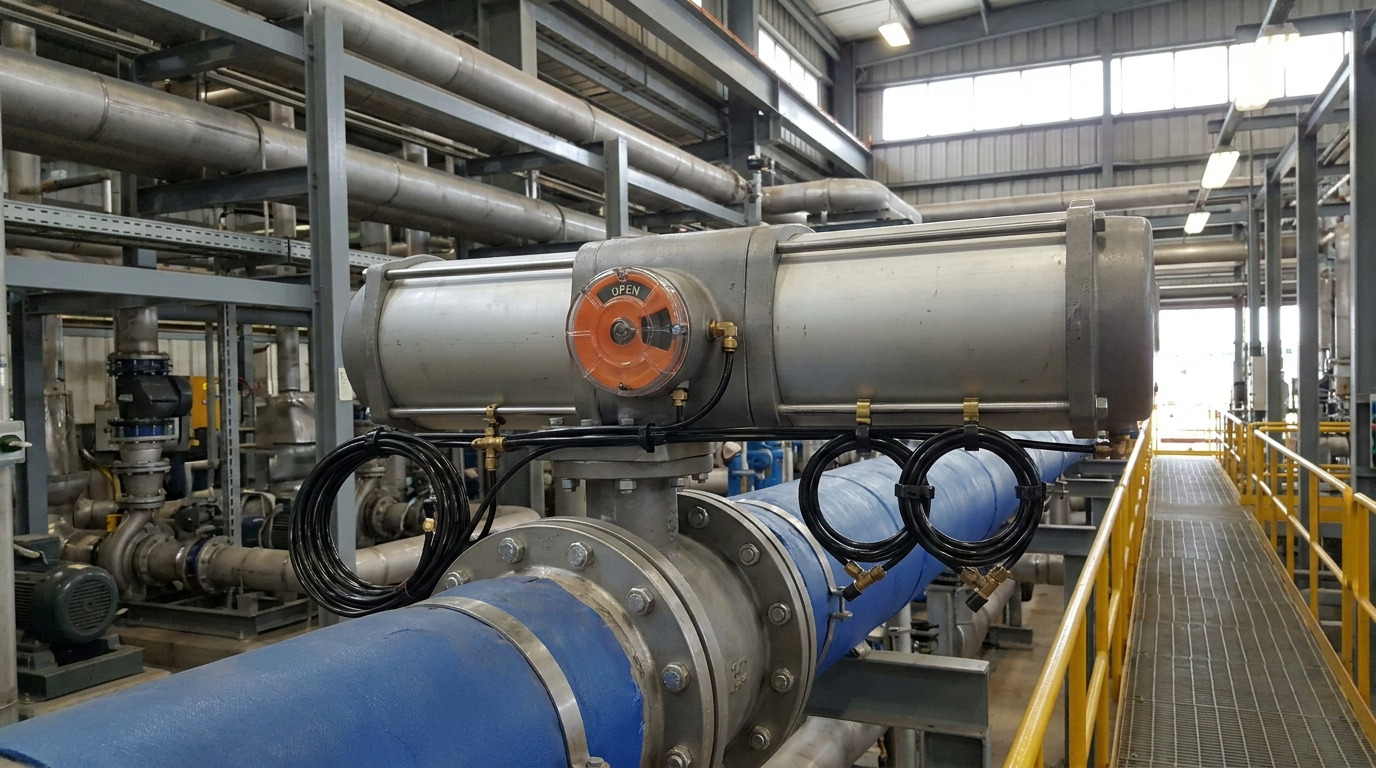
A pneumatic actuator butterfly valve uses compressed air to control a central disc, serving as a reliable quarter-turn solution for industrial piping systems. When process lines leak and factory floors flood, production schedules collapse rapidly. These costly disruptions drain profits and force maintenance teams to scramble. Here is the perfect strategy to restore control and keep your fluid systems running without interruption.
Why Is A Pneumatic Actuator Butterfly Valve Cost-Effective?
A pneumatic actuator butterfly valve is the most cost-effective option because it offers high flow capacity with a minimal physical footprint. This design dramatically cuts down on material expenses compared to bulky gate alternatives. You get exceptional performance without breaking your maintenance budget.
Here is the deal: These units install quickly and require less structural support in your pipeline.
Why Choose Compact Flow Control Options?
What is the real story? Factory managers consistently choose this valve style for large-diameter pipes because of its lightweight profile. Heavy gate fixtures strain pipe joints and demand expensive mounting brackets.
- Reduces structural load on your piping system
- Fits neatly into cramped factory spaces
- Lowers overall installation expenses significantly
Key Takeaway: Choosing a lightweight flow control device protects your infrastructure and preserves your operating budget.
| Benefit | Gate Fixture | Butterfly Alternative |
|---|---|---|
| Weight Profile | Very Heavy | Lightweight |
| Space Needed | Large | Compact |
| Initial Cost | High | Low |
The data confirms that quarter-turn devices provide superior economic advantages for process facilities.
How Does A Pneumatic Actuator Butterfly Valve Convert Air?
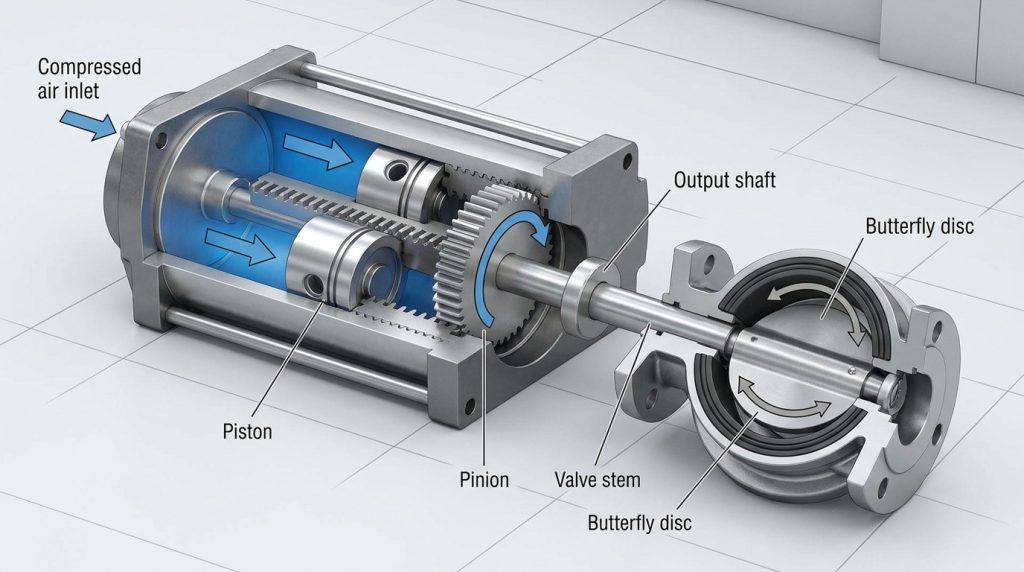
A pneumatic actuator butterfly valve converts air pressure into rotary motion by pushing pistons inside a sealed cylinder. As the compressed air expands, it forces the internal mechanism to spin the central stem. This simple mechanical action provides fast and reliable pipeline isolation.
Ready for the good part? You can easily automate this process to match your exact production rhythm.
What Are The Core Internal Mechanics?
This is where it gets interesting: The internal mechanism typically relies on either a rack and pinion or a scotch yoke design. The rack and pinion style offers uniform torque delivery for smaller units.
- Rack and pinion generates consistent linear force
- Scotch yoke provides massive breakaway power
- Both designs connect directly to the main shaft
Key Takeaway: Understanding your internal mechanics helps you select the right automation power for your process lines.
| Mechanism Style | Torque Curve | Best Application Size |
|---|---|---|
| Rack and Pinion | Linear | Small to Medium |
| Scotch Yoke | U-Shaped | Large |
Matching the mechanical design to your pipe diameter prevents premature equipment failure.
Single Vs Double Acting Pneumatic Actuator Butterfly Valve?
A pneumatic actuator butterfly valve with a single-acting design uses springs to close, while a double-acting unit requires air for both directions. If your facility loses power, the spring-return model automatically moves to a safe position. The double-acting version remains exactly where it was when the air stopped.
But here is the kicker: Your facility safety audit will often dictate which configuration you must install.
How Do You Determine Safety Needs?
You might be wondering: Why would anyone choose a double-acting model if it lacks a fail-safe spring? Double-acting units are cheaper and offer a smaller physical footprint.
- Single-acting ensures a secure fail-safe position
- Double-acting reduces initial purchasing expenses
- Spring-return models protect hazardous chemical lines
Key Takeaway: Always match your automation logic to the specific hazard level of your media.
| Actuator Type | Fail-Safe Function | Air Requirement |
|---|---|---|
| Single-Acting | Yes (Springs) | One Direction |
| Double-Acting | No | Both Directions |
Prioritizing a fail-safe mechanism is mandatory when handling aggressive or dangerous fluids.
How To Select A Pneumatic Actuator Butterfly Valve Seal?
You select a pneumatic actuator butterfly valve seal by matching the elastomer material directly to your process media temperature and chemical makeup. For basic water lines, a standard EPDM rubber seat provides excellent longevity. Corrosive chemicals demand specialized PTFE materials to prevent rapid deterioration.
Look at this: Using the wrong rubber will cause your pipeline to leak within a matter of days.
Why Does Elastomer Compatibility Matter?
Listen to this: A cheap recycled rubber seat might look identical to premium virgin PTFE, but it lacks chemical resistance. If you expose standard EPDM to oily fluids, the material absorbs the oil and swells rapidly.
- EPDM handles water and weak acids efficiently
- PTFE resists aggressive solvents and harsh chemicals
- Metal seats endure extreme abrasive slurry conditions
Key Takeaway: Investing in the correct seat material prevents catastrophic leaks and costly factory shutdowns.
| Seat Material | Ideal Media | Temperature Limit |
|---|---|---|
| EPDM Rubber | Water, HVAC | Low to Medium |
| Virgin PTFE | Corrosive Acids | Medium |
| Solid Metal | Steam, Slurry | Very High |
Selecting the right sealing compound dictates the entire operational lifespan of your equipment.
Why Use A Triple Offset Pneumatic Actuator Butterfly Valve?
A pneumatic actuator butterfly valve with a triple offset geometry achieves zero leakage by eliminating friction between the disc and the seat. The metal components only touch at the exact final moment of closure. This unique engineering prevents wear and tear during high-temperature steam operations.
Want to know a secret? Standard friction-based seals melt away quickly when exposed to thermal oil.
How Does Offset Geometry Stop Leaks?
It gets better: By shifting the pivot point away from the center line, the disc sweeps into the seat without dragging. This geometry creates a secure mechanical wedge that holds firm under intense pressure.
- First offset moves the shaft behind the seat
- Second offset pushes the shaft away from the center
- Third offset angles the sealing cone shape
Key Takeaway: Advanced geometry provides absolute shutoff capabilities for your most demanding high-heat environments.
| Design Type | Friction Level | Shutoff Quality |
|---|---|---|
| Concentric | High | Standard |
| Double Offset | Medium | Better |
| Triple Offset | Zero | Absolute |
Eliminating mechanical friction is the only way to survive extreme industrial heating applications.
How To Size A Pneumatic Actuator Butterfly Valve Torque?
You size a pneumatic actuator butterfly valve by calculating the breakaway torque required to unseat the disc and adding a mandatory safety factor. Static friction creates a massive initial resistance when the disc sits closed for weeks. If you size based on running torque, the unit will stall.
Truth be told: Undersized automation hardware is the leading cause of sticky control devices.
Why Is A Safety Margin Mandatory?
Let us dig deeper: Factory air pressure fluctuates constantly when multiple machines draw from the same compressor. You must add a thirty percent safety margin to guarantee movement during these low-pressure dips.
- Compensates for early morning air pressure drops
- Overcomes internal sludge buildup over time
- Handles minor seat swelling from chemical reactions
Key Takeaway: Adding a healthy safety margin ensures your automated systems never fail during peak production hours.
| Condition | Base Torque | Recommended Safety Factor |
|---|---|---|
| Clean Water | 100 Nm | 20% |
| Sticky Slurry | 100 Nm | 40% |
| Dry Powder | 100 Nm | 50% |
Proper sizing calculations protect your automation hardware from stalling against unexpected mechanical resistance.
Which Materials Extend Pneumatic Actuator Butterfly Valve Life?
A pneumatic actuator butterfly valve lasts longer when you select solid stainless steel discs and blowout-proof internal stems. Cheap plated iron discs scratch easily, exposing the bare metal to rapid rust and corrosion. Solid stainless steel resists degradation through its entire thickness.
Check this out: Spending a little extra upfront saves you thousands in replacement labor later.
Why Avoid Plated Internal Components?
Think about it: When abrasive particles scratch a thin nickel plating, the underlying ductile iron rapidly oxidizes. This rust creates a jagged edge that shreds the soft rubber seat upon closing.
- Solid SS316 offers full-thickness corrosion defense
- Blowout-proof stems prevent dangerous internal pressure accidents
- Polished surfaces deter sticky media accumulation
Key Takeaway: Upgrading your internal disc metal directly prevents premature seating failures and fluid contamination.
| Component Material | Initial Expense | Lifespan Rating |
|---|---|---|
| Plated Ductile Iron | Low | Short |
| Solid SS316 | Moderate | Long |
| Duplex Steel | High | Maximum |
Investing in premium metal alloys completely eliminates the risk of rapid internal corrosion.
What Accessories Help A Pneumatic Actuator Butterfly Valve?
A pneumatic actuator butterfly valve requires solenoid valves, limit switch boxes, and air filter regulators to integrate into your central control system. The solenoid directs the air, while the limit switch confirms the exact physical position back to your computer. The regulator keeps the incoming air clean and dry.
You see: Automation is useless without accurate feedback sensors.
How Do Positioning Tools Improve Control?
Here is a good point: If your process demands precise flow regulation rather than simple on-off actions, you need a smart positioner. This device reads a continuous signal and modulates the air volume perfectly.
- Solenoids control the basic directional air paths
- Switch boxes provide remote visual confirmations
- Smart positioners allow for exact throttling percentages
Key Takeaway: Proper accessory integration turns a basic mechanical block into a highly intelligent control instrument.
| Accessory | Primary Function | Control Type |
|---|---|---|
| Solenoid | Directs Airflow | On / Off |
| Limit Switch | Sends Confirmation | Feedback |
| Smart Positioner | Modulates Angle | Throttling |
Coordinating these electronic accessories gives you complete mastery over your pipeline automation.
How To Select A Pneumatic Actuator Butterfly Valve Matrix?
You select a pneumatic actuator butterfly valve by cross-referencing your media type, maximum temperature limit, and specific automation requirements. Start by identifying whether you are pumping water, acid, or powder. Then, verify the thermal limits to choose between rubber or solid metal seats.
Wait, there is more: A simple selection matrix removes all the guesswork from your procurement process.
How Do You Apply The Selection Rules?
Now, pay attention: If you are handling food products, you must select FDA-approved white elastomer seats and polished steel. If you are moving dry cement powder, you must increase your actuator size to fight abrasive friction.
- Match your elastomer directly to the fluid chemistry
- Upgrade to scotch yoke actuators for heavy powders
- Specify polished stainless steel for sanitary lines
Key Takeaway: Following a strict selection matrix prevents dangerous mismatches between your equipment and your media.
| Application | Media Type | Required Seat |
|---|---|---|
| Utility Lines | Clean Water | EPDM Rubber |
| Food Processing | Milk or Beer | Sanitary PTFE |
| Thermal Heating | Hot Steam | Metal Triple Offset |
Using a structured matrix guarantees your final installation will survive its intended environment.
How To Fix A Broken Pneumatic Actuator Butterfly Valve?
You fix a pneumatic actuator butterfly valve by methodically checking the electronic solenoid coil, confirming the air pressure, and inspecting for seat swelling. If the air pressure is completely normal but the device refuses to turn, the rubber seat has likely bonded to the disc. This happens when equipment sits idle for long periods.
Do not panic: Most common failures are easily diagnosed with a simple visual inspection.
What Are The Common Diagnostic Steps?
Let me explain: A slow response time usually indicates a clogged exhaust silencer on the main solenoid. If your control room loses the signal entirely, moisture has probably corroded the copper contacts inside the limit switch.
- Clean out dirty exhaust silencers regularly
- Verify your limit switch boxes remain waterproof
- Manually stroke sticky units to break static friction
Key Takeaway: Routine diagnostic checks prevent minor air blockages from causing massive production delays.
| Symptom | Probable Cause | Immediate Action |
|---|---|---|
| Fails to Move | Static Bonding | Manually Stroke |
| Slow Turning | Blocked Silencer | Clean Exhaust |
| Signal Lost | Corroded Switch | Replace Contacts |
Maintaining clean instrument air eliminates ninety percent of your daily automation headaches.
How Can We Support Your Fluid Control Systems Today?
We resolve your toughest pipeline challenges by delivering custom-engineered flow control solutions that perfectly match your factory requirements. We know that unpredictable leaks and stalled automation hardware cause endless frustration for your maintenance crew. By providing robust, field-tested equipment and verified material certificates, we ensure your production lines run flawlessly. We believe every industrial facility deserves uncompromising safety and absolute precision. Reach out and contact us today to optimize your entire fluid management strategy.
FAQ
Q1: Can I use an EPDM rubber seat for oil-based media?
No, you cannot use EPDM for oil because the rubber will absorb the fluid, swell rapidly, and jam the internal disc.
Q2: What’s the best actuator style for very large pipe diameters?
The scotch yoke actuator is the best option because it generates massive breakaway torque to overcome the high static friction of larger discs.
Q3: How do I know if my control device needs a smart positioner?
You need a positioner if your process requires continuous flow modulation, as standard solenoids only offer basic open and close functions.
Q4: Can I ignore the breakaway torque when sizing my automation equipment?
No, you must calculate breakaway torque, because ignoring it guarantees your device will stall when trying to unseat a closed disc.
Q5: What’s the best way to prevent the internal stem from shooting out under pressure?
Installing a blowout-proof stem design is the best method, as it uses an internal collar to secure the shaft safely inside the main body.