
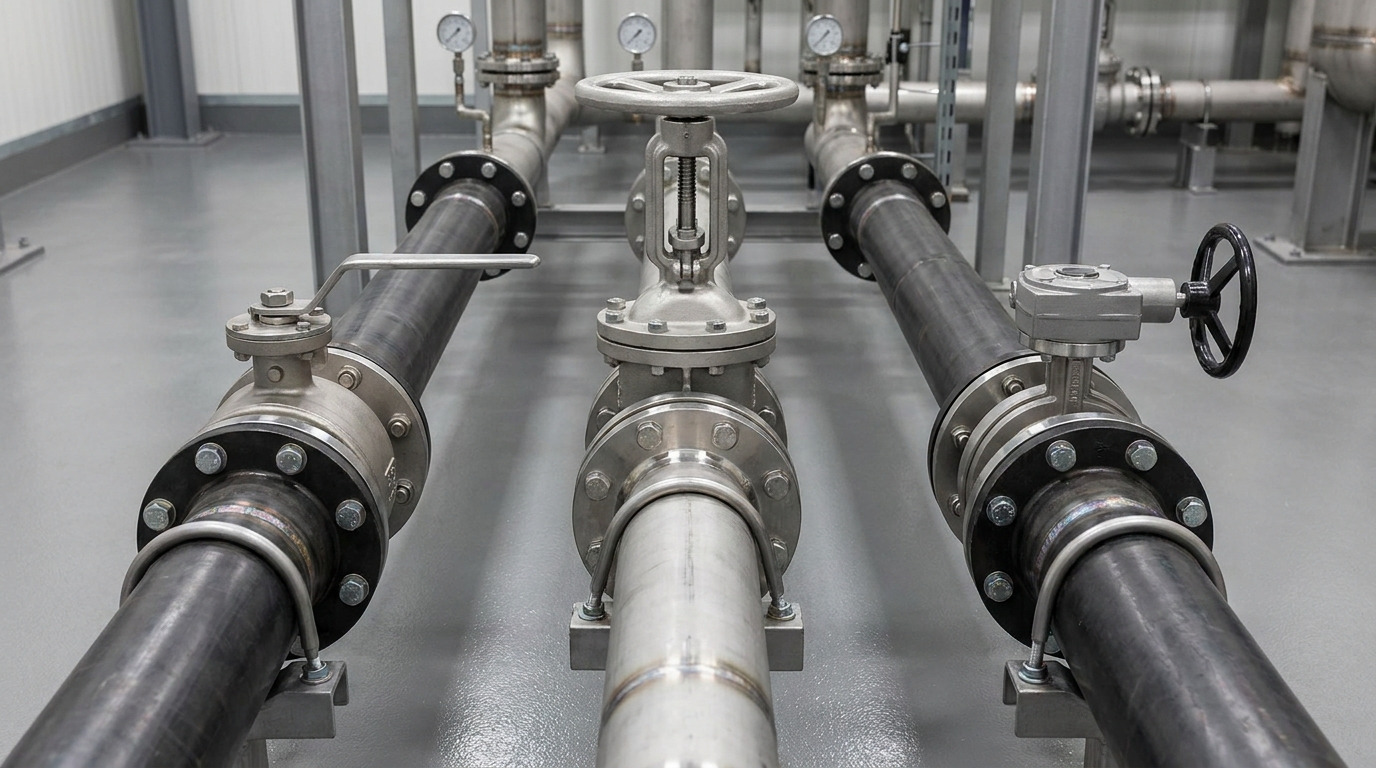
Choose a ball valve for tight quarter-turn shutoff, a gate valve for full-bore low-pressure-drop isolation, and a butterfly valve when large line size, weight, and fast operation matter more than a completely unobstructed bore. That is the core answer in a ball valve vs gate valve vs butterfly valve comparison, but the right choice still depends on pressure drop, leakage tolerance, media, pressure class, size, and how often the valve operates.
A typical example is a DN300 cooling-water header where the project team wants quick isolation, low head loss, and reasonable installed cost. A full-port industrial ball valve may seal tightly, but it may be heavier and more expensive at that size; a gate valve may keep the bore open, but it needs more operating space; a butterfly valve may solve the space and cost problem, but its disc remains in the flow path.
Ball Valve vs Gate Valve vs Butterfly Valve At a Glance
The quickest way to compare these valves is to separate three questions: how the valve blocks flow, what remains in the flow path, and what failure mode matters most in your service.
| Selection factor | Ball valve | Gate valve | Butterfly valve |
|---|---|---|---|
| Main motion | Quarter-turn, usually 90 degrees | Multi-turn linear stem travel | Quarter-turn, usually 90 degrees |
| Flow path when open | Full-port or reduced-port bore through the ball | Full-bore path when fully open | Disc remains in the flow path |
| Best use | Tight on-off isolation, gas, clean liquids, frequent operation | Full-bore isolation, low pressure loss, infrequent operation | Large-diameter lines, compact layout, fast shutoff |
| Throttling suitability | Poor for standard designs; use V-port/control design if required | Poor; seat and wedge damage risk | Moderate for some designs, but not a substitute for a control valve |
| Main tradeoff | Strong shutoff but cost and torque rise in large sizes | Low loss but slow operation and larger envelope | Compact and economical, but more flow obstruction |
| Common standards to check | API 608, API 6D, ASME B16.34, API 598 | API 600, API 6D, AWWA C509/C515, API 598 | API 609, AWWA C504, ASME B16.34, API 598 |
The table is a starting filter, not the final specification. If your line must be piggable, needs very low pressure drop, or cannot tolerate trapped cavity fluid, the answer may change even when the general comparison looks obvious.
How Flow Path Changes the Real Choice
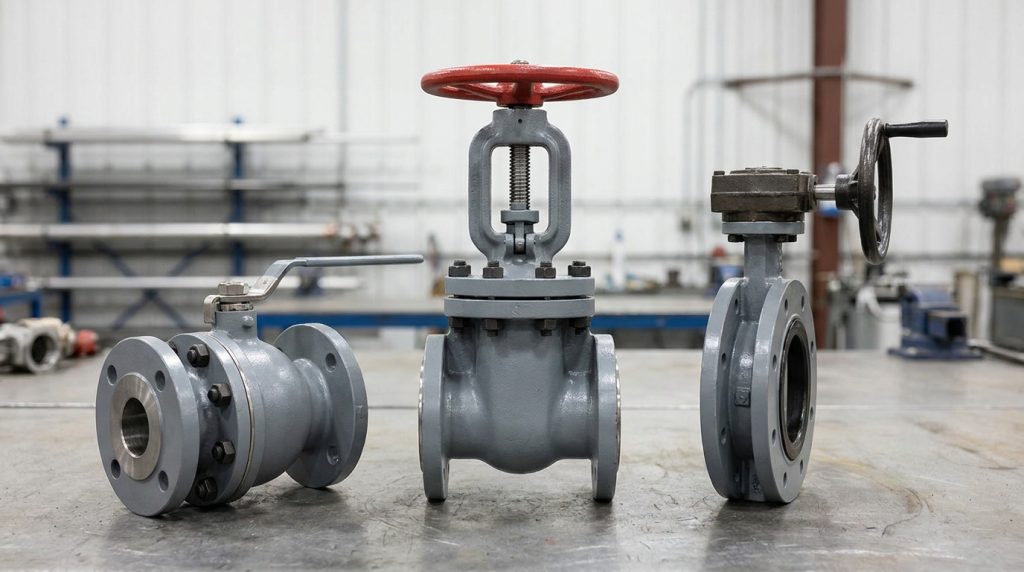
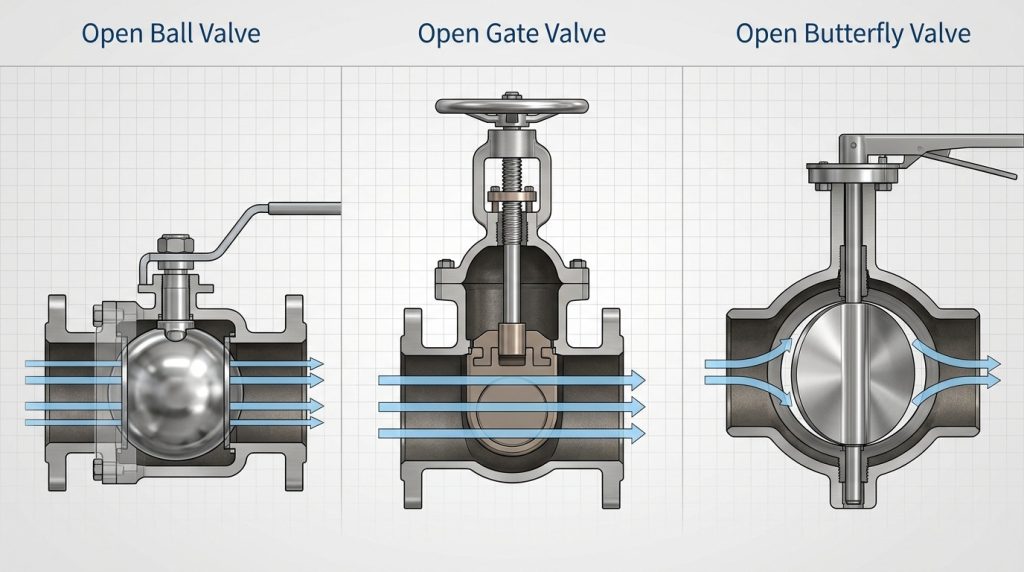
The flow path is the main reason these three valves behave differently in real systems. A ball valve blocks flow with a drilled sphere, a gate valve lifts a wedge or slab out of the pipeline, and a butterfly valve rotates a disc inside the pipe.
Which valve gives the lowest pressure drop?
A full-port ball valve and a fully open gate valve usually create very low pressure loss because the flow path is nearly straight. Published engineering loss-coefficient tables commonly list a fully open ball valve around K = 0.05 and a fully open gate valve around K = 0.15, but those are indicative values, not a substitute for the valve manufacturer’s Cv data.
Butterfly valve pressure drop varies more because the disc, shaft, seat profile, and opening angle all influence turbulence. For liquid sizing, the common Cv relationship is ΔP = (Q/Cv)² for water-like specific gravity, where Q is flow in U.S. gpm and ΔP is psi; when pressure drop matters, checking ball valve pressure drop using Cv is a useful next step before treating any valve type as “low loss.”
Which valve seals best in on-off service?
A soft-seated ball valve often gives the tightest shutoff among the three, especially in clean gas or clean liquid service. The spherical sealing contact supports reliable isolation, but seat material limits temperature, abrasion resistance, chemical compatibility, and fire-performance requirements.
Gate valves can also provide tight isolation, but they should be fully open or fully closed. If you leave a wedge gate partly open, the flow can erode the seating area, cause vibration, and make the valve leak later even if it looked acceptable during installation.
Which valve reacts fastest?
Ball and butterfly valves are fast because they normally move from open to closed in a quarter turn. That speed is useful for emergency isolation and automation, but it can also create water hammer if a liquid line is closed too quickly.
Gate valves close more slowly because the stem must travel through several turns. That slower action is less convenient for fast shutoff, but it can be helpful in water systems where sudden closure could produce damaging pressure surges.
Match the Valve to Service Conditions
The best valve type changes when the media, pressure, temperature, line size, and operating frequency change. You should start with the process requirement, then decide whether tight sealing, unrestricted flow, compactness, or controllability is the dominant need.
When should you choose a ball valve?
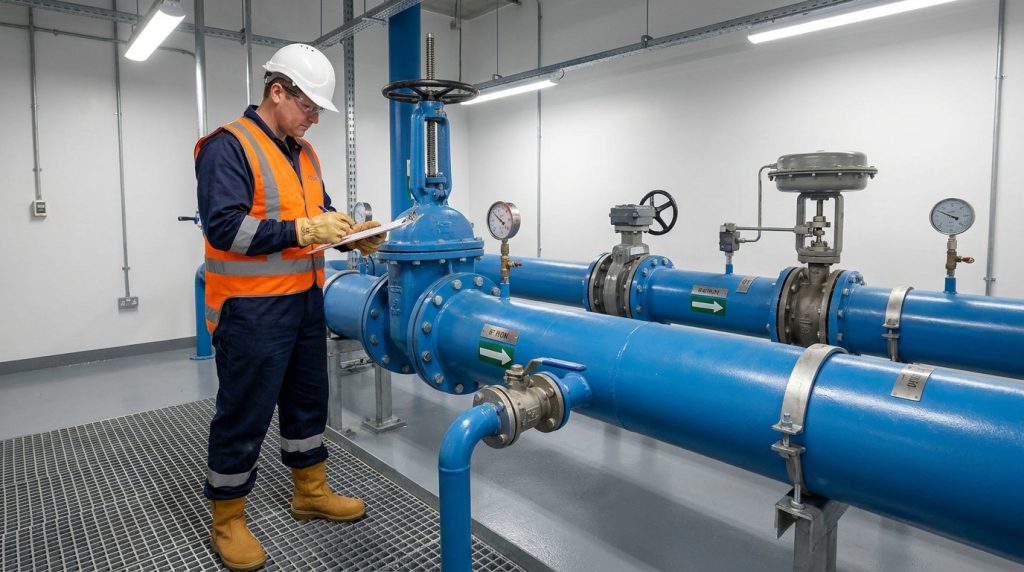
Choose a ball valve when you need fast, repeatable on-off isolation with strong sealing in clean service. It is often a strong choice for gas lines, chemical service, utility isolation, and automated shutdown points where a clear open/closed position is valuable.
Be cautious when the fluid contains abrasive solids, when temperature exceeds the seat material range, or when the system needs continuous throttling. In larger sizes or high-pressure service, trunnion-mounted designs are often used to reduce seat loading and operating torque, while floating ball designs remain common in smaller and moderate-pressure lines.
When should you choose a gate valve?
Choose a gate valve when the system needs a full-bore flow path and the valve will normally stay fully open or fully closed. This is why gate valves remain common in water mains, pipeline isolation, power utility lines, and services where low head loss matters over long operating periods.
The weak point is partial opening. A gate valve is not a control valve; using it to “crack open” flow can damage the gate, seats, and guides, especially where velocity, debris, or pressure differential is high.
When should you choose a butterfly valve?
Choose a butterfly valve when compact installation, lower weight, fast operation, and large diameter are more important than a completely open bore. A modern industrial butterfly valve is often practical for HVAC, cooling water, water treatment, seawater systems, and many low-to-medium pressure process lines.
The main boundary is shutoff severity and flow sensitivity. A resilient-seated concentric butterfly valve may be excellent for clean water, while high-performance double-offset or triple-offset designs are better suited for higher temperature, higher pressure differential, or metal-seated isolation.
Where Each Valve Becomes the Wrong Choice
Each valve becomes the wrong choice when its strength is used outside its design boundary. Most selection failures happen because the buyer compares the valve names instead of comparing the service conditions.
Can you throttle with these valves?
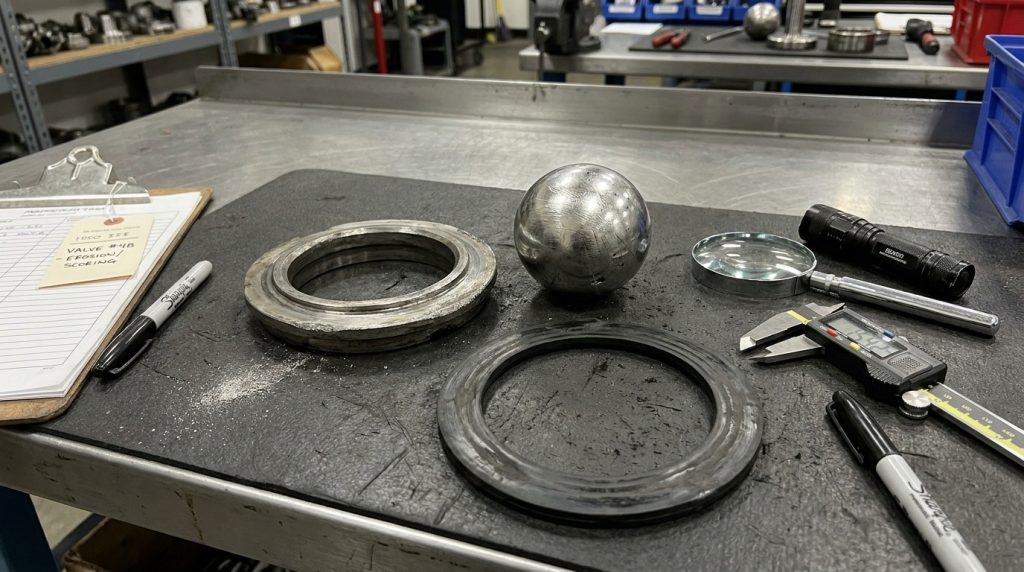
Standard gate valves should not be used for throttling because the wedge and seat can erode when flow passes through a small opening. Standard ball valves are also poor throttling valves because small openings concentrate velocity across the seat and can damage soft sealing surfaces.
Butterfly valves can handle some modulating duties better than standard ball or gate valves, but the design still matters. If the process requires stable control over a wide flow range, a control valve, characterized butterfly valve, or V-port ball valve may be the better specification.
What media causes the most trouble?
Clean water, air, and many compatible liquids are easier for all three valve types. The real difficulty starts with slurry, crystallizing media, viscous fluids, steam, corrosive chemicals, or gas service with strict leakage limits.
Abrasive solids can scratch ball seats, collect in gate pockets, or wear butterfly discs and liners. In water and wastewater treatment, for example, the decision often depends on whether the line carries clean water, backwash flow, sludge, chemicals, or final effluent.
What size or space limit changes the answer?
As size increases, ball valves often become heavier, more expensive, and higher in torque. Gate valves also become large and need more vertical or handwheel clearance, especially with rising-stem designs.
Butterfly valves gain an advantage in large diameters because their short face-to-face dimension and lighter body reduce installation burden. The tradeoff is that the disc remains in the flow, so you should check whether the added pressure loss, turbulence, or pigging obstruction is acceptable.
Standards and Data Sheet Details to Confirm
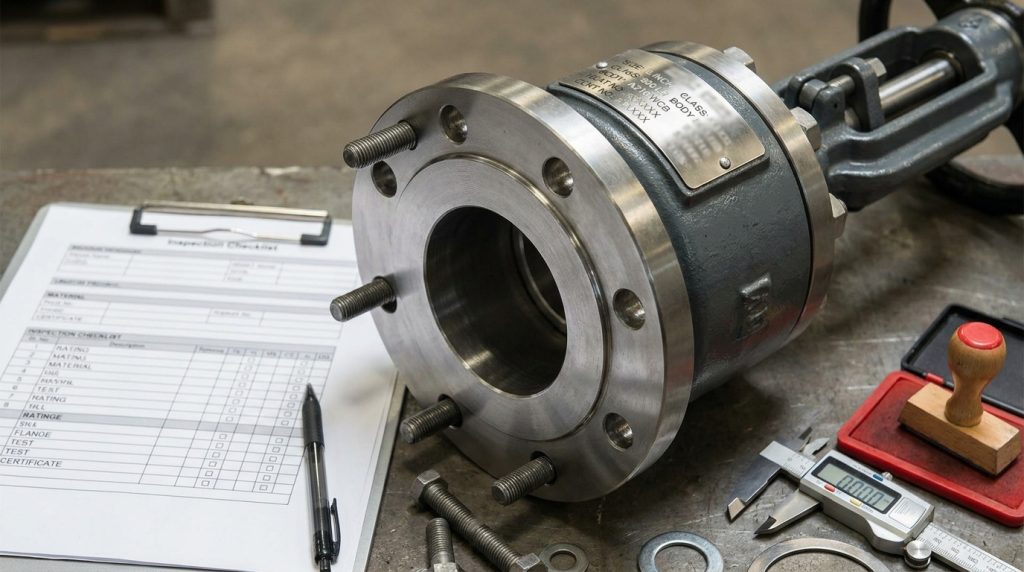
Standards do not select the valve for you, but they define the technical language you need to compare offers fairly. The same “ball valve” or “butterfly valve” description can mean very different things if the pressure class, seat material, test standard, end connection, and bore design are not fixed.
Which standards usually apply?
For metallic industrial valves, ASME B16.34 is often used for pressure-temperature ratings, materials, dimensions, testing, and marking within its scope. ASME B16.5 covers pipe flanges and flanged fittings from NPS 1/2 through NPS 24, with pressure class designations such as Class 150, 300, 600, 900, 1500, and 2500 depending on size and component type.
For product standards, API 608 is commonly used for metal ball valves, API 600 for bolted-bonnet steel gate valves, and API 609 for butterfly valves. For waterworks, AWWA C504 covers rubber-seated butterfly valves from 3 in. through 72 in. for raw water, potable water, wastewater, and reclaimed water within its stated pH and temperature boundaries, while AWWA C509/C515 are common references for resilient-seated gate valves.
What numbers should be checked?
Before you approve a valve type, check the numbers that directly affect fit and performance. Do not rely only on the valve name or nominal size.
Confirm these items on the final data sheet or drawing:
- NPS/DN size, bore type, and face-to-face dimension
- Pressure class or PN rating at the actual design temperature
- Cv or Kv value if pressure drop affects pump duty or process flow
- Seat material, body material, trim material, and media compatibility
- End connection, flange drilling, gasket surface, and bolt clearance
- Leakage test requirement, such as API 598 or EN 12266-1 where applicable
- Operating torque, actuator sizing margin, and fail position if automated
- Whether the valve must be piggable, fire-tested, anti-static, or low-emission
Key Takeaway: a good comparison does not stop at “ball, gate, or butterfly.” It converts the process need into a valve type, then locks that choice with data sheet values that can be inspected, tested, and purchased consistently.
A Practical Selection Framework
Use a short decision sequence when the three options all look possible. This keeps the choice tied to system behavior instead of personal preference.
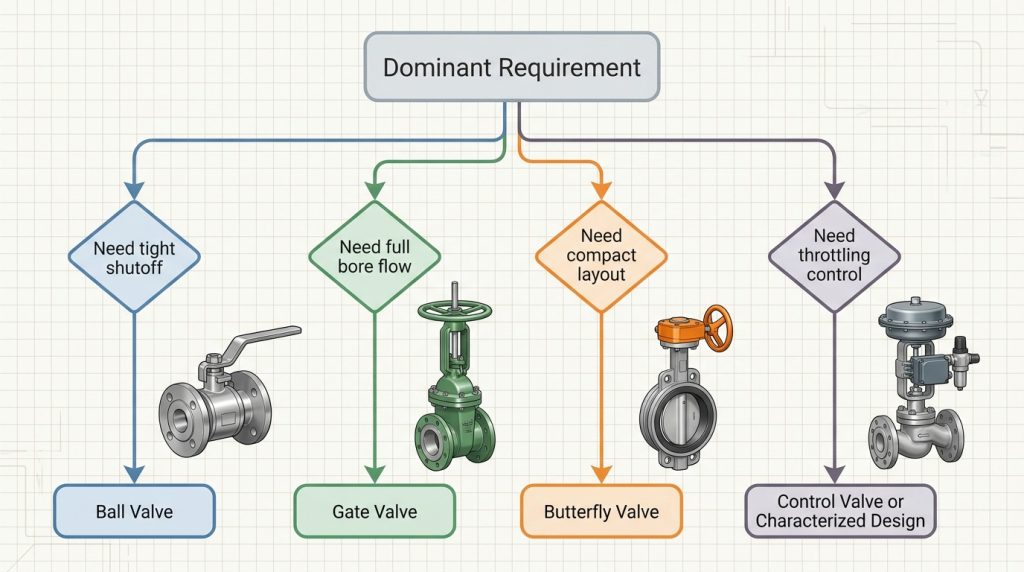
Start with the dominant requirement:
- If leakage control and fast isolation are the main requirements, start with a ball valve.
- If full-bore flow and low long-term head loss are the main requirements, start with a gate valve.
- If large size, compact layout, and installed cost are the main requirements, start with a butterfly valve.
- If continuous throttling is the main requirement, step outside this simple comparison and evaluate a proper control valve or characterized control design.
Then test that first choice against the limits. Ask whether the media will damage the seat, whether the valve will operate frequently, whether pressure drop matters, whether the line needs pigging, whether closure speed could cause water hammer, and whether the selected standard matches the project specification.
For many projects, the final answer is mixed. A plant may use ball valves for instrument isolation and gas shutoff, gate valves for full-bore main isolation, and butterfly valves for large cooling-water or HVAC headers. The best design is not the one that uses one valve everywhere; it is the one that puts each valve where its tradeoff makes sense.
Conclusion
This article compared ball valves, gate valves, and butterfly valves by shutoff behavior, flow path, pressure drop, throttling limits, media risk, standards, and data sheet checks. In simple terms, choose ball valves for tight fast isolation, gate valves for full-bore low-loss service, and butterfly valves for compact large-line isolation where the disc-in-flow design is acceptable.
For a real project, the next step is to confirm the valve type against your medium, pressure, temperature, size, leakage requirement, actuator plan, and applicable standards. If you are comparing options for a specific line list, drawing, or purchase specification, you can request a technical review with the operating conditions and valve requirements so the selection can be checked before ordering.
FAQ
Can I use a butterfly valve instead of a gate valve?
Yes, if compact size, lighter weight, and fast operation matter more than a completely unobstructed bore. Do not make the swap automatically when the line needs pigging, very low head loss, or full-bore isolation.
What’s the best valve for tight shutoff?
A soft-seated ball valve is usually the best starting point for tight shutoff in clean on-off service. For high temperature, abrasive media, or fire-risk service, the seat design and test requirement matter more than the valve name alone.
How do I know if a gate valve is better than a ball valve?
Choose a gate valve when full-bore flow and low pressure loss are more important than quick quarter-turn operation. Choose a ball valve when frequent operation, automation, clear position indication, or tighter sealing is the stronger requirement.
Can I throttle flow with a ball valve, gate valve, or butterfly valve?
Only with caution. Standard gate valves and standard ball valves are poor throttling choices, while butterfly valves can handle some modulation but still need the right disc, seat, actuator, and flow conditions.
What’s the best choice for large-diameter water lines?
A butterfly valve is often the practical choice for large-diameter water lines because it is compact and lighter, but a gate valve may still be better where the system needs full-bore flow and minimum head loss. The final choice should be checked against pressure drop, closure speed, installation space, and the project’s waterworks standard.