
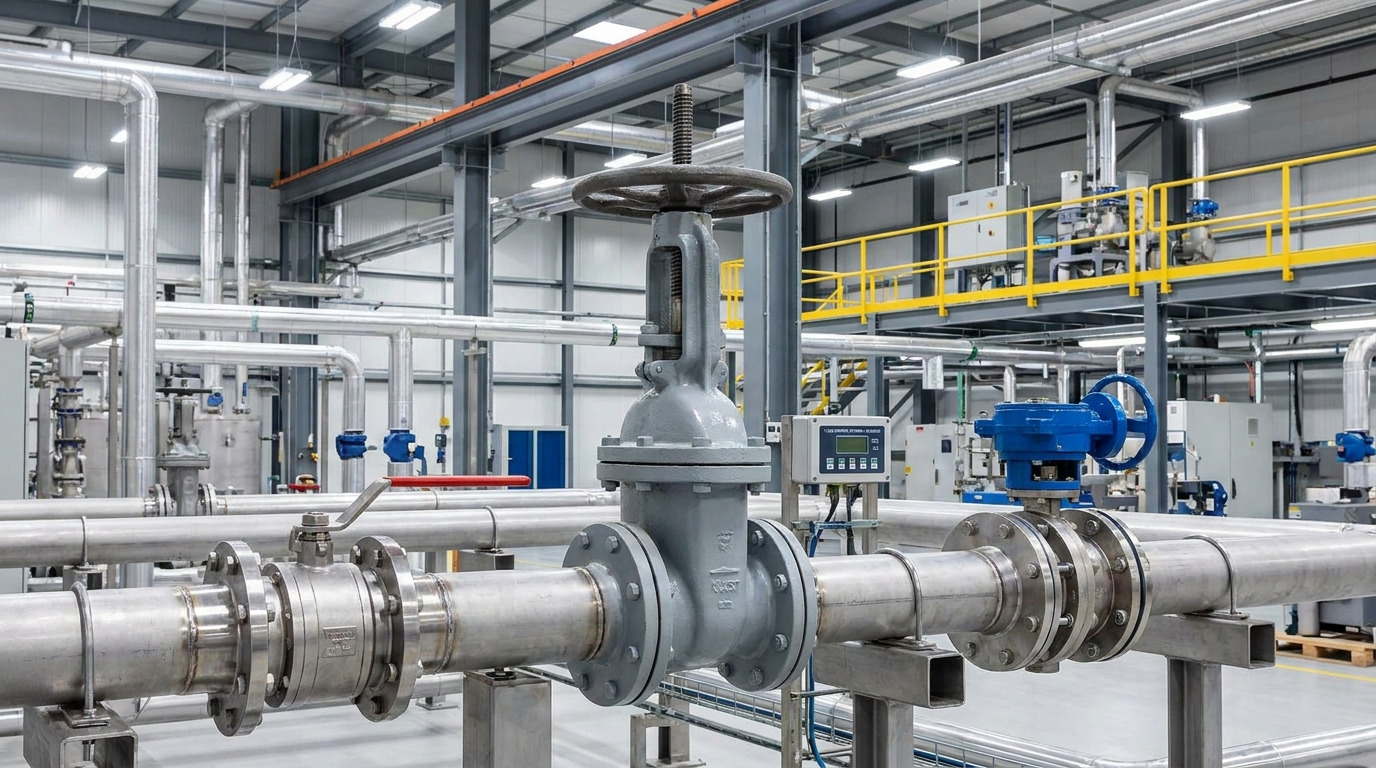
Understanding different equipment types for your application requires analyzing fluid characteristics, pressure limits, and isolation requirements. You might struggle with frequent pipeline leaks, a common scenario when mismatched equipment handles harsh factory media. Such mismatches cause catastrophic system failures, costing facilities thousands through downtime.
Fortunately, implementing proper mechanisms provides a foolproof way preventing unwanted fluid mixing. Choosing a proper ball valve vs gate valve vs butterfly valve guarantees consistent pressure control throughout complex manufacturing facilities. Quality equipment lasts longer, keeping workers safe from hazardous chemical exposure.
What Are Key Valve Terms You Must Understand?
Comparing a ball valve vs gate valve vs butterfly valve requires understanding basic industry vocabulary. Knowing technical terminology prevents costly misapplication during complex pipeline projects. An actuator operates internal mechanisms while specific flow paths dictate fluid direction safely.
What Makes an Actuator Function Properly?
Actuators serve as primary power sources moving internal parts smoothly. Facilities rely on manual or automated versions depending upon required torque levels. Here’s the deal: picking an incorrect actuator guarantees sluggish performance during high-stress factory operations.
- Manual units operate via handwheels.
- Electric models convert alternating currents.
- Pneumatic devices run on compressed air.
Why Does Flow Path Matter for Piping?
Internal passageways determine how liquids travel from inlet ports toward outlet connections. Straight paths reduce unwanted turbulence whereas convoluted routes create heavy friction losses.
Key Takeaway: Mastering basic vocabulary helps you avoid severe purchasing errors, keeping your facility running smoothly.
| Term | Definition | Impact on Performance |
|---|---|---|
| Actuator | Control unit | Dictates response time |
| Flow Path | Internal route | Affects pressure loss |
| Backflow | Reversed liquid | Causes severe damage |
This breakdown shows how foundational concepts directly influence mechanical behavior inside industrial pipelines.
How Do You Compare These Control Mechanisms?
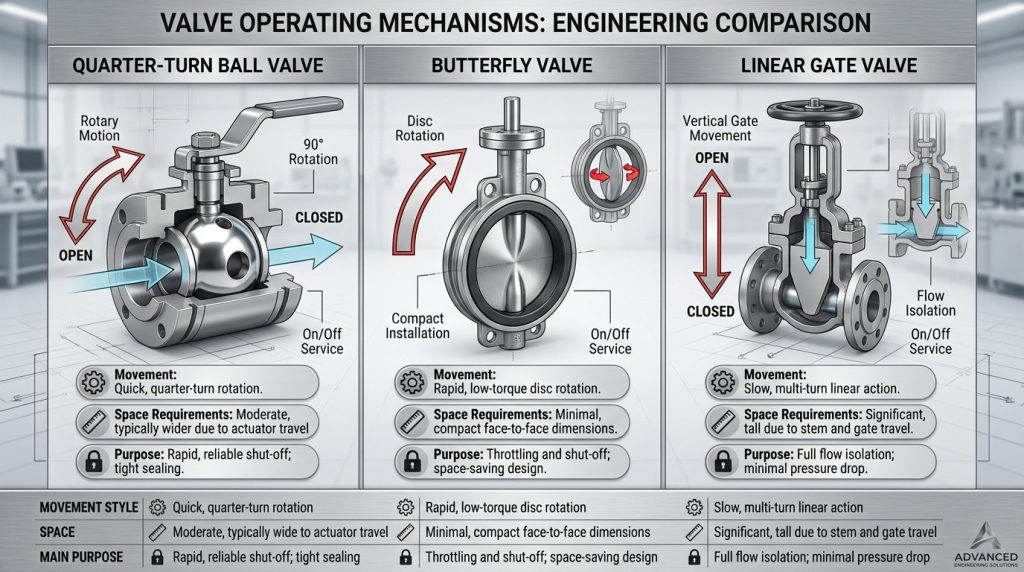
Evaluating any ball valve vs gate valve vs butterfly valve reveals distinct operational differences. Quarter-turn designs act fast whereas linear models take longer for complete closure. Your specific fluid parameters dictate which design works best for everyday operations.
How Does a Quarter-Turn Mechanism Work?
Spherical closures feature hollow ports aligned with liquid direction. Turning external handles ninety degrees shuts off passage completely. What’s the real story? These fast-acting designs provide reliable sealing without requiring excessive maintenance over time.
- Spheres handle high pressures effortlessly.
- Discs fit tight spaces nicely.
- Both turn ninety degrees quickly.
Which Option Saves You More Money?
Rotary discs generally cost less than bulky linear gates. Petroleum plants favor them because they require minimal installation effort.
Key Takeaway: Matching a mechanism with specific factory needs prevents budget overruns and reduces maintenance headaches.
| Type | Mechanism | Cost Profile |
|---|---|---|
| Spherical | Rotary | Moderate |
| Disc | Quarter-turn | Low |
| Linear | Vertical | High |
Comparing these options demonstrates how mechanical simplicity directly correlates with lower installation expenses.
What Makes Gate Valves Ideal for Large Pipes?
Analyzing a ball valve vs gate valve vs butterfly valve shows why linear models dominate massive infrastructure projects. Heavy plates move vertically, creating a solid barrier against heavy liquid streams. Operators deploy them specifically for total isolation rather than gradual throttling.
How Does Linear Motion Stop Fluid Flow?
Vertical gates lower slowly into a secure seating area. This slow action prevents sudden water hammer shocks. Think about it: slamming a massive barrier closed rapidly would shatter surrounding pipe networks instantly.
- Slow closures protect weak joints.
- Vertical plates create tight seals.
- Open positions offer zero resistance.
Why Are They Bad at Regulating Flow?
Partially open gates vibrate violently under high velocity. Constant rattling damages internal components quickly.
Key Takeaway: You should reserve linear gates strictly for complete isolation tasks, avoiding any partial flow regulation.
| Feature | Action | Result |
|---|---|---|
| Barrier | Vertical drop | Total isolation |
| Speed | Slow travel | Prevents shock |
| Regulation | Poor throttling | Causes vibration |
This mechanical profile proves why vertical plates excel at isolation but fail during partial regulation duties.
How Do Globe Valves Excel at Throttling?
When comparing a ball valve vs gate valve vs butterfly valve against throttling models, linear discs provide superior flow adjustment. Fluid takes multiple turns inside a unique body shape. This winding path allows operators fine control over passing media amounts.
How Does Fluid Direction Change Inside?
Liquids enter below a seating ring before moving upward. This forced detour creates natural resistance against high-speed surges. You might be wondering: why force liquid through such convoluted pathways intentionally?
- Detours reduce heavy kinetic energy.
- Upward motion controls volume precisely.
- Internal shapes prevent rapid wear.
What Causes Pressure Drops in These Units?
Every directional change consumes energy from passing liquids. Multiple internal bends create significant friction losses automatically.
Key Takeaway: Choose globe models when precise regulation outweighs concerns over slight pressure reductions.
| Component | Function | Effect |
|---|---|---|
| Disc | Moves vertically | Adjusts volume |
| Internal path | Forces turns | Creates drop |
| Seat ring | Blocks passage | Seals tightly |
Reviewing this internal geometry explains why heavy throttling tasks demand specific directional changes.
When Should You Choose Plug Valves?
Reviewing a ball valve vs gate valve vs butterfly valve helps engineers understand when cylindrical plugs become necessary. Corrosive environments destroy standard equipment rapidly. Cylindrical stoppers offer robust performance during highly severe industrial applications.
Why Do Refineries Prefer Cylindrical Plugs?
Refineries handle nasty chemicals that ruin standard seals fast. Plugs provide a massive surface area for better stopping power. Ready for the good part? These robust units simply adjust downward as parts wear out over time.
- Large surfaces stop leaks better.
- Adjustable fits extend operational life.
- Sturdy metals resist harsh chemicals.
How Do They Prevent Internal Voids?
Unlike spherical designs, cylinders leave zero empty spaces inside their housing. This prevents dangerous chemical build-up.
Key Takeaway: Investing in cylindrical stoppers protects workers from chemical exposure caused by trapped liquids.
| Feature | Advantage | Benefit |
|---|---|---|
| Cylinder | No voids | Stops build-up |
| Surface | Massive area | Seals tight |
| Fit | Adjustable | Extends lifespan |
Evaluating these distinct traits shows how void-free designs keep hazardous plants operating securely.
What Are Key Applications for Needle Valves?
While a ball valve vs gate valve vs butterfly valve manages high volumes, needle designs handle minute quantities. Delicate instruments require exact dosing without sudden surges. Conical plungers provide unparalleled accuracy for clean gas lines.
How Does a Conical End Regulate Flow?
A sharp plunger acts like a precise tuning dial. Moving this pin barely opens a tiny gap. Consider this fact: operators count exact drops per minute using fine threads.
- Sharp pins allow micro-adjustments.
- Small gaps prevent massive surges.
- Threaded stems give ultimate control.
Why Are Clean Liquids Ideal Here?
Dirty fluids clog tiny internal passages almost instantly. Propane lines remain clean enough for these delicate instruments.
Key Takeaway: You must reserve conical plungers for ultra-clean environments demanding microscopic adjustments.
| Application | Media Type | Benefit |
|---|---|---|
| Gas lines | Propane | Exact dosing |
| Instruments | Clean liquids | Micro-adjustments |
| Laboratories | Pure water | Zero surges |
This specific use case highlights how microscopic gaps deliver extreme accuracy during sensitive operations.
How Do Check Valves Prevent System Backflow?
A ball valve vs gate valve vs butterfly valve requires human or mechanical actuation whereas backflow preventers operate automatically. Reversed liquids destroy expensive pumps overnight. Unidirectional designs slam shut whenever pressure drops abruptly.
What Happens When Outflow Pressure Increases?
Higher downstream forces push internal discs backward. This reverse action seals inlet ports immediately. But wait, consider another detail: self-controlling actions require zero external power sources for reliable operation.
- Pressure differences drive automatic closures.
- Fast reactions save costly machinery.
- Simple mechanics reduce failure points.
How Do They Mitigate Water Hammer?
Sudden fluid reversals create massive shockwaves inside pipes. Swing models close quickly enough, stopping those damaging shocks entirely.
Key Takeaway: Installing unidirectional mechanisms saves expensive pumping equipment from catastrophic reverse-flow damage.
| Component | Function | Advantage |
|---|---|---|
| Disc | Swings backward | Stops backflow |
| Spring | Assists closure | Speeds reaction |
| Body | Houses parts | Contains pressure |
Understanding automated closure mechanisms reveals their sheer value in protecting vulnerable upstream machinery.
Why Opt for Angle Seated Valves?
Unlike a standard ball valve vs gate valve vs butterfly valve, angled models handle thick slurries effortlessly. Heavy liquids demand straight paths without harsh bottlenecks. Placing seating areas at an angle creates massive clearance for viscous media.
How Does a Piston Actuator Deliver Speed?
Pneumatic cylinders pull internal plugs backward instantly. This fast retraction clears pathways immediately upon receiving air signals. The best part? Operators achieve incredibly low pressure drops despite handling thick materials.
- Air pressure guarantees instant response.
- Angled paths reduce flow resistance.
- Pistons survive millions of cycles.
What Makes Them Effective Against Shocks?
Reversing their installation direction naturally combats sudden pipeline shocks. Plugs close against incoming streams gently rather than slamming violently.
Key Takeaway: Select angled piston models for high-viscosity applications requiring lightning-fast response times.
| Feature | Action | Benefit |
|---|---|---|
| Angled seat | Clears path | Lowers drop |
| Piston | Pulls plug | Adds speed |
| Reverse setup | Closes gently | Stops shock |
Reviewing this angled geometry demonstrates how unconventional shapes solve extremely difficult fluid handling challenges.
How Do Diaphragm Valves Maintain Sanitary Flow?
Comparing a ball valve vs gate valve vs butterfly valve against membrane types reveals why food plants demand specific designs. Standard models harbor bacteria inside tiny crevices. Elastic membranes completely isolate passing media from any mechanical components.
How Does a Flexible Membrane Isolate Media?
Compressors pinch rubber sheets downward until they touch bottom surfaces. This pinching action creates a flawless barrier against contamination. Consider another perk: cleaning these units takes minutes because no hidden pockets exist.
- Rubber sheets block mechanical contact.
- Smooth channels wash out easily.
- Elastic materials resist acidic cleaners.
Why Do Pharmaceutical Plants Rely on Them?
Making medicine requires absolutely sterile conditions round-the-clock. Membrane models guarantee zero cross-contamination between different drug batches.
Key Takeaway: You should deploy membrane units whenever product purity remains your highest operational priority.
| Industry | Contamination Risk | Solution |
|---|---|---|
| Pharmaceutical | Very high | Rubber membrane |
| Food & Beverage | High | Smooth channel |
| Cosmetics | Moderate | Easy washdown |
Analyzing these sanitary features shows exactly why cleanroom environments reject traditional industrial equipment.
What Role Do Solenoid Valves Play in Automation?
Choosing between a ball valve vs gate valve vs butterfly valve often involves manual labor whereas solenoids offer pure automation. Modern factories require instant electronic responses during emergency scenarios. Magnetic fields pull internal plungers instantly upon receiving electrical signals.
How Do Electromagnetic Fields Open Pathways?
Electric currents energize copper coils located atop metal housings. This energized coil lifts magnetic plungers upward effortlessly. You might ask yourself: how fast do magnetic fields react during emergencies?
- Coils generate magnetic pull instantly.
- Plungers lift without mechanical linkage.
- Springs push plungers down afterward.
Why Are They Necessary for Leak Detection?
Production lines use automated sensors searching for tiny pressure drops. Once detected, sensors trigger solenoids, shutting off supply lines instantly.
Key Takeaway: Implementing magnetic automation provides instantaneous safety shutoffs, protecting entire facilities from massive leaks.
| Component | Function | Benefit |
|---|---|---|
| Copper coil | Creates magnet | Instant action |
| Plunger | Blocks path | Tight shutoff |
| Spring | Returns plunger | Failsafe close |
This electrical integration proves how simple magnetic principles create highly responsive automated safety systems.
How Can You Select Ideal Mechanisms for Long-Term Success?
Sorting through countless equipment options feels overwhelming when your facility demands flawless operation. We resolved your confusion by comparing various designs, explaining actuator types, and detailing specific applications ranging from sanitary membranes toward robust industrial gates. Matching mechanical traits with your unique fluid parameters prevents catastrophic system failures.
Ruitoflow delivers custom fluid control solutions engineered exactly for demanding global industries. Our manufacturing expertise guarantees reliable performance across every pipeline project you manage. Reach out and contact us today for expert guidance. Precision engineering transforms chaotic pipelines into perfectly controlled networks.
FAQ
Q1: What’s the best way to choose between quarter-turn and linear models?
Yes, you should assess your space constraints first. Quarter-turn designs require less room whereas linear models need vertical clearance for proper operation.
Q2: Can I use gate models for throttling water flow?
No, never use them for regulation. Partially open plates vibrate violently, causing severe internal damage quickly.
Q3: How do I know if a plug design fits my refinery?
Yes, it fits perfectly if you handle corrosive chemicals. Cylindrical stoppers lack internal voids, preventing hazardous chemical buildup entirely.
Q4: Can I rely on check valves for automated backflow prevention?
Yes, absolutely. Their internal discs react strictly based on pressure differences, shutting automatically without requiring external power.
Q5: What’s the best option for maintaining absolute sanitary conditions?
Yes, membrane designs work best. Elastic rubber sheets isolate passing media from mechanical components, preventing bacterial contamination completely.