
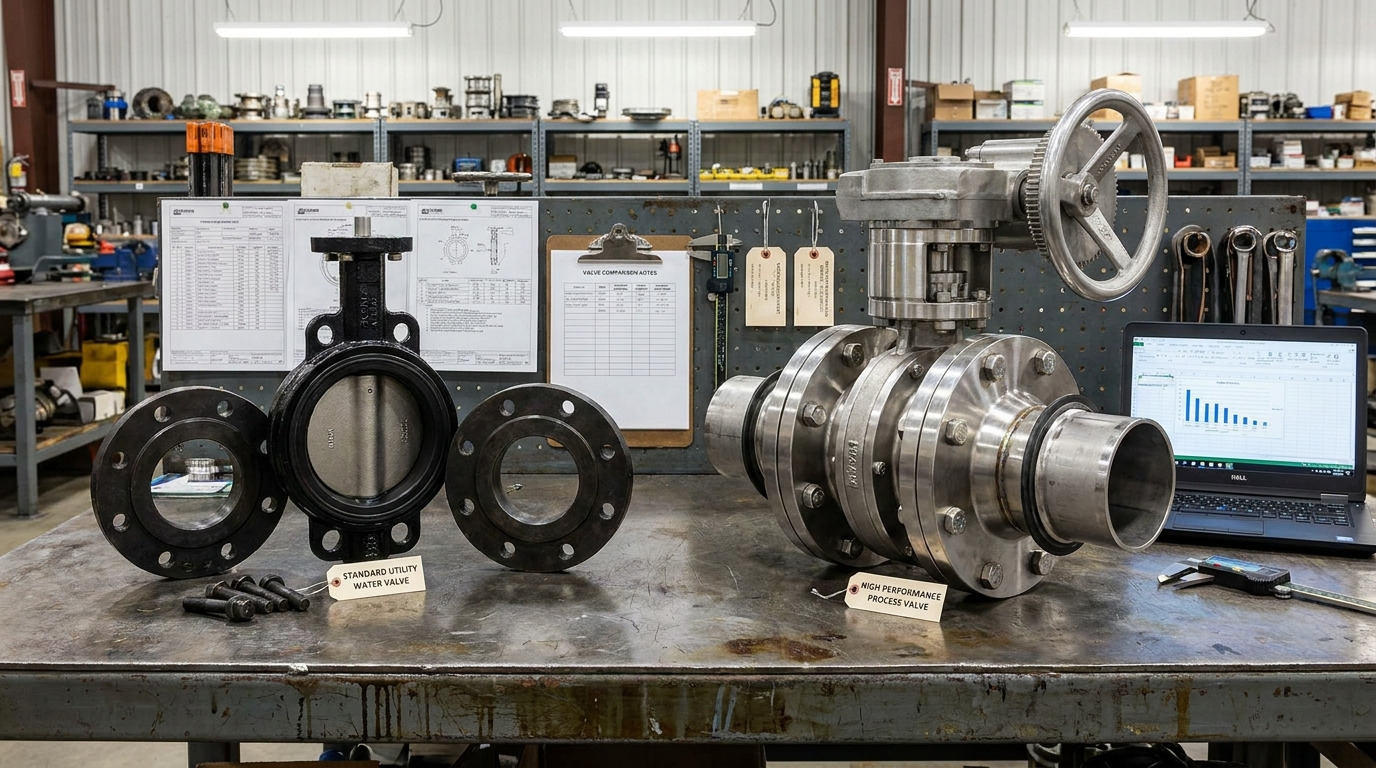
A high performance butterfly valve is the better choice when a standard butterfly valve cannot safely handle the pressure, temperature, media, leakage expectation, or cycling demand. The high performance butterfly valve vs butterfly valve decision is not about buying the “stronger” option every time; it is about matching the valve design to the actual service conditions.
In this article, “butterfly valve” means a standard, general-service, resilient-seated concentric valve unless noted otherwise. If you are comparing options for water, HVAC, steam, hydrocarbons, chemical lines, or process isolation, the first useful step is understanding where a regular butterfly valve is still the right economical choice and where high-performance construction becomes necessary.
A typical example is a plant that uses low-pressure cooling water in one area and hot condensate, solvents, or higher-pressure process fluid in another. Both lines may accept a quarter-turn valve, but the seat material, offset design, test requirement, and pressure-temperature rating can point to two different valve types.
High Performance Butterfly Valve vs Butterfly Valve Basics
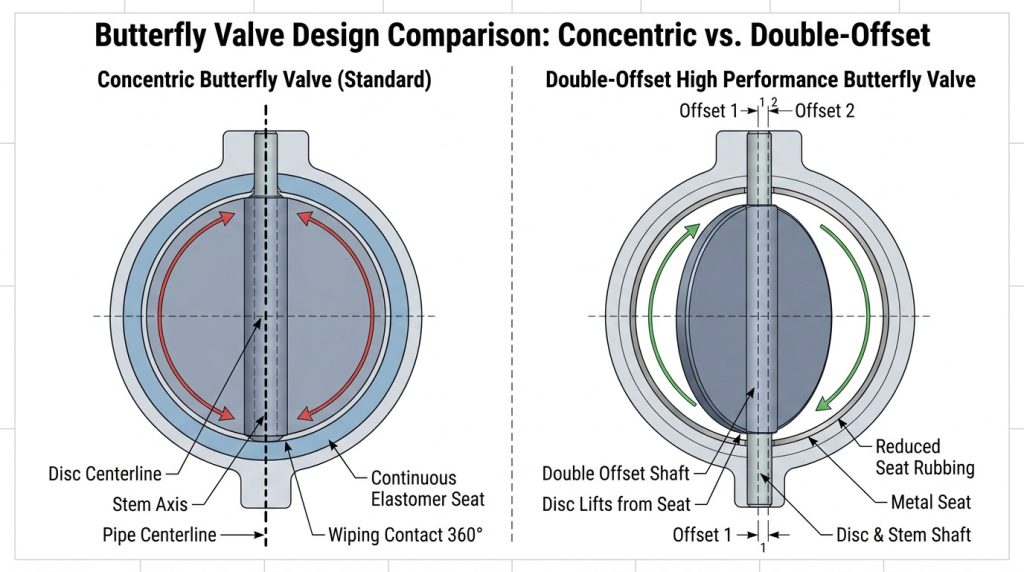
The basic difference is that a standard butterfly valve usually relies on a centered disc pressing into an elastomer seat, while a high performance butterfly valve uses an offset design and more demanding seat materials to reduce rubbing, improve sealing, and handle tougher service.
A standard concentric butterfly valve is simple, compact, and cost-effective. The disc rotates around the centerline of the pipe and compresses into a rubber or elastomer liner. This makes it useful for clean water, HVAC, low-pressure air, many utility lines, and non-severe industrial service.
A high performance butterfly valve, often called an HPBV, normally uses a double-offset or eccentric geometry. The stem and disc are offset so the disc moves away from the seat as it opens, reducing continuous seat scraping. This design supports higher pressure-temperature combinations, better shutoff in demanding media, and longer seat life where a rubber-lined valve would wear too quickly.
Is High Performance Only About Pressure?
No. Pressure is important, but it is only one part of the decision. A standard valve can fail early even at moderate pressure if the temperature, chemical compatibility, seat swelling, cycle frequency, or leakage requirement is outside the seat design.
You should also check whether the valve is required for throttling, isolation, frequent operation, or emergency shutoff. A valve that works well for occasional chilled-water isolation may not be suitable for hot oil, steam, hydrocarbons, corrosive chemicals, dry gas, vacuum, or high-cycle automation.
Where Does a Standard Valve Still Win?
A standard butterfly valve still wins when the service is clean, relatively low-pressure, moderate-temperature, and not safety-critical. In those cases, a resilient-seated valve often gives the best balance of price, weight, installation simplicity, and sealing performance.
The practical rule is simple: do not pay for high performance if the system does not need it. If you have clean water, cooling water, HVAC, irrigation, non-abrasive slurry at suitable velocity, or general utility service within the valve data sheet, a standard butterfly valve is often the more sensible option.
Core Differences That Change the Decision
The real decision changes when you compare construction, rating basis, seat behavior, leakage expectations, and application risk together. A single label such as “Class 150” or “PTFE seat” is not enough to prove that the valve is suitable.
The table below gives a practical comparison you can use before discussing final specifications with a manufacturer.
| Decision point | Standard butterfly valve | High performance butterfly valve | Practical check |
|---|---|---|---|
| Common design | Concentric disc and resilient seat | Usually double-offset or eccentric disc and seat | Confirm disc geometry, seat type, and shaft design |
| API 609 category concept | Category A is commonly associated with manufacturer-rated CWP valves; API 609 public summaries list NPS 2 to NPS 48 with ASME Class 125 or Class 150 bolting patterns | Category B is ASME Class and pressure-temperature rated; public API 609 summaries list lug/wafer Class 150, 300, and 600 from NPS 3 to NPS 48 | State API 609 category and edition in the project data sheet |
| Seat materials | EPDM, NBR, FKM, or other elastomers | PTFE/RPTFE, reinforced polymer, laminated seat, graphite, or metal seat depending on design | Match seat to media, temperature, pressure, and leakage requirement |
| Pressure-temperature basis | Often limited by elastomer seat and manufacturer CWP | Body may follow ASME class basis, but seat rating may be lower than body rating | Ask for both body rating and seat rating |
| Published catalog examples | Some rubber-lined industrial valves are limited around 200 psig and 300°F under specific catalog conditions | Some PTFE/RPTFE HPBV designs with stainless trim are listed around 740 psig and 400°F under specific catalog conditions | Treat these as examples, not universal ratings |
| Leakage expectation | Soft seats may achieve no visible leakage under specified test conditions | Soft-seated HPBVs can be very tight; metal-seated designs may allow defined leakage unless specified otherwise | Confirm API 598, ISO 5208, EN 12266-1, or project leakage class |
| Best-fit services | Water, HVAC, air, utilities, non-severe process service | Steam, hot water, hydrocarbons, higher-pressure gas, chemical service, higher cycle duty | Use actual service data, not only valve name |
| Cost logic | Lower initial cost and simpler construction | Higher initial cost, often justified by severe conditions | Compare life-cycle risk, not only unit price |
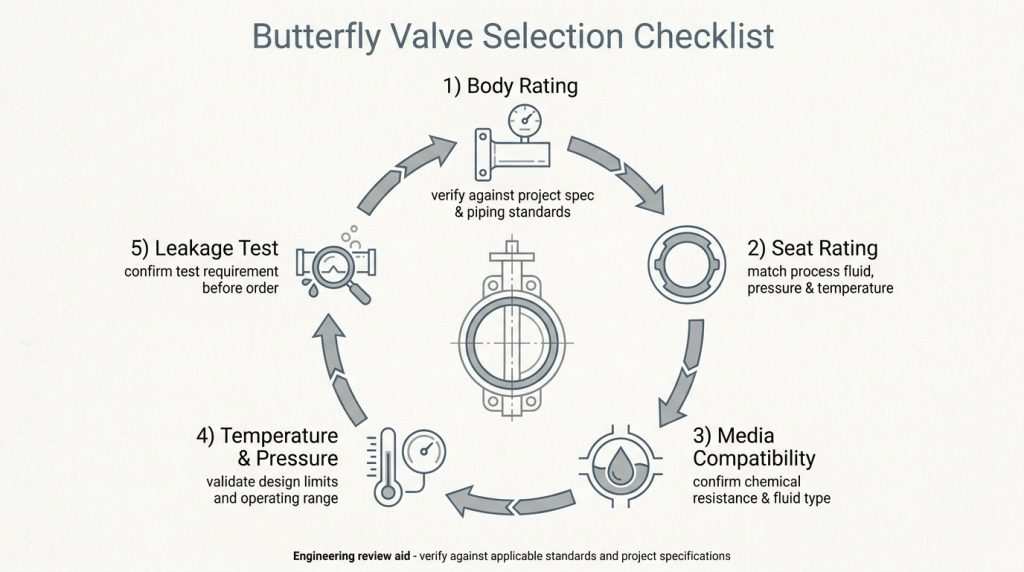
The most important point in this table is the seat rating. API 609 Category B language allows the seat rating to be less than the body rating, so a Class 300 body does not automatically mean the seat can seal at every Class 300 pressure-temperature condition.
When a Standard Butterfly Valve Is Enough
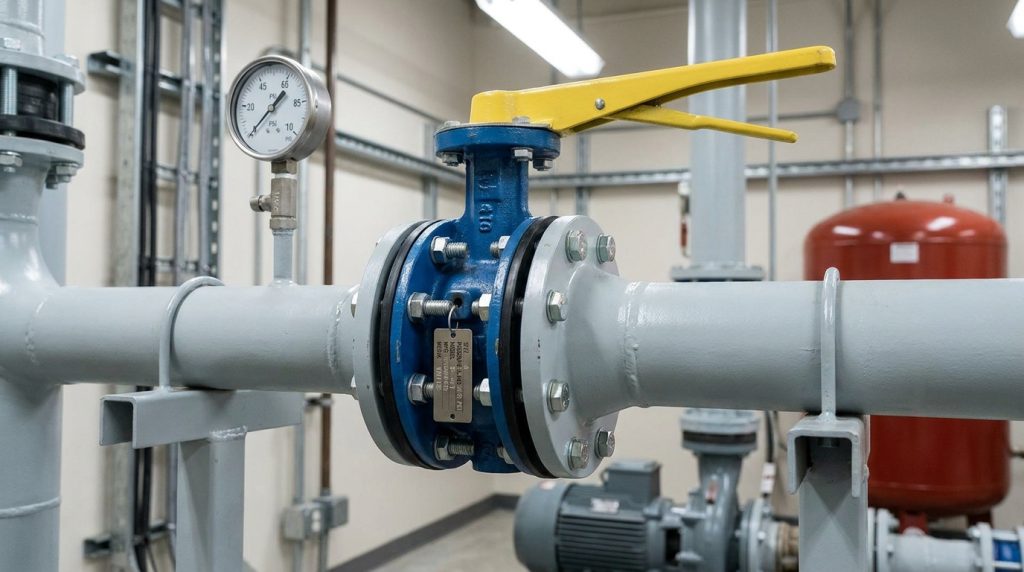
A standard butterfly valve is enough when the media, temperature, pressure, cycling, and leakage requirement stay inside the published limits of the resilient seat. In clean utility services, it may be the most practical and economical answer.
For water and HVAC applications, the reasons are clear. The valve is light, compact, easy to automate, and usually available in wafer, lug, or flanged-style configurations. The resilient liner can provide tight shutoff under suitable test conditions, while the simple concentric construction keeps cost and maintenance complexity down.
A standard valve is usually appropriate when these conditions are true:
- The media is clean water, treated water, air, or another compatible non-severe fluid.
- The operating temperature stays comfortably within the elastomer seat rating.
- The pressure is within the manufacturer’s CWP and flange compatibility.
- The line is not carrying erosive solids, aggressive solvents, hot hydrocarbons, or high-temperature steam.
- The valve is not expected to solve a severe shutoff, fire-safe, or emissions-control requirement by itself.
If you need to understand how temperature changes material suitability, a separate check of butterfly valve material temperature limits is useful because EPDM, NBR, FKM, PTFE, and metal seats fail in different ways.
Key takeaway: a standard butterfly valve is not a “cheap version” of an HPBV. It is the correct valve when the service is clean, moderate, and well inside the seat and body rating.
When You Need a High Performance Butterfly Valve
You need a high performance butterfly valve when the service starts to exceed the practical comfort zone of a resilient-seated concentric valve. The common triggers are higher pressure, higher temperature, more aggressive media, tighter shutoff expectations, or frequent operation.
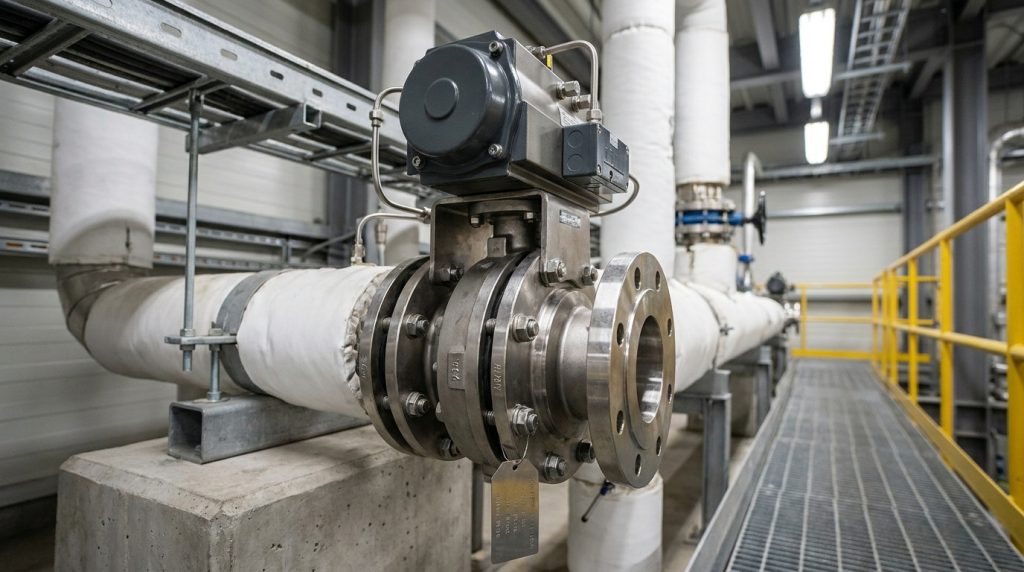
The double-offset design matters because it changes how the disc interacts with the seat. Instead of dragging across the seat through much of the rotation, the disc cams away from the seat during opening and returns into the seat during closing. That reduces friction, lowers wear, and helps the valve maintain shutoff under tougher conditions.
How Do Pressure and Temperature Change the Choice?
Pressure and temperature must be judged together because seat performance drops as conditions become hotter, more chemically aggressive, or more mechanically loaded. A valve that looks safe at ambient temperature may not seal safely at an elevated process temperature.
For metallic pressure boundaries, ASME B16.34-2025 is commonly used to evaluate pressure-temperature ratings for steel, nickel-base alloy, and other applicable valve materials. But the body rating is only part of the answer. The final limit may be set by the seat, stem seal, bearing material, packing, end connection, or actuator torque.
In 2026 projects, also confirm which API 609 edition the purchase specification requires. API announced that API 609 10th Edition was published in May 2026 and becomes effective on December 1, 2026; many active specifications may still name a previous edition during the transition.
What Media Conditions Make the Seat Decisive?
The seat becomes decisive when the media can swell, soften, cut, chemically attack, or thermally damage the sealing surface. Clean water is forgiving; steam, solvents, hydrocarbons, abrasive slurry, dry gas, and high-temperature process fluids are not.
PTFE or RPTFE may be suitable for many chemical services, but it is not a universal answer. Metal or graphite-assisted designs may be considered for higher temperature or harsher service, but then leakage class and operating torque must be reviewed carefully. For severe pressure, heat, or abrasive service, a metal seat butterfly valve may be a better path than trying to force a soft seat into the wrong application.
Why Simple Comparison Signals Can Mislead You
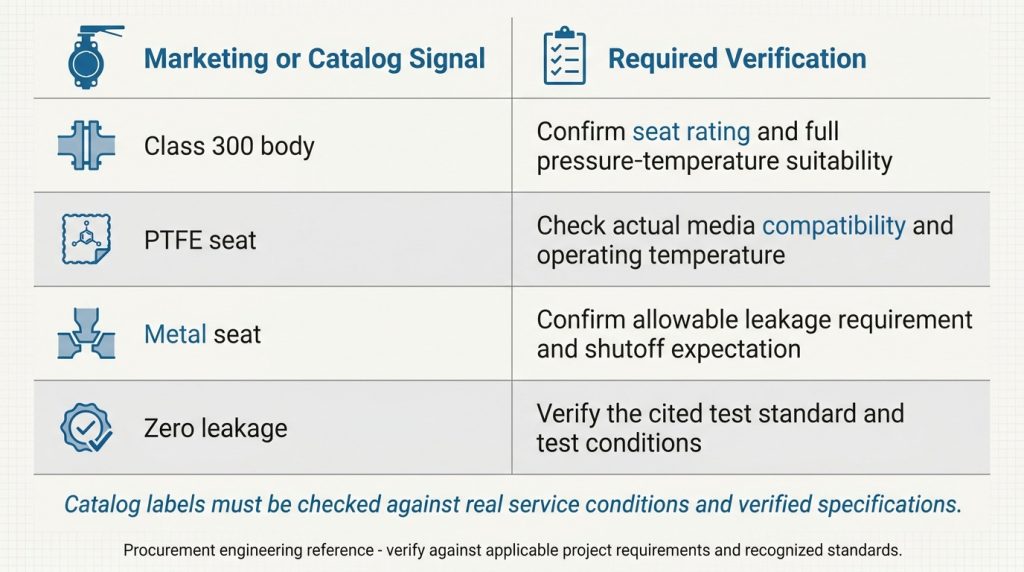
Simple comparison signals can mislead you because valve labels often hide the conditions behind the rating. “High performance,” “Class 300,” “zero leakage,” and “PTFE seat” all need context before they become useful specifications.
From a valve manufacturer’s perspective, the most common mistake is comparing two valves by name instead of by service envelope. You should compare the actual pressure, temperature, media, leakage test, end connection, flow role, actuator, and operating frequency.
Can a Higher Body Rating Hide a Seat Limit?
Yes. A higher body rating can hide a lower seat limit if the seat cannot seal at the same pressure-temperature condition as the body. This is especially important for high performance butterfly valves because the pressure boundary and sealing system may have different limits.
For example, a valve body may be offered in an ASME pressure class, while the seat insert has a separate rating curve. If the data sheet gives only the body class, ask for the seat rating at your maximum operating temperature and differential pressure.
Can PTFE or Metal Seats Solve Every Problem?
No. PTFE can improve chemical resistance and temperature capability compared with many elastomers, but it can cold-flow, deform, or lose sealing margin under the wrong pressure-temperature combination. Metal seats can handle harsher temperatures and abrasion, but they may not provide the same leakage performance as a soft seat unless the design and test requirement are specified.
This is why leakage language matters. API 598, 11th Edition, February 2023 covers inspection and pressure testing for resilient-seated, nonmetallic-seated, and metal-to-metal-seated gate, globe, plug, ball, check, and butterfly valves. If shutoff is critical, do not rely on marketing phrases; specify the required test standard and acceptable leakage rate.
How to Decide Without Overbuying
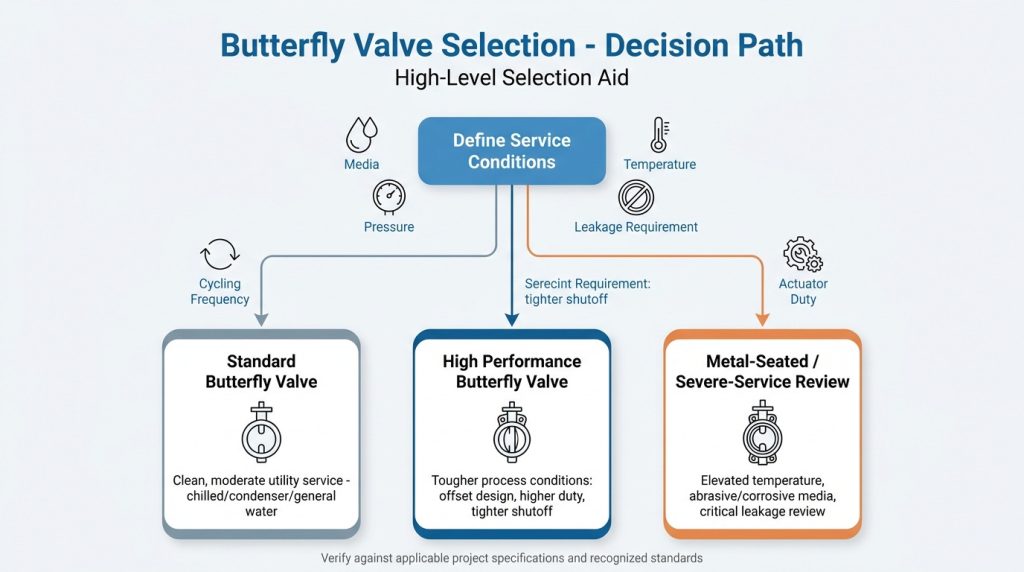
The best decision is to start with the service conditions, then choose the simplest valve that safely meets them. This prevents two opposite mistakes: buying a standard valve for severe service, or buying an HPBV where a regular resilient-seated valve would perform well.
Use this quick decision path before comparing price:
- Choose a standard butterfly valve when the service is clean, compatible, moderate in pressure and temperature, and well within the elastomer seat data.
- Move toward a high performance butterfly valve when pressure-temperature load, media severity, shutoff requirement, cycling, or actuator duty becomes demanding.
- Review a metal-seated or severe-service design when temperature, abrasion, fire-safe requirements, or leakage expectations exceed PTFE/RPTFE capability.
- Confirm both body and seat ratings, not only flange class.
- Verify test requirements before purchase, especially API 598, ISO 5208, EN 12266-1, or project-specific leakage language.
What Should You Confirm Before Comparing Price?
Confirm the operating data before comparing price because the lowest quote is meaningless if the valve is not rated for the real service. At minimum, prepare the media, maximum and normal temperature, maximum and normal pressure, differential pressure, pipe size, flange standard, valve function, operation frequency, actuator requirement, leakage class, and applicable standard.
You should also include whether the valve is used for isolation, throttling, control, emergency shutoff, dead-end service, or occasional maintenance isolation. These details can change the correct valve type even when pipe size and pressure class look the same.
When Should You Move to a Sizing Check?
Move to a sizing check when the valve will throttle, control flow, operate partially open, or sit in a line where pressure drop, velocity, cavitation, or noise matters. The HPBV decision tells you which construction family is likely suitable; it does not replace flow sizing.
For those cases, a focused butterfly valve selection review should include Cv, opening angle, pressure drop, torque, actuator safety factor, and the valve’s position in the piping system. Final values should always be confirmed against the valve drawing and data sheet.
Conclusion
A high performance butterfly valve is not automatically better than a standard butterfly valve; it is better when the application demands higher pressure-temperature capability, tougher seat materials, tighter tested shutoff, reduced seat wear, or more severe media compatibility. A standard butterfly valve remains the right choice for many water, HVAC, air, and utility systems where the elastomer seat and body rating are comfortably within the operating envelope.
If you are comparing the two for a real project, gather the media, pressure, temperature, pipe size, flange standard, valve function, leakage requirement, and actuator needs first. Then contact us to discuss which butterfly valve construction can match those conditions without overbuying or underspecifying the valve.
FAQ
Can I Replace a Standard Butterfly Valve With HPBV?
Yes, you can in many systems, but it should not be treated as a direct swap without checking dimensions, torque, flange fit, face-to-face length, pressure class, and actuator requirements. A high performance butterfly valve may have different installation and operating requirements from a resilient-seated concentric valve.
What’s the Best Choice for Steam Service?
A high performance butterfly valve is usually the better starting point for steam service. Steam combines temperature, pressure, and sealing stress in a way that often exceeds the comfort zone of rubber-lined standard butterfly valves.
How Do I Know if My Service Is Too Severe?
Your service is probably too severe for a standard butterfly valve if it includes high temperature, high differential pressure, aggressive chemicals, hydrocarbons, dry gas, abrasive solids, frequent cycling, or strict leakage requirements. The safest check is to compare your actual operating conditions against the body rating, seat rating, and test standard.
Can I Use a Standard Butterfly Valve for Chemicals?
Yes, but only when the chemical is compatible with the seat, liner, disc, and shaft materials at the actual temperature and concentration. Mild chemical water treatment service may be acceptable, while solvents, acids, caustics, or elevated-temperature chemicals may require PTFE, metal, or other high-performance seat options.
What’s the Best Way to Ask for a Quotation?
The best way is to send a complete service snapshot, not only the valve size. Include media, concentration, pressure, temperature, line size, flange standard, valve type preference, seat material if known, actuator requirement, leakage test, quantity, and any project standard such as API 609 or API 598.