
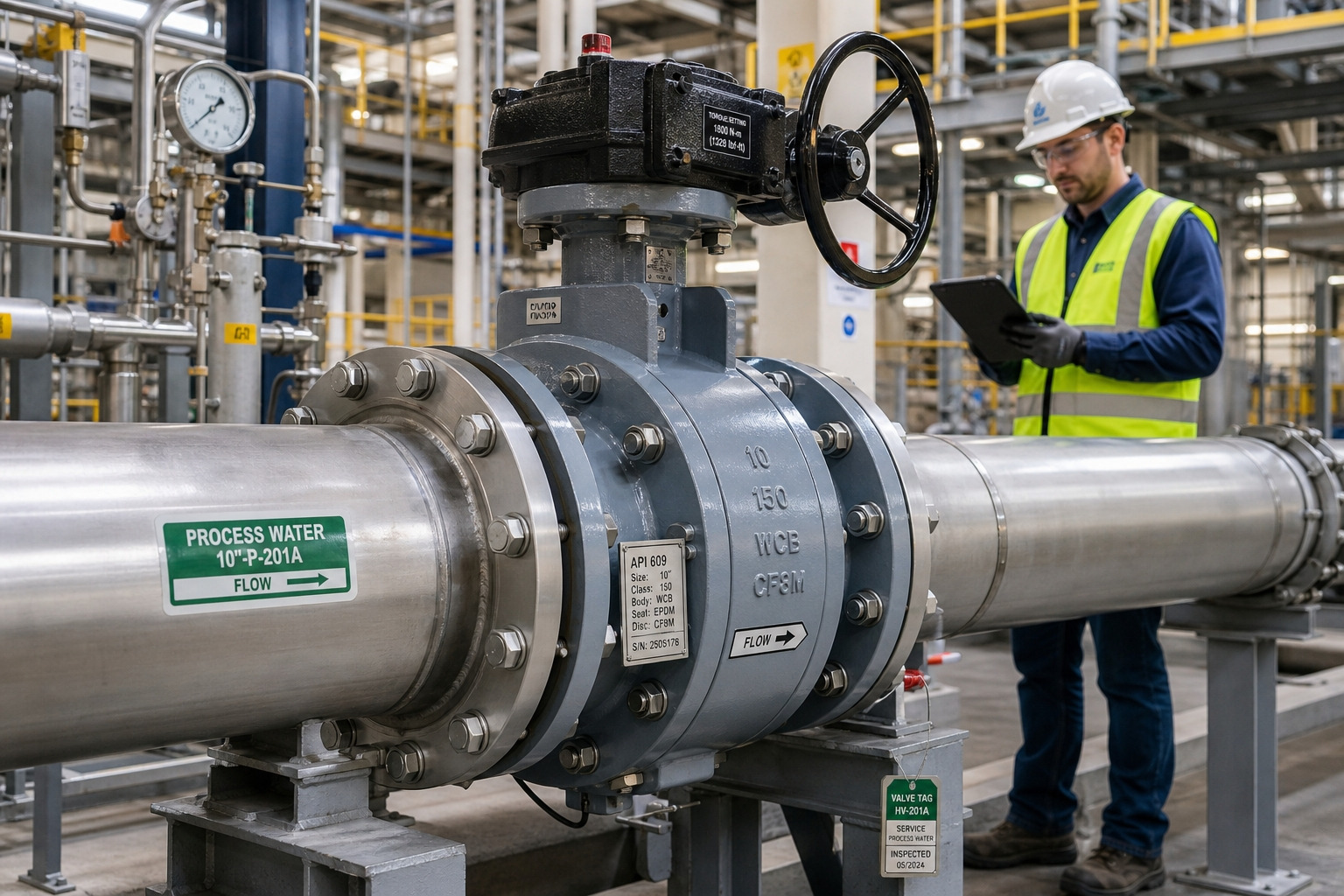
An API 609 butterfly valve is a butterfly valve designed, rated, dimensioned, inspected, and tested according to API Standard 609 for industrial piping service. For you as a specifier, buyer, or engineer, the phrase “API 609 butterfly valve” mainly tells you which design category, pressure rating basis, end connection, face-to-face dimension, material limits, and test requirements must be confirmed before ordering.
This matters because the API 609 label alone does not make every valve suitable for every service. A resilient-seated wafer valve for water service and a metal-seated triple offset valve for high-temperature process service may both sit under the API 609 umbrella, but they solve very different problems. If you are comparing an industrial butterfly valve for a project, API 609 helps create a common technical language, while your actual media, temperature, pressure, flange standard, leakage requirement, and installation condition decide the final valve.
What an API 609 Butterfly Valve Actually Covers
API 609 covers butterfly valves for industrial piping, but it is not a complete selection decision by itself. The standard defines important requirements for design, materials, face-to-face dimensions, pressure-temperature ratings, inspection, examination, testing, marking, and shipping, while still leaving project-specific choices to the purchaser and manufacturer.
The currently published API Standard 609 is the 10th Edition, May 2026. Many projects, however, still cite earlier editions in legacy specifications, so the edition should be treated as part of the purchase requirement instead of being assumed.
Which End Connections Are Included?
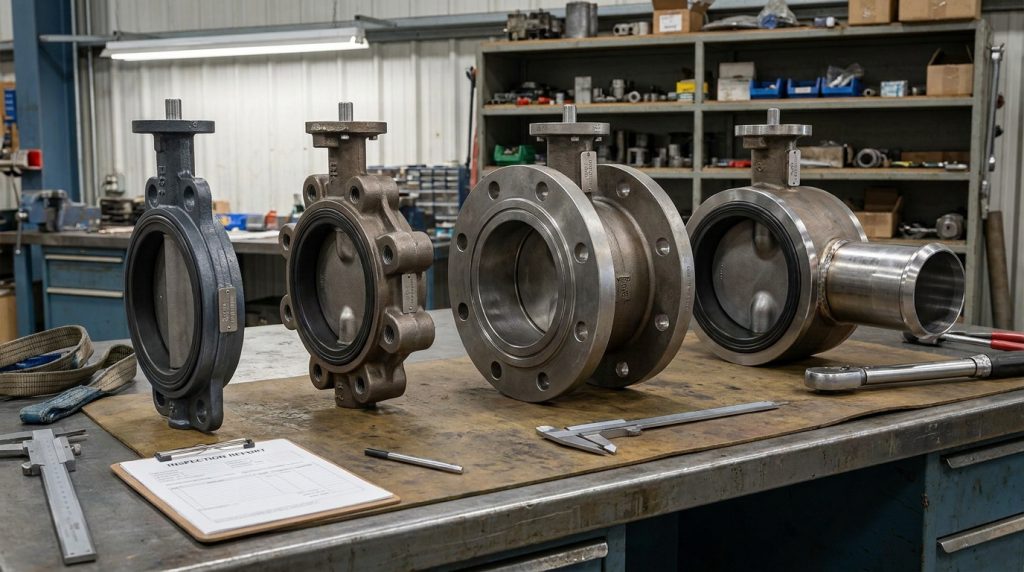
API 609 includes double-flanged, lug-type, wafer-type, and butt-welding end butterfly valves. That scope is important because the end connection affects installation method, bolting, maintenance access, and whether the valve can be removed without disturbing both sides of the piping.
Wafer valves are compact and usually economical, but they depend on the adjacent flanges and through-bolting arrangement. Lug valves add threaded or tapped lug features and may be considered where isolation on one side of the pipeline is part of the design, provided the valve and installation are rated for that condition. Double-flanged and butt-welding end designs are usually selected where the piping class, valve size, or service severity requires a more robust connection.
What Does API 609 Not Decide For You?
API 609 does not replace the need to define the real service conditions. It does not automatically choose the seat material, actuator type, corrosion allowance, flange series, fire-test requirement, or acceptable leakage class for your application.
You still need to specify, at minimum:
- Fluid or gas handled by the line
- Operating and design pressure
- Operating and design temperature
- Valve size and pressure class
- End connection and flange standard
- Body, disc, shaft, seat, and seal materials
- Shutoff direction and leakage requirement
- Manual, gear, pneumatic, electric, or hydraulic operation
- Any fire-test, fugitive-emission, NACE, or project-specific requirement
Key takeaway: API 609 is the design and purchase framework. The actual valve choice depends on the service data you attach to that framework.
API 609 Category A vs Category B
The most important API 609 selection point is whether the valve belongs to Category A or Category B. Category A is generally used for manufacturer-rated cold working pressure valves, while Category B is used for ASME pressure-temperature-rated valves in more demanding industrial service.
The table below summarizes how the current API 609 scope is commonly read for buyer-side specification. It is a useful starting point, but the final valve must still match the edition, drawing, data sheet, and project piping class.
| API 609 classification | Typical rating basis | Covered size and class range | Practical selection meaning |
|---|---|---|---|
| Category A | Manufacturer-rated CWP | DN 50 to DN 1500, NPS 2 to NPS 60, with ASME Class 125 or Class 150 flange bolting patterns | Often used for resilient-seated, concentric designs in lower-pressure utility and general service |
| Category B lug and wafer | ASME pressure-temperature rating | Class 150 and 300, DN 50 to DN 1500, NPS 2 to NPS 60 | Used when class-rated performance and compact installation are both needed |
| Category B lug and wafer | ASME pressure-temperature rating | Class 600, DN 80 to DN 1500, NPS 3 to NPS 60 | Used for higher-pressure service where wafer or lug construction is still suitable |
| Category B double-flanged or butt-welding | ASME pressure-temperature rating | Class 150, 300, and 600, DN 80 to DN 1500, NPS 3 to NPS 60 | Used where stronger pipe-end integration, larger sizes, or process piping requirements drive the design |
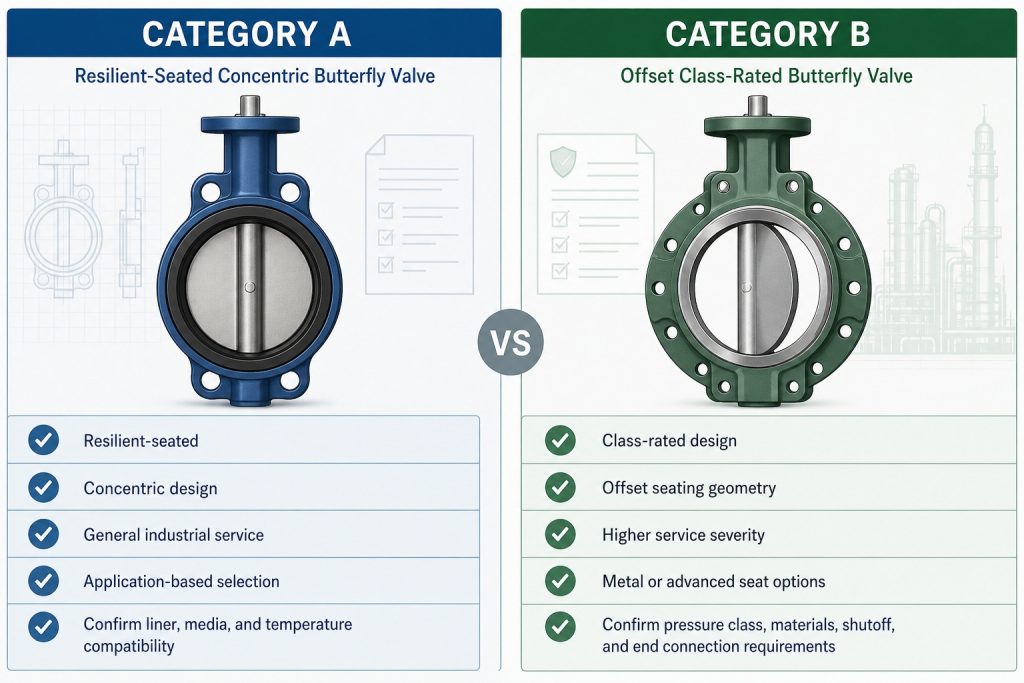
The practical difference is not just paperwork. Category A and Category B often lead you toward different seat designs, pressure-rating logic, face-to-face tables, body construction, shaft sealing details, and cost levels.
When Is Category A the Practical Choice?
Category A is usually the practical choice when you need a compact, economical butterfly valve for moderate temperature and lower-pressure service. These valves are commonly associated with concentric disc and seat construction, where the disc rotates against a resilient seat.
You should consider Category A when the line service is stable, the seat material is compatible with the media, and the pressure-temperature demand stays within the manufacturer’s cold working pressure rating. It is not the right shortcut for severe thermal cycling, high differential pressure, abrasive media, or applications where metal seating or class-rated performance is required.
When Should You Look at Category B?
Category B should be considered when the valve must be specified by ASME pressure class and pressure-temperature rating. These valves are often associated with offset-seat designs, including high-performance double offset and triple offset constructions.
A Category B valve is usually more appropriate when you are dealing with refinery, petrochemical, gas, steam, thermal oil, or other process services where temperature, pressure, shutoff reliability, and material rating are more critical. It also gives the buyer a clearer link to ASME B16.34-type pressure-temperature rating logic, especially for steel, nickel alloy, or special alloy valve bodies.
What Standards Work With API 609?
API 609 works with other piping and valve standards, so a correct specification usually names more than one document. This is where many purchase mistakes start: the buyer says “API 609,” but the drawing, flange, testing, and material standards are incomplete.
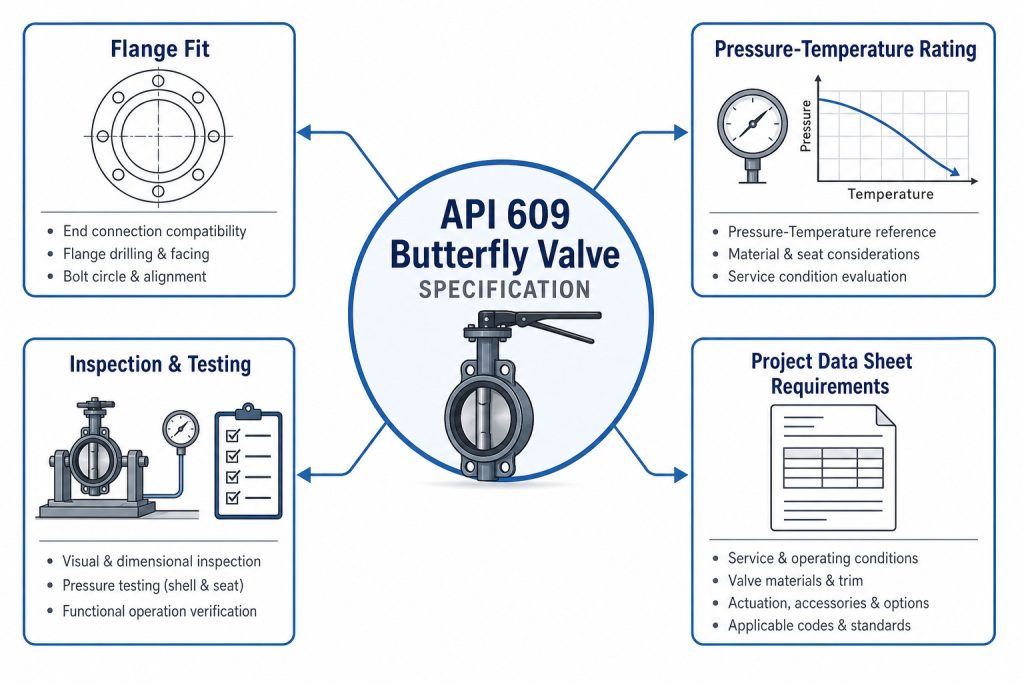
ASME B16.5 is commonly used for pipe flanges and flanged fittings from NPS 1/2 through NPS 24, while ASME B16.47 covers large-diameter steel flanges from NPS 26 through NPS 60. For valve pressure-temperature ratings, ASME B16.34 is often the key reference for steel, nickel alloy, and similar pressure-containing valve materials.
How Do Flange Standards Affect Fit?
Flange standards affect bolt holes, gasket seating, body clearance, and whether the valve can be installed without interference. This is especially important for wafer and lug butterfly valves because the valve body sits between pipe flanges and the disc may swing into the pipe bore.
For example, a valve described as Class 150 still needs the correct flange drilling and bolting pattern. If you are checking a smaller project line, a Class 150 flange bolting review can help you catch obvious fit risks before the valve reaches site.
Large sizes need even more care. Once the line moves beyond NPS 24, ASME B16.47 Series A or Series B flange details may affect bolt circle, bolt quantity, gasket dimensions, and available installation space. You should not assume a large-diameter valve will fit just because the NPS and class look correct.
What Testing Should You Specify?
Testing should be stated clearly because API 609 and API 598 often appear together in valve purchase specifications. API 598, 11th Edition, February 2023, covers inspection, examination, supplementary examination, and pressure test requirements for resilient-seated, nonmetallic-seated, and metal-to-metal-seated valves, including butterfly valves.
For an API 609 butterfly valve, the buyer should confirm whether the project requires shell testing, seat closure testing, low-pressure air testing, high-pressure closure testing, bidirectional testing, or another project-specific inspection. A general statement such as “tested as standard” is weaker than a clear inspection and test plan tied to the valve type, seat design, size, pressure class, and service.
Key takeaway: API 609 identifies the butterfly valve standard, but flange fit and test acceptance usually depend on additional standards and project documents.
How to Read Ratings and Dimensions Correctly
You should not read API 609 as a single universal pressure rating. The rating depends on category, valve size, body material, seat material, pressure class, temperature, and maximum differential pressure across the disc.
For Category A valves, the cold working pressure rating is normally assigned by the manufacturer and limited by the shell rating, seat rating, and differential pressure rating. For Category B valves, the pressure-temperature rating is tied more directly to ASME class logic and material rating tables, while the seat rating may still be lower than the body rating.
What Does CWP Mean for Category A?
CWP means cold working pressure, which is the manufacturer-rated pressure at ambient or near-ambient conditions. It is not the same as a full pressure-temperature class rating across elevated temperature service.
This distinction matters when you are handling warm water, hot condensate, chemical service, compressed gas, or any medium that changes the seat or liner behavior. If the valve has an elastomer or soft seat, temperature and chemical compatibility may reduce the real usable pressure long before the body itself becomes the limiting component.
Why Does Face-to-Face Length Matter?
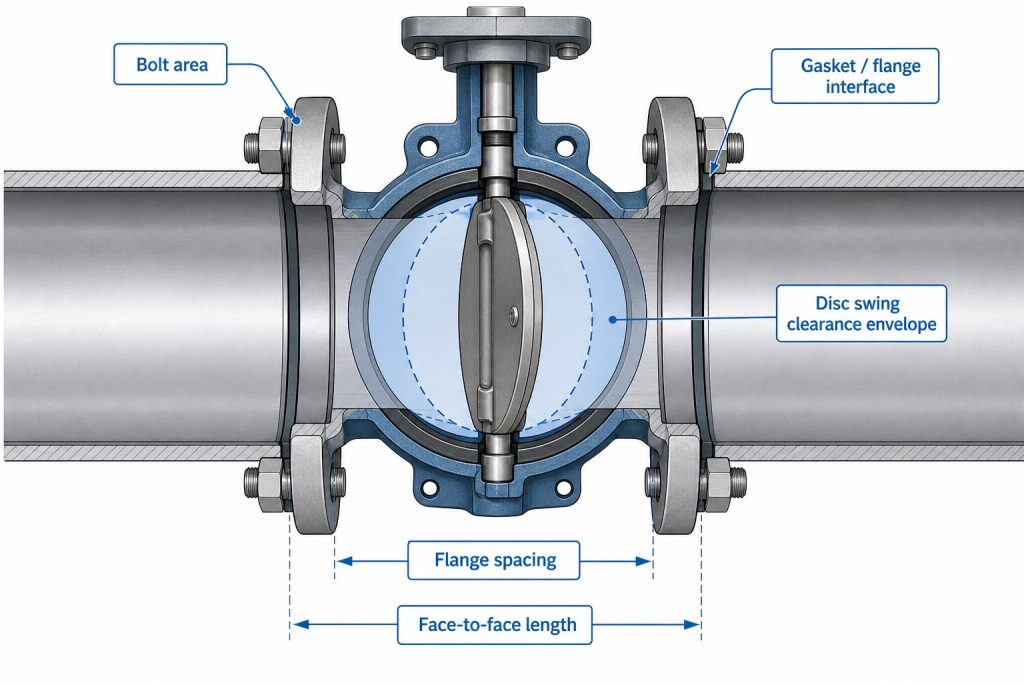
Face-to-face length decides whether the valve can replace an existing valve without pipe modification. API 609 includes face-to-face dimensional requirements, but the correct table depends on Category A or Category B, end connection, pressure class, and pattern.
This is why a replacement valve should not be ordered from size and class alone. You should compare the existing installed length, flange standard, gasket type, bolt arrangement, disc swing clearance, and actuator envelope. For new systems, using a proper butterfly valve selection process helps prevent a technically compliant valve from becoming a poor fit in the actual piping layout.
Disc clearance is another common issue. A butterfly valve disc rotates into the flow path, so the inside diameter of the adjacent pipe, liner, or flange must not interfere with disc movement. This is especially important in lined pipe, heavy-wall pipe, reducing spools, and compact pump-room layouts.
Materials and Seat Choices Decide the Service Limit
API 609 gives the design framework, but material and seat choices decide whether the valve can survive your media, temperature, pressure, and cycling conditions. A valve can be API 609 compliant and still be wrong for the service if the seat or trim is incompatible.
Common project decisions include body material, disc material, shaft material, seat material, shaft sealing, and external coating. Ductile iron, carbon steel, stainless steel, nickel alloy, and special alloy bodies may all appear in different API 609 projects, but the final selection must follow the piping class, corrosion risk, pressure-temperature rating, and fluid compatibility.
Can a Soft Seat Be API 609?
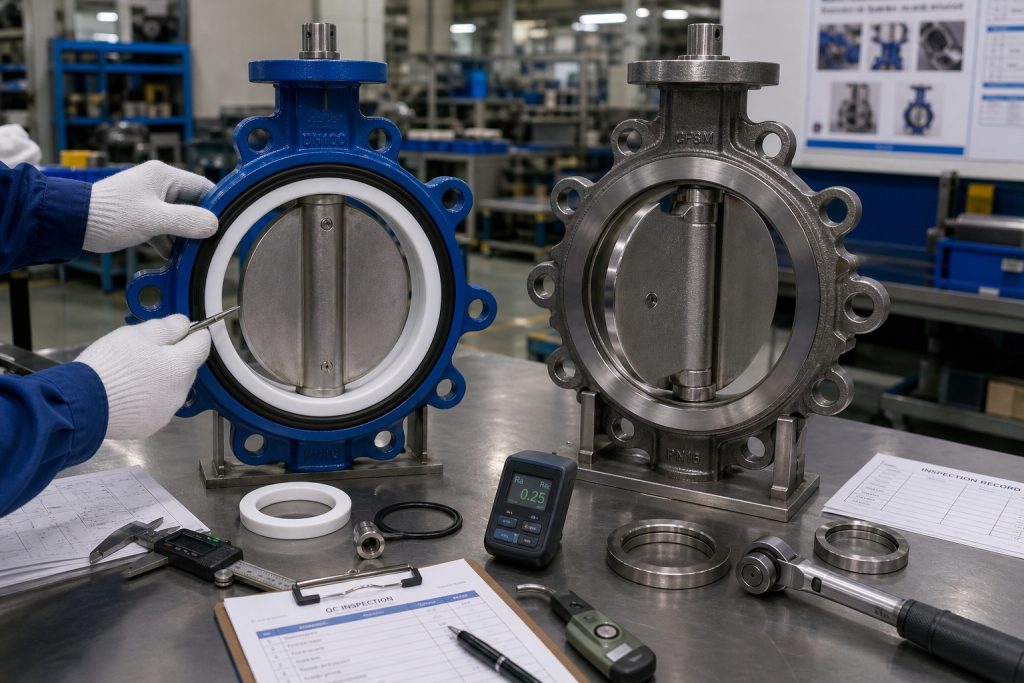
Yes, a soft-seated butterfly valve can be supplied under API 609 when the design and rating basis fit the standard. Many Category A valves use resilient seats, and some Category B valves may use PTFE or RPTFE seats where the pressure-temperature rating is suitable.
The caution is that a soft seat is usually the limiting component. It may offer good shutoff at moderate conditions, but it can be damaged by excessive temperature, abrasive solids, aggressive chemicals, high velocity, or incorrect disc alignment. You should ask for the seat material data sheet and confirm the final pressure-temperature limit on the valve drawing or data sheet.
When Does a Metal Seat Make Sense?
A metal seat makes sense when temperature, pressure, media, or service severity exceeds what a soft seat can handle. Metal-seated butterfly valves are often considered for high-temperature service, thermal cycling, erosive flow, or applications where a resilient seat would age too quickly.
However, metal seating is not a magic upgrade. It may increase torque, cost, and actuator requirements, and the leakage standard must be stated clearly. If your service points toward high pressure or harsh conditions, a metal-seat butterfly valve should be evaluated with the actual media, temperature, pressure class, shutoff direction, and operating frequency.
Common Specification Mistakes to Avoid
Most API 609 butterfly valve problems come from incomplete specifications rather than from the standard itself. The valve may be built correctly, but the buyer may have failed to define the operating conditions that make the valve suitable.
Common mistakes include:
- Specifying “API 609” without Category A or Category B
- Naming the pressure class but omitting temperature
- Assuming wafer, lug, and double-flanged valves are interchangeable
- Ignoring seat material limits when the body rating looks acceptable
- Forgetting disc clearance in lined or heavy-wall pipe
- Requesting tight shutoff without naming the test standard and direction
- Choosing an actuator before confirming torque at design conditions
- Replacing an existing valve without checking face-to-face length
What Should You Put in an RFQ?
A good RFQ should make the valve duty clear enough that the manufacturer does not have to guess. At minimum, include size, pressure class, API 609 category if known, end connection, body and trim material preference, seat material, media, operating pressure, design pressure, operating temperature, design temperature, shutoff direction, leakage requirement, actuator type, flange standard, quantity, and any inspection requirement.
For lug-style valves, also state whether the valve is expected to support dead-end or downstream-flange-removal conditions. A lug-style butterfly valve can be useful in certain isolation layouts, but only when the valve design, pressure rating, installation method, and safety procedures all support that use.
Where API 609 Butterfly Valves Are a Good Fit
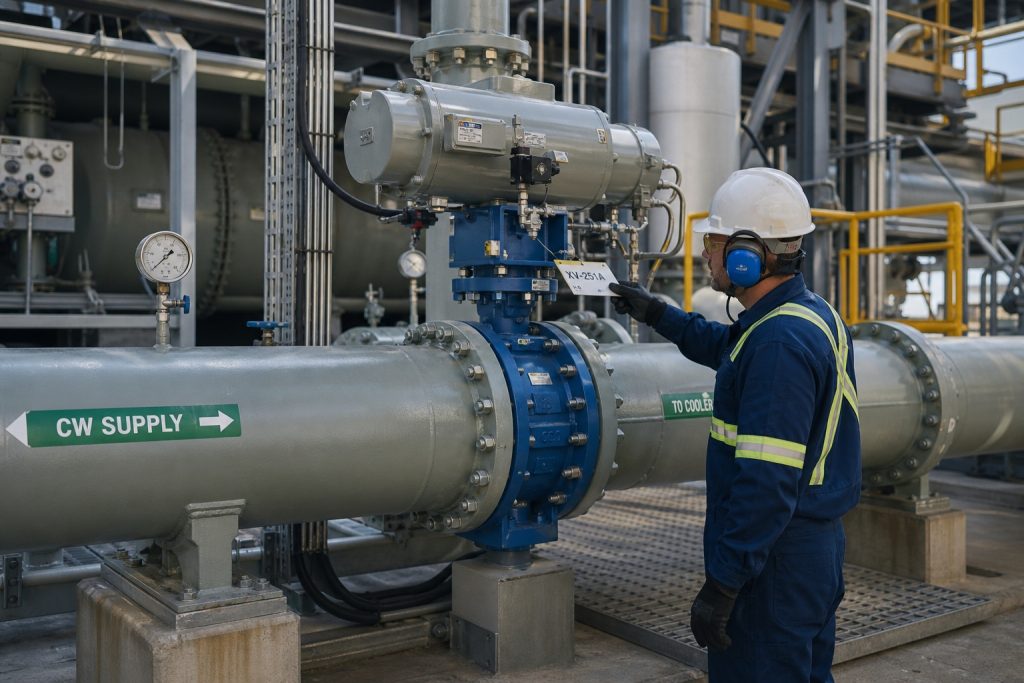
API 609 butterfly valves are a good fit where compact quarter-turn operation, lower weight, and efficient flow control are valuable. They are often used in process piping, utilities, water systems, cooling lines, petrochemical service, power plants, terminals, and general industrial fluid handling.
Compared with many gate or globe valves, butterfly valves can reduce installation space and operating time. A 90-degree turn moves the disc from open to closed, and gearboxes or actuators can be added for larger sizes or higher torque conditions. For large-diameter piping, this compactness can be a major cost and layout advantage.
They are not ideal for every service. Highly abrasive slurry, severe cavitation, heavy throttling near closed position, very high pressure drop, or frequent operation at unstable partial openings may require a different valve type or a specialized butterfly valve design. If control stability is critical, you should check the flow characteristic, actuator sizing, and expected operating range instead of assuming any butterfly valve can throttle well.
Conclusion
An API 609 butterfly valve is best understood as a standardized industrial butterfly valve, not as a one-size-fits-all product. This article covered what API 609 includes, how Category A and Category B differ, which supporting standards affect flange fit and testing, why ratings and face-to-face dimensions must be checked carefully, and how material and seat choices shape the final service limit.
If you are preparing a project specification, replacement inquiry, or valve comparison, gather your media, pressure, temperature, flange standard, valve size, preferred end connection, seat requirement, actuator need, and testing requirement first. Then you can send your valve requirements for a practical review of the API 609 category, materials, connection type, and specification details that fit your line conditions.
FAQ
Can I use an API 609 butterfly valve for steam service?
Yes, but only if the valve design, seat material, pressure-temperature rating, and leakage requirement match the steam conditions. Do not rely on the API 609 label alone, because steam temperature can quickly rule out many resilient-seated designs.
What’s the best API 609 category for chemical processing?
The best category depends on the chemical, temperature, pressure, and corrosion risk. Category B is often considered for more demanding chemical service, but the body, disc, shaft, seat, and gasket materials must still be checked against the actual chemical concentration and temperature.
How do I know if I need wafer, lug, or double-flanged ends?
Choose the end connection based on installation, maintenance, piping class, and isolation needs. Wafer valves are compact, lug valves can support certain isolation layouts when properly rated, and double-flanged valves are often preferred where stronger pipe-end support or large-size stability is needed.
Can I replace an old butterfly valve with any API 609 valve?
No, you should confirm face-to-face length, flange standard, bolt pattern, disc clearance, pressure rating, seat material, actuator dimensions, and shutoff direction before ordering. Two API 609 valves can still have different installation requirements.
How do I know if the valve is truly suitable for my pressure class?
Check the API 609 category, ASME pressure class, body material rating, seat rating, design temperature, and maximum differential pressure. The lowest applicable limit is usually the real operating limit, so the final answer should come from the valve data sheet and approved drawing.