
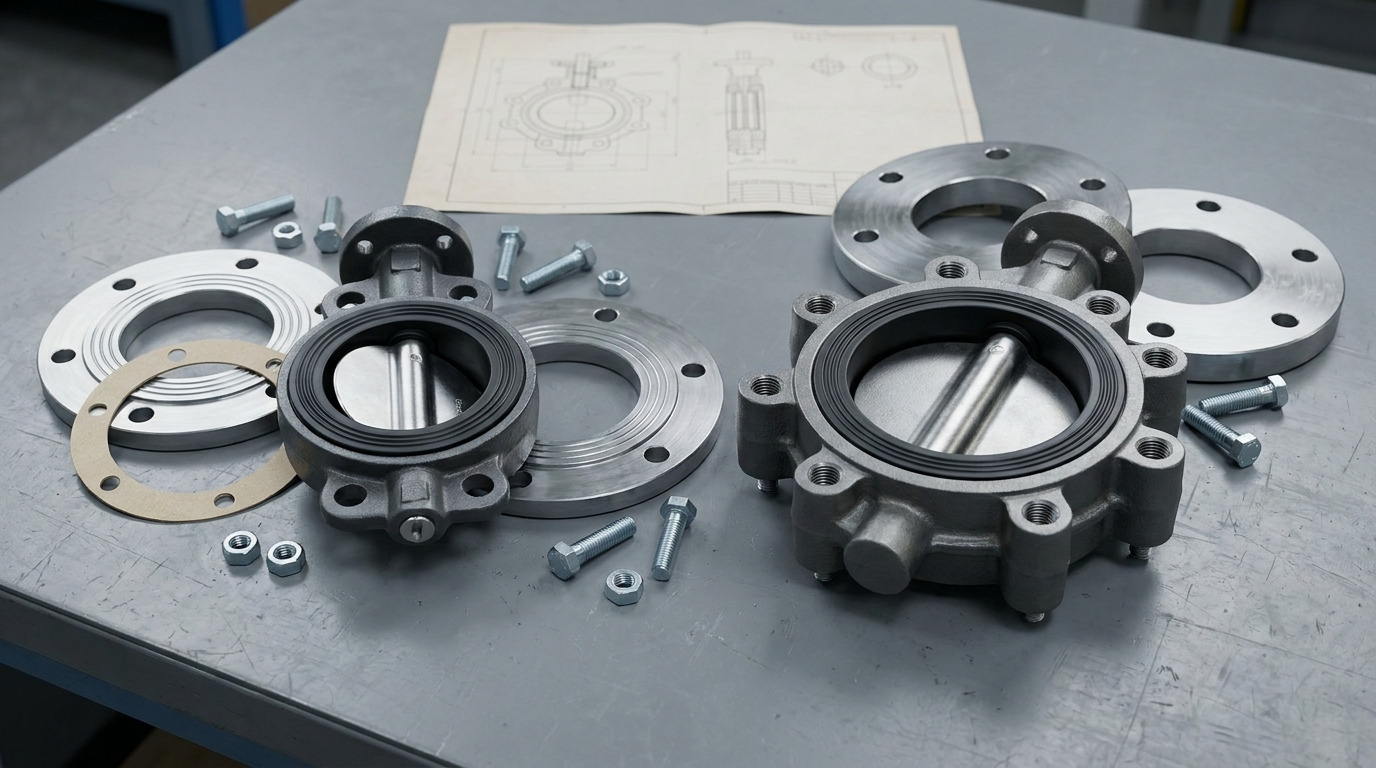
Choose a wafer style butterfly valve for compact, cost-sensitive lines that stay clamped between two flanges, and choose a lug style butterfly valve when you need independent bolting or verified dead-end service. The real wafer vs lug style butterfly valve decision is not only about price; it is about how the valve is supported, sealed, removed, and isolated in your piping layout.
If you are comparing butterfly valve options for a water, utility, chemical, HVAC, or general industrial line, this guide focuses on the body connection style. It does not replace the need to confirm pressure class, seat material, flange standard, actuator torque, and the final valve drawing.
Wafer vs Lug Style Butterfly Valve Differences That Matter
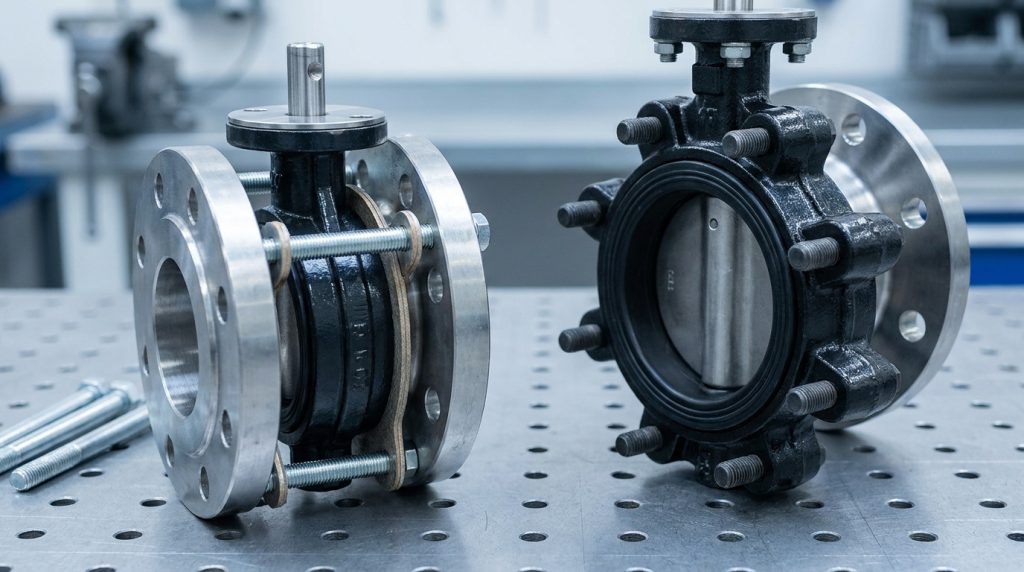
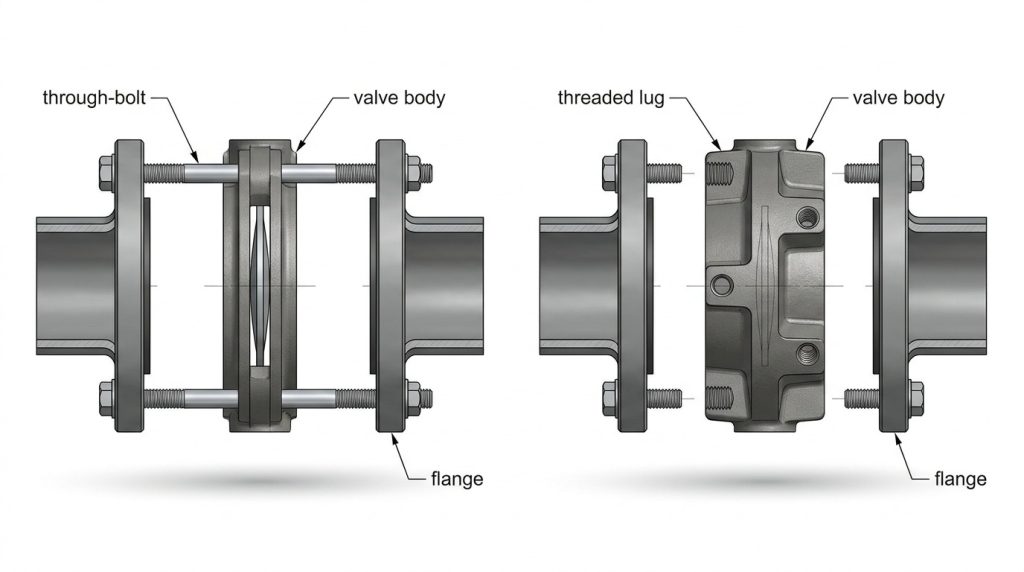
The key difference is the bolting path: a wafer valve is squeezed between two pipe flanges by through-bolts or studs, while a lug valve has threaded lugs around the body so each flange side can be bolted independently. Both are usually quarter-turn valves, meaning the disc rotates 90 degrees from open to closed, but their installation and isolation behavior are very different.
Use this comparison to separate body style from the other parts of the valve, such as disc material, seat compound, stem design, and actuator type.
| Decision point | Wafer style butterfly valve | Lug style butterfly valve | What you must verify |
|---|---|---|---|
| Bolting method | Long bolts or studs pass across both flanges | Bolts thread into lugs on each side | Bolt size, length, thread depth, and flange class |
| Pipe removal | Both sides normally depend on the same clamping set | One side may be removed if the valve is rated for that duty | Dead-end rating and pressure direction |
| Space and weight | Usually lighter and more compact | Usually heavier and wider at the lugs | Clearance around flanges and actuator |
| Typical cost | Lower body cost | Higher body cost | Total installed cost, not only valve price |
| Isolation risk | Less suitable where one side may be opened | Better for end-of-line or sectional maintenance when rated | Manufacturer data sheet and project procedure |
| Standards | Often covered by API 609, MSS SP-67, ISO 5752, or EN 558 depending on project | Same standards may apply, but lug details must be checked | Exact edition and applicable valve category |
| Best fit | Lines that remain assembled between two flanges | Lines needing independent flange bolting | Actual maintenance and shutdown plan |
The table shows why two valves with the same nominal size and pressure class may not be interchangeable. A wafer valve may fit the same flange gap, but it cannot automatically take the same maintenance role as a lug valve.
When a Wafer Style Valve Is the Better Choice
A wafer style valve is usually the better choice when the valve will stay permanently clamped between two intact flanges and you want a lighter, simpler, lower-cost installation. It is common in water, air, non-critical utility, HVAC, and general process lines where the piping system is shut down before either side of the valve is removed.
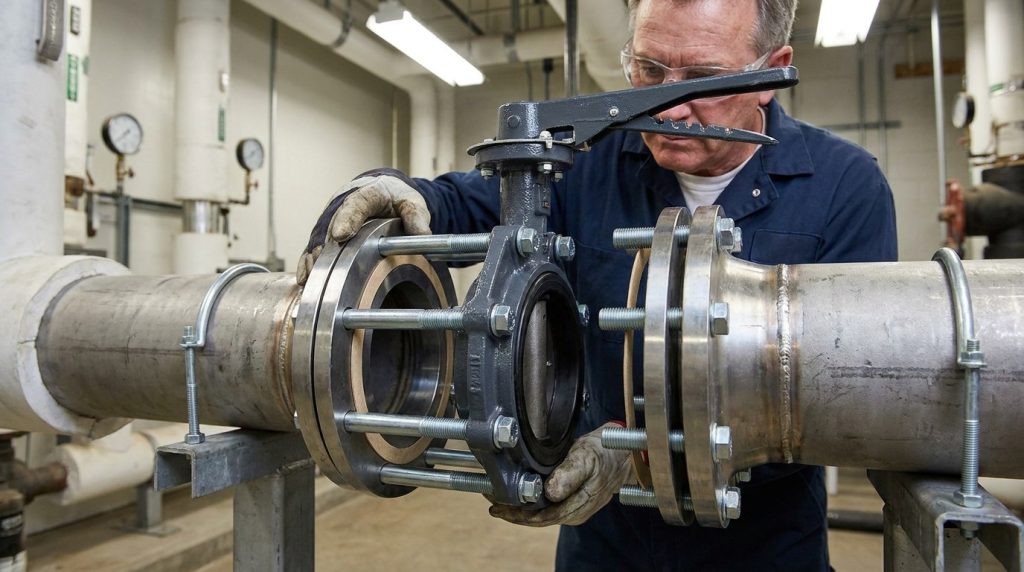
Because a wafer body has no full bolt holes of its own, alignment during installation matters. The valve must be centered carefully so the disc clears the pipe bore and the seat is compressed evenly; poor centering can damage the seat, create leakage, or make the disc rub during operation. If fit-up is your main concern, a dedicated check of wafer butterfly valve fit is a useful next step before approving the drawing.
Where does wafer save space and cost?
Wafer valves save space because the body sits between flanges without extended lug ears. They also reduce body weight, which matters on large-diameter utility piping, skids, and equipment packages where every added load affects supports and handling.
The cost advantage is strongest when the line does not require one-sided maintenance. If the valve will only be removed during a full shutdown, paying extra for lugs may not create real value.
When should you avoid wafer?
Avoid treating a wafer valve as a shortcut when the line may be opened on one side while the other side remains pressurized. In that situation, the same through-bolts that clamp the valve also connect both pipe flanges, so removing one side can disturb the sealing load.
You should also be cautious in vibrating lines, slurry service, or piping with poor flange alignment. The wafer body itself may be suitable, but the installation tolerance becomes less forgiving when the valve depends completely on the mating flanges for support and compression.
When a Lug Style Valve Earns Its Extra Cost
A lug style valve earns its extra cost when the piping layout needs independent flange bolting, end-of-line isolation, or easier downstream pipe removal. The threaded lugs allow each side of the valve to be bolted separately, which can make the valve more useful in sectional maintenance.
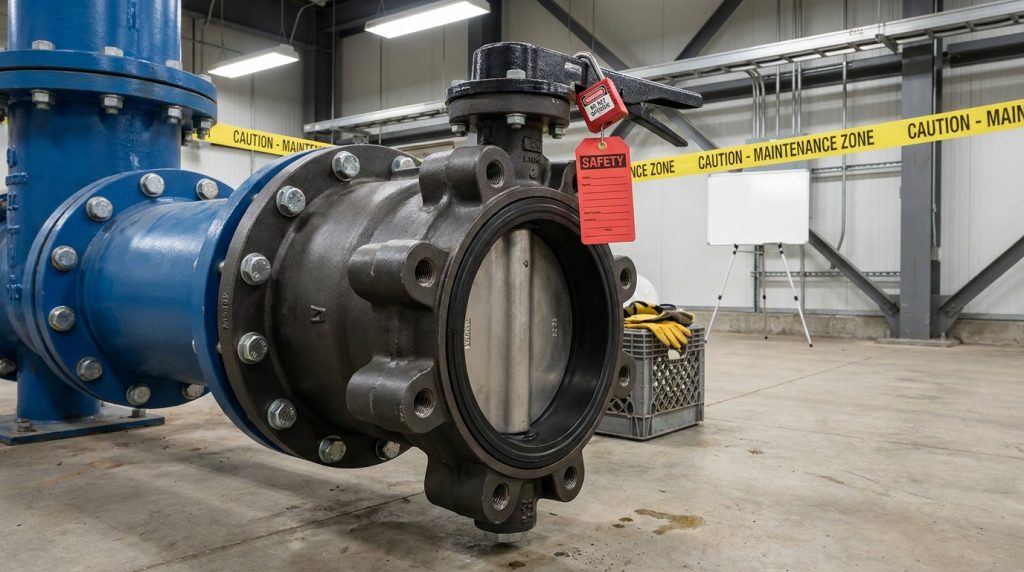
This does not mean every lug valve is automatically safe for dead-end service. The correct question is whether that exact lug valve, in that size, pressure class, seat design, and flow direction, is rated for the dead-end condition you intend to use. For this reason, lug style butterfly valve for dead-end service should always be checked against the valve data sheet rather than assumed from the body shape.
What counts as dead-end service?
Dead-end service means the valve may hold pressure when there is no downstream pipe section, or when the downstream side is removed for maintenance. In practical terms, the valve becomes the pressure boundary at the end of the line.
This is where lug style can be valuable. If the valve has a confirmed dead-end rating, the upstream side can remain bolted while the downstream side is disconnected under the approved maintenance procedure.
How much should you trust the rating?
Trust the rating only when it is stated for the exact valve configuration. A resilient seated lug valve may have one rating for normal bidirectional service and another rating for dead-end service; some designs may require a downstream flange, reduced pressure, or a specified flow direction.
From a valve manufacturer’s perspective, the safest RFQ wording is not simply “lug type.” It should state whether dead-end service is required, the maximum differential pressure, the pressure side, the medium, and whether the downstream flange may be removed.
Standards, Flanges, and Bolts You Must Match
Body style selection is incomplete until the valve standard, flange standard, face-to-face dimension, and bolting details all match the piping system. A valve can be the right style and still fail the project review if the bolt pattern, flange face, or dimensional standard is wrong.
For ASME flange systems, ASME B16.5-2025 covers NPS 1/2 through NPS 24 pipe flanges and flanged fittings; it includes Class 150, 300, 400, 600, 900, and 1500 through NPS 24, with Class 2500 through NPS 12. For larger steel flanges, ASME B16.47-2025 covers NPS 26 through NPS 60 in Class 75, 150, 300, 400, 600, and 900. These limits matter because a wafer or lug body must match the actual flange series, not just the nominal pipe size.
Which standards should be named?
For industrial butterfly valves, project specifications often refer to API 609, MSS SP-67, ISO 5752, EN 558, or a combination of valve and flange standards. MSS SP-67-2022 covers flanged-end, single-flange lug-type, and flangeless wafer-type butterfly valves from NPS 1 1/2 through NPS 72, and it distinguishes Type I tight shut-off valves from Type II valves permitting seat leakage.
API 609 is also common for double-flanged, lug-and-wafer-type, and butt-welding-end butterfly valves. The 10th Edition was published on May 27, 2026, and becomes effective on December 1, 2026, so the edition named in the project specification should be confirmed when ordering an API 609 butterfly valve.
What flange and bolt details decide fit?
Bolt length is one of the easiest places to make a mistake. A wafer valve normally uses through-bolts or studs across both flanges, while a lug valve uses shorter bolts or studs into threaded body lugs from each side.
Do not reuse a wafer bolt list for a lug valve without checking the drawing. For ASME Class 150 layouts, a Class 150 butterfly valve bolt chart can help identify the first round of bolt-size questions, but the final values must still follow the valve drawing, flange standard, gasket thickness, and thread engagement requirement.
Seat, Media, and Pressure Limits Can Override Body Style
A lug body does not make the valve stronger in every service, and a wafer body does not make the valve weak in every service. The body connection controls installation behavior, while pressure-temperature limits, shutoff performance, and chemical compatibility often depend on the seat, disc, stem, body material, and valve standard.
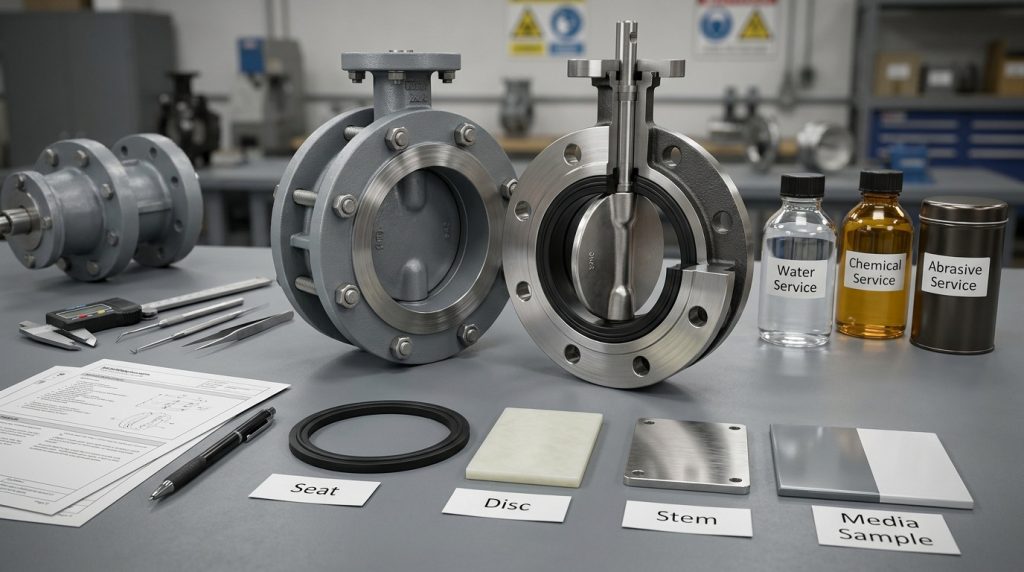
For resilient seated butterfly valves, typical published seat ranges vary by compound and manufacturer. As a practical screening range, EPDM seats are often used around -30 C to 120 C in water service, NBR or Buna-N around -10 C to 80 C for many oil-compatible services, and PTFE-lined constructions may be selected for broader chemical resistance. These are not design limits; final limits must be confirmed from the valve data sheet for the actual compound, pressure, and medium.
Does lug always mean higher pressure?
No. Lug style mainly changes the bolting arrangement and possible dead-end use; it does not automatically raise the valve’s pressure class. A wafer valve and a lug valve may share the same pressure rating if they use the same design standard, materials, seat system, and flange class.
If pressure is the real concern, check the pressure-temperature rating, shell material, seat rating, leakage class, and test standard. In higher temperature or higher differential pressure service, the answer may be a different butterfly valve design rather than simply changing wafer to lug.
Which service conditions override the body style?
Media compatibility can override the body choice very quickly. Chlorinated water, seawater, acids, caustic solutions, hydrocarbons, abrasive slurry, steam, and high-cycle automation can all change the correct seat, disc, stem, coating, and actuator torque.
You should be especially careful when the valve will throttle rather than simply isolate. Butterfly valves can regulate flow, but throttling near the almost-closed position increases velocity, torque, noise, and seat wear, so the body style should not be the only selection factor.
A Practical Selection Framework
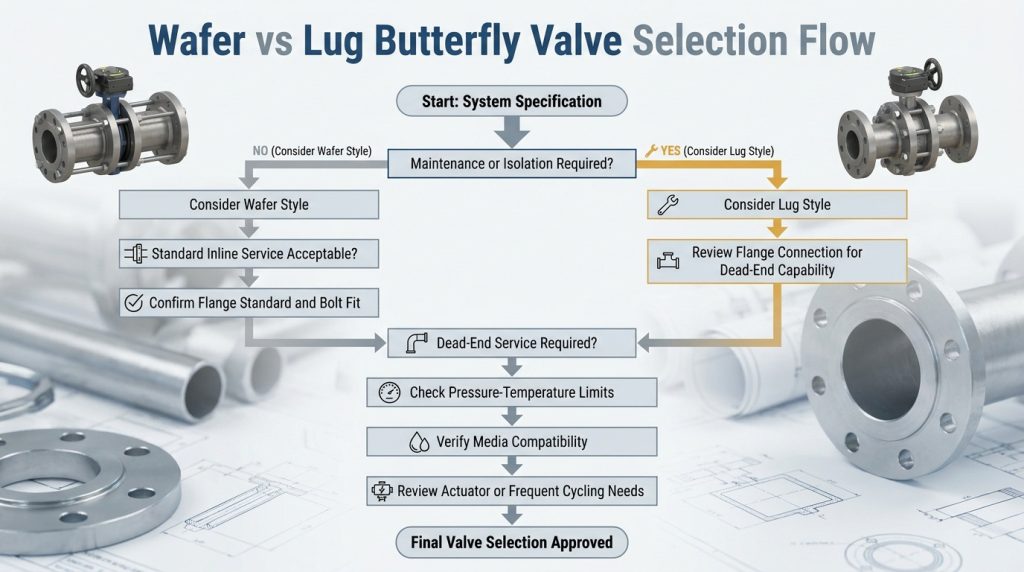
The simplest way to choose is to start with the piping task, then confirm the engineering limits. If the line stays assembled and the valve is only removed during full shutdown, wafer is often enough; if one side may be removed or used as an end-of-line boundary, lug is usually the stronger candidate.
Before approving the valve, ask these questions in order:
- Will either side of the pipe be removed while the other side may remain pressurized?
- Is dead-end service required, and at what pressure and flow direction?
- Which flange standard, size, class, and face type are used?
- Which valve standard and edition does the project specification require?
- What are the medium, temperature, pressure, and cleaning conditions?
- Is the valve for isolation, throttling, automation, or frequent cycling?
- Does the drawing confirm bolt length, face-to-face dimension, disc clearance, and actuator orientation?
What information should be on the RFQ?
A useful RFQ should include NPS or DN size, flange class or PN rating, wafer or lug style, required standard, body and disc material, seat material, medium, pressure, temperature, actuator type, and whether dead-end service is required. If the line is replacing an existing valve, include the face-to-face dimension and photos or drawings of the flange arrangement.
Key Takeaway: do not choose wafer or lug by name alone. Choose by isolation requirement first, then confirm flange fit, pressure-temperature rating, seat compatibility, and bolting details.
Conclusion
This comparison explains the practical difference between wafer and lug style butterfly valves: wafer is compact and economical for lines that stay clamped between two flanges, while lug style is better when independent bolting or verified dead-end service matters. The safest choice depends on the maintenance plan, flange standard, bolting method, valve standard, seat material, and actual service limits.
For a project comparison, share the valve size, pressure class, medium, temperature, flange standard, dead-end requirement, and available drawings when you contact RUITO Flow. That information makes it easier to discuss whether wafer or lug style is the better fit before you finalize the specification or RFQ.
FAQ
Can I replace a wafer butterfly valve with a lug valve?
Yes, you can often replace a wafer valve with a lug valve if the face-to-face dimension, flange pattern, pressure rating, seat material, and disc clearance match. Do not assume it is a direct swap only because the nominal size is the same.
What’s the best choice for dead-end service?
A lug style butterfly valve is usually the better choice for dead-end service, but only if the data sheet specifically rates that valve for the condition. Confirm pressure, flow direction, downstream flange requirement, and seat design.
How do I know if my valve is wafer or lug style?
A wafer valve usually has a slim body without threaded full lugs, and long bolts pass across both pipe flanges. A lug valve has threaded lugs around the body, allowing each flange side to be bolted separately.
Can I use the same bolts for wafer and lug valves?
No, not without checking the drawing. Wafer valves usually need longer through-bolts or studs, while lug valves usually use separate shorter bolts into threaded body lugs.
Does lug style seal better than wafer style?
Not automatically. Sealing performance depends more on seat design, disc finish, pressure rating, installation alignment, and the specified leakage requirement than on lug or wafer body style alone.