
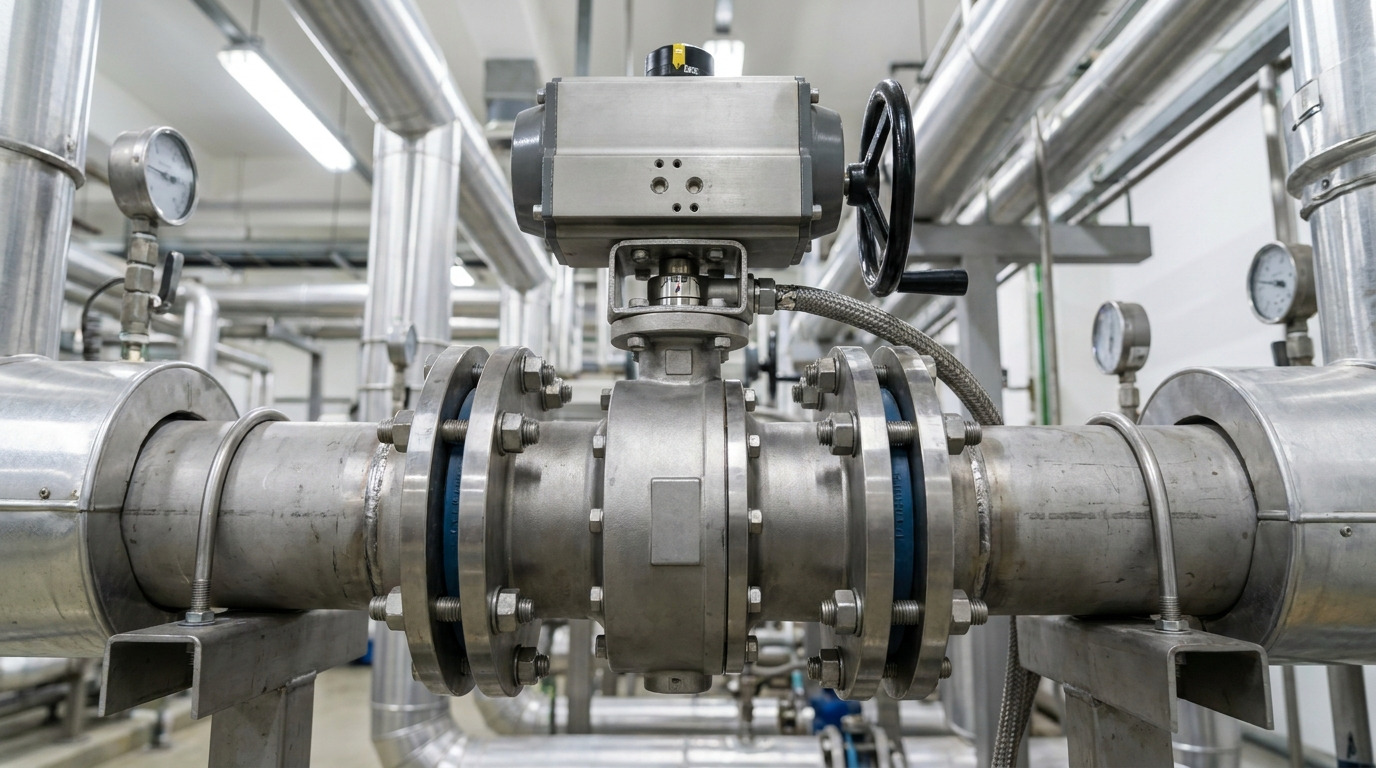
A wafer butterfly valve is an ultra-compact, lightweight flow control device designed to be clamped between flanges to regulate fluid flow. Think about it: you are constantly dealing with high installation costs and pipe sagging caused by bulky, heavy valves. This ongoing pipeline stress agitates your structural integrity and increases maintenance costs, but deploying a butterfly wafer valve completely eliminates these issues. You will enjoy a low-profile, cost-effective solution that fits into the tightest spaces of your pipeline.
What is a butterfly wafer valve?
A butterfly wafer valve is an industrial valve that uses a rotating disc to control fluid flow while sandwiched between two flanges. You will find that its body is extremely narrow, making it the lightest and most compact design available on the market. This structural simplicity means you can install it quickly without adding heavy support brackets to your piping.
Why choose the slim wafer profile?
The main reason to choose this design is its incredible space-saving capability. Let’s face it: heavy valves can cause your pipelines to sag and fail. By clamping this specialized valve directly between standard flanges, you drastically minimize the space and structural deadweight needed for installation.
The reality is that choosing the wrong style leads to frequent pipe sagging and severe seat wear. To prevent these mechanical issues, you must prioritize low-weight configurations.
- Slim face-to-face dimensions: Drastically minimizes the physical envelope required.
- Low physical weight: Reduces mechanical stress and eliminates the need for expensive pipe hangers.
- Fast quarter-turn operation: Offers rapid flow control with minimal effort.
| Parameter | Standard Valve | Wafer Valve |
|---|---|---|
| Weight Profile | Heavy, structural deadweight | Ultra-low, lightweight profile |
| Space Footprint | Large physical envelope | Minimal space-saving profile |
| Support Requirements | High (frequent support brackets) | Minimal (clamped directly between flanges) |
Analyzing these differences reveals how the wafer profile drastically reduces your mechanical loads and protects your piping system from long-term damage.
Key Takeaway: Choose the wafer configuration to maximize pipeline space and significantly reduce structural piping loads.
How does a butterfly wafer valve work?
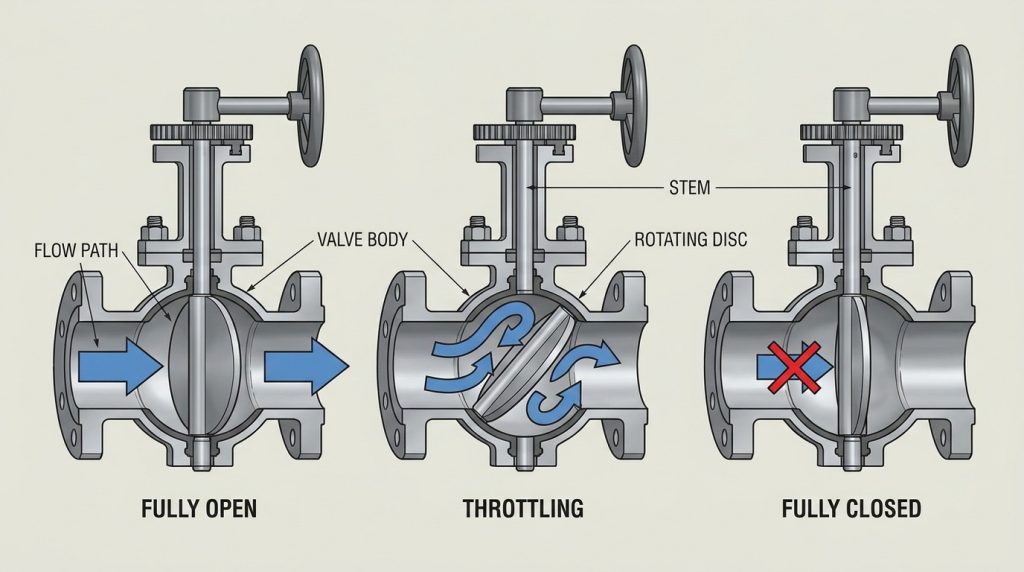
A butterfly wafer valve works by rotating its flat disc ninety degrees inside the pipe to either allow or block flow. You operate the stem to turn the disc parallel or perpendicular to the fluid.
How does the disc create a tight seal?
To achieve a tight seal, the disc compresses tightly against the soft seat when closed. What does this mean for you? You gain swift, efficient control over the entire line with minimal mechanical effort.
The reality is: running the valve partially open can cause seat erosion if you do not monitor it. High-velocity media can wear away elastomeric materials if the valve is used continuously for throttling.
- Quarter-turn action: 90-degree rotational arc for immediate open-to-close isolation.
- Strong seat compression: Achieves zero leakage under standard operating pressures.
- Low operating torque: Minimizes the energy and size required for manual levers or automated actuators.
| Disc Angle | Flow Rate | Seal Status | Pressure Drop | Hydrodynamic Wear |
|---|---|---|---|---|
| 0° (Closed) | 0% | Bubble-tight | Maximum restriction | Zero seat wear |
| 30° to 70° | Variable | Throttling | Moderate to high | High-velocity hydrodynamic erosion |
| 90° (Open) | 100% | Full flow | Minimal pressure drop | Zero face friction |
This straightforward mechanics helps you achieve instant system isolation while preserving system safety.
Key Takeaway: Quarter-turn rotational motion provides immediate system isolation and reduces automated actuator budget needs.
Which parts build a butterfly wafer valve?
A butterfly wafer valve is built from four main components: the body, the disc, the seat, and the stem. You will find that each part must work in perfect harmony to handle high pressures.
What roles do the stem and disc play?
The stem transmits torque from your actuator to rotate the disc inside the flow path. But here is the catch: you must select high-strength stem materials to prevent torsional shearing under high-pressure spikes.
The disc must feature a hydrodynamic profile to maximize the flow coefficient ($C_v$) while minimizing turbulence. Standardized mounting pads, such as those compliant with ISO 5211, are also critical for integrating standard pneumatic or electric actuators.
- Stem connects actuator to disc: Transfers rotational energy safely.
- Disc regulates the medium: Pivots inside the flow path to isolate or allow flow.
- Seat prevents fluid leakage: Provides a continuous, uninterrupted sealing surface.
- Outer body houses internals: Safely centers the entire assembly between flanges.
| Component | Primary Material Options | Main Function | Primary Wear Risk |
|---|---|---|---|
| Body | Ductile Iron, WCB Carbon Steel, SS316 | Outer containment & alignment | Atmospheric or chemical corrosion |
| Disc | Stainless Steel 316, Duplex, Al-Bronze | Flow modulation & isolation | Cavitation & abrasive wear |
| Seat | EPDM, NBR, PTFE, Laminated Metal | Bubble-tight sealing barrier | Thermal degradation & tearing |
| Stem | Stainless Steel 410, SS17-4PH | Torquing force transmission | Torsional shearing & misalignment |
Understanding these roles helps you select compatible metals and elastomeric components for your chemical process.
Key Takeaway: High-quality core materials and robust stems prevent sudden mechanical failures under high operating pressures.
What types of butterfly wafer valve exist?
Three main types of butterfly wafer valve exist: concentric, double-offset, and triple-offset. You select them based on how extreme your system pressure and temperature are.
How do concentric and offset designs differ?
Concentric designs have a centered stem and work great for low-pressure lines. What does this mean for you? You must transition to offset designs for high-temperature steam or severe chemical services.
Double and triple offset designs lift the disc off the seat immediately upon opening. This camming action prevents rubbing and drastically reduces wear on your seals.
- Concentric types: Best for utility water and low-pressure, low-temperature services.
- Double-offset types: Designed for high-performance chemical handling.
- Triple-offset types: Feature metal-to-metal seating for extreme heat and high-pressure steam.
| Valve Type | Offset Geometry | Seal Type | Temp Rating | Pressure Rating |
|---|---|---|---|---|
| Concentric | Zero offsets | Soft elastomer | Up to 120°C | PN10 / PN16 |
| Double Offset | Dual shaft offsets | PTFE / RTFE | Up to 200°C | Class 150 / 300 |
| Triple Offset | Three angular offsets | Metal-to-metal | Up to 600°C | Class 150 / 900 |
This clear categorization allows you to match the correct valve to your line conditions, preventing premature failure.
Key Takeaway: Use offset valve designs for high-temperature steam and demanding high-pressure chemical lines.
How do you select a butterfly wafer valve seat?
You select a butterfly wafer valve seat based on the chemical traits, temperature, and pressure of your process fluid. You must balance material durability against initial budget costs.
Which seat material fits your medium?
Soft EPDM seats offer great sealing for water, but they fail quickly in hot oils. To make matters worse, using the wrong seat material leads to immediate swelling, seat melting, and rapid fluid leaks.
For aggressive acids, highly corrosive processes, or high temperatures, you must select robust PTFE or laminated metal configurations to ensure safety.
- EPDM: Ideal for general water, HVAC, and mild glycol loops.
- NBR: Great resistance to oils, fats, and hydrocarbons, but poor UV resistance.
- PTFE: Chemically inert; perfect for strong acids and corrosive chemicals.
- Metal-to-Metal: Best for high-pressure steam, thermal oils, and abrasive slurries.
| Seat Material | Max Temperature | Best Applications | Main Chemical Weakness |
|---|---|---|---|
| EPDM | 120°C | Clean water, HVAC systems | Swells and degrades in oils/hydrocarbons |
| NBR | 90°C | Lubricants, fuel oil, air lines | Suffers from poor UV and ozone resistance |
| PTFE | 200°C | Strong acids, industrial chemicals | Susceptible to cold flow (creep) under load |
| Metal | 600°C | Superheated steam, hot slurry | Higher initial cost; susceptible to debris scoring |
Reviewing these chemical boundaries ensures you select a reliable seal that minimizes plant downtime.
Key Takeaway: Choose the right seat material to avoid premature seal failure, seat melting, and hazardous fluid leaks.
Why choose a butterfly wafer valve for your line?
You choose a butterfly wafer valve because it offers significant space savings, reduces pipeline weight, and lowers overall purchasing costs. You will enjoy a highly efficient setup that does not require heavy pipe supports.
How does this design cut project costs?
The lightweight wafer body is much cheaper to buy and install than bulky gate valves. Think about it: you can eliminate up to seventy percent of structural support weight.
Furthermore, because of their lightweight design and balanced hydrodynamic forces, these valves require smaller actuators. This reduces your upfront expenditure on pneumatic or electric automation systems.
- Lower purchasing price: Fewer raw materials translate to direct equipment savings.
- Reduced shipping and handling: Lightweight profiles make transport and installation easy.
- Lower automation expenses: Reduced operating torque allows for smaller, cheaper actuators.
| Feature Comparison | Traditional Gate Valve | Optimized Wafer Valve |
|---|---|---|
| Physical Weight | Heavy (causes pipe sagging and stress) | Ultra-light (minimizes structural loads) |
| Bracket/Support Needs | High (requires heavy concrete or steel supports) | Minimal (needs zero dedicated hangers) |
| Operating Speed | Slow, multi-turn manual wheels | Fast, quarter-turn manual or automated levers |
| Sizing Footprint | Massive face-to-face dimensions | Slim, space-saving wafer profile |
These physical and operational advantages directly translate to lower installation and maintenance overheads.
Key Takeaway: Lightweight wafer profiles drastically lower shipping, installation, and long-term piping infrastructure expenses.
How do you install a butterfly wafer valve properly?
You install a butterfly wafer valve properly by centering it between flanges and tightening the bolts evenly in a star pattern. You must leave the disc slightly open during installation to prevent pinching.
What is the correct alignment procedure?
Perfect alignment ensures that the disc can rotate freely without scraping against your pipe walls. The reality is: misalignment causes immediate seat damage, high operating torque, and flange leaks.
Remember, you must never install auxiliary gaskets. The integrated resilient seat naturally wraps around the valve faces to form its own reliable, bubble-tight flange seal.
- Spread the flanges: Provide enough clearance so the valve slides in easily without dragging.
- Keep disc cracked open (approx. 10%): Protects the delicate disc edge from getting pinched or dented.
- Center the valve body: Use alignment pins or flange bolts to ensure perfect pipe alignment.
- Hand-tighten all bolts: Ensure the valve is evenly seated before applying torque.
- Star-pattern torque: Tighten with a torque wrench gradually to prevent seat warping and uneven stress.
| Installation Step | Critical Goal | Tool Required | Critical Danger to Avoid |
|---|---|---|---|
| 1. Flange Spacing | Provide clean clearance | Flange spreader | Dragging disc face on rough metal |
| 2. Disc Positioning | Protect disc edge | Manual lever | Fully closed disc getting deformed |
| 3. Flange Centering | Avoid disc interference | Alignment pins | Misaligned bolts cracking the body |
| 4. Final Fastening | Prevent seat warping | Torque wrench | Using impact wrenches that unevenly stress bolts |
Following these field steps protects your valve from mechanical distortion and guarantees a leak-free start.
Key Takeaway: Keep the disc slightly open and never use auxiliary gaskets during installation to prevent pinching and seat damage.
How do you maintain a butterfly wafer valve over time?
You maintain a butterfly wafer valve over time by conducting regular seat inspections and lubricating the actuator stem. You will prolong its service life by keeping the line clean from debris.
How do you prevent premature seat wear?
Flushing the pipeline regularly removes abrasive particles that scratch the seal. But here is the catch: operating the valve at high velocity accelerates internal seat erosion.
If you spot a minor bypass leak during routine inspections, do not ignore it. Think about it: internal bypass leaks lead to high-velocity wire-drawing erosion that quickly destroys the valve body beyond repair.
- Clean pipeline before startup: Removes weld slag, scale, and destructive debris.
- Cycle the valve monthly: Prevents build-up and ensures the disc moves freely.
- Check stem seals for leaks: Prevent external emissions and keep operating torque low.
| Maintenance Task | Frequency | Main Benefit | Wear Indicator to Watch |
|---|---|---|---|
| Stem Lubrication | Every 6 months | Keeps torque low and smooth | High resistance / stiff operation |
| Visual Leak Check | Monthly | Prevents media loss and corrosion | Wet packing gland / exterior corrosion |
| Flange Bolt Check | Annually | Maintains secure, leak-free compression | Loose fasteners / joint sweating |
This proactive routine helps you spot early signs of wear before they turn into expensive emergency shutdowns.
Key Takeaway: Regular stem lubrication and system flushing prevent unexpected failures and keep your operational torque low.
How do wafer and lug butterfly wafer valve styles differ?
Wafer and lug butterfly wafer valve styles differ in how they connect to flanges and support downstream pipeline maintenance. You will choose the wafer style for basic clamping and the lug style for dead-end services.
When should you specify a lug design?
You must specify a lug design when you need to perform maintenance on downstream pipes without draining the whole system. What does this mean for you? You gain superior system flexibility at a slightly higher cost.
If you disconnect downstream piping with a wafer style valve, the valve loses all clamping force and blows out instantly. Lug styles feature threaded body holes, allowing you to bolt them directly and safely perform downstream maintenance.
- Wafer style: Uses unified, long bolts that run flange-to-flange across the body.
- Lug style: Features threaded metal lugs that allow independent bolting on each side.
- Lug style allows dead-end service: Safely holds line pressure when downstream piping is removed.
| Feature Comparison | Wafer Style | Lug Style |
|---|---|---|
| Bolting Design | Through-bolts clamping the valve | Threaded bolt inserts on the body |
| Dead-End Service | Strictly prohibited (blowout risk) | Fully approved and safe |
| Total Weight | Extremely lightweight | Moderately heavier |
| Procurement Cost | Most economical option | Moderately higher cost |
Comparing these physical limits ensures you maintain downstream piping safely without risking catastrophic blowouts.
Key Takeaway: Specify lug styles when you need to isolate downstream pipelines safely during system maintenance.
Where can you buy a quality butterfly wafer valve?
You can buy a quality butterfly wafer valve directly from established industrial manufacturers who offer certified materials and pressure testing. You will secure long-term reliability by choosing API 598 tested products.
What makes a manufacturer reliable?
A reliable partner provides complete material test reports and quick technical support. Think about it: buying cheap, uncertified valves often leads to early project failures, costly downtime, and safety hazards.
To ensure performance, select a manufacturer that adheres strictly to verified production standards and pressure-tests every single unit before it leaves the factory.
- Factory-direct pressure testing: Guarantees zero leakage upon delivery.
- Fully traceable metal components: Prevents metallurgical issues in highly corrosive applications.
- Standardized actuator interfaces: Ensures simple integration with ISO 5211 mounting pads.
| Factory Standard | Industry Certification | Benefit to Your Project |
|---|---|---|
| API 598 | Valve Leakage Inspection | Confirms zero-leakage performance under pressure |
| ISO 5211 | Standard Actuator Interface | Simplifies automated actuator mounting and replacements |
| EN 10204 3.1 | Material Traceability (MTR) | Provides complete metallurgical proof and quality assurance |
Verifying these factory credentials ensures you receive high-performance components designed to last.
Key Takeaway: Always request full material test reports (MTRs) and API 598 test certificates to guarantee field performance.
How can you optimize your system with a butterfly wafer valve?
Optimizing your industrial flow control system begins with choosing a premium butterfly wafer valve that matches your chemical medium, operating temperature, and pressure. This comprehensive guide has resolved your main piping challenges by explaining quarter-turn mechanics, seat material limits, and installation tips.
Partnering with Ruito Flow gives you access to factory-direct, API 598-compliant valves backed by full material traceability and dedicated engineering support. To secure absolute sealing reliability and find the ideal layout, contact us today to discuss your project and elevate your operational efficiency.
Frequently Asked Questions
Can I use a butterfly wafer valve for dead-end service?
No, you cannot. Wafer valves rely on double-sided flange clamping. Removing downstream piping releases all clamping pressure, which will cause a sudden and dangerous blowout.
What’s the best seat material for steam?
Metal-to-metal seating is the best option. Soft elastomeric materials such as EPDM and PTFE will fail and deform rapidly under high-temperature steam lines exceeding 200°C.
How do I know if my valve requires a gearbox?
Check the valve’s nominal size. Valves larger than DN200 (8 inches) require a gearbox because the physical operating torque becomes too high to turn manually with a simple lever.
Can I install secondary gaskets on the valve?
No, you should not. The resilient seat of the wafer valve acts as its own gasket. Adding extra gaskets will pinch the seat, increase operating torque, and damage the disc.
How do I know if the seat is leaking?
Monitor downstream pressure and flow. If you detect pressure or fluid flow downstream when the valve is fully closed, the seat is likely worn out, scratched, or chemically degraded.