
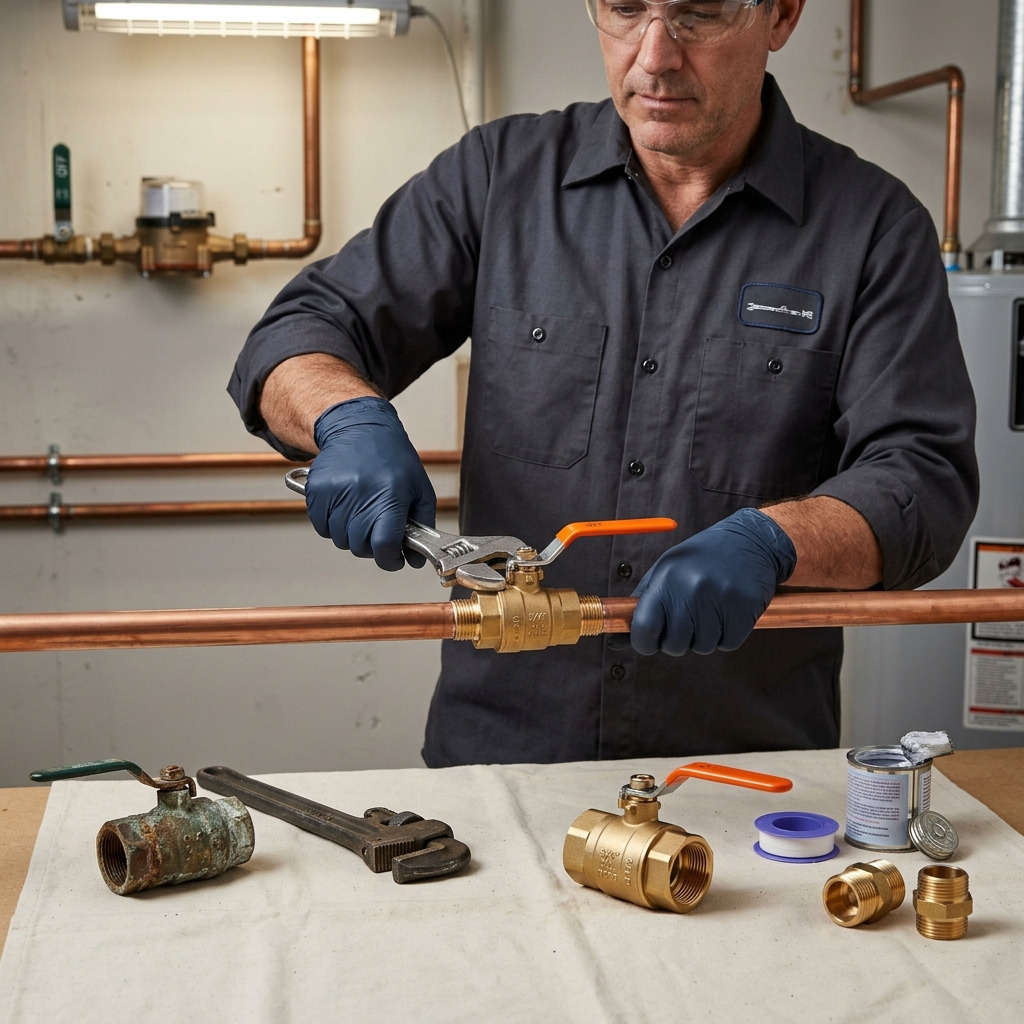
The plumber cost to replace ball valve is shaped less by the small valve price and more by access, isolation, pipe material, code requirements, and whether the work is residential, commercial, or industrial. A simple accessible shutoff may be a routine plumbing job, while a corroded main line, buried valve, high-pressure process line, or potable-water compliance requirement can change both labor time and replacement specification.
For facility managers, contractors, and procurement teams, the better question is not only “How much will the plumber charge?” It is “What must be included so the replacement valve actually fits the duty?” If the old valve failed because of corrosion, wrong seat material, undersized bore, poor access, or pressure mismatch, replacing it with the same low-cost part can move the problem forward rather than solve it. For industrial or commercial systems, the new ball valve should be checked against media, pressure, temperature, connection type, operation frequency, and any project testing requirement before price is treated as final.
What a Plumber Is Actually Charging For
A plumber’s quote covers labor, site preparation, valve replacement, leak checking, and the risk of working on a pressurized water or process line. The valve itself may be a small part of the invoice, especially when the line must be drained, the work area is difficult to reach, or the plumber must coordinate a shutdown.
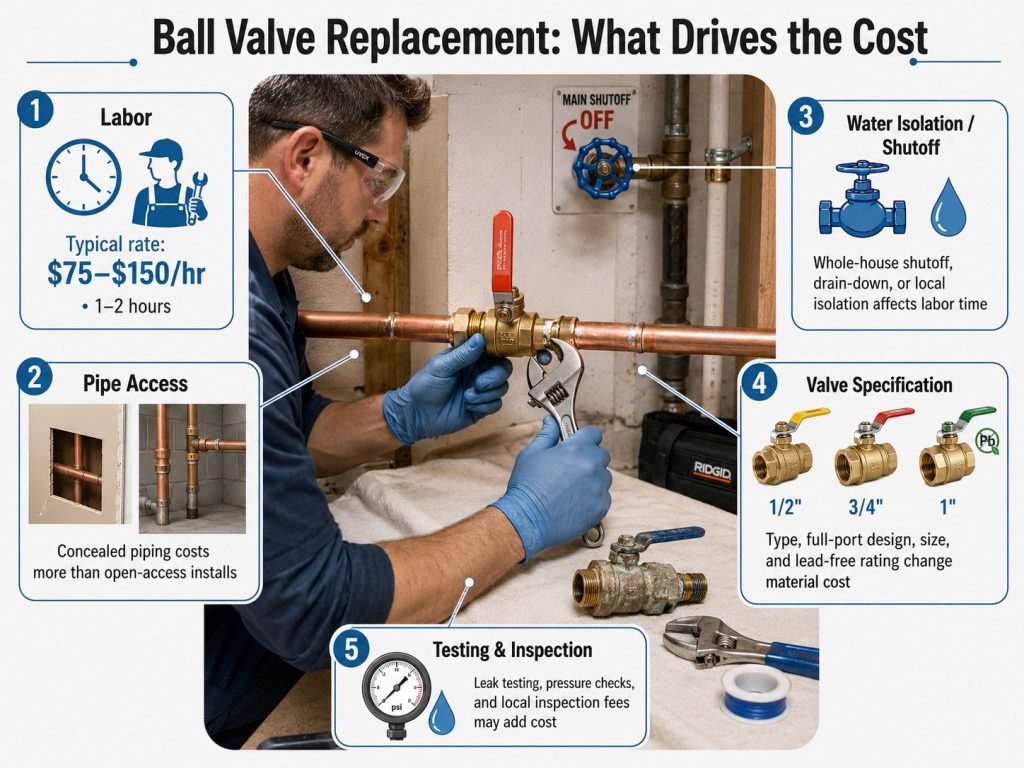
Published cost guides show why a single number can be misleading. A May 2026 home improvement cost calculator places a basic, accessible water shutoff valve installation at $277 to $333 per valve, while a 2026 main water shutoff valve guide reports many residential replacements in the $375 to $600 range, depending on location, material, and trenching.
Those figures are useful for residential budgeting, but they are not a fixed industrial benchmark. Commercial and plant piping may require work permits, lockout procedures, pipe supports, flange alignment, welding controls, pressure testing, or production downtime planning.
Labor Is Not the Same as the Invoice Rate
The U.S. Bureau of Labor Statistics reported that plumbers, pipefitters, and steamfitters had a May 2025 national mean hourly wage of $34.70 and a median hourly wage of $30.67. That wage data helps explain labor-market pressure, but it is not the same as a plumber’s customer-facing hourly rate.
A service invoice usually includes travel, licensing, insurance, tools, business overhead, minimum service time, and job risk. Emergency work, after-hours work, or utility coordination can add more than the valve material itself.
Plumber Cost to Replace Ball Valve by Job Type
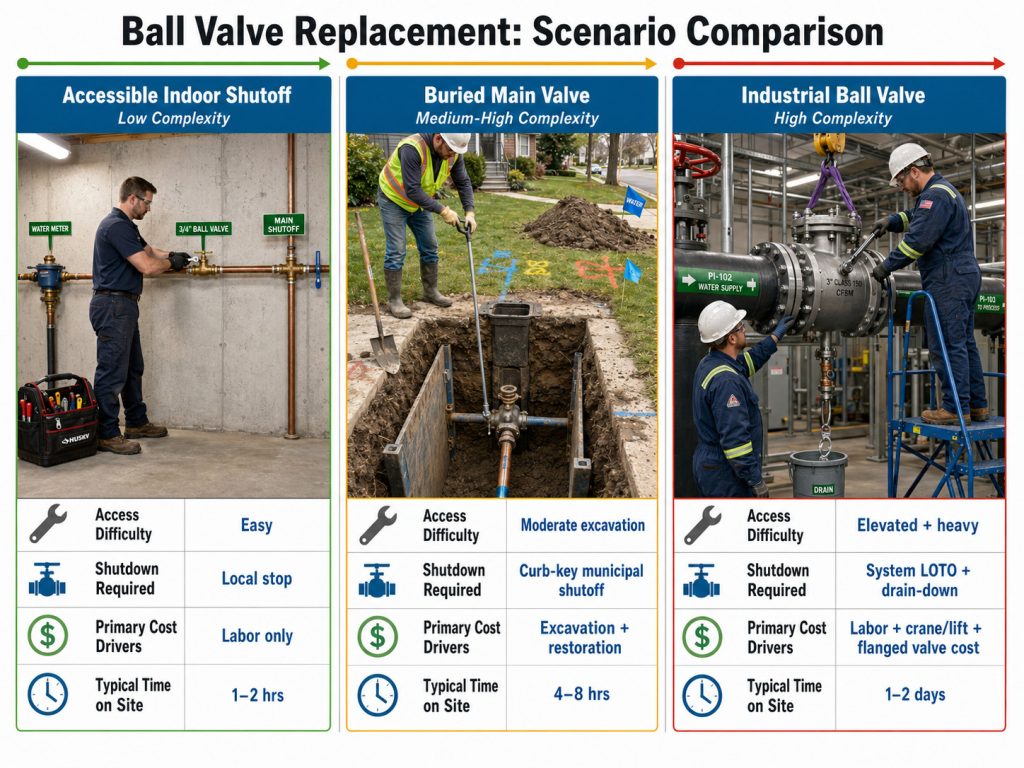
The plumber cost to replace ball valve rises as the job moves from an accessible fixture or indoor shutoff to a main service valve, mechanical room valve, or industrial isolation valve. The cost driver is the amount of controlled work required before and after the valve is removed.
| Job condition | Why the quote changes | What to confirm before approving |
|---|---|---|
| Accessible indoor shutoff | Basic work can be close to published residential installation estimates such as the May 2026 $277 to $333 per valve range under favorable conditions | Pipe material, connection type, access, and whether nearby pipe needs replacement |
| Main water shutoff | 2026 residential guides often place main shutoff replacement around $375 to $600, with permits and trenching adding cost | Who can shut off upstream water, permit needs, and whether excavation is involved |
| Potable water line | U.S. drinking-water plumbing products must meet the SDWA “lead free” definition of a 0.25% weighted average lead content across wetted surfaces where applicable | Lead-free marking, certification basis, and whether NSF/ANSI/CAN 61 or NSF/ANSI/CAN 372 is specified |
| Commercial mechanical room | Labor may include draining, lockout, insulation removal, access equipment, and work-window limits | Shutdown window, drain points, valve size, pressure class, and insulation restoration |
| Industrial process line | Work may require facility isolation procedures and post-installation testing, not just a quick swap | Media hazards, pressure rating, flange standard, material compatibility, and test requirement |
The table is not a quote template. It is a way to separate ordinary plumbing labor from specification-driven cost. A low quote that excludes shutdown, access repair, or code-required materials may become expensive later if the new valve leaks, seizes, or fails inspection.
Material and Connection Type Change the Labor
Threaded valves can be quick when pipe ends are clean and accessible. Soldered copper, press-fit systems, welded pipe, buried service lines, and flanged industrial valves can require more preparation and different tools.
For a small residential shutoff, the valve body may be inexpensive. For a commercial or industrial replacement, the price can shift because of stainless steel, full-port design, flanged ends, fire-safe design, actuator mounting, special seats, or project documentation.
Why Valve Specification Can Change the Quote
Valve specification affects cost because the replacement must match the actual duty, not just the handle style. A ball valve is a quarter-turn valve, but bore type, seat material, pressure rating, and end connection determine whether the replacement is suitable.
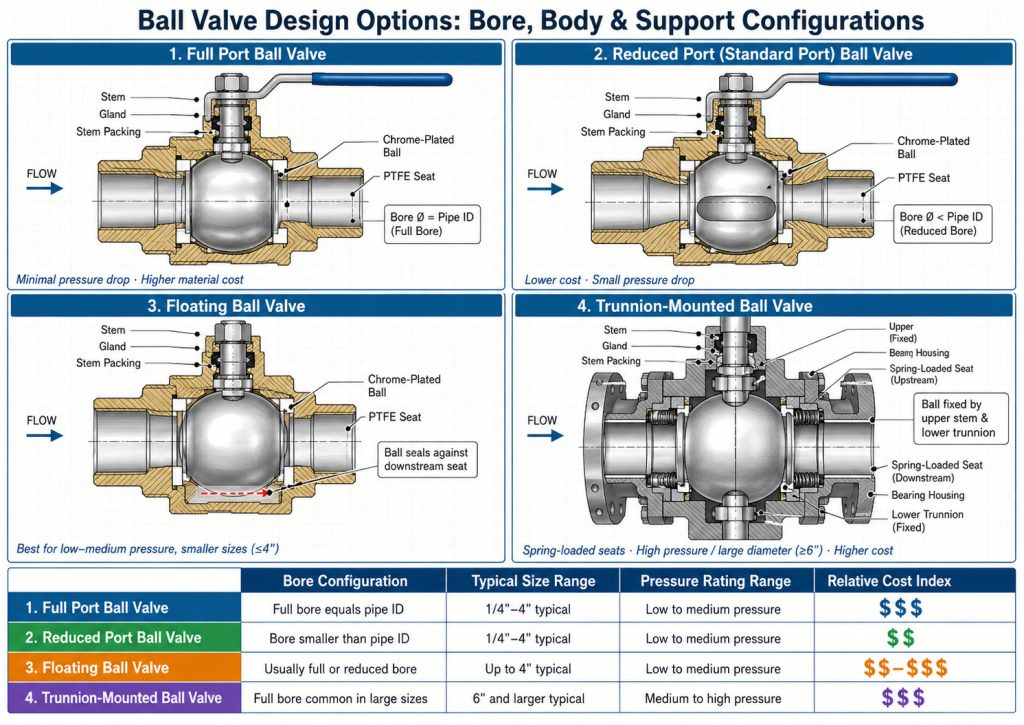
A full-port valve reduces flow restriction compared with a reduced-port design, but it usually has a larger body and may cost more. A floating ball valve is common in smaller, moderate-duty applications, while trunnion-mounted designs are more relevant for larger sizes or higher operating forces. The mechanics behind how a ball valve works in industrial piping matter because a plumber or pipefitter may need to match both the pipe connection and the operating condition.
For industrial metallic valves, ASME B16.34 applies to new construction and covers items such as pressure-temperature ratings, dimensions, materials, testing, and marking. That does not mean every small plumbing ball valve is selected to ASME B16.34, but it shows why industrial replacement cost cannot be judged only by valve diameter.
Seat and Seal Materials Are Cost Drivers
Soft seats such as PTFE or reinforced PTFE are common for clean water, air, and many general services, but they are not suitable for every temperature, abrasive media, or chemical condition. Elastomers may be economical but need compatibility checks. Metal-seated designs are used in harsher duties, but they can increase purchase cost and may not provide the same low-torque operation as soft-seated valves.
For potable-water systems, material compliance is also part of the cost discussion. NSF explains that NSF/ANSI 61 addresses health-effects requirements for products, components, and materials that contact drinking water, while lead-content requirements may be handled separately through lead-free rules or certification programs.
Repair or Replacement Decision
Replacement is usually more practical when the ball valve body is sealed, corroded, misapplied, hard to access repeatedly, or no longer matches the service conditions. Repair may be reasonable when the valve is designed for maintenance and compatible seats, seals, packing, or body gaskets are available.
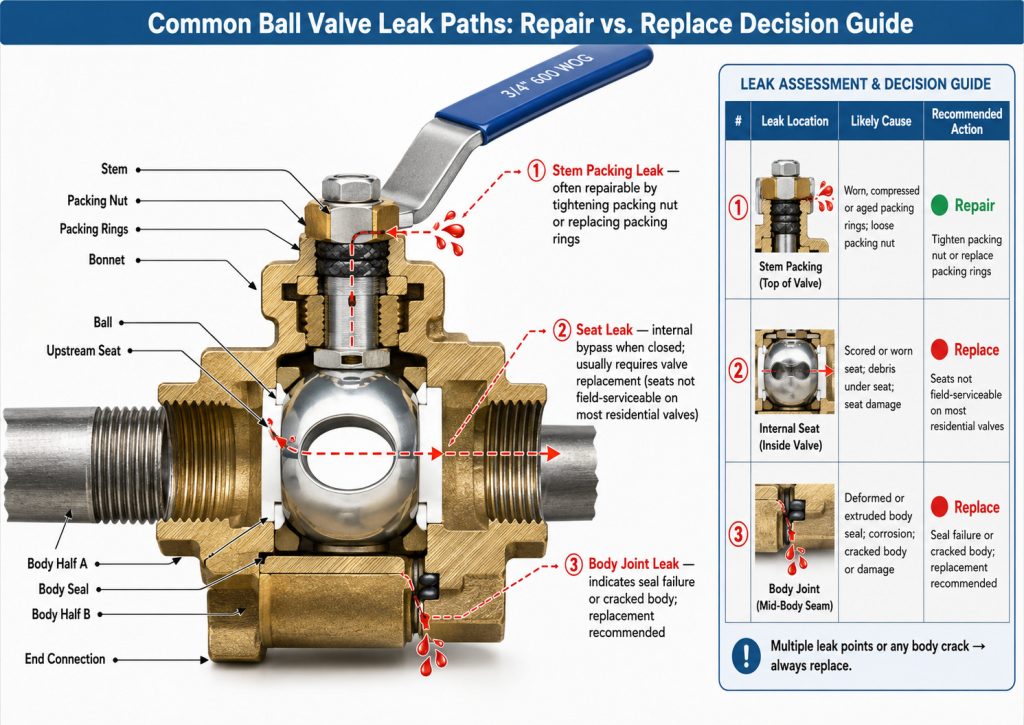
A plumber may be able to tighten packing or replace a handle in a simple case, but that is different from rebuilding a valve. One-piece and sealed-body valves are often poor repair candidates because internal parts are not easily accessible. Three-piece ball valves may be easier to service if the line is isolated and the center body can be removed without disturbing pipe ends.
A useful ball valve repair path starts by identifying whether leakage comes from the stem, body joint, seat, pipe connection, or damaged pipe nearby. If the leak is actually from pipe corrosion or thread damage, replacing only the ball valve may not solve the problem.
When Paying More Upfront Can Reduce Repeat Work
A higher valve cost may be justified when it avoids a second shutdown. Examples include replacing an old multi-turn gate valve with a quarter-turn ball valve, selecting a full-port valve where pressure drop matters, or choosing stainless steel where dezincification, chlorides, or process chemicals make ordinary brass risky.
The reverse is also true. Overspecifying an industrial valve for a simple low-pressure residential line can waste budget. The correct choice is conditional: media, pressure, temperature, connection type, code requirement, and service frequency should decide.
Industrial and Commercial Replacement Risks
In commercial and industrial systems, the replacement cost often reflects safety and downtime controls more than the valve itself. A ball valve on a chilled-water loop, compressed-air header, chemical skid, or process drain cannot be priced like an isolated fixture shutoff.
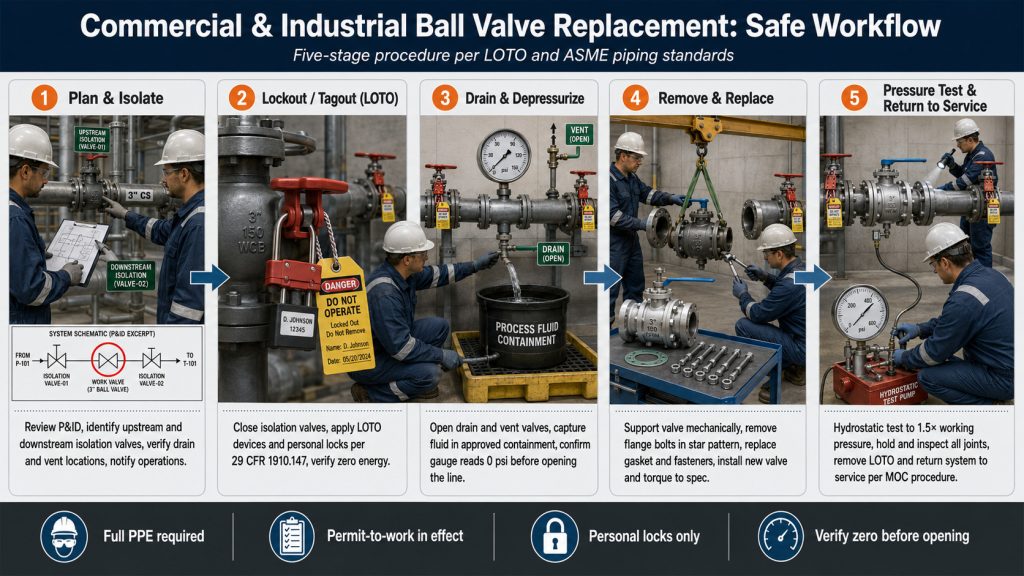
In covered general-industry settings, OSHA’s lockout/tagout rule at 29 CFR 1910.147 applies to servicing and maintenance where unexpected energization or release of stored energy could injure workers, and the standard requires documented control procedures in many covered cases through energy control procedure requirements. This can add labor time for isolation, verification, communication, and return-to-service checks.
Testing can also affect cost. ISO 5208:2015 specifies examinations and pressure tests used by a valve manufacturer to establish pressure-boundary integrity and verify closure tightness for industrial metallic valves, when used with the applicable product standard. A field replacement may not repeat a full manufacturer test, but project specifications may require hydrostatic testing, seat leakage checks, or documented inspection before the line returns to service.
HVAC and Water Systems Need Different Cost Thinking
In building services, cost often comes from access, shutdown coordination, insulation, drain-down time, and restoring service quickly. In water treatment, corrosion resistance, coating, and potable or non-potable service boundaries may matter more. For chilled water and heating loops, a replacement valve should fit the hydraulic function of the system, not just the pipe diameter; this is especially relevant in HVAC and district energy systems.
For chemical, oil, gas, steam, or high-temperature services, a plumber may not be the right trade at all. A pipefitter, mechanical contractor, or facility maintenance team may need to handle the work under a defined permit and isolation plan.
How to Prepare a Quote Request That Avoids Surprises
A good quote request gives the plumber, contractor, or valve supplier enough information to separate labor cost from valve specification risk. This reduces vague allowances and helps prevent the wrong replacement from being installed because the old valve “looked similar.”
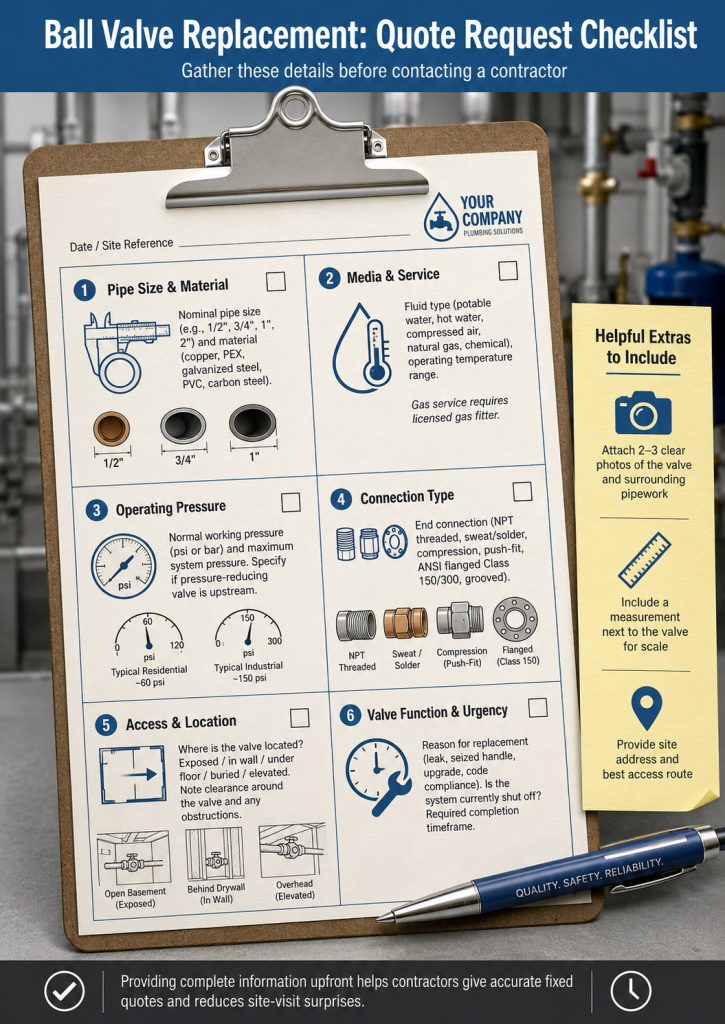
Before requesting pricing, collect:
- Pipe size and connection type, such as threaded, soldered, press, flanged, or welded
- Valve location and access condition, including wall, ceiling, pit, vault, or mechanical room
- Media, temperature, pressure, and whether the line is potable water
- Existing valve markings, photos, and handle orientation
- Whether upstream isolation is available
- Whether pipe sections, unions, flanges, gaskets, or supports may need replacement
- Any required standards, test records, or project documentation
- Preferred work window and whether downtime affects operations
For water, air, and general utility lines, pressure marking can be misunderstood. A ball valve WOG rating should not be treated as a universal guarantee for every temperature, fluid, or installation. The actual rating depends on the valve design, materials, seat limits, and manufacturer conditions.
Questions to Ask Before Accepting the Quote
Ask what is included in the price: labor, valve, fittings, disposal, permits, access work, pipe repair, pressure check, and return visit if needed. Also ask whether the plumber has assumed easy access and whether the old valve can be isolated without shutting down a wider system.
For commercial and industrial projects, ask whether the quoted valve is a direct replacement or an upgraded specification. If the existing valve failed early, a direct replacement may preserve the original mistake.
Conclusion
The plumber cost to replace ball valve is best understood as a bundle of labor, access, isolation, material compatibility, and replacement quality. Published residential ranges can help with a starting budget, but the final cost depends on the site and on whether the replacement valve matches the real service conditions.
RUITO’s position on valve replacement is practical: a lower installed price only has value when the valve is correctly specified for the medium, pressure, connection, and maintenance expectation. If you are replacing ball valves in commercial, HVAC, water, or industrial systems, you can send RUITO your valve replacement requirements for a specification discussion based on valve type, materials, pressure rating, seat design, and project conditions.
FAQ
How much does a plumber charge to replace a ball valve?
A simple accessible replacement may fall near common residential shutoff-valve cost ranges, but the final price depends on access, labor market, pipe material, permits, and valve specification. Main shutoff valves, buried valves, and commercial mechanical-room valves usually cost more than a small accessible fixture valve.
Is the ball valve itself the expensive part?
Usually, labor and access are bigger cost drivers than the valve body in residential work. In commercial or industrial projects, the valve can become a larger share of cost when stainless steel, flanged ends, high pressure class, special seats, or documented testing are required.
Should I repair a leaking ball valve or replace it?
Replace it when the body is sealed, badly corroded, hard to operate, internally damaged, or misapplied for the service. Repair is more reasonable when the valve is designed for maintenance and compatible seats, seals, packing, or gaskets are available.
Does a potable water ball valve need special certification?
Often yes, depending on local code and application. In the United States, drinking-water plumbing products may need to meet lead-free requirements, and many projects also reference NSF/ANSI/CAN drinking-water standards for wetted components.
What information should I send for an industrial replacement quote?
Send pipe size, connection type, medium, temperature, pressure, valve photos, markings, location, access limits, shutdown window, and any required standards or testing. These details help separate plumbing labor from valve specification risk and reduce the chance of a poor replacement choice.