
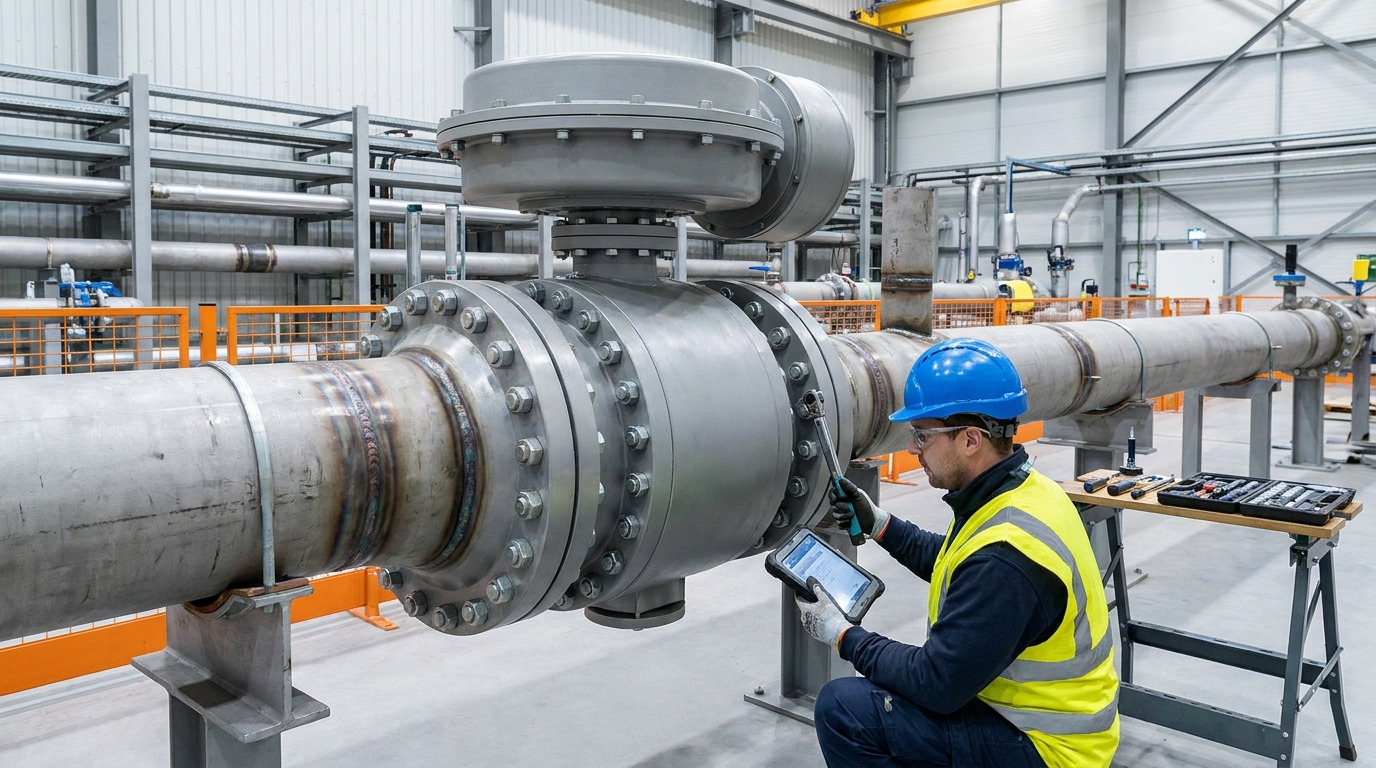
A pipeline leak often starts at the flanges when maintenance teams struggle with mismatched hardware during an urgent shutdown. You stare at the pipe assembly, realizing that guessing the thread length or torque specs could ruin the seal and force costly downtime. Applying the correct specifications using a 150# butterfly valve bolt chart immediately eliminates this guesswork and restores a secure connection. This ensures safe operations and proper alignment.
Why Do Bolt Charts Matter for a 150# Butterfly Valve Bolt Chart?
A reliable 150# butterfly valve bolt chart matters because it standardizes hardware dimensions to prevent catastrophic joint failures. Choosing wrong stud lengths or incorrect diameters weakens the pipe integrity immediately.
What’s the real story? Engineers rely on these precise metrics to select adequate fasteners for demanding industrial environments.
Does Hardware Sizing Prevent Flange Leaks?
Yes, exact hardware sizing aligns the mating surfaces perfectly to maintain structural integrity.
- It distributes clamping force evenly across the gasket area.
- It stops localized stress points from cracking the pipe flange.
- It prevents vibration-induced loosening during system operation.
Can Proper Selection Extend Equipment Life?
Choosing the exact fastener grades reduces metal fatigue and minimizes internal joint corrosion over time.
Here’s the deal: Matching the right metal grades to the flange bodies prevents galvanic corrosion and pitting.
Key Takeaway: Correctly sizing your installation bolts prevents unexpected leaks and extends overall piping lifespan significantly.
| Fastener Purpose | Associated Risk | Primary Benefit |
|---|---|---|
| Bolt Diameter | Thread stripping | Secure alignment |
| Stud Length | Bottoming out | Complete thread engagement |
Applying accurate diameter measurements directly stabilizes the joint against vibration.
How Does a Flange 150# Butterfly Valve Bolt Chart Improve Safety?
A flange 150# butterfly valve bolt chart improves safety by delivering exact torque distribution data across all connection points. Without these precise measurements, operators risk under-tightening or fracturing the mating flanges.
You might be wondering how this affects daily maintenance tasks. Accurate documentation allows technicians to confidently tighten joints without exceeding the maximum yield strength of the fasteners.
Why Are Double Flanges Critical?
Double flanged units require precise bolt calculations to secure both ends without creating misalignment.
- They utilize two separate sets of studs for independent tightening.
- They isolate piping sections without depressurizing the entire system.
- They demand exact stud length matching for proper thread protrusion.
Are ANSI Standards Essential Here?
Following ANSI specifications guarantees that replacement components will match existing infrastructure flawlessly.
This is where it gets interesting… The ANSI B16.5 framework dictates the exact number of holes and stud diameters required.
Key Takeaway: Utilizing recognized flange standards ensures your connections remain leak-free and fully compliant with safety codes.
| Valve Size | Hole Count | Stud Diameter |
|---|---|---|
| 2 inch | 4 | 5/8 inch |
| 6 inch | 8 | 3/4 inch |
Matching the exact hole count with the correct diameter ensures uniform gasket compression.
What Are Key Metrics in a Wafer 150# Butterfly Valve Bolt Chart?
Key metrics in a wafer 150# butterfly valve bolt chart include the overall stud length needed to span the entire body. Because these units lack their own flange holes, the fasteners must bridge the gap perfectly.
Ready for the good part? Wafer designs rely entirely on the compression generated by these long continuous studs.
How Do You Calculate Stud Length?
Calculating the stud length requires adding the valve face-to-face dimension, two flange thicknesses, and nut allowances.
- Add the width of the central valve body.
- Include the thickness of both mating pipe flanges.
- Account for gasket thickness and thread protrusion for two nuts.
Why Do Centering Holes Matter?
Some wafer designs feature centering holes that help installers align the unit during initial bolt insertion.
But here’s the kicker… These alignment features drastically reduce installation time by holding the body steady before final torquing.
Key Takeaway: Precise length calculations are mandatory for wafer installations to achieve the necessary compressive clamping force.
| Wafer Size | Estimated Stud Length | Torque Range |
|---|---|---|
| 4 inch | 6.5 inch | 45-50 lb-ft |
| 8 inch | 8.0 inch | 80-90 lb-ft |
Accurate stud lengths prevent the nuts from running out of thread before achieving full compression.
How Does Material Affect Your 150# Butterfly Valve Bolt Chart?
Material selection affects a 150# butterfly valve bolt chart by dictating the tensile strength and corrosion resistance of the fasteners. Stainless steel offers excellent rust prevention, whereas carbon steel provides higher tensile capabilities.
Let’s dive deeper into how temperature fluctuations influence these metal choices. Extreme heat can cause certain alloys to stretch, while freezing temperatures might induce brittleness in standard carbon steel.
When Is Stainless Steel Preferred?
Stainless steel fasteners are essential when the piping system handles corrosive media or faces harsh outdoor weather.
- They resist oxidation in marine or chemical environments.
- They maintain aesthetic integrity in sanitary processing plants.
- They prevent galvanic reactions when paired with similar alloys.
Why Is Carbon Steel Used Often?
Carbon steel hardware remains the industry standard for high-pressure systems operating in non-corrosive environments.
What’s the catch? You must ensure these studs receive proper zinc plating or galvanization to delay surface rusting.
Key Takeaway: Matching the fastener alloy to the operational environment prevents premature structural degradation and unexpected maintenance.
| Material Type | Environment | Key Advantage |
|---|---|---|
| ASTM A193 B8 | Corrosive | Rust resistance |
| ASTM A307 | General HVAC | Cost efficiency |
Selecting the appropriate metallurgical grade directly correlates to the joint’s long-term environmental survival.
How to Find a Maker With a True 150# Butterfly Valve Bolt Chart?
Finding a manufacturer with a true 150# butterfly valve bolt chart requires verifying their engineering certifications and quality control processes. A reputable supplier will readily provide comprehensive torque and dimension tables tailored to their specific products.
Here’s the deal: The best suppliers do not just sell hardware; they provide the technical documentation necessary for safe installation.
Are ISO Certifications Important?
Yes, ISO certifications prove that the factory follows strict, repeatable procedures when manufacturing their flow control devices.
- It ensures material traceability from raw steel to finished product.
- It guarantees standardized testing protocols for pressure retention.
- It provides a reliable dispute resolution framework if defects occur.
Should They Offer Custom Documentation?
Top-tier suppliers often generate customized documentation to match your exact piping layout and fluid requirements.
You might be wondering if this extra step is worth the effort. Tailored data sheets eliminate installation ambiguity on the job site.
Key Takeaway: Partnering with a fully certified producer guarantees that the dimensions on paper match the hardware in reality.
| Certification | Focus Area | Impact on Quality |
|---|---|---|
| ISO 9001 | Management | Consistent output |
| API 609 | Valve Design | Pressure safety |
Verifying international manufacturing credentials ensures that the supplied technical charts remain dependable and accurate.
What Torque Values Apply to a 150# Butterfly Valve Bolt Chart?
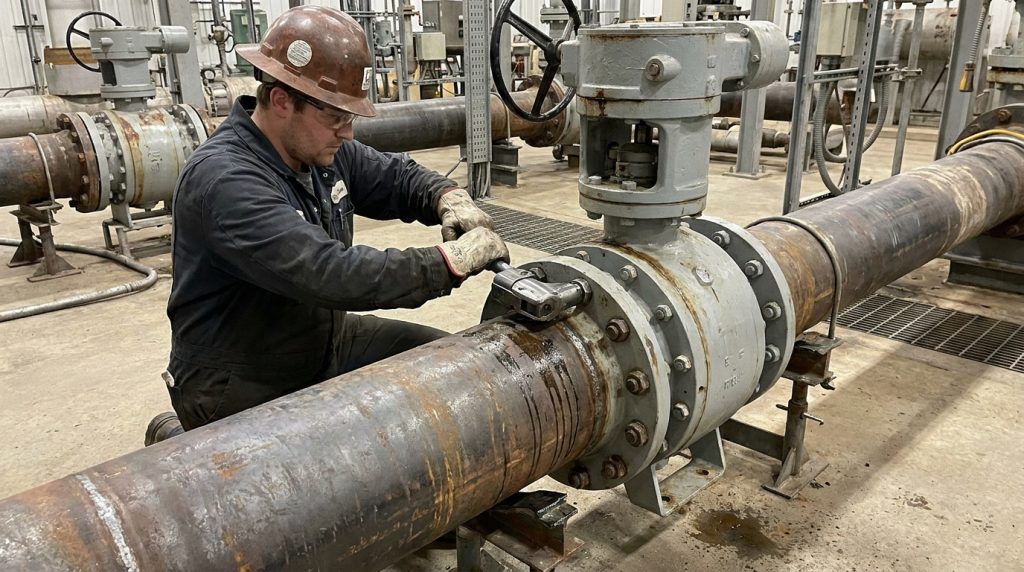
Torque values in a 150# butterfly valve bolt chart dictate the exact rotational force needed to compress the seating material. Applying too much force crushes the elastomer seat, while insufficient torque permits fluid bypass.
This is where it gets interesting… The required tightening force scales exponentially as the pipe diameter increases.
How Do You Apply Rotational Force?
Technicians must apply rotational force using a calibrated torque wrench in a specific crisscross or star pattern.
- Start by hand-tightening all nuts to ensure basic alignment.
- Apply 30% of the target force in a star pattern.
- Increase to 60%, and then finish at 100% across all points.
Why Is Gasket Material Relevant?
The hardness of your sealing gasket directly changes the amount of compressive force required for a tight seal.
But here’s the kicker… A rigid Teflon seat demands significantly more bolt tension than a soft EPDM rubber liner.
Key Takeaway: Strict adherence to specified tightening protocols prevents uneven seat compression and maximizes the valve’s operational lifespan.
| Gasket Type | Torque Requirement | Application Method |
|---|---|---|
| Soft EPDM | Moderate | Star Pattern |
| Hard PTFE | High | Star Pattern |
Adjusting your tightening sequence based on the liner material prevents irreversible damage to the soft sealing components.
How Do Lug Valves Differ in a 150# Butterfly Valve Bolt Chart?
Lug style units differ in a 150# butterfly valve bolt chart because they use threaded inserts requiring shorter, separate cap screws. Instead of one long stud spanning both flanges, each side bolts independently into the valve body.
Ready for the good part? This independent bolting allows technicians to remove downstream piping while keeping the upstream side pressurized.
What Is Dead-End Service?
Dead-end service refers to the practice of capping off a pipeline at the valve without a downstream flange.
- Lug designs handle dead-end service securely and safely.
- They utilize the threaded inserts to hold full line pressure.
- They require careful selection of bolt length to prevent bottoming out.
How Do Thread Pitches Vary?
The threaded lugs must match the thread pitch of the selected fasteners perfectly to prevent cross-threading.
What’s the real story? Standard ANSI flanges generally utilize Unified National Coarse (UNC) threads for these heavy-duty industrial applications.
Key Takeaway: Lug configurations require specific screw lengths and precise thread matching to ensure safe dead-end isolation capabilities.
| Valve Style | Fastener Type | Dead-End Capable |
|---|---|---|
| Wafer | Long Studs | No |
| Lug | Cap Screws | Yes |
Understanding the mechanical differences between lug and wafer bodies dictates the exact type of fasteners you must procure.
What Errors Occur When Using a 150# Butterfly Valve Bolt Chart?
Errors occur when using a 150# butterfly valve bolt chart if technicians misinterpret the difference between bolt diameter and wrench size. Another common mistake involves reusing old, stretched fasteners that no longer hold the correct tension.
Here’s the deal: Fasteners undergo plastic deformation when tightened, meaning their structural integrity degrades after the first installation.
Why Does Thread Binding Happen?
Thread binding happens when dirt, rust, or incorrect thread pitches cause the nut to seize on the stud.
- Always apply an approved anti-seize compound before tightening.
- Ensure the thread pitch of the nut matches the stud exactly.
- Clean all mating surfaces thoroughly prior to hardware assembly.
Can Misalignment Ruin the Seal?
If the piping is not perfectly aligned before bolting, the tightened fasteners will induce severe bending stresses.
You might be wondering why this matters so much. Forced alignment transfers pipe strain directly into the valve body, causing premature failure.
Key Takeaway: Proper installation practices and fresh hardware are just as critical as the dimensions listed on the data sheet.
| Common Error | Consequence | Prevention Method |
|---|---|---|
| Reusing bolts | Loss of tension | Install new hardware |
| Misalignment | Body stress | Align pipes first |
Addressing basic installation errors prevents the most common causes of post-maintenance pipeline leakage.
How Do Temperatures Impact a 150# Butterfly Valve Bolt Chart?
Temperatures impact a 150# butterfly valve bolt chart by causing thermal expansion or contraction of the steel fasteners. When a system heats up, the studs elongate, which can reduce the clamping force on the gasket.
This is where it gets interesting… Extreme cold environments require specialized alloys that resist low-temperature embrittlement and cracking.
What Is Thermal Cycling?
Thermal cycling occurs when a process repeatedly fluctuates between very hot and very cold operational states.
- It causes the flange connections to continuously expand and contract.
- It often loosens standard fasteners over several operational cycles.
- It requires periodic hot-torquing to maintain a secure seal.
Why Use High-Tensile Alloys?
High-tensile alloys like ASTM A193 B7 maintain their structural rigidity even when exposed to severe industrial heat.
But here’s the kicker… These specialty metals require entirely different torque multipliers to achieve the correct initial stretch.
Key Takeaway: Factoring environmental temperatures into your hardware selection prevents thermal-induced loosening and sudden joint failures.
| Temperature State | Material Effect | Required Action |
|---|---|---|
| High Heat | Elongation | Hot torquing |
| Deep Cold | Embrittlement | Use alloy steel |
Matching fastener metallurgy to the thermal environment ensures the joint remains tight during extreme operational swings.
Where Is Good Data for a 150# Butterfly Valve Bolt Chart Found?
Good data for a 150# butterfly valve bolt chart is found directly in manufacturer engineering manuals and verified ANSI B16.5 standard documents. Trusting unverified online forums or generic reference sheets often leads to incorrect procurement and hazardous installations.
What’s the real story? Reliable data always originates from the specific engineering team that designed and tested the flow control equipment.
Why Contact the Factory Directly?
Contacting the factory directly ensures that you receive the most updated and accurate technical specifications for your exact model.
- They possess the original design schematics and pressure test results.
- They can adjust recommendations based on your specific media.
- They provide certified drawings for stringent regulatory compliance.
How Do Spec Sheets Help?
Official specification sheets consolidate all dimensional, material, and torque requirements into one easily digestible reference document.
Ready for the good part? Maintaining these official sheets in your maintenance logs streamlines future repairs and ensures total compliance.
Key Takeaway: Sourcing your technical data straight from certified manufacturers eliminates costly guesswork and guarantees pipeline safety.
| Data Source | Reliability Level | Best Use Case |
|---|---|---|
| Factory Manual | Exceptional | Final installation |
| General Standard | High | Preliminary design |
Relying on official manufacturer documentation is the only foolproof method to guarantee accurate hardware dimensions.
Understanding the correct hardware dimensions ensures that your piping infrastructure remains secure, efficient, and entirely leak-free. By matching the right studs and torque values to your specific flange type, you eliminate the risk of unexpected system downtime. We engineer precision flow control solutions that take the guesswork out of complex industrial installations. If you need reliable technical specifications or customized valve assemblies, please contact us today to connect with our technical team. Ruitoflow is dedicated to advancing global fluid control reliability through uncompromising manufacturing standards.
FAQs
Q1: Can I reuse bolts during valve maintenance?
No, you should never reuse hardware. Fasteners undergo stress during tightening, and reusing them compromises the holding strength and risks leakage.
Q2: What’s the best way to handle a mismatched bolt chart?
Stop the installation immediately. Using the wrong dimensions will ruin the flange threads and prevent adequate seating pressure.
Q3: How do I know if I need stainless steel fasteners?
Check your environmental conditions first. Stainless steel is mandatory if the piping faces corrosive chemicals, marine environments, or extreme moisture.
Q4: What’s the best method to apply torque evenly?
Always use a calibrated torque wrench in a star pattern. This distributes the compressive force equally across the entire gasket surface.
Q5: Can I use wafer bolts on a lug style body?
No, lug bodies require separate cap screws. Wafer studs are too long and will not thread properly into the blind lug holes.