
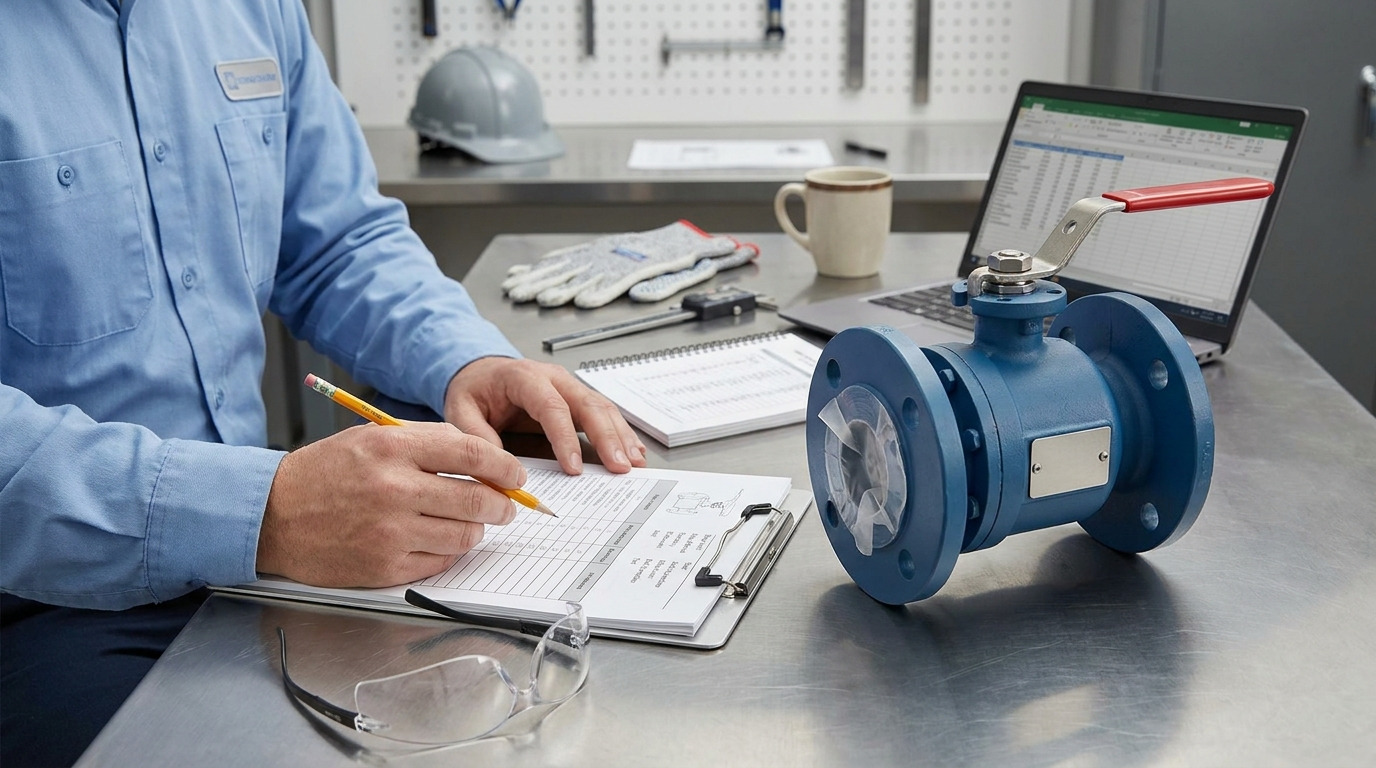
A ball valve full port specification is mainly a flow-capacity choice, not a guarantee that the valve is suitable for every service. In industrial piping, the usual problem is simple: a line needs reliable shutoff, but the wrong bore style can add pressure loss, block cleaning access, or create an unnecessary cost burden. This article explains when a full port design is worth specifying, when a standard or reduced port is enough, and what to confirm before ordering industrial ball valves for a project.
What Ball Valve Full Port Means in Practice
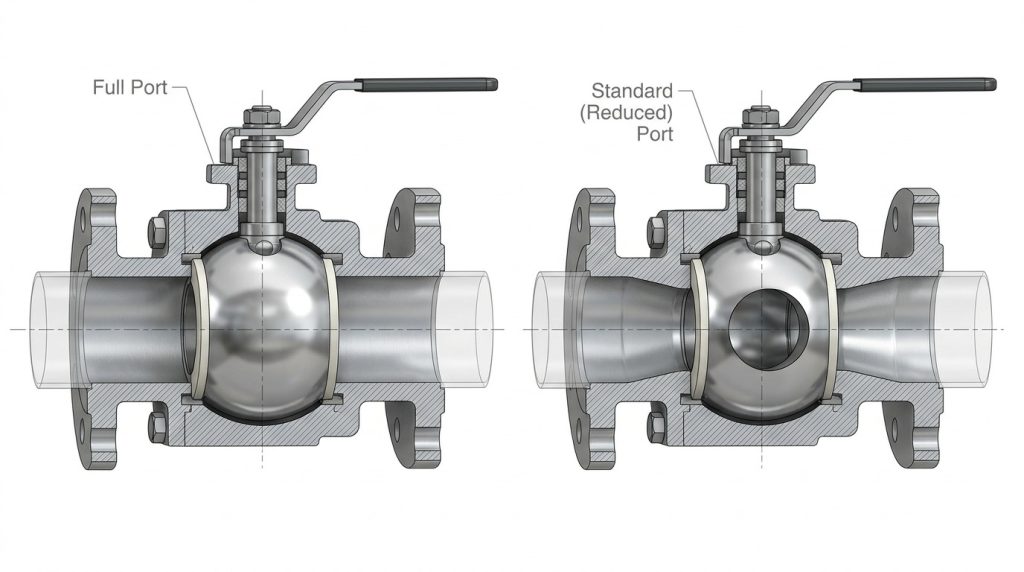
Ball valve full port means the flow path through the ball and valve body is intended to stay close to the connected pipe bore, so the open valve does not create a major internal narrowing. A standard port or reduced port valve has a smaller bore through the ball, which can make the valve more compact but adds more local restriction.
A ball valve still works by rotating a drilled ball between open and closed positions. The port style only describes the bore through that ball and body. It does not, by itself, define pressure rating, seat material, stem design, fire-safe construction, fugitive-emission performance, or test acceptance.
Full Port vs Standard Port Language
In many project documents, “full port” and “full bore” are used for the same intent. “Standard port” is often used when the bore is smaller than the line size but still acceptable for general isolation. “Reduced port” is the clearer term when the buyer wants to state that a smaller bore is permitted.
From a valve manufacturer’s perspective, the safest RFQ wording is not just “full port.” It is better to ask the supplier to confirm the nominal size, actual bore policy, pressure class, end connection, material, seat, and test requirement.
Full Port vs Standard Port in Engineering Terms
The main difference is how much the valve bore interrupts the line flow when the valve is fully open. That affects pressure drop, cleaning access, pigging possibility, installed envelope, and material cost.
Use this table as a selection screen before moving into detailed sizing.
| Decision Point | Full Port Tendency | Standard or Reduced Port Tendency | What to Verify |
|---|---|---|---|
| Flow capacity | Lower restriction when the line needs a near-straight bore | More restriction because the internal bore narrows | Confirm manufacturer Cv or flow data; IEC 60534-2-1:2011 covers equations for compressible and incompressible flow through control valves, but notes limits for non-Newtonian fluids, mixtures, slurries, and liquid-solid conveyance |
| Pressure loss | Better where the pressure budget is tight | Acceptable where added pressure drop does not affect pump or process performance | Compare valve loss with total system pressure budget |
| Cleaning or pigging | More suitable when a clear bore is required | May obstruct cleaning tools or create a local restriction | Confirm actual bore opening and cleaning tool diameter |
| Valve envelope | Larger body and ball are common | More compact body is common | Check installed space, pipe support, handle clearance, and weight |
| Purchase cost | More material and machining may raise cost | Often more economical for simple isolation | Compare life-cycle effect, not only unit price |
| Standards and testing | Port style does not replace product and test requirements | Same | For metallic industrial valves, ISO 5208:2015 specifies pressure-boundary and closure-tightness testing actions for manufacturers |
The table is not a substitute for a datasheet. A full port valve can still be wrong if the seat material is incompatible, the pressure-temperature rating is not suitable, or the end connection does not match the piping standard.
When a Full Port Ball Valve Is Worth Specifying
A full port valve is worth specifying when the line cannot afford unnecessary restriction or when the bore must remain open for cleaning, draining, or process reasons. The value is strongest in flow-sensitive lines, piggable sections, viscous services, and applications where a small local loss becomes significant over repeated operation.
For liquid lines, the next step is usually pressure-drop review. If flow rate, fluid properties, inlet pressure, outlet pressure, and allowable pressure loss are known, a calculation can show whether the bore style matters enough to justify the larger valve. RUITO’s discussion of ball valve pressure drop using Cv is a useful next step when the issue is not only “full port or not,” but how the valve affects the whole piping system.
Flow-Sensitive Pumped Lines
Full port designs are often preferred when the valve sits near pumps, headers, transfer lines, or process equipment where pressure margin is limited. A reduced bore can act like a local contraction, increasing velocity through the valve and adding avoidable pressure loss.
The risk is not only energy loss. Higher local velocity can also increase noise, vibration, erosion risk, or downstream disturbance in sensitive systems, depending on the fluid and piping layout.
Cleaning, Pigging, and Drainage
Where a line must pass a pig, cleaning tool, or unobstructed flushing flow, the actual bore matters more than the product name. A valve marked as the correct nominal pipe size may still be unsuitable if the ball opening is smaller than the tool or cleaning requirement.
This is also relevant for viscous liquids and some process residues. A smoother, less restricted path can reduce hold-up points, although the final judgment still depends on seat design, body cavity geometry, and the cleaning method.
When Standard or Reduced Port May Be Better
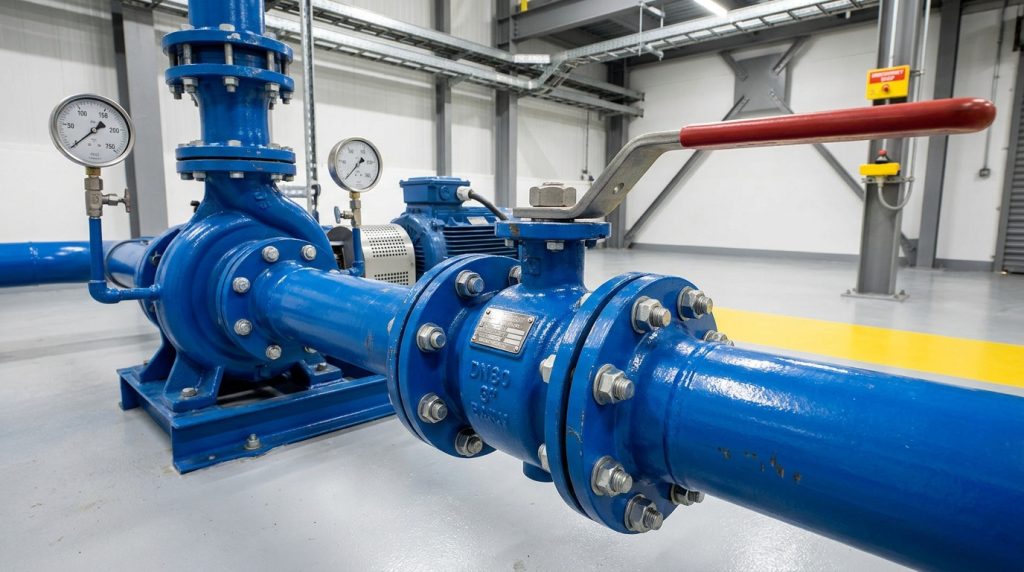
A standard or reduced port valve may be the more practical choice when the valve is used for simple on-off isolation and the system can tolerate the added local loss. The smaller bore can reduce body size, material use, installed space, and cost.
This is why reduced bore valves are common in compact equipment skids, utility lines, bypasses, drains, and general isolation points where flow capacity is not the limiting design factor. If this is the likely direction, compare the decision with the deeper discussion of a reducing ball valve before assuming full port is necessary.
Compact Piping and Utility Service
Space can be a real design constraint around equipment packages, racks, and skid-mounted systems. A reduced port valve may leave more room for handles, actuators, insulation, pipe supports, and maintenance access.
The practical question is simple: will the smaller bore interfere with the required flow, cleaning, or future maintenance? If not, full port may add cost without adding meaningful value.
Services With Modest Flow Demand
Some valves are installed for isolation during maintenance rather than continuous high-flow operation. In those cases, a moderate pressure drop across the valve may not affect the process.
Still, the decision should be documented. Ask for the expected flow rate, allowable pressure drop, and manufacturer flow data rather than relying only on habit or a generic line-size rule.
Materials and Standards Still Decide the Limit
Full port does not make a ball valve suitable for corrosive, abrasive, high-temperature, cryogenic, or fire-risk service by itself. The body material, ball material, seat material, stem sealing, pressure-temperature rating, and applicable standard remain the real engineering boundaries.
For metal ball valves with flanged, threaded, or welding ends, API announced that API Standard 608, 7th Edition was published and became effective on October 2, 2025. For pipeline and piping valves in petroleum and natural gas service, API Specification 6D, 25th Edition is a separate framework for manufacturing valve requirements. These references are useful only when they match the project scope; they should not be applied blindly to every industrial line.
Pressure, Temperature, and End Connections
Pressure class cannot be inferred from port style. A full port valve still needs a rating that matches the design pressure, design temperature, material, and end connection.
For new construction, ASME B16.34-2025 covers pressure-temperature ratings, dimensions, tolerances, materials, nondestructive examination, testing, and marking for relevant valve types and materials. For replacement work, ASME B16.10-2022 is important because it addresses face-to-face and end-to-end dimensions for installation interchangeability.
Seat and Seal Compatibility
Soft seats such as PTFE-based materials are common for tight shutoff in many clean services, but their suitability depends on temperature, pressure, chemical compatibility, and media cleanliness. Abrasive particles can damage soft seats, while high temperatures may require different materials or metal-seated construction.
A full bore does not protect a poor seat choice. If the media is abrasive, crystallizing, corrosive, or temperature-sensitive, the seat and seal discussion should happen before the RFQ is finalized.
How to Write a Full Port Ball Valve RFQ
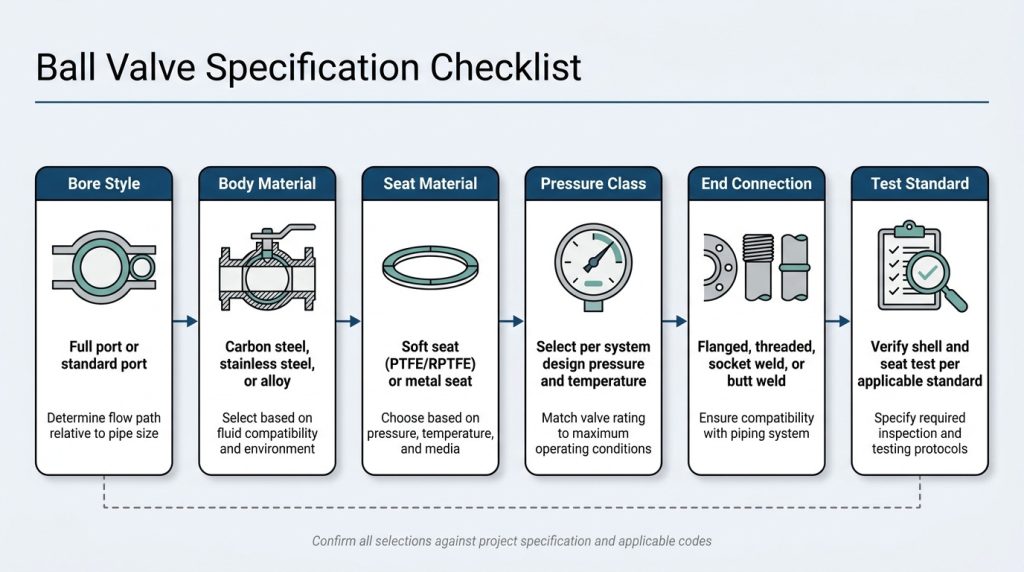
A ball valve full port RFQ should state the bore requirement clearly, then connect it to the service conditions that justify it. This helps the supplier review the valve as an engineered component instead of a generic line item.
Include these items where available:
- Nominal pipe size and required port style, such as full port, full bore, standard port, or reduced port
- Media name, concentration if relevant, cleanliness, solids content, and viscosity concerns
- Design pressure, operating pressure, design temperature, and operating temperature
- Required flow rate and allowable pressure drop
- Body, ball, stem, seat, seal, and bolting material preferences
- End connection, such as flanged, threaded, socket weld, or butt weld
- Applicable product standard, test standard, and documentation requirements
- Manual handle, gear operator, pneumatic actuator, or electric actuator requirement
- Any cleaning, pigging, draining, or cavity-relief requirement
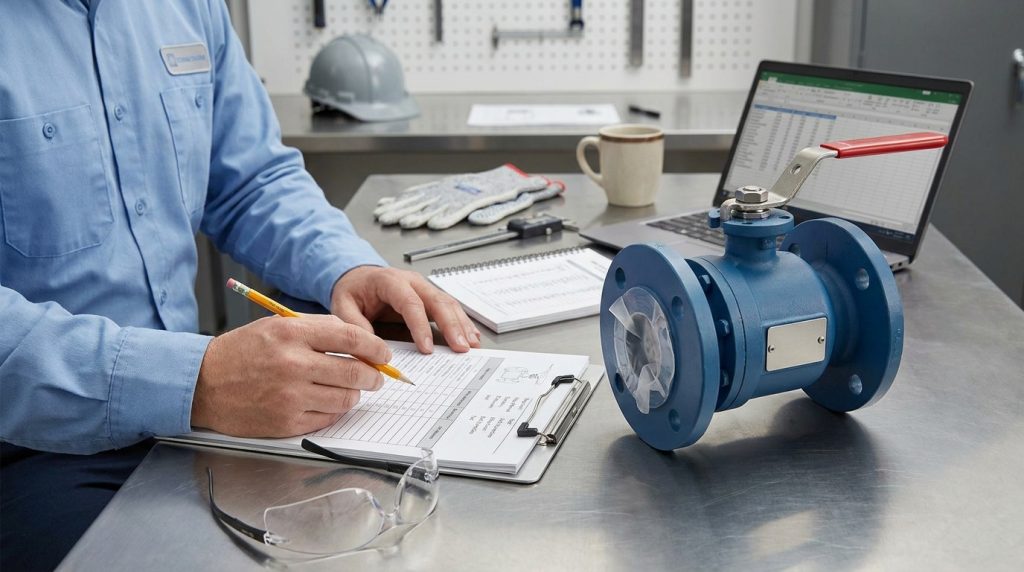
For flanged piping, the end connection and rating should be treated as part of the selection, not an afterthought. A flanged ball valve needs the correct flange standard, pressure class, face-to-face expectation, bolting space, and gasket compatibility before the bore choice can be considered complete.
Common Mistakes That Lead to Poor Selection
The most common mistake is treating full port as a universal upgrade. It is a useful design choice, but it does not replace flow calculation, material review, seat selection, or pressure-temperature verification.
Another mistake is using a ball valve as a throttling valve because it is convenient. Ball valves are generally better for on-off isolation; partial opening can concentrate velocity and wear on the seat area. If the line needs regular modulation, a control valve, globe valve, or another throttling design may be more appropriate.
A third mistake is forgetting safety and maintenance boundaries. In U.S. workplace contexts, OSHA’s 29 CFR 1910.147 lockout/tagout standard covers servicing and maintenance where unexpected energization or stored-energy release could injure employees, and it identifies a line valve as an energy-isolating device. Before inspection, cleaning, or disassembly, the site procedure must address isolation, depressurization, draining, and verification.
Conclusion
A full port ball valve is usually the right direction when flow capacity, low pressure loss, pigging, flushing, or cleaning access matters. A standard or reduced port valve can still be a sound choice when the service is simple isolation and the system can tolerate the added restriction.
RUITO’s practical position is that bore style should be confirmed together with material, seat design, end connection, pressure-temperature rating, and testing expectations before the valve becomes a purchase line. If your project needs help comparing full port and reduced port options, you can send the media, pressure, temperature, connection, bore preference, and flow-duty notes to RUITO for a focused selection discussion.
FAQ
Is full port the same as full bore?
Yes, in most industrial valve discussions the two terms point to the same design intent. They both refer to a ball valve bore that stays close to the connected pipe bore, but the supplier should still confirm the actual bore policy for the selected size and series.
Does a full port ball valve eliminate pressure drop?
No, it only reduces the restriction compared with a smaller-bore design under similar conditions. The complete pressure drop still depends on flow rate, fluid properties, pipe layout, fittings, valve geometry, and manufacturer flow data.
Is a full port ball valve better for throttling?
No, full port does not turn a ball valve into a good throttling valve. Ball valves are usually selected for isolation, while frequent modulation may require a valve type designed for control service.
Should every industrial line use full port valves?
No, full port should be specified when the service benefits from the larger bore. If the line is compact, the flow demand is modest, and the pressure loss is acceptable, a standard or reduced port valve may be more practical.
What should I confirm before ordering?
Confirm the port style, actual bore expectation, pressure-temperature rating, end connection, body and seat materials, test standard, actuator requirement, and any cleaning or pigging need. Those details matter more than the phrase “full port” alone.