
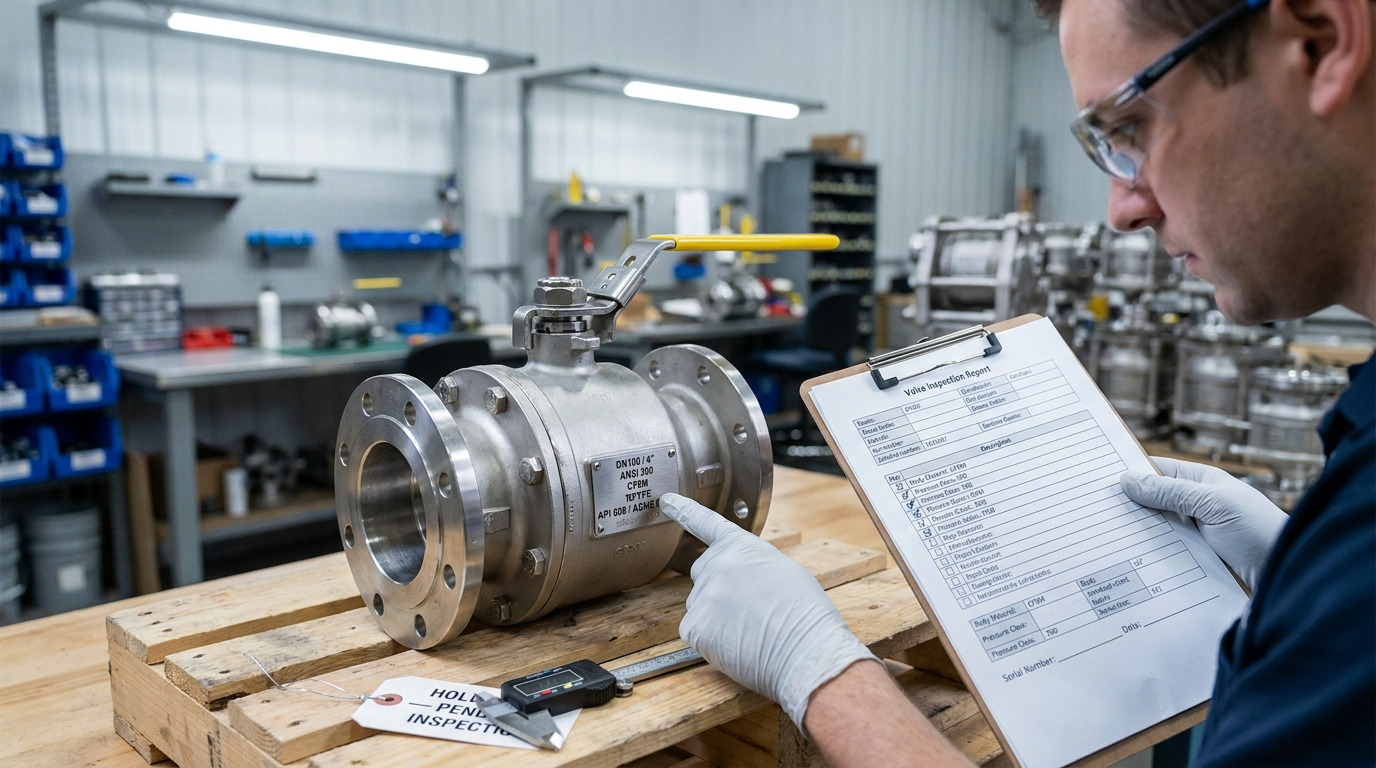
A reducing ball valve is usually the right choice when a line can tolerate a smaller internal bore and some additional pressure drop in exchange for a more compact and economical valve body. The problem appears when a purchasing team treats nominal pipe size as the only selection factor, then discovers later that the valve restricts flow, complicates cleaning, or does not match the process duty.
For engineers, contractors, and valve buyers, the practical question is not simply “which one is better?” It is whether the bore design matches the required flow rate, pressure budget, media condition, cleaning method, and installation standard. If you are comparing industrial ball valves for isolation service, the bore style should be confirmed together with Cv, end connection, pressure class, seat material, and the line’s real operating conditions.
What a Reducing Ball Valve Really Means
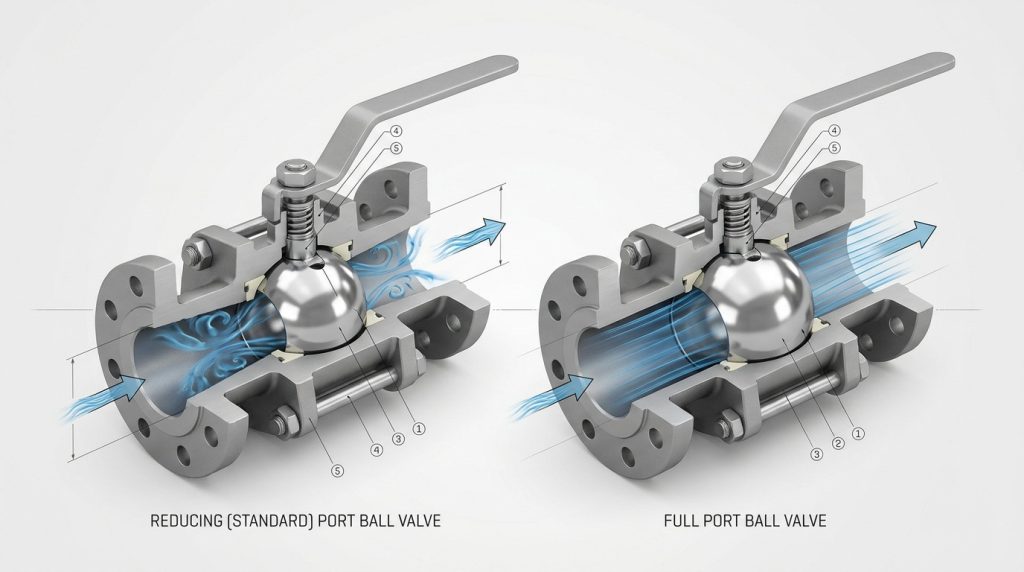
A reducing ball valve, more commonly called a reduced port or reduced bore ball valve, has an internal ball opening smaller than the connected pipe bore. When the valve is fully open, the flow still passes through a narrowed passage inside the ball, so the valve behaves like a local restriction in the piping system.
This is different from a full port ball valve, where the ball opening is closer to the pipe’s internal diameter. Standards language recognizes this distinction: the ISO 17292:2015 listing covers metal ball valves with full bore, reduced bore, and double-reduced bore configurations for petroleum, petrochemical, and allied industries.
Why the name can be confusing
“Reducing” does not mean the valve reduces pressure as a pressure regulator would. It means the flow opening inside the valve is reduced relative to the pipe connection size.
That distinction matters in specifications. A reduced bore valve may have the correct pressure class and end connection, yet still create more flow resistance than a full port valve in the same nominal size.
How the valve still works as a ball valve
The operating principle remains the same: a spherical ball rotates 90 degrees to align or block the flow passage. The difference is the diameter of that passage. For a deeper mechanical explanation, the basic way a ball valve works helps connect bore design with shutoff behavior, torque, and seat contact.
Where Reduced Bore Changes Flow and Pressure Drop
Reduced bore mainly affects flow capacity, velocity through the valve, and pressure drop. It does not automatically make a valve unsuitable, but it does mean the valve should be checked against the system’s allowable pressure loss instead of selected by pipe size alone.
The useful metric here is Cv. In valve sizing, the ISA valve sizing definition describes Cv as the number of U.S. gallons per minute of water at 60°F that will pass through a valve with a 1 psi pressure drop under specified conditions. A reduced bore valve normally has a lower Cv than a comparable full port valve, because the flow path is smaller.
Port area affects more than one number
A smaller bore can increase local velocity through the valve. In clean utility water, compressed air, or non-critical auxiliary lines, that may be acceptable. In high-flow services, long pipe runs, or pump-limited systems, the added loss can reduce downstream pressure or increase energy demand.
For this reason, ball valve pressure drop should be evaluated with flow rate, fluid density, upstream pressure, downstream pressure, and the selected valve’s published Cv data.
Pressure rating is not the same as pressure drop
Pressure rating tells you whether the valve body, closure member, seats, and end connections are suitable for the pressure-temperature boundary. Pressure drop tells you how much energy the moving fluid loses while passing through the open valve.
A reduced bore valve may have a suitable pressure class but still be a poor hydraulic fit if the system has little pressure margin. A full port valve may be hydraulically better, but it may be heavier, larger, and more expensive than the line actually requires.
Full Port and Reducing Ball Valve Comparison
The fastest way to choose between the two is to separate hydraulic need from mechanical and procurement preference. The table below compares the decision factors that usually matter before a valve is ordered.
| Decision factor | Reducing ball valve | Full port ball valve | What to confirm before purchase |
|---|---|---|---|
| Bore designation | Recognized as reduced bore or double-reduced bore in standards such as ISO 17292 | Recognized as full bore in the same standard framework | Confirm the bore style is written in the datasheet, not assumed from nominal pipe size |
| Flow capacity | Lower Cv is expected for the same nominal line size | Higher Cv is expected when the bore is closer to pipe ID | Request published Cv or flow data for the exact valve size and design |
| Pressure loss | More likely to add local pressure drop | Usually selected where low restriction is important | Compare allowable pressure drop with calculated valve loss |
| Cleaning or pigging | Internal step can obstruct cleaning devices or solids | Better suited where unobstructed passage is required | Confirm whether pigging, flushing, or solids passage is part of the duty |
| Size and cost impact | Often more compact and economical | Often larger, heavier, and higher cost | Balance installed cost against flow performance and maintenance access |
| Standards check | Bore is only one part of compliance | Bore is only one part of compliance | Confirm pressure class, end connection, face-to-face, test, marking, and material requirements |
The key takeaway is simple: reduced bore is a design choice, not a defect. It becomes a problem only when the buyer expected full-port flow capacity, cleaning access, or low pressure loss and did not state that requirement clearly.
When a Reducing Ball Valve Makes Engineering Sense
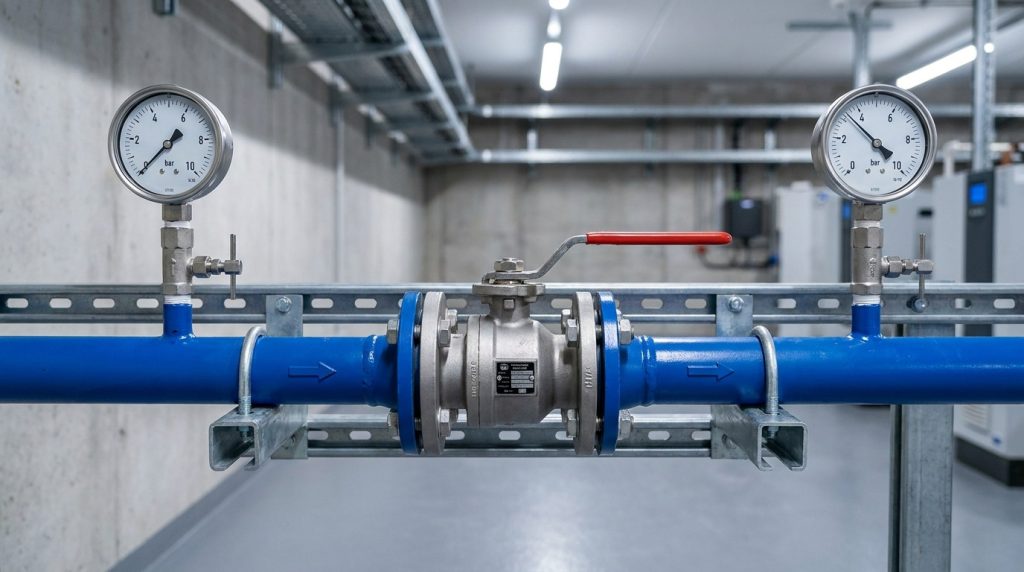
A reduced bore ball valve makes sense when shutoff reliability, compact installation, and cost control matter more than maximum flow area. It is often reasonable in general isolation duties where the line has enough pressure margin and the fluid is clean enough to pass through the smaller port without clogging risk.
General utility and moderate flow lines
Cooling water branches, utility air, non-critical drain lines, and many auxiliary services may not require a full pipe-size opening through every isolation valve. In these cases, a reduced bore valve can still provide practical shutoff while avoiding unnecessary valve size, weight, and cost.
The important condition is that the system can accept the extra loss. If the line is already close to a pump’s operating limit or downstream equipment needs stable pressure, the reduced port should be checked more carefully.
Compact assemblies and package equipment
Skids, compact manifolds, and equipment packages often have limited space. A reduced bore valve can help keep the assembly smaller, especially where the valve is used mainly for isolation during maintenance rather than continuous high-flow operation.
This does not remove the need for proper specification. The valve still needs compatible body material, seat material, stem sealing, pressure class, and end connection for the media and operating temperature.
Clean media without pigging requirements
Reduced bore is more comfortable when the media is clean liquid or gas and the line does not require pigging. If solids, scale, wax, fibers, or slurry are present, the internal step can become a collection point or restriction.
A manufacturer can discuss whether a floating or trunnion-mounted construction is more appropriate when size, torque, pressure, or seat load becomes important. For larger isolation duties, trunnion ball valve design may become part of the selection conversation.
When Full Port Is the Safer Specification
Full port is usually the safer specification when the line needs low restriction, cleaning access, or a flow path close to the pipe ID. It is also the more cautious choice when the buyer does not yet know the allowable pressure drop but knows the process is flow-sensitive.
Pigging, flushing, and unobstructed passage
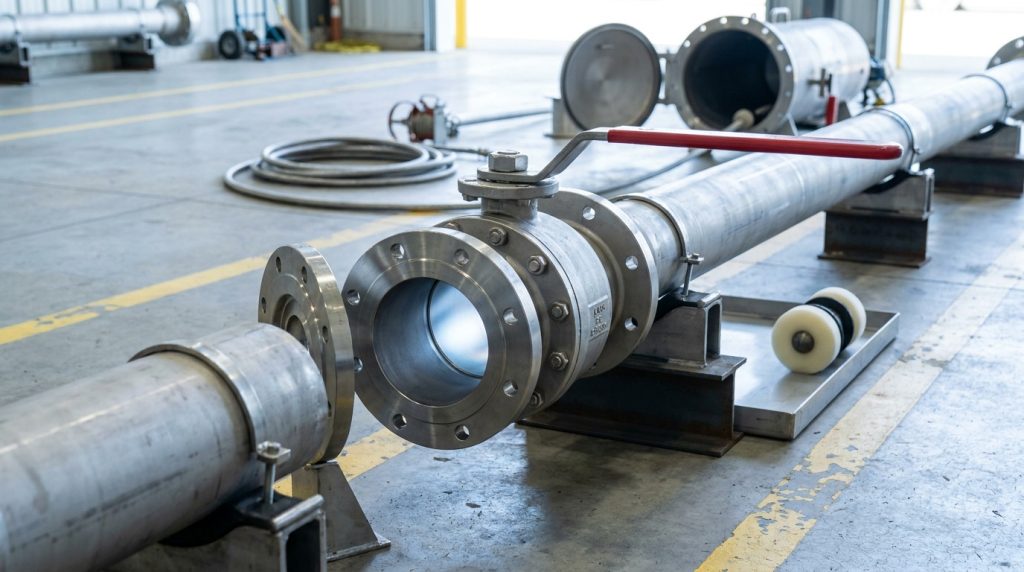
A full port design is generally preferred where pipeline pigs, cleaning tools, or flushing flow must pass through the valve. A reduced bore creates a shoulder inside the line, which can stop tools or trap material.
This is not just a maintenance issue. In some pipelines, cleaning access protects product quality, reduces buildup, or helps keep flow stable over time.
Tight pressure budgets and high flow demand
Full port becomes more attractive when the system cannot afford much pressure loss. Examples include long pipelines, pump-limited loops, high-flow transfer lines, and processes where downstream pressure affects equipment performance.
A reduced bore valve may still work if the calculated pressure drop is acceptable. But when the margin is narrow, paying for a larger flow path can be easier than correcting an undersized valve after installation.
Dirty, abrasive, or scaling media
Where the media contains solids or tends to scale, the reduced opening can increase blockage and erosion risk. Full port does not eliminate those risks, but it reduces the sudden bore change and may give the system more tolerance.
For abrasive or severe service, bore choice is only one factor. Seat design, hardfacing, body material, operating frequency, and flushing strategy may matter as much as port size.
Standards and Specifications to Confirm Before Ordering
Bore style should be written into the valve specification along with pressure class, end connection, material, test requirement, and dimensional standard. If the purchase order only says “ball valve, same size as pipe,” the supplier may not know whether full port or reduced bore is expected.
Pressure-temperature and construction standards
For metallic valves, ASME B16.34:2025 addresses pressure-temperature ratings, dimensions, tolerances, materials, nondestructive examination requirements, testing, and marking. This does not replace the need for a valve-specific datasheet, but it shows why pressure class cannot be separated from material and temperature.
For metal ball valves in petroleum, petrochemical, and allied services, ISO 17292 provides a useful reference scope that includes DN 8 to DN 600 and NPS 1/4 to NPS 24, with Class and PN designations listed in the standard summary. That kind of scope helps buyers avoid treating all “ball valves” as one generic product.
End dimensions, flanges, and testing
When replacing or matching existing piping, face-to-face length matters. ASME B16.10:2022 covers face-to-face and end-to-end dimensions of straightway valves and is intended to support installation interchangeability across valve type, size, rating class, and end connection.
For flanged valves, the ASME B16.5:2025 listing covers pipe flanges and flanged fittings from NPS 1/2 through NPS 24, including pressure-temperature ratings, materials, dimensions, tolerances, marking, and testing. If the project uses flanged ends, a flanged ball valve selection discussion should include flange rating, gasket surface, bolt pattern, and mating pipeline standard.
Inspection and pressure testing should also be specified clearly. The API Std 598 listing covers inspection, examination, supplementary examination, and pressure test requirements for several valve types, including ball valves. The applicable test standard should match the project specification rather than be assumed after the valve is built.
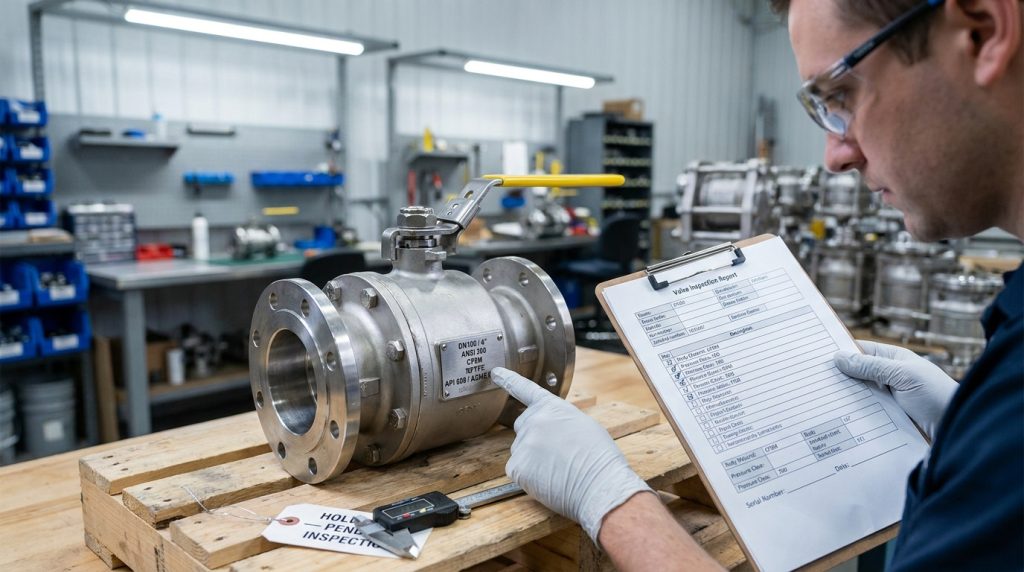
How to Discuss the Valve With a Manufacturer
The best manufacturer conversation starts with operating conditions, not just a valve name. A clear inquiry reduces the chance of receiving a reduced bore valve when full port is needed, or paying for full port when the system does not require it.
Prepare these details before requesting a quotation or technical review:
- Nominal pipe size and required bore style, if already known
- Required flow rate and allowable pressure drop
- Fluid type, density, viscosity, cleanliness, and solids content
- Operating pressure, design pressure, operating temperature, and design temperature
- Body material, seat material, and seal compatibility requirements
- End connection, flange standard, face-to-face requirement, and installation orientation
- Manual, pneumatic, electric, or bare-stem actuation needs
- Testing standard, inspection requirement, marking, and documentation expectations
From a valve manufacturer’s perspective, the most useful wording is direct: “reduced bore acceptable if Cv meets the pressure-drop limit” or “full port required for pigging and unobstructed passage.” That sentence prevents a common mismatch between commercial quotation and engineering intent.
Conclusion
A reduced bore ball valve can be a practical, economical isolation valve when the line has enough flow margin and does not need full-bore access. A full port ball valve is usually the better fit when pressure drop, pigging, cleaning access, or high-flow performance carries more risk than valve size or cost.
RUITO’s position is that valve selection should make the flow path, material, pressure class, and testing expectations clear before the purchase order is finalized, because that clarity protects both system performance and procurement cost control. If you are comparing reduced bore and full port options for a real project, you can share your valve specifications with RUITO to discuss bore style, Cv, materials, end connection, and applicable test requirements.
FAQ
Is a reducing ball valve the same as a reduced port ball valve?
Yes, in most industrial purchasing contexts the terms point to the same idea. The valve has a smaller internal ball opening than the connected pipe size, so “reduced port” or “reduced bore” is usually the clearer specification wording.
Does reduced bore mean the valve has a lower pressure rating?
No, bore style and pressure rating are different specifications. A reduced bore valve can still have the required pressure class, but it may create more pressure drop than a full port valve in the same nominal line size.
Should I always choose full port for industrial service?
No, full port is not always necessary. It is preferred when the line needs low restriction, pigging access, or high flow capacity, but reduced bore can be suitable for clean media, moderate flow, and compact isolation duties.
What information should I provide when asking for a reduced bore valve?
Provide the pipe size, required flow rate, allowable pressure drop, media, pressure, temperature, material requirements, end connection, and any test standard. If full port is mandatory, state that clearly instead of relying on the valve’s nominal size.
Can a reduced bore ball valve be used for throttling?
Usually it should not be selected as a fine throttling valve. Standard ball valves are mainly for open-close isolation, and partial opening can create unstable flow, seat wear, noise, or erosion depending on media and pressure conditions.