
An API JIS EN593 butterfly valve quotation needs a requirement-by-requirement review. The three labels do not define one interchangeable valve. Specify the design standard, flange interface, body length, service limits, and acceptance tests separately. Then require the supplier to identify the exact offered configuration and any exceptions before placing the order.
1. What does an API JIS EN593 butterfly valve listing mean?
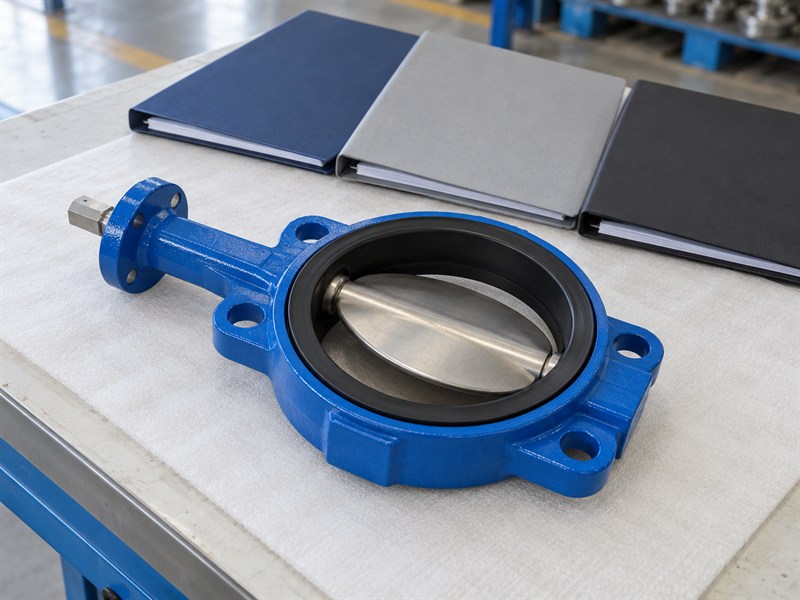
An API JIS EN593 butterfly valve listing usually describes several options within a supplier’s product range. It can also describe a valve designed to one standard with a connection requested under another. Ask which claims apply to the specific size, body construction, materials, and pressure designation on your quotation.
API and JIS are standards families. Request the document numbers rather than accepting those abbreviations alone. EN 593 identifies a butterfly-valve standard, but the order still needs its agreed edition and the applicable construction. A website heading cannot resolve those fields for a purchase order.
What should the first technical reply contain?
Require a marked data sheet. Each requirement should have an offered value, a supporting document, or a stated exception. An unanswered field remains open during bid comparison.
| Listing field | Required clarification |
|---|---|
| Design claim | Standard number, edition, and offered scope |
| Connection | Flange standard, designation, facing, and bore |
| Product identity | Model, size, construction, and controlled drawing |
Keep the commercial description short, but make the technical attachments specific enough for the inspector to identify the delivered valve.
2. Which API JIS EN593 butterfly valve design route applies?
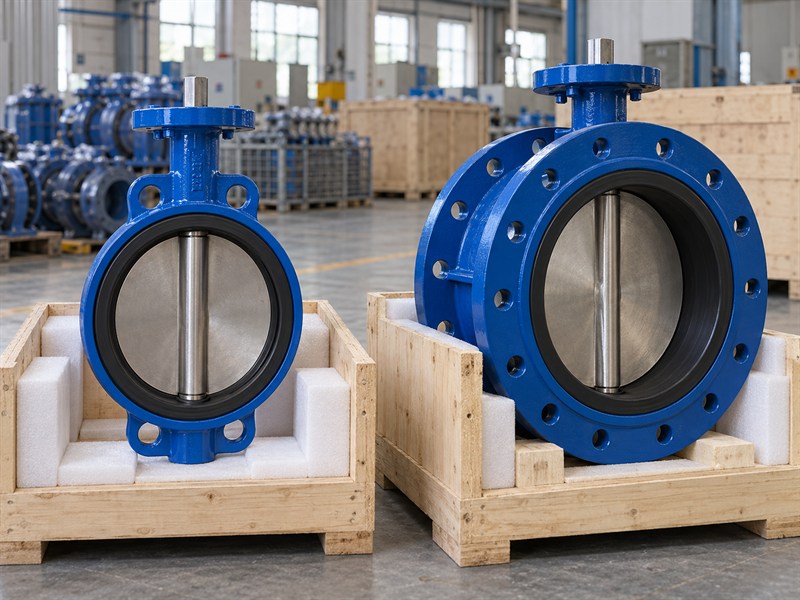
For an API JIS EN593 butterfly valve enquiry, choose the required design route and verify that the offered construction falls within its scope. API 609, JIS B 2032, and EN 593 should not be treated as three spellings of the same specification. A supplier offering several routes must explain which one governs the selected valve.
The JSA listing for JIS B 2032:2024 identifies a wafer-type rubber-seated butterfly-valve standard. Review its scope before applying that designation to a different body style or application. Where several requirements are contractual, document the compliance assessment and resolve conflicts explicitly.
How do API JIS EN593 butterfly valve requirements overlap?
Assign each requirement to an agreed document. Record the precedence rule in the order instead of asking the factory to choose after production begins.
| Requirement | Decision to record |
|---|---|
| Valve design | Governing standard and applicable construction |
| Supplementary requirements | Additional clauses and accepted exceptions |
| Conflicting requirements | Agreed precedence and written resolution |
RUITO should review an order-specific API or JIS request against the offered configuration. A general product-range description does not establish certification of every available valve.
3. Which API JIS EN593 butterfly valve edition applies?
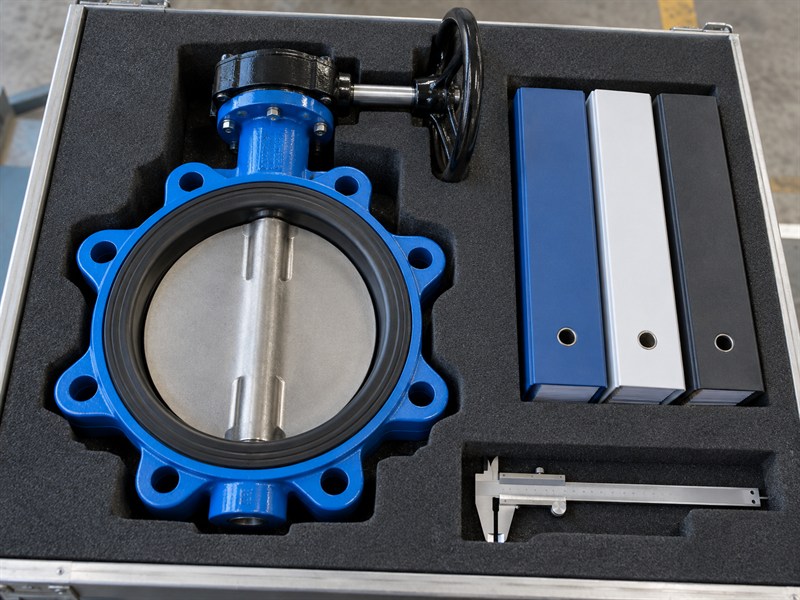
Check the edition specified for the API JIS EN593 butterfly valve order against the supplier’s proposed edition. New publication does not automatically change an existing contract. Conversely, an old catalogue reference should not silently become the acceptance basis for a new order.
Edition checks are relevant to current quotations. BSI lists API STD 609:2026, published in May 2026. Its EN 593 release listing identifies BS EN 593:2026, published in September 2026. Confirm the required national adoption, edition, amendments, and project transition arrangements with the responsible engineer.
Which documents should share the same baseline?
Align the purchase specification, supplier data sheet, inspection plan, and certificate wording. A drawing referencing one edition and a test report referencing another needs a documented review.
| Document | Edition check |
|---|---|
| Purchase specification | Contractual requirement and precedence |
| Supplier submission | Offered edition and exceptions |
| Inspection records | Accepted baseline used for release |
Retain the approved revision history so a repeat purchase does not inherit an obsolete or unreviewed requirement by accident.
4. Will the API JIS EN593 butterfly valve fit the piping?
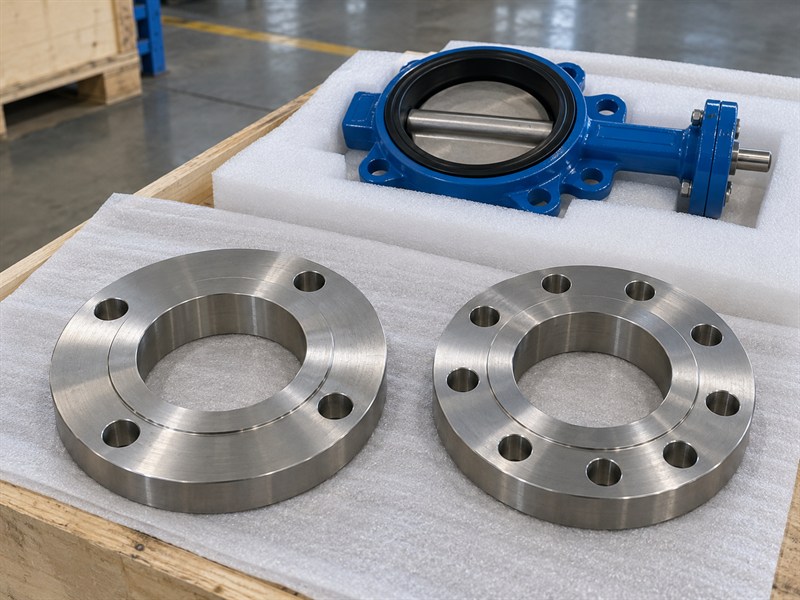
Verify the mating flange and body-length requirements of an API JIS EN593 butterfly valve independently of the design label. Record nominal size, flange document, pressure designation, facing, hole pattern, bore, and the selected face-to-face dimension. The same nominal size can appear on valves with incompatible interfaces.
Disc clearance requires the actual mating bore and nearby geometry. A bolt pattern that aligns does not prove the disc can open through a lined pipe, reducer, or flange neck. Review the complete installation drawing and compare the offered body with the existing space using the wafer butterfly valve size checks.
What belongs on the approved interface drawing?
Show the dimensions used to accept the assembly. Keep flange drilling, face-to-face length, and disc sweep as distinct checks rather than one broad statement of compatibility.
| Fit check | Evidence required |
|---|---|
| Bolting | Hole count, diameter, pitch circle, and fastening arrangement |
| Axial space | Body length and permitted installation arrangement |
| Disc movement | Sweep envelope and minimum clear mating bore |
Do not drill, grind, or force an unsuitable connection to make a shipment fit. Resolve discrepancies against the approved configuration before installation.
For replacement work, identify which dimensions came from a site measurement and which came from a drawing. Record inaccessible features as unconfirmed. A supplier cannot resolve an uncertain flange bore from a nominal pipe-size label alone; provide the relevant lining, pipe-wall, and adjacent-fitting details before accepting the disc-clearance assessment.
5. Are API JIS EN593 butterfly valve ratings equivalent?
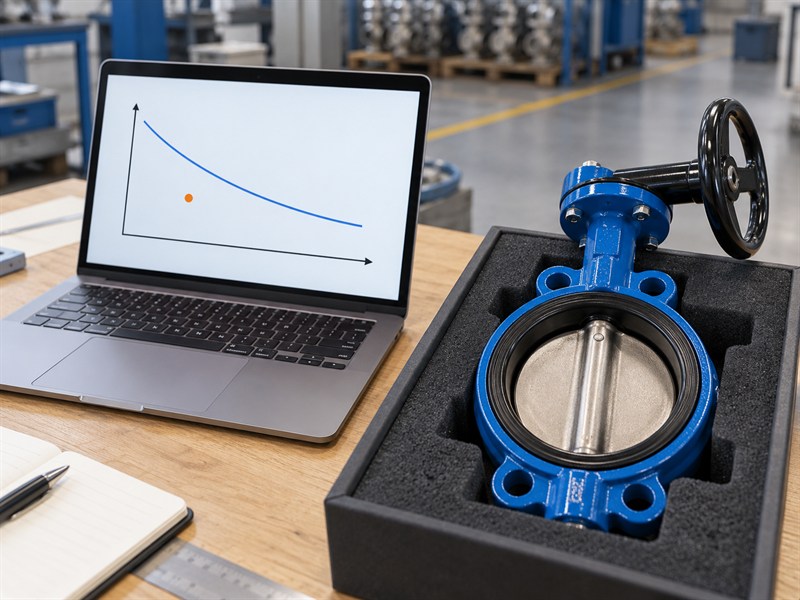
An API JIS EN593 butterfly valve rating comparison needs an engineering assessment for the exact materials, temperature, and construction. Do not convert a designation into a universal service rating or assume that similar catalogue numbers establish equivalence.
Separate body pressure capability, seat shutoff differential, and connection limits. Temperature can restrict the complete assembly through the seat, auxiliary seals, coating, or other components. The governing service limit is the accepted combination of those constraints for the selected duty.
What operating conditions should the purchaser provide?
State normal and maximum pressure, temperature range, closing differential, flow direction, and credible transient conditions. Identify vacuum or end-of-line service separately where required.
| Rating question | Required supplier response |
|---|---|
| Body pressure | Approved pressure–temperature basis |
| Shutoff duty | Permitted differential and direction |
| Complete service | Limits of the selected wetted and sealing components |
The conceptual image has no numerical rating. Obtain the manufacturer's configuration-specific limits before accepting the duty. A factory test pressure also needs its own stated procedure; it is not a continuous operating allowance.
6. Which API JIS EN593 butterfly valve materials fit the duty?
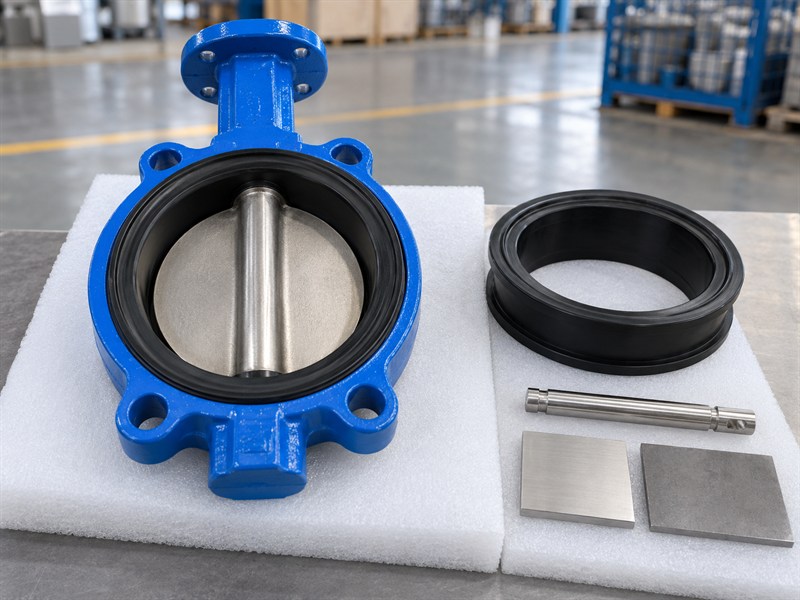
Specify the body, disc, shaft, seat, auxiliary seals, and wetted fasteners or liners in the API JIS EN593 butterfly valve material list. A standards label does not establish compatibility with a particular fluid. Give the supplier the composition, concentration, contamination, temperature, and exposure conditions needed to assess the complete material combination.
An EPDM water configuration and an NBR oil configuration have different intended boundaries. Chemical duty requires review of the full wetted material list; naming PTFE or PFA alone leaves other components unresolved. Clean compressed-air service also requires a configuration and gas-tightness acceptance basis suited to that duty.
How should material substitutions be controlled?
Define which changes require purchaser approval. A supplier should not replace the seat compound or shaft grade using only a broad claim that the substitute meets a listed standard.
| Material field | Order requirement |
|---|---|
| Metallic components | Grade, traceability, and required records |
| Seat and seals | Compound identity and service limits |
| Coating or lining | System, coverage, and acceptance requirements |
Retain the approved material list with the drawing. That record gives maintenance staff a usable basis for replacement parts and later fluid changes.
7. How should API JIS EN593 butterfly valve tests be specified?
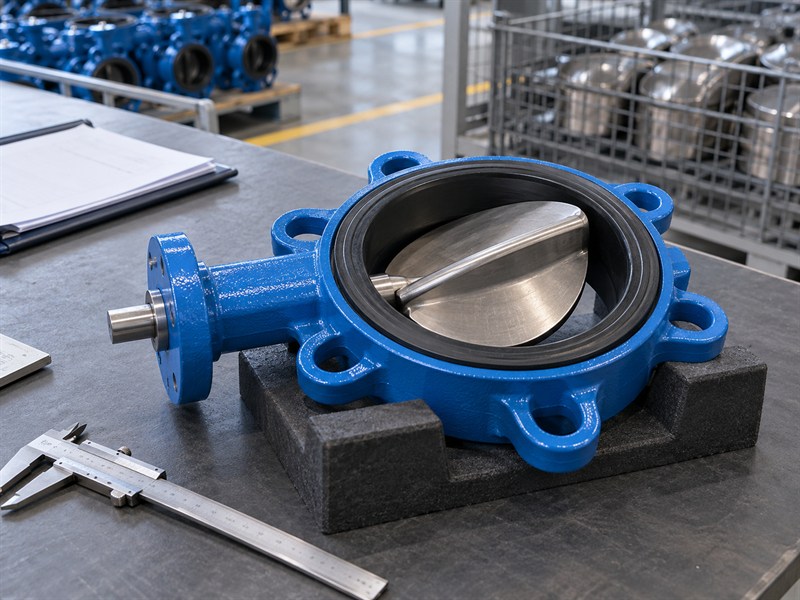
An API JIS EN593 butterfly valve inspection plan should name each required test, its governing document, and its acceptance conditions. The design route and the pressure-test route may need separate references. Have the responsible parties agree the applicable methods rather than combining convenient fragments from different documents.
Record the test medium, temperature, pressure, duration, direction, seat acceptance criterion, and configuration. Identify whether the result covers shell integrity, shutoff, operation, or another requirement. A report stating only “tested” leaves the purchaser unable to compare the result with the order.
Which API JIS EN593 butterfly valve checks need witnesses?
Specify document review, witness or hold points, instrument requirements, and the disposition of failures. Provide enough notice for the purchaser's inspector to attend the agreed stages.
| Inspection item | Acceptance information |
|---|---|
| Shell and seat tests | Procedure, conditions, criteria, and results |
| Dimensional inspection | Approved drawing and measured features |
| Functional checks | Travel, operator settings, and required response |
A successful functional stroke cannot establish seat leakage under pressure. Keep the results distinct and trace each one to the tested valve or defined production batch.
If a leakage report gives a result without its acceptance criterion, return it for clarification. The purchaser needs to know whether the recorded observation satisfies the specified method and duty. Keep any approved repair, retest, or concession linked to that report so the final release decision can be followed through the records.
8. What API JIS EN593 butterfly valve evidence is needed?
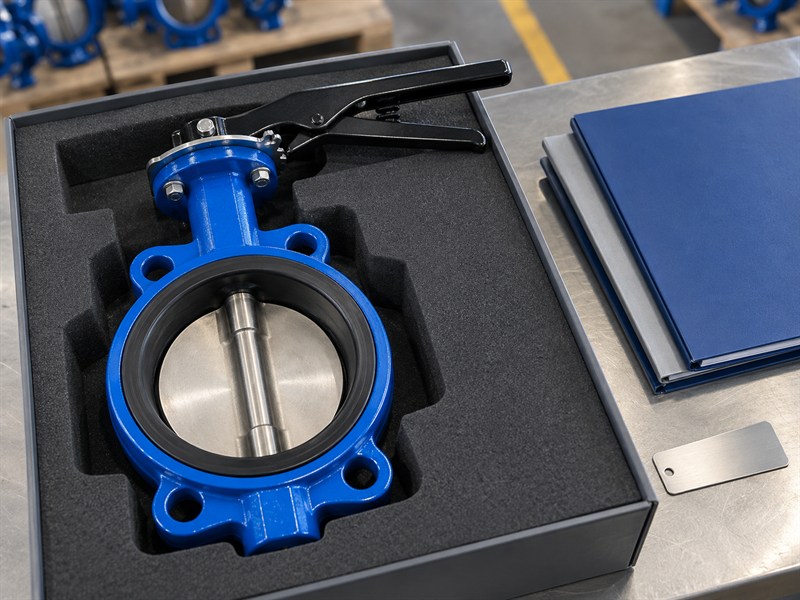
Request an API JIS EN593 butterfly valve compliance statement limited to the supplied configuration and accepted requirements. It should identify the order, product, size, materials, relevant standards and editions, drawing revision, and any approved exceptions. The supporting records should allow an inspector to follow those references.
Distinguish a manufacturer's declaration from a third-party certificate or an application approval. Each has its own issuer and scope. A quality-system certificate does not by itself prove that a particular valve meets every product requirement in the order.
How can the receiving team check the document package?
Compare the valve identification with the packing list, drawing, material records, and inspection reports. Investigate missing or inconsistent references before releasing the goods for installation.
| Evidence | Question to answer |
|---|---|
| Identification | Can the delivered item be linked to the order? |
| Material and test records | Do they cover the accepted configuration? |
| Declaration or certificate | Does its stated scope support the actual claim? |
Avoid expanding a document's meaning during bid comparison. An approval for one material, size range, or application cannot establish coverage for a different offered valve.
9. How do you freeze an API JIS EN593 butterfly valve order?
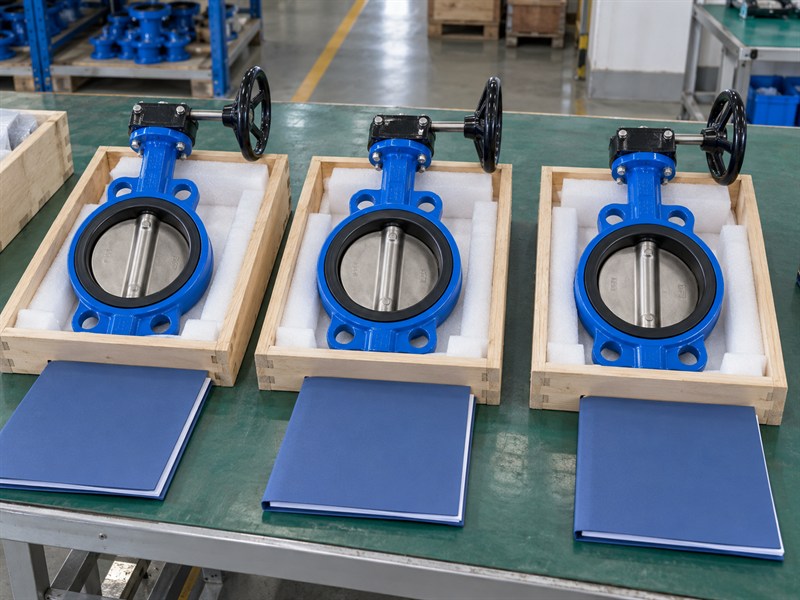
Attach the completed API JIS EN593 butterfly valve requirement matrix to the purchase order. Resolve the design route, interface, service, materials, operation, testing, records, and exceptions before manufacturing release. A supplier's signed response should identify the same configuration as the final commercial quotation.
Check the installation and operation requirements as part of that review. The bolt selection guide, manual wafer valve checks, and installation orientation guidance can help organize the questions, but the approved order drawing governs the supplied arrangement.
Which changes need a fresh technical review?
Control changes to materials, body length, flange drilling, seat design, operator, and the accepted testing route. Also review changes to documents on which the compliance statement depends.
| Order attachment | Purpose |
|---|---|
| Requirement matrix | Records offered values and accepted exceptions |
| Drawings and material list | Defines the manufactured configuration |
| Inspection and document plan | Defines evidence required for release |
Send the matrix and service data when you contact RUITO for a configuration review. Request written confirmation of each proposed standard claim before approving production.
For an API JIS EN593 butterfly valve comparison, ask suppliers to return deviations in a separate controlled list. A changed flange arrangement, alternative test route, or different seat compound should remain visible through technical approval and the final order. Close each item with an accepted response and a document revision rather than an informal sales assurance.
10. What API JIS EN593 butterfly valve questions come up?
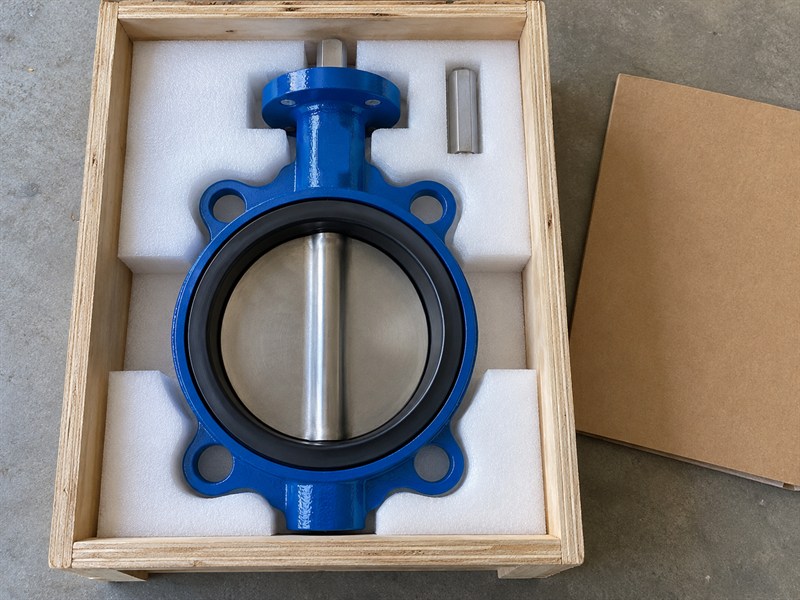
Q1: Does a three-standard heading prove full compliance?
No; an API JIS EN593 butterfly valve heading needs configuration-specific supporting evidence. Ask which standard numbers, editions, sizes, constructions, and materials apply to the offered valve. Require supporting documents and a list of exceptions for the actual order.
Q2: Can a valve use one design route and another flange system?
That combination needs review against the governing requirements and an approved drawing. The flange interface, body design, length, disc clearance, and accepted service limits must all be resolved for the proposed configuration.
Q3: Does a new edition automatically change an existing order?
No. Confirm the contractual baseline and agreed change procedure. Resolve any requested move to a newer edition with the responsible engineer and supplier before changing manufacturing or acceptance requirements.
Q4: Can one pressure-test report support every standards claim?
Only within the scope demonstrated by that report and the agreed requirements. Review the method, conditions, acceptance criteria, product identification, and any differences between the required testing routes.
Q5: What should I send with a request for quotation?
Send the fluid and duty, size, construction, governing standards and editions, connection details, materials, operation requirements, inspection plan, and required records. Ask the supplier to return a completed compliance matrix with all deviations identified.