
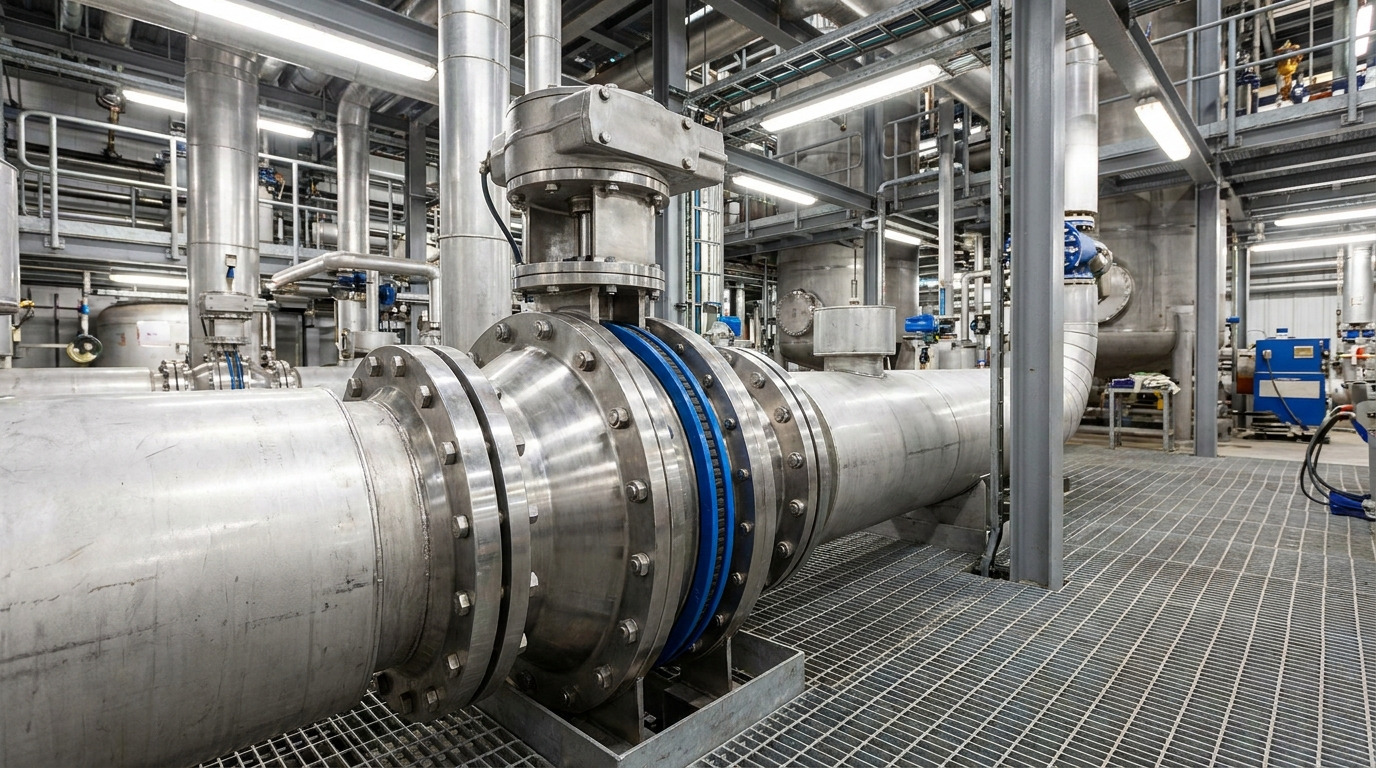
Butterfly valve seals are inherently complex because they must maintain a continuous peripheral shut-off under severe pipeline pressure. You deal with high-stakes piping systems where unexpected leaks at critical junctions can stall an entire plant’s production. It is incredibly frustrating when cheap elastomer parts swell or crack, causing expensive downtime, hazardous spills, and regulatory fines. This is why high-quality butterfly valve seals are designed to withstand aggressive chemicals and extreme temperatures. By choosing the right geometry and materials, you secure a reliable, leak-free flow control solution that keeps your facility running smoothly.
Why are butterfly valve seals exceptionally complex?
Butterfly valve seals are exceptionally complex because they must maintain a continuous 360-degree contact seal against rotating discs while managing high fluid velocities and thermal fluctuations. When you upgrade your system, selecting the right butterfly valve seals is essential to prevent costly bypass leaks. These dynamic components face constant friction, meaning standard configurations rarely last.
If you compare them to static seals, dynamic designs require much tighter manufacturing tolerances. A minor alignment error can rapidly accelerate localized wear and destroy your sealing integrity. That is why choosing the right geometry is critical.
What makes geometry so critical?
The geometric profile of your valve seat determines how evenly pressure is distributed across the entire contact surface. Think about it:
- Concentric designs provide symmetrical sealing but high friction.
- Double-offset profiles reduce contact wear significantly.
- Triple-offset geometries eliminate friction almost entirely.
These structural differences directly impact your operational torque and overall service life.
Can system deformation ruin a seal?
Pipeline stresses and pressure spikes often deform the valve body, which can easily ruin a standard seal. Here is the deal:
- Elastic recovery keeps the seal intact during minor flexing.
- Permanent set happens when high pressure overstretches the elastomer.
- Rigid housings prevent the seat from shifting out of alignment.
Selecting resilient polymers allows your seal to dynamically adapt to these unavoidable pipeline stresses.
| Deformation Level | Elastomer Behavior | Sealing Outcome |
|---|---|---|
| Low (<0.1 mm) | Elastic recovery | Continuous seal |
| Medium (0.1 – 0.3 mm) | High compression | Increased wear |
| High (>0.3 mm) | Permanent set | Direct leakage |
This performance data illustrates how physical pipe strain dictates the baseline material tolerances you need.
Key Takeaway: Monitoring pipeline deformation and selecting high-elasticity seats prevents premature sealing failure.
How do offset designs impact butterfly valve seals?
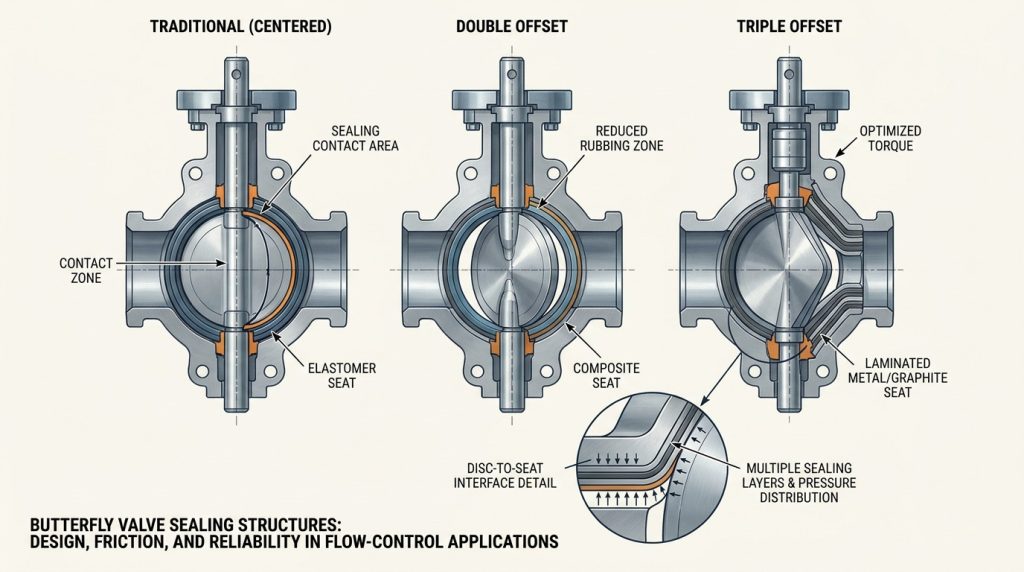
Offset designs impact butterfly valve seals by moving the shaft away from the sealing plane, which drastically reduces friction and wear during opening and closing cycles. When you operate high-cycle industrial lines, custom butterfly valve seals must be configured to match these offset geometries. Without proper alignment, your seats will degrade prematurely due to uneven compression.
Double and triple offset arrangements protect the soft sealing material from being dragged along the disc face. Unlike traditional gate valves which slide vertically, these rotating designs require specialized seat shapes to maintain a bubble-tight seal. Let us explore how manufacturing techniques solve this.
What is the monobloc advantage?
In double-offset designs, a seamless monobloc seal molded without joints provides unmatched structural integrity. But wait, there’s more:
- Seamless molding eliminates vulnerable split-line leak paths.
- Uniform density prevents material extrusion under high pressure.
- Symmetrical profiles simplify your field replacement routines.
This construction ensures that high-velocity process fluids cannot bypass or tear the seal face.
Why choose molded elastomer joints?
Fully molded joints are essential because they prevent high-pressure fluids from tearing apart glued seams. Think about it:
- Glued interfaces break down quickly when exposed to aggressive media.
- Spliced vulcanized joints offer moderate strength but degrade under thermal stress.
- Fully molded seats provide a homogenous barrier that lasts.
Investing in molded joints protects your system from catastrophic split-line failures.
| Manufacturing Method | Tensile Strength | Lifecycle Expectancy |
|---|---|---|
| Seamless Molding | Maximum | 100,000+ Cycles |
| Vulcanized Splice | Moderate | 50,000 Cycles |
| Adhesive Bonding | Low | <20,000 Cycles |
Reviewing these mechanical limits helps you avoid unreliable bonded seals in critical pipelines.
Key Takeaway: Specifying seamless, fully molded elastomer joints prevents sudden seal separation under intense dynamic stress.
When do centered designs fail butterfly valve seals?
Centered designs fail butterfly valve seals when the constant contact between the disc and the seat creates excessive friction, leading to rapid wear at the spindle passage. To minimize this ongoing stress, selecting premium butterfly valve seals with reinforced shaft holes is highly recommended. If you ignore this wear, your valves will eventually leak from the top and bottom stems.
These centered configurations are common in water utility lines but fail quickly under high-cycle conditions. Unlike robust ball valves which isolate their seals during rotation, centered butterfly systems rub the seat constantly. Fortunately, custom engineering offers a direct solution.
How do centered pins drive wear?
Centered pins keep the disc in continuous contact with the rubber liner throughout its entire 90-degree movement. Here is the deal:
- Continuous friction generates high localized thermal stress.
- Elastomer tearing occurs rapidly near the spindle openings.
- Actuator torque requirements increase as the rubber swells.
This friction cycle quickly degrades standard liners, resulting in stem leaks.
Can custom molding solve the issue?
Custom molding reinforces the high-wear zones around the spindle by adding extra material thickness. Think about it:
- Extra thickness provides structural backup where friction is highest.
- Integrated PTFE sleeves reduce rotational friction against the shaft.
- Customized profiles maintain a tight seal even during heavy rotation.
This targeted reinforcement keeps the seal operational for millions of cycles.
| Sealing Strategy | Spindle Friction | Wear Resistance |
|---|---|---|
| Standard Liner | High | Moderate |
| Reinforced Spindle Zone | Moderate | Very High |
| PTFE-Sleeved Liner | Low | Exceptional |
This comparison demonstrates how targeted reinforcement neutralizes high spindle friction.
Key Takeaway: Implementing custom-molded reinforced spindle zones eliminates localized trunnion leaks and stabilizes operating torque.
Which materials elevate dynamic butterfly valve seals?
Elevating dynamic butterfly valve seals requires matching specialized elastomers like EPDM or Viton directly to the chemical composition and temperature of your process fluid. Selecting appropriate materials for your butterfly valve seals is the single most critical factor in preventing premature swelling or cracking. Using the wrong elastomer will lead to immediate chemical degradation and costly system downtime.
If you process water, acids, or hydrocarbons, your material requirements will differ drastically. Many standard gate valves utilize metal-to-metal seating, but butterfly systems rely heavily on elastomer resilience. Let us examine the best materials for the job.
Is EPDM the ultimate default?
Ethylene Propylene Diene Monomer (EPDM) is the most popular default material for utility water and HVAC applications. Here is the deal:
- Outstanding resistance to hot water, steam, and glycols.
- Incredible elastic recovery after long-term compression.
- Low compatibility with petroleum-based oils and solvents.
For standard non-corrosive liquids, EPDM offers an unbeatable cost-to-performance ratio.
When does Viton become mandatory?
Viton (FKM) is mandatory when your pipeline transports high-temperature hydrocarbons, fuels, or aggressive chemicals. But wait, there’s more:
- Excellent thermal stability up to 200°C.
- Exceptional resistance to strong mineral acids and organic solvents.
- High mechanical strength prevents extrusion under heavy pressure.
Using Viton in harsh chemical lines protects your operations from catastrophic seat failure.
| Material | Max Temperature | Chemical Suitability |
|---|---|---|
| EPDM | 130°C | Water, Steam, Glycol |
| Viton (FKM) | 200°C | Oils, Fuels, Strong Acids |
| Nitrile (NBR) | 110°C | Hydrocarbons, Slurry |
Comparing these material properties allows you to select the ideal elastomer for your fluid environment.
Key Takeaway: Matching media chemistry directly to EPDM or Viton prevents chemical swelling and maintains long-term seal tightness.
How do high pressures degrade butterfly valve seals?
High pressures degrade butterfly valve seals by pushing the elastomer beyond its elastic limit, causing severe deformation, extrusion, and eventual tearing along the sealing edge. To prevent this destructive extrusion, you need heavy-duty butterfly valve seals that feature reinforced backing or high-durometer compounds. If your system pressure spikes frequently, standard soft seats will fail rapidly.
Unlike heavy check valves designed with thick metal retainers, rotating disc seats must remain flexible yet structurally sound. When fluid forces push hard against the disc, the shaft deflects and distorts the seal geometry. Let us analyze how to combat this mechanical stress.
Why do trunnion areas leak first?
The trunnion area leaks first because it is subjected to high rotational friction and lateral shaft deflection simultaneously. Think about it:
- Fluid pressure forces the shaft sideways, crushing the seal on one side.
- Micro-gaps open up on the opposite side, allowing media to bypass.
- Abrasive particles migrate into these gaps, scoring the dynamic surface.
This combination of friction and deflection quickly destroys standard spindle seals.
Can dynamic U-seals withstand high cycles?
Dynamic U-seals and chevron packings are engineered to expand under pressure, automatically sealing tighter as system forces rise. Here is the deal:
- Pressure-energized profiles adapt to minor shaft deflections instantly.
- Multi-ring chevron packs provide multiple sealing barriers against leaks.
- Self-adjusting lips reduce maintenance overhead and actuator strain.
These advanced configurations keep your spindle area bone dry under extreme pressure.
| Seal Type | Deflection Tolerance | High-Cycle Lifespan |
|---|---|---|
| O-Ring | Low | Moderate |
| Chevron Pack | High | Outstanding |
| Dynamic U-Seal | Very High | Excellent |
This performance breakdown shows how dynamic geometries outperform static O-rings in high-pressure lines.
Key Takeaway: Upgrading to dynamic U-seals or chevron packing prevents spindle leaks caused by high-pressure shaft deflection.
Why use PTFE composites for butterfly valve seals?
Using PTFE composites for butterfly valve seals provides universal chemical resistance and extremely low operating friction, making them perfect for aggressive chemical processing. Installing standard rubber seats in highly acidic environments is a recipe for disaster, which is why chemical-grade butterfly valve seals are so important. These advanced composite seats combine the inert nature of PTFE with the flexibility of elastomers.
If you have experience with globe valves, you know that chemical isolation requires robust, non-reactive materials. Butterfly designs achieve this chemical barrier by wrapping a high-purity PTFE liner around a resilient rubber core. Let us explore the engineering behind this combination.
What makes PTFE liners superior?
Polytetrafluoroethylene (PTFE) liners are completely inert to almost all known industrial acids, bases, and organic solvents. But wait, there’s more:
- Zero chemical degradation ensures your process fluid remains uncontaminated.
- Low friction coefficient minimizes the torque required to open the valve.
- High temperature range allows operation in demanding thermal processes.
These benefits make PTFE the absolute gold standard for hazardous chemical pipelines.
How does elastomer backup support PTFE?
Because PTFE lacks natural elastic memory, a resilient elastomer backup ring is required to continuously energize the seal. Think about it:
- Without backup, PTFE would deform permanently under pressure and leak.
- The rubber core acts as a spring, pushing the PTFE liner against the disc.
- Selecting the right backing material matches the temperature of your line.
This dual-material construction delivers the ultimate combination of sealing resilience and chemical immunity.
| Sealing Element | Key Material Property | Operational Role |
|---|---|---|
| PTFE Liner | High chemical resistance | Media contact barrier |
| EPDM Backup | Excellent elastic memory | Continuous energizing force |
| Viton Backup | High-temp resilience | Heavy-duty thermal support |
Understanding how these layers interact ensures you choose the right composite backing for your application.
Key Takeaway: Combining a PTFE liner with a resilient elastomer backup guarantees long-term chemical resistance and a tight seal.
Can innovative flanges improve butterfly valve seals?
Innovative flange profiles improve butterfly valve seals by distributing installation forces evenly, preventing over-compression, and eliminating the need for separate pipe gaskets. When you install these systems, integrating advanced butterfly valve seals with built-in flange sealing rings saves both labor and materials. A poorly designed flange connection can easily pinch and ruin your seat before the valve even operates.
While standard flange joints on gate valves require separate flat gaskets, modern butterfly seats wrap around the body to seal the pipe face directly. This dual-purpose design ensures a bubble-tight seal with minimal installation effort. Let us look at how dual-component profiles optimize this.
What is the dual-component design?
The dual-component design features a rigid inner ring for stability and an outer elastomer envelope for flexibility. Here is the deal:
- The rigid core prevents the elastomer from over-compressing during bolt tightening.
- Flexible sealing lips adapt easily to misaligned or uneven pipe flanges.
- Integrated design eliminates the risk of gasket slippage during field installation.
This smart combination guarantees a highly repeatable, leak-free installation every time.
Why eliminate matted lead gaskets?
Replacing hazardous matted lead gaskets with modern elastomer profiles improves both environmental safety and sealing elasticity. Think about it:
- Lead gaskets pose severe health and environmental risks during disposal.
- Metal seals lack the elasticity to cope with pipe thermal expansion.
- Advanced polymers provide superior sealing without toxic heavy metals.
Switching to elastomeric flange profiles ensures modern regulatory compliance and safety.
| Gasket Type | Environmental Impact | Installation Effort | Sealing Elasticity |
|---|---|---|---|
| Matted Lead | High toxicity | Complex & slow | Poor |
| Dual-Component | Non-toxic | Simple & fast | Outstanding |
This comparison shows why upgrading to non-toxic elastomeric flange profiles is the smartest operational choice.
Key Takeaway: Utilizing dual-component flange-integrated seals guarantees a secure, non-toxic seal and simplifies pipeline installation.
How do you diagnose broken butterfly valve seals?
Diagnosing broken butterfly valve seals requires examining worn seat surfaces for specific visual clues like scoring, swelling, or localized tearing along the flow path. If you do not quickly identify why your butterfly valve seals failed, your replacement seats will suffer the exact same fate. Correct diagnosis is the first step toward improving your system’s uptime and reliability.
For instance, slurry systems create abrasive wear patterns that look completely different from chemical swell. While ball valves are prone to seat scratching from trapped particles, butterfly liners suffer from erosion along the disc edge. Let us break down how to analyze these failures.
What causes rapid abrasive wear?
Abrasive wear occurs when solid particulates in your slurry get trapped between the rotating disc and the soft seat. But wait, there’s more:
- High-velocity particulate streams erode the soft polymer seat face.
- Trapped particles scratch and carve out bypass channels during closure.
- Misaligned discs focus all the abrasive wear on a single side of the seat.
Using hardened polymers or polyurethane seats is vital for combating these gritty environments.
Can chemical bypass be prevented?
Chemical bypass is prevented by matching your seat’s chemical compatibility to the specific fluid and cleaning chemicals you use. Here is the deal:
- Chemical incompatibility causes the elastomer to swell, soften, and lose strength.
- Swollen rubber increases operating torque, which can damage your actuator.
- Chemically degraded seals tear easily under normal dynamic rotation.
Conducting a thorough chemical compatibility review prevents bypass leaks before they start.
| Failure Mode | Visual Indicator | Corrective Action |
|---|---|---|
| Abrasive Wear | Scored & torn seat | Upgrade to PU or Metal seat |
| Chemical Swell | Distorted & soft liner | Switch to PTFE or Viton |
| Extrusion | Nibbled/shredded edges | Use harder elastomer backing |
Identifying these failure patterns tells you exactly which material upgrades are required.
Key Takeaway: Conducting detailed physical failure analysis allows you to select targeted seat upgrades that double your valve lifecycle.
How should you maintain sanitary butterfly valve seals?
Maintaining sanitary butterfly valve seals requires using high-purity, FDA-compliant materials that can withstand both aggressive cleaning chemicals and high-temperature steam sterilization. To guarantee hygienic processing, investing in certified sanitary butterfly valve seals is absolutely critical for your plant. Any material degradation in these systems can lead to bacteria accumulation and ruin entire batches.
If you manage food, beverage, or pharmaceutical lines, you know that cleaning processes are incredibly tough on soft parts. Unlike heavy-duty globe valves that use PTFE bellows, butterfly systems require highly flexible, crevice-free elastomer liners. Let us examine how to maintain these sanitary standards.
Why is CIP compliance difficult?
Clean-In-Place (CIP) compliance is challenging because sanitary cleaning chemicals and hot steam rapidly degrade standard elastomers. Think about it:
- Caustic wash solutions break down low-grade polymers, causing them to crack.
- High-temperature steam sterilization cycles cause thermal degradation.
- Microscopic cracks in the rubber trap organic debris and harbor bacteria.
You must select certified food-grade elastomers to ensure your seals survive repeated washdowns.
How do you verify perfect seal fit?
Verifying a perfect seal fit requires regular pressure testing and dry assembly checks in your workshop before installation. But wait, there’s more:
- Symmetrical contact pressure around the disc prevents organic material from getting trapped.
- Regular inspection ensures the seat remains flush against the valve body.
- Material certification tracking guarantees full compliance with FDA and USP standards.
This strict verification process ensures clean, safe, and sterile processing operations.
| Sanitary Material | FDA Compliance | Chemical Resistance | Steam Resistance |
|---|---|---|---|
| Platinum Silicone | Yes | Moderate | High |
| Virgin PTFE | Yes | Exceptional | Exceptional |
| Sanitary EPDM | Yes | Good | Very High |
This material data helps you pick the right FDA-approved seal to survive rigorous cleaning regimes.
Key Takeaway: Utilizing high-purity, certified materials and conducting regular fit verification prevents batch contamination and ensures sanitary compliance.
How do you choose heavy-duty butterfly valve seals?
Choosing heavy-duty butterfly valve seals requires assessing your pipeline’s maximum working pressure, temperature extremes, and chemical compatibility to select the ideal seat structure. When you design high-performance systems, sourcing heavy-duty butterfly valve seals from an experienced manufacturer ensures long-term operational success. Investing time in this selection process avoids unexpected shutdowns and costly pipeline repairs.
Whether you are replacing worn parts or building a new facility, working with a specialized valve partner is invaluable. Compared to standard check valves that use simple discs, butterfly valves require highly coordinated sealing interfaces. Let us explore the custom engineering advantages.
How does Ruitoflow secure your line?
Ruitoflow secures your pipeline by engineering and manufacturing industrial valves that meet strict global quality standards. Here is the deal:
- We maintain full compliance with ISO 9001, CE, and DNV certifications.
- Every valve undergoes 100% hydrostatic and pneumatic pressure testing.
- Our experienced technical team responds to your inquiries within 24 hours.
This commitment to quality ensures you receive reliable, leak-free flow control components.
Why partner with us for custom engineering?
Partnering with us for custom engineering allows you to get bespoke sealing solutions tailored to your unique specifications. Think about it:
- We can manufacture customized profiles directly from your technical drawings.
- Our advanced testing facilities simulate your exact operating conditions.
- We provide comprehensive material traceability and performance reports.
This custom capability ensures you get the perfect seal, no matter how complex your pipeline.
| Service Feature | Standard Procurement | Custom Engineering |
|---|---|---|
| Lead Time | 5 – 10 Days | 15 – 25 Days |
| Design Flexibility | Fixed Catalog | Full custom to CAD |
| Testing Protocols | Batch testing | 100% individual testing |
This service breakdown demonstrates how custom engineering delivers exactly what your complex systems require.
Key Takeaway: Partnering with a certified manufacturer like Ruitoflow ensures you receive custom, high-precision sealing solutions designed for your plant’s specific needs.
Ready to secure your pipeline with Ruitoflow?
Managing complex pipeline environments requires reliable, high-performance seals that eliminate leaks and withstand harsh chemical flows. We specialize in solving your most difficult sealing challenges with custom-engineered industrial valves and durable elastomer seats. Let us help you eliminate unexpected downtime, protect your process lines, and achieve zero-leakage performance across your entire facility. To optimize your flow control systems and discuss your custom requirements, contact us today for expert engineering support and a free technical consultation.
Frequently Asked Questions
Can I use standard EPDM butterfly valve seals for oil-based media?
No, you should avoid using standard EPDM for oil-based applications because it will quickly swell and degrade. EPDM is ideal for water and steam, but hydrocarbons require Nitrile (NBR) or Viton (FKM) to prevent rapid material breakdown.
What’s the best seat material for steam cleaning in food lines?
EPDM or PTFE is the absolute best choice for high-temperature sanitary steam sterilization. These materials safely withstand temperatures up to 130°C and maintain their elastic memory through repeated Clean-In-Place (CIP) washing cycles.
How do I know if my butterfly valve seals are over-compressed?
An immediate rise in the torque required to rotate the valve disk, alongside rubber extrusion at the flange joints, indicates over-compression. Excessively tight bolts pinch the liner, which accelerates friction wear and causes structural tearing.
Can I replace a glued split-ring seal with a molded monobloc seal?
Yes, you can make this upgrade if your valve body is designed for dynamic offset configurations. Seamless monobloc seals eliminate the joint failures common in spliced or glued alternatives, significantly extending the operational life of your valve.
How do I know if a PTFE composite seal is necessary for my system?
A PTFE composite seal is highly necessary when your process fluid contains strong acids, bases, or corrosive chemical solvents. While standard elastomers dissolve or swell in aggressive media, inert PTFE barriers protect your pipeline from catastrophic leaks.