
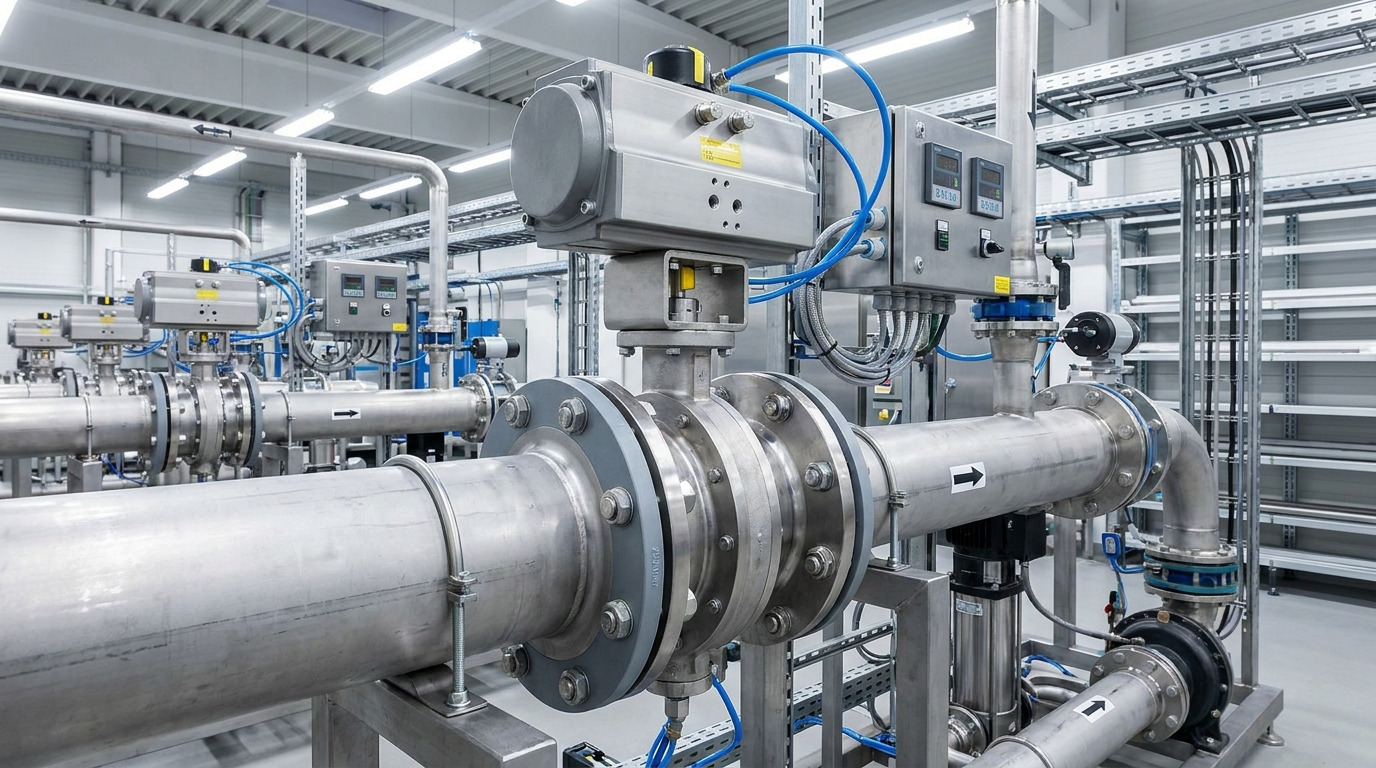
This ultimate guide to pneumatic butterfly valves teaches you how these quarter-turn flow control devices use pressurized air to actuate a rotating disc for efficient system isolation and precise selection.
In modern processing facilities, utilizing unreliable manual valves often leads to delayed flow adjustments, high labor costs, and frequent production bottlenecks. If a single manual component fails to shut off tightly during an emergency, it can jeopardize your entire production schedule and lead to expensive fluid spills.
Fortunately, integrating a high-performance air operated butterfly valve resolves these critical efficiency leaks by providing rapid, automated quarter-turn isolation and reliable, long-term flow management.
Why Choose an Air Operated Butterfly Valve?
Choosing an air operated butterfly valve is highly beneficial because it provides a lightweight, cost-effective, and compact solution for modern automated piping systems. This automated setup reduces physical stress on pipe supports while maintaining reliable quarter-turn flow isolation.
What Benefits Do These Automated Valves Offer You?
When you automate your flow systems, finding reliable and lightweight components is your top priority. Think about this: a high-quality valve prevents unexpected pressure drops and maintains system safety.
- Reduced Structural Load: Extremely low weight decreases stress on pipe hangers.
- Lower Torque Demand: Symmetrical disc rotation minimizes the physical force needed for actuation.
| Valve Type | Average Weight | Space Required | Relative Cost |
|---|---|---|---|
| Butterfly Valve | Very Low | Minimal | Low |
| Ball Valve | High | Moderate to High | High |
Key Takeaway: Utilizing compact designs directly lowers your structural support costs and installation times. This comparative data clearly demonstrates how lightweight materials optimize long-term piping integrity.
How Does an Air Operated Butterfly Valve Work?
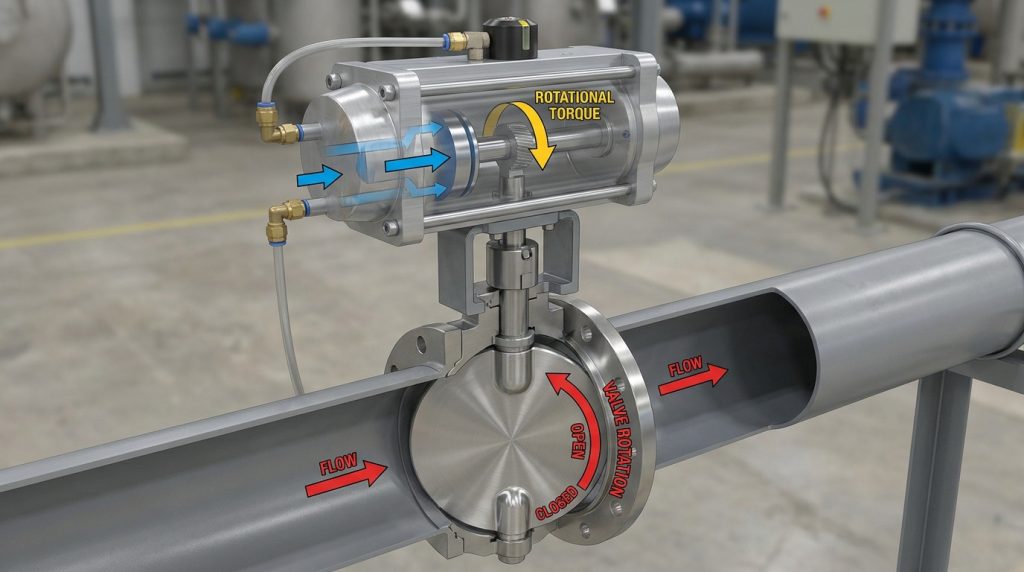
An air operated butterfly valve works by converting compressed air energy into rotational mechanical force to open or close an internal disc. This pneumatic actuator drives a central stem that rotates the disc 90 degrees within the fluid stream.
How Does the Actuator Convert Air into Rotation?
When you apply compressed air to the actuator, the system must translate linear force into rotational movement. Here is the thing: standard scotch yoke or rack-and-pinion designs ensure this transition happens instantly.
- Double-Acting Mechanism: Uses compressed air for both opening and closing cycles.
- Single-Acting Spring Return: Uses air to stroke open and springs to return the valve to its fail-safe state.
| Actuator Type | Air Required | Fail-Safe Position | Cost Factor |
|---|---|---|---|
| Double-Acting | Both directions | Stays in last position | Economical |
| Single-Acting | One direction | Automatically opens or closes | Higher |
Key Takeaway: Selecting single-acting actuators provides your facility with reliable fail-safe protection during sudden power losses. This operational summary illustrates how actuator selection influences both system safety and overall component costs.
How to Seal an Air Operated Butterfly Valve?
To seal an air operated butterfly valve, you must compress a resilient elastomer or high-grade metal seat directly against the rotating disc. Selecting the correct sealing arrangement prevents internal bypass and ensures absolute shutoff under high operational pressures. Many engineers compare these sealing mechanics to those of standard ball valves to find the ideal leakage prevention setup.
When Should You Select Soft Seats Over Metal?
When you specify sealing materials, matching the physical properties of your media is critical. Why does this matter? Choosing incompatible materials causes rapid seat swelling and premature valve failure.
- EPDM Rubber: Excellent for utility water and glycol systems but vulnerable to oils.
- Virgin PTFE: Provides exceptional chemical resistance across highly corrosive media lines.
| Seat Material | Maximum Temp | Fluid Compatibility | Seal Class |
|---|---|---|---|
| EPDM | 120°C | Water, Glycol, Mild Chemicals | Class VI |
| PTFE | 150°C | Corrosive Acids, Alkalis | Class VI |
Key Takeaway: Selecting seat materials matched to your media eliminates operational leaks and extends the valve’s lifespan. This technical matrix demonstrates how sealing materials dictate temperature limits and fluid compatibility.
How to Size an Air Operated Butterfly Valve?
To size an air operated butterfly valve correctly, you must calculate the media’s flow rates and match the valve’s breakaway torque with an appropriate pneumatic actuator. This calculation ensures the actuator has enough power to overcome seat friction under maximum differential pressure.
Why Is Breakaway Torque Critical for Your Sizing?
When you calculate your required actuator size, you must plan for real-world environmental changes. But wait, there’s more: static friction inside a closed valve is significantly higher than normal running friction.
- Seat Compression: Elastomers deform around the closed disc, increasing initial resistance.
- Extended Standby: Valves left closed for weeks require a much larger physical force to open.
| Media Type | Fluid Characteristics | Recommended Sizing Safety Factor |
|---|---|---|
| Clean Water | Low viscosity, no solids | 20% to 25% |
| Sticky Fluids | Oils, syrups, polymers | 30% to 35% |
Key Takeaway: Incorporating a 30% safety factor ensures your actuator successfully opens the valve under all conditions. This calculation guide highlights how fluid characteristics determine the necessary torque overhead.
Where Do You Install an Air Operated Butterfly Valve?
You install an air operated butterfly valve inline between standard pipe flanges, ensuring proper alignment to prevent seat deformation. Choosing the right physical location minimizes turbulence and protects upstream equipment from sudden pressure spikes. This installation profile is much more compact than traditional gate valves, making it perfect for tight pipe runs.
What Are the Best Flange Alignment Practices for You?
When you mount your valve inline, achieving perfect piping alignment prevents immediate mechanical issues. Think about this: uneven stress on the valve body causes seat distortion and external leakage.
- Partial Disc Opening: Keep the disc slightly open during installation to protect seat edges.
- Concentric Flanges: Ensure pipe flanges are parallel to distribute physical load evenly.
| Material Spec | Tensile Strength | Corrosion Resistance | Cost vs. Lifespan |
|---|---|---|---|
| Ductile Iron | Medium | Low | Low cost / Short lifespan |
| SS316 Stainless | Very High | Excellent | Higher cost / Longest lifespan |
Key Takeaway: Proper flange alignment and high-quality body materials ensure your piping system remains leak-free for years. This material comparison highlights why selecting superior alloys like SS316 maximizes overall component durability.
How to Maintain an Air Operated Butterfly Valve?
To maintain an air operated butterfly valve, you must perform regular visual inspections, lubricate moving actuator parts, and replace worn seals systematically. Keeping a consistent maintenance schedule ensures reliable valve cycling and prevents unexpected process downtime.
How Can You Create an Effective Maintenance Schedule?
When you establish your plant’s preventative maintenance protocols, consistency is your greatest asset. Here is the thing: simple, routine checks prevent minor seal wear from turning into catastrophic failures.
- Weekly Checks: Drain the filter-regulator bowl and verify operating air pressure.
- Monthly Cycles: Actuate standby valves to prevent elastomer bonding.
| Maintenance Interval | Target Inspection Point | Action Required |
|---|---|---|
| Weekly | Filter-Regulator Bowl | Drain accumulated moisture |
| Monthly | Standby Valve Units | Cycle the valve on-off |
Key Takeaway: Adhering to a structured maintenance timeline keeps your automated systems operating at peak efficiency. This maintenance schedule outlines the essential actions required to prevent unexpected process shutdowns.
Why Does an Air Operated Butterfly Valve Save Space?
An air operated butterfly valve saves space because its narrow, wafer-thin body design requires minimal face-to-face installation clearance. This compact profile allows the valve to fit easily into high-density piping configurations where bulky alternatives cannot.
How Do Compact Dimensions Improve Your Pipe Layout?
When you design high-density piping networks, every inch of space you save improves ease of maintenance. Why does this matter? Bulky valve bodies require massive structural supports and increase total construction costs.
- Wafer Body Design: Fits snugly between flanges, requiring minimal face-to-face clearance.
- Lug Body Design: Features threaded inserts for secure, single-sided dead-end service.
| Body Style | Face-to-Face Space | Bolt Pattern Connection | Best Application |
|---|---|---|---|
| Wafer | Extremely Narrow | Clamped between flanges | Standard inline systems |
| Lug | Narrow | Bolted directly to flanges | Dead-end pipe isolation |
Key Takeaway: Choosing a wafer or lug body reduces your system’s overall footprint and lowers physical support costs. This physical comparison illustrates how specific body styles optimize installation flexibility in narrow runs.
How to Control an Air Operated Butterfly Valve?
You control an air operated butterfly valve by directing compressed air through solenoid valves or precise electropneumatic positioners to adjust the disc’s angle. These control accessories receive electronic signals from your centralized system to manage flow rates dynamically.
When Do You Need a Positioner for Modulating Flow?
When you need to regulate flow rates precisely, standard on-off accessories are not sufficient. But wait, there’s more: modulating loops require a smart positioner to balance air volume dynamically.
- Analog Control: Receives a 4-20mA signal to adjust the disc to precise angles.
- Dynamic Balancing: Automatically compensates for fluctuating pipeline pressures to maintain stability.
| Accessory Component | Principal Function | Control Type | Critical For |
|---|---|---|---|
| Solenoid Valve | Routes pilot air on/off | Discrete On/Off | Simple isolation loops |
| Valve Positioner | Balances disc angle dynamically | Modulating Analog | Precise flow rate control |
Key Takeaway: Integrating an electropneumatic positioner gives you highly accurate flow modulation and stable system control. This accessory overview defines which component is required for your specific automation goals.
Who Manufactures Your Air Operated Butterfly Valve?
A certified industrial factory manufactures your air operated butterfly valve to guarantee strict quality standards and precise material traceability. Partnering with an experienced manufacturer ensures your equipment is engineered to withstand demanding operational conditions.
Why Does Factory Customization Solve Your Problems?
When you source valves for complex industrial processes, standard catalog options often fall short. Here is the thing: a certified manufacturing partner can customize configurations to match your exact piping layouts.
- Custom Drillings: Match bodies perfectly with international flange standards.
- Extended Stems: Allow for easy pipe insulation and protect actuators from high-temperature lines.
| Sourcing Approach | Custom Modifications | Quality Documentation | Long-Term Reliability |
|---|---|---|---|
| Standard Catalog | Extremely limited | Basic packing slips only | Variable |
| Direct Certified Factory | Fully customized to spec | Complete MTRs and QA logs | High & guaranteed |
Key Takeaway: Working directly with factory engineers ensures your equipment satisfies rigorous industrial compliance standards. This comparison outlines the quality and customization advantages of direct factory sourcing.
How to Troubleshoot an Air Operated Butterfly Valve?
To troubleshoot an air operated butterfly valve, you must isolate the pneumatic actuator, check the pilot solenoid, and inspect the internal sealing surfaces for debris. Methodically testing each component helps you pinpoint the exact cause of operational delays or fluid leakage.
What If Your Actuator Experiences Sluggish Response?
When you observe a delay in your valve’s cycle time, you must act quickly to prevent system instability. Think about this: sluggish performance is often caused by simple, easily resolved pneumatic issues.
- Blocked Silencers: Clean or replace dirty exhaust mufflers to restore proper airflow.
- Worn Piston Seals: Install fresh O-rings to eliminate internal actuator air bypass.
| Field Symptom | Probable Root Cause | Recommended Corrective Action |
|---|---|---|
| Valve Fails to Rotate | Blocked solenoid exhaust silencer | Remove and clean the exhaust muffler |
| Sluggish Actuation Cycle | Air bypassing internal piston seals | Install a fresh actuator seal kit |
Key Takeaway: Resolving minor pneumatic issues immediately restores your system to peak operational speed. This troubleshooting matrix helps you diagnose and fix common field errors before they cause downtime.
How to Take Your Next Steps for Reliable Flow Control?
By understanding working mechanics, sealing materials, and actuator sizing, you can confidently select the perfect automation solution for your pipelines. Our team helps you overcome system inefficiencies by providing custom-engineered, fully traceable valves designed to excel in challenging environments.
We invite you to partner with us to elevate your plant safety and maximize flow control efficiency. Please contact us today to receive detailed technical drawings, custom product quotes, or to discuss your project specifications with our certified engineering specialists.
What Are the Most Common Questions About These Valves?
Can I use an air operated butterfly valve for throttling control?
Yes, you can utilize these valves for throttling when they are paired with an electropneumatic positioner. However, you should keep the disc’s travel angles between 30 and 70 degrees. This range prevents cavitation, reduces turbulent wear, and ensures highly stable flow regulation over time.
What’s the best seat material for abrasive slurries?
The best seat option for abrasive slurries is a thick, wear-resistant polyurethane seat or a triple offset metal design. These specialized configurations prevent the abrasive particles from grinding down the sealing faces during cycling. Consequently, they drastically extend the valve’s service life in demanding solids-handling operations.
How do I know if my actuator is undersized?
You will know your actuator is undersized if the valve fails to rotate or moves sluggishly despite receiving normal air pressure. This performance issue typically occurs when the breakaway torque or pipeline differential pressures are calculated incorrectly during sizing. Upgrading to a larger pneumatic actuator resolves these mechanical delays.
Can I replace an electric actuator with a pneumatic one?
Yes, you can easily swap an electric actuator for a pneumatic one if the valve has a standard mounting pad. Most automated setups rely on universal ISO 5211 interfaces to simplify actuator replacement. However, you must verify that your facility has a reliable, dry compressed air supply available nearby.
How do I know if my valve seat needs to be replaced?
You will know your seat needs replacement when you observe continuous downstream leakage even when the valve is fully closed. This leakage is usually accompanied by physical swelling, tearing, or hardening of the elastomer material. Installing a fresh, chemically compatible seat restores bubble-tight sealing instantly.