
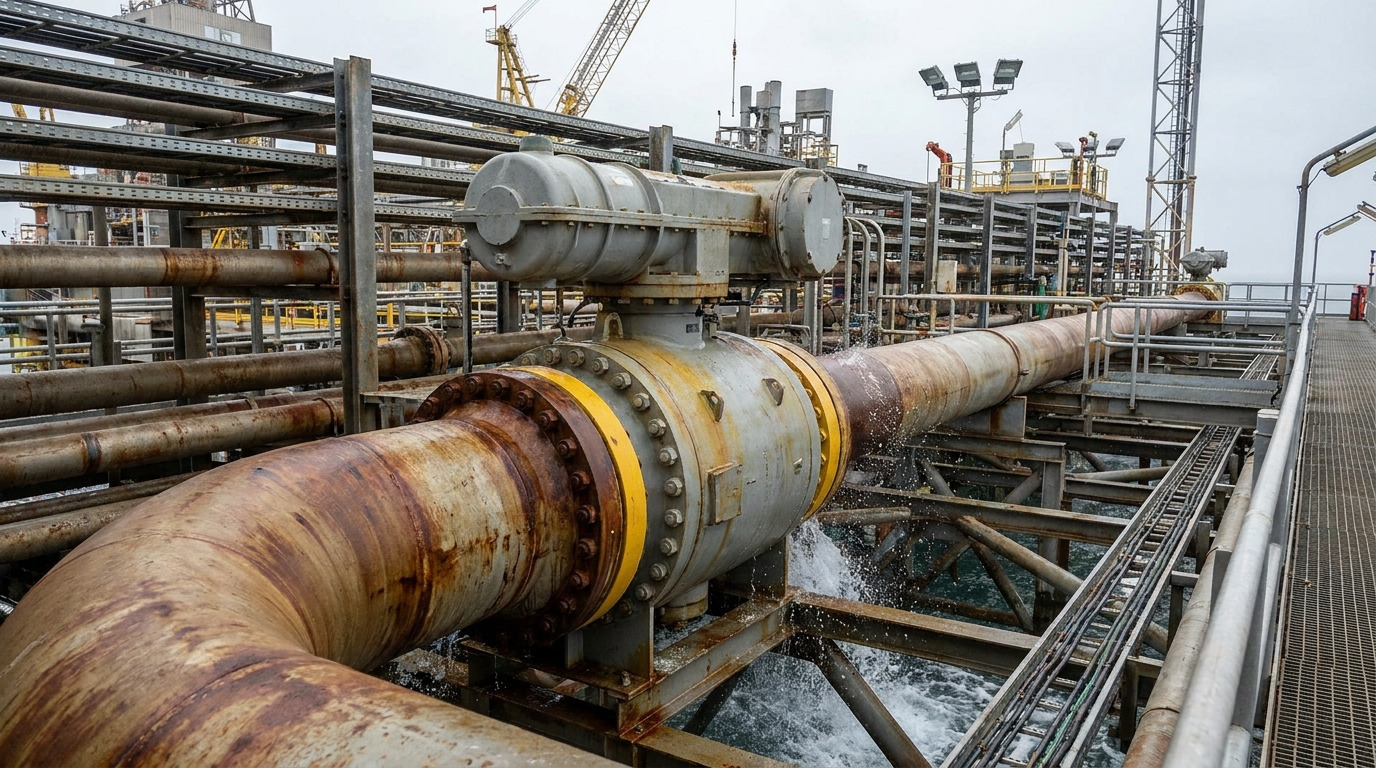
Operators install rotational quarter-turn discs across pipelines to regulate heavy petroleum flows under extreme pressures efficiently. You might install a fluid control mechanism along a frozen pipeline during winter. Freezing temperatures jam moving internal parts quickly and halt crude extraction entirely. Upgrading your infrastructure with a resilient butterfly valve gas fixes this costly downtime immediately. These specialized mechanisms stop flow reliably while resisting aggressive media across remote installations. We design modern fluid handling systems prioritizing durability against intense operational demands continually.
What harsh conditions impact a butterfly valve gas system?
A butterfly valve gas faces extreme temperatures exceeding 816C along remote offshore drilling platforms continually. Installing this durable machinery prevents catastrophic pipe failures during intense pressure surges. You probably realize how unpredictable weather creates immense stress on metal components. Operating environments demand heavy-duty materials capable of handling aggressive crude continuously.
Why do pressure surges threaten pipelines?
Sudden pressure drops destroy weak mechanical seals inside standard pipe connections instantly. But here’s the kicker… replacing damaged equipment costs millions in lost production revenue alone. You need dependable barriers protecting sensitive midstream transport networks. High-pressure recovery features make specific rotational discs ideal for managing aggressive fluid movement.
How do offshore climates degrade metals?
Saltwater corrosion destroys unprotected carbon steel surfaces rapidly without specialized alloy coatings. You might be wondering… why engineers prefer triple-offset designs for offshore rigs?
- Specialized alloys resist abrasive saline moisture buildup.
- Compact layouts save valuable platform deck space easily.
- Tight sealing prevents hazardous chemical leaks completely.
Key Takeaway: Selecting rugged materials prevents costly saltwater corrosion damage across offshore platforms.
| Threat Type | Typical Impact | Prevention Strategy |
|---|---|---|
| Extreme Heat | Seal degradation | Metal-to-metal seating |
| Freezing Cold | Component jamming | Thermal outer jackets |
| Saline Water | Rapid surface rust | Specialized alloy coatings |
Implementing resilient materials reduces unexpected mechanical failures during severe offshore weather events.
Why does a triple-offset butterfly valve gas fit oil tasks?
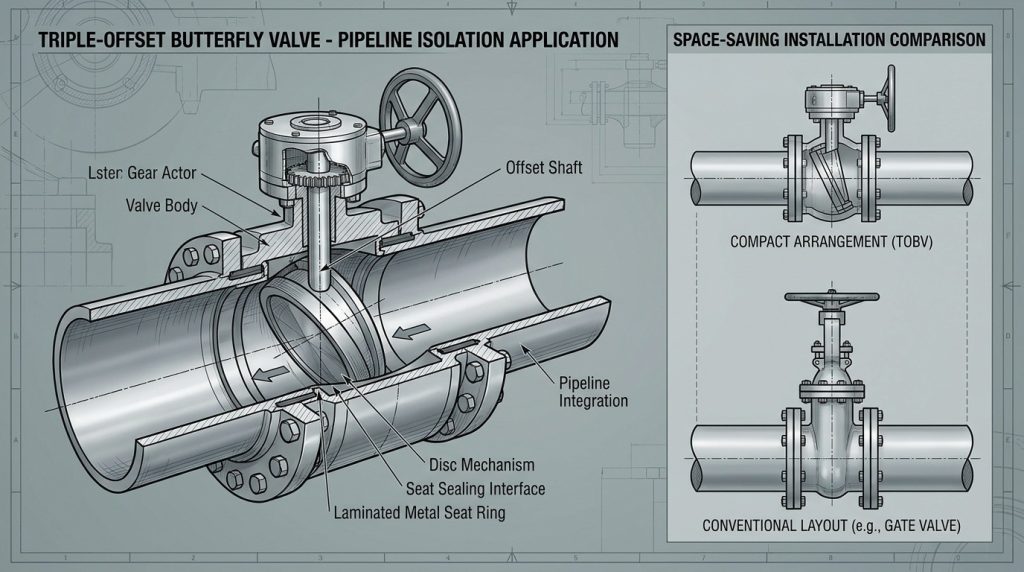
A triple-offset butterfly valve gas guarantees zero leakage through advanced asymmetric disc engineering principles. Traditional gates require immense physical space aboard crowded floating production storage units. You save significant weight by deploying compact triple-offset designs instead. High-performance models cover total ownership costs by demanding less frequent physical repairs over decades.
How does zero leakage improve safety?
Combustible natural vapors escape easily through worn rubber seals during high-stress operations. What’s the real story? Metal-to-metal seating provides reliable isolation against volatile petrochemical leaks. Preventing accidental ignition protects rig workers operating near active extraction zones. Tight shut-off capabilities prevent dangerous environmental contamination completely.
Can compact designs reduce structural strain?
Heavy gate mechanisms add unnecessary tonnage onto floating offshore vessels needlessly. Ready for the good part? Lighter rotational barriers decrease overall structural fatigue significantly.
- Reduced weight lowers transportation costs during initial installation.
- Smaller profiles fit tight spaces between complex pipe grids.
- Lighter components require smaller support brackets structurally.
Key Takeaway: Upgrading to triple-offset models maximizes safety while decreasing structural weight burdens.
| Design Feature | Benefit | Offshore Application |
|---|---|---|
| Metal Seating | Zero leakages | Gas compression |
| Compact Body | Weight reduction | FPSO turrets |
| Triple Offset | Reduced friction | Water treatment |
Utilizing compact dimensions allows engineers greater flexibility when designing intricate platform layouts.
How does a butterfly valve gas handle upstream flow control?
An upstream butterfly valve gas controls raw unrefined crude flowing directly from underground wellheads efficiently. Abrasive sand particles travel alongside extracted fluids violently during initial pumping phases. You must deploy rugged internal components capable of withstanding constant physical abrasion. Heavy-duty construction ensures continuous operation throughout a well’s entire lifespan.
Why is abrasive media destructive?
Raw petroleum contains sharp sediment grinding against interior surfaces aggressively. This is where it gets interesting… hardened disc edges deflect solid particles without sustaining severe structural damage. Weak materials erode quickly under high-velocity slurry streams. Operators rely upon hardened alloys preventing premature internal wear.
How do operators manage high wellhead pressure?
Initial extraction forces exert tremendous mechanical stress across sealing boundaries constantly. Here is the deal… reinforced bodies withstand pressure ratings up to ASME Class 1500 easily.
- Thick walls resist internal bursting forces predictably.
- Robust stems prevent dangerous bending under heavy loads.
- Secure mountings absorb severe pipeline vibrations naturally.
Key Takeaway: Hardened internal components extend operational lifespans dramatically when processing abrasive unrefined mixtures.
| Media Element | Damage Potential | Component Defense |
|---|---|---|
| Sand Particles | Surface scratching | Hardened disc edge |
| High Pressure | Casing rupture | Thickened metal wall |
| Rapid Velocity | Seal erosion | Reinforced seating |
Deploying reinforced structural housings guarantees stable performance under violent wellhead pressure fluctuations.
What role does a butterfly valve gas play in midstream pipes?
A midstream butterfly valve gas regulates fluid transportation across thousands of miles seamlessly. Maintaining consistent flow rates across vast distances requires dependable isolation checkpoints. You can isolate specific pipe segments rapidly during unexpected maintenance emergencies. Quick quarter-turn operation stops massive fluid columns faster than multi-turn alternatives.
How do quick shut-offs minimize spill damage?
Ruptured transport lines dump thousands of gallons per minute into natural environments violently. You might be wondering… how fast can emergency operators halt these catastrophic spills? Automated pneumatic actuators rotate discs fully closed within mere seconds. Fast reaction times prevent minor leaks from becoming massive ecological disasters.
Why is low pressure drop beneficial midstream?
Forcing liquids through restrictive bottlenecks consumes excessive pumping energy unnecessarily. Let me explain… streamlined internal profiles allow smooth liquid passage with minimal resistance.
- Reduced friction lowers daily electricity consumption at pumping stations.
- Smooth internal contours prevent solid sediment accumulation.
- Unrestricted pathways maintain consistent delivery volumes accurately.
Key Takeaway: Installing streamlined rotational barriers lowers energy costs across vast midstream pumping networks.
| Operation Phase | Desired Trait | Valve Contribution |
|---|---|---|
| Transporting | Flow efficiency | Low pressure drops |
| Isolating | Fast response | Quarter-turn action |
| Maintaining | Easy access | Top-entry layouts |
Maintaining unhindered flow dynamics reduces mechanical wear on expensive midstream pumping stations.
Why are downstream plants reliant on a butterfly valve gas?
A downstream butterfly valve gas manages refined petroleum products enduring extreme refining temperatures reliably. Processing facilities boil crude mixtures separating lighter fractions from heavy tars constantly. You need dependable heat-resistant equipment operating safely near active furnaces. Thermal expansion ruins standard polymer seals quickly during intense refining cycles.
How do refineries handle extreme heat?
Boiling petroleum reaches temperatures melting conventional plastics instantly. But here’s the kicker… graphite-infused metal rings maintain tight seals despite immense thermal shifts. These specialized gaskets expand symmetrically preventing unpredictable fluid bypass. Consistent thermal stability keeps dangerous volatile compounds contained securely.
What makes precise flow regulation necessary?
Mixing exact chemical ratios dictates final refined product quality strictly. What’s the real story? Gear-operated handwheels provide operators fine-tuned control over chemical injection rates.
- Calibrated gearboxes allow micro-adjustments easily.
- Locking mechanisms hold disc positions firmly against strong currents.
- Position indicators show precise opening angles visually.
Key Takeaway: Utilizing thermal-resistant materials maintains strict safety protocols inside high-temperature refining environments.
| Downstream Challenge | Material Solution | Outcome |
|---|---|---|
| Extreme Heat | Graphite seals | No seal melting |
| Chemical Mixing | Gear operators | Precise dosing |
| Volatile Vapors | Fugitive emission packing | Cleaner air |
Implementing precise mechanical controls ensures consistent chemical mixtures during sensitive refining processes.
How does a butterfly valve gas compare against ball valves?
A butterfly valve gas provides comparable isolation capabilities while occupying significantly less physical space. Bulky ball designs require massive bodies housing large spherical internal components. You save substantial procurement budget choosing streamlined rotational discs instead. Lower initial costs make large-diameter installations economically feasible for massive projects.
Are rotational discs easier to maintain?
Extracting heavy ball components requires specialized lifting cranes during routine servicing. Ready for the good part? Thin disc profiles allow easier removal from active pipe networks. Lighter parts reduce physical strain on maintenance crews substantially. Faster repairs mean less costly downtime for busy production facilities.
Do ball valves handle slurries better?
Spherical bores sometimes trap abrasive debris within hidden internal cavities secretly. This is where it gets interesting… open disc designs flush sediment away naturally during regular operation.
- Self-cleaning edges prevent sticky crude buildup.
- Fewer internal gaps leave no room for sand accumulation.
- Direct flow paths wash away clinging particles efficiently.
Key Takeaway: Choosing rotational disc models reduces both initial procurement costs and long-term maintenance expenses.
| Valve Type | Weight Profile | Cost Efficiency |
|---|---|---|
| Standard Ball | Very heavy | Expensive |
| Gate Valve | Heavy | Moderate |
| Rotational Disc | Lightweight | Highly economical |
Analyzing physical dimensions proves streamlined models offer superior logistical advantages over bulky alternatives.
What maintenance extends a butterfly valve gas lifespan?
A butterfly valve gas requires periodic visual inspections detecting early wear on critical sealing surfaces. Neglected equipment suffers premature failure causing unexpected plant shutdowns abruptly. You should schedule routine lubrication preventing metallic stem galling under heavy friction. Proper upkeep keeps specialized torque mechanisms functioning smoothly for decades.
Why is routine lubrication necessary?
Dry metal grinding creates microscopic cracks leading toward catastrophic stem fractures eventually. Here is the deal… injecting industrial grease reduces operating torque dramatically. Smooth rotation prevents expensive automated actuators from burning out prematurely. Well-lubricated parts require less physical effort during manual override procedures.
How do operators spot seal degradation?
Tiny fugitive emissions signal compromised internal gaskets requiring immediate attention. You might be wondering… how technicians detect invisible gas leaks early?
- Ultrasonic sensors hear high-frequency hissing from failing joints.
- Chemical sniffers detect trace volatile organic compounds nearby.
- Pressure gauges reveal abnormal internal system fluctuations clearly.
Key Takeaway: Implementing proactive lubrication schedules prevents severe mechanical binding across critical moving parts.
| Maintenance Task | Frequency | Primary Purpose |
|---|---|---|
| Stem Lubrication | Quarterly | Prevent galling |
| Seal Inspection | Monthly | Stop fugitive leaks |
| Actuator Testing | Bi-annually | Confirm response time |
Establishing strict inspection routines catches minor mechanical flaws before they trigger massive system failures.
Are lightweight butterfly valve gas designs safer for offshore?
A lightweight butterfly valve gas decreases dangerous structural stress on aging floating oil platforms. Heavy equipment installations sink deep-water rigs slightly altering their delicate buoyancy calculations. You must calculate every single pound added onto isolated oceanic structures carefully. Shaving thousands of pounds off pipe manifolds improves overall maritime safety margins.
How does weight affect rig stability?
Top-heavy platforms roll dangerously during violent oceanic hurricane strikes. Let me explain… lowering the center of gravity keeps floating structures upright during storms. Using compact pipeline components directly contributes toward safer vessel dynamics. Stable platforms protect onboard personnel from sudden catastrophic capsizing events.
Do lighter parts improve installation safety?
Swinging heavy steel castings via crane above deck hands poses severe crush hazards continuously. But here’s the kicker… maneuvering lighter components reduces fatal rigging accidents significantly.
- Smaller footprint lowers collision risks during transport.
- Reduced mass lessens impact forces if dropped accidentally.
- Fewer lifting slings complicate the installation process less.
Key Takeaway: Minimizing top-side component weight directly enhances overall vessel stability against violent oceanic storms.
| Design Aspect | Hazard Reduced | Safety Benefit |
|---|---|---|
| Low Mass | Crane failures | Safer lifting |
| Compact Shape | Deck crowding | Clearer walkways |
| Streamlined Body | Rig tilting | Better buoyancy |
Prioritizing compact pipeline infrastructure protects remote offshore workers from unnecessary physical workplace hazards.
How to select the right butterfly valve gas for FPSO vessels?
A proper butterfly valve gas for FPSO applications requires strict adherence to ASME Class 1500 standards. Floating production vessels encounter unique dynamic stresses ordinary land-based refineries never experience. You need flexible connections absorbing constant wave motion without snapping fragile internal stems. Consulting experienced metallurgical engineers guarantees correct material selection for aggressive marine environments.
Why do FPSOs demand specialized metallurgy?
Salty sea air rusts generic iron castings within weeks at sea. What’s the real story? Duplex stainless steels resist both internal chemical attacks and external chloride pitting. Investing in premium alloys prevents sudden catastrophic blowouts offshore. Reliable metallurgy keeps remote extraction vessels operating without constant part replacements.
How does vessel motion affect pipe joints?
Relentless ocean waves bend rigid pipe structures causing microscopic weld fractures continuously. Ready for the good part? Resilient mounting brackets isolate sensitive valve bodies from harsh structural vibrations.
- Flexible gaskets absorb lateral pipeline shifting safely.
- Reinforced trunnions keep discs aligned perfectly despite vessel sway.
- Anti-blowout stems prevent dangerous internal ejections safely.
Key Takeaway: Selecting premium duplex stainless alloys prevents rapid structural degradation on floating production vessels.
| FPSO Condition | Component Threat | Engineering Solution |
|---|---|---|
| Salty Air | External rusting | Duplex stainless steel |
| Hull Flexing | Joint fracturing | Flexible mountings |
| High Pressure | Stem blowout | Anti-blowout designs |
Integrating vibration-resistant mountings protects delicate sealing mechanisms from destructive oceanic wave energy.
Can a butterfly valve gas manage extreme cryogenic liquids?
A butterfly valve gas handles liquefied natural gas safely operating at brutal -162C temperatures. Standard carbon steel shatters like fragile glass under such extreme freezing conditions instantly. You must utilize specialized austenitic steels retaining ductile strength during severe cryogenic exposure. Extended bonnet designs isolate sensitive packing materials away from freezing pipeline fluids.
Why do cryogenic fluids freeze regular valves?
Intense cold hardens standard rubber O-rings causing immediate catastrophic seal failures. This is where it gets interesting… specialized Kel-F polymer inserts remain pliable despite extreme freezing temperatures. These advanced plastics maintain secure barriers stopping invisible vapor leaks completely. Reliable cryogenic sealing prevents explosive gas accumulations inside enclosed transport ships.
How do extended bonnets protect equipment?
Frost buildup climbs up metallic stems freezing automated actuators solidly. Here is the deal… creating a physical thermal distance prevents ice from reaching critical control gears.
- Longer metal necks dissipate freezing temperatures naturally.
- Drip plates deflect condensation away from sensitive electronics.
- Insulation jackets trap thermal energy around the main body.
Key Takeaway: Deploying extended bonnets protects sensitive control mechanisms from destructive cryogenic frost buildup.
| Cryogenic Factor | Mechanical Issue | Specific Countermeasure |
|---|---|---|
| -162C Temp | Metal shattering | Austenitic stainless steel |
| Frozen Moisture | Actuator jamming | Extended thermal bonnet |
| Hardened Seals | Vapor leakage | Kel-F polymer inserts |
Utilizing advanced thermal isolation techniques ensures automated actuators remain functional during deep-freeze operations.
What Next For Fluid Control Solutions In Your Pipeline?
Implementing highly engineered quarter-turn mechanisms eliminates recurring leakages across demanding petroleum extraction networks. You have seen how compact triple-offset layouts solve complex space limitations aboard offshore rigs gracefully. Upgrading older gate infrastructure reduces unexpected maintenance costs dragging down quarterly profit margins. We engineer resilient fluid handling components prioritizing zero-leakage performance under extreme industrial conditions daily. Reaching peak extraction efficiency demands uncompromising equipment reliability from wellhead to refinery. Please contact us today to upgrade your outdated pipeline isolation systems immediately.
FAQ
Q1: Can I replace a bulky gate model with a compact rotational one?
Yes, you absolutely can. Lighter rotational models fit into identical pipeline gaps while saving significant weight.
Q2: What’s the best material for highly corrosive offshore environments?
Duplex stainless steel is best. It resists aggressive saltwater chloride pitting far better than standard carbon steel.
Q3: How do I know if my system needs a triple-offset design?
Check your current leakage rates. If your application demands zero leakage under high pressure, triple-offset models provide reliable metal-to-metal sealing.
Q4: Can I operate these large-diameter pipelines manually?
Yes, but it requires effort. Most large installations utilize calibrated gearboxes reducing manual turning force.
Q5: What’s the best way to prevent cryogenic frost on actuators?
Using an extended bonnet is best. This creates a thermal buffer preventing extreme cold from reaching sensitive external control units.