
Choose a JIS 10K butterfly valve by matching its approved service rating, connection drawing, materials, and operating arrangement with your piping specification. A “10K” description leaves too much open for a replacement order. Check the flange, disc clearance, and delivery documents before a low-priced valve becomes a site modification job.
1. What does a JIS 10K butterfly valve rating mean?
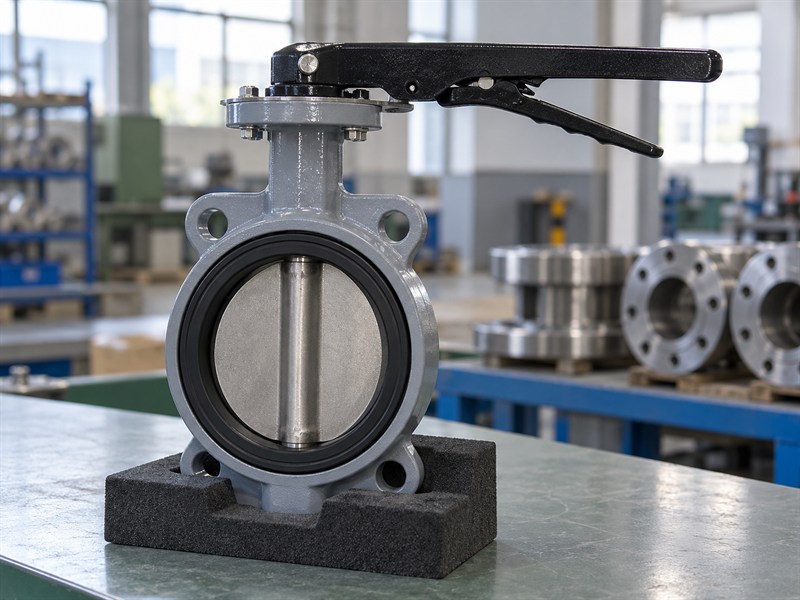
A JIS 10K butterfly valve has a specified pressure-class designation, but you still need the exact model's allowable service conditions. Treat “10K” as a starting point for the specification. It does not identify the seat, operating temperature, directional closing capability, or mating flange construction by itself.
Consider a replacement request that says only “DN100, JIS 10K, water.” One supplier might offer a wafer valve with a lever, while another offers a double-flanged valve with a gearbox. Both descriptions can contain the requested size and class. Their installation lengths, fasteners, access requirements, and supplied documents can differ substantially.
Which rating questions should you close before comparing prices?
Ask for an approved data sheet that identifies the entire offered configuration. Keep the pressure boundary and seat differential limits distinct.
- State normal and maximum operating pressure and temperature.
- Identify the largest differential pressure during closing.
- Include reverse pressure and transients where they can occur.
| Description | What it does not establish alone |
|---|---|
| JIS 10K | Complete pressure–temperature suitability |
| DN100 | Actual bore and external dimensions |
| Water service | Seat compound and purpose-specific approvals |
Resolve those missing conditions before using the quotation as an approved purchasing specification.
2. Which JIS 10K butterfly valve documents do you need?
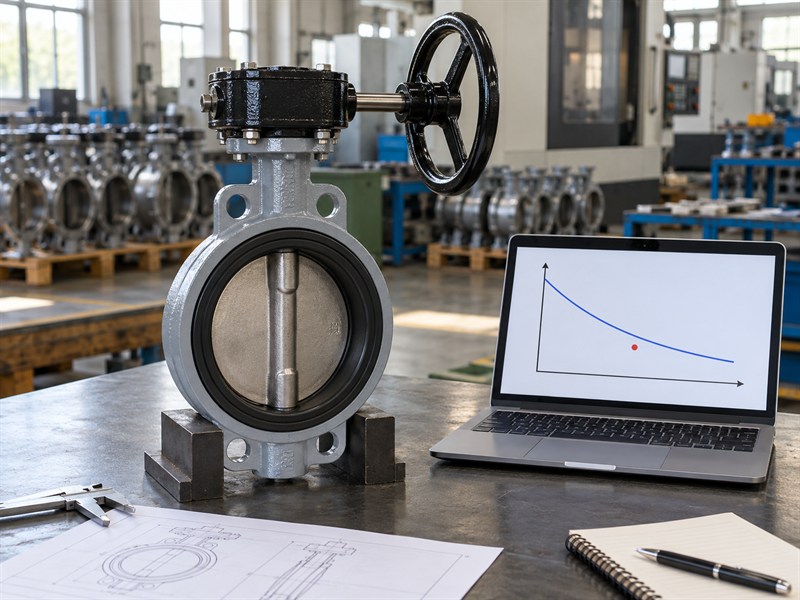
A JIS 10K butterfly valve needs a model-specific data sheet, dimensioned drawing, material list, and agreed inspection requirements. Those documents should describe the same size, body style, seat, operator, and revision. A general catalogue can help you shortlist a product, but a mixed catalogue page cannot define an order-specific assembly.
Identify the applicable valve standard separately from the connection standard. For example, the published scope of JIS B 2032:2024 concerns wafer type rubber-seated butterfly valves for general facilities. A different construction or a marine application needs its own applicable specification rather than an assumed extension of that scope.
What makes a document package usable on site?
The installer needs dimensions and installation instructions; the purchaser needs a clear acceptance basis. Assign approval responsibilities before the supplier starts manufacturing.
- Request the general arrangement drawing for your exact size.
- List required materials and permitted substitutions.
- Agree which records must accompany each shipment.
| Document | Purchasing decision it supports |
|---|---|
| Service data sheet | Suitability for the stated duty |
| Approved drawing | Physical installation and access |
| Inspection plan | Release and acceptance conditions |
Put revision numbers on the approval record so a later drawing change cannot pass unnoticed.
3. Can a JIS 10K butterfly valve fit PN flanges?
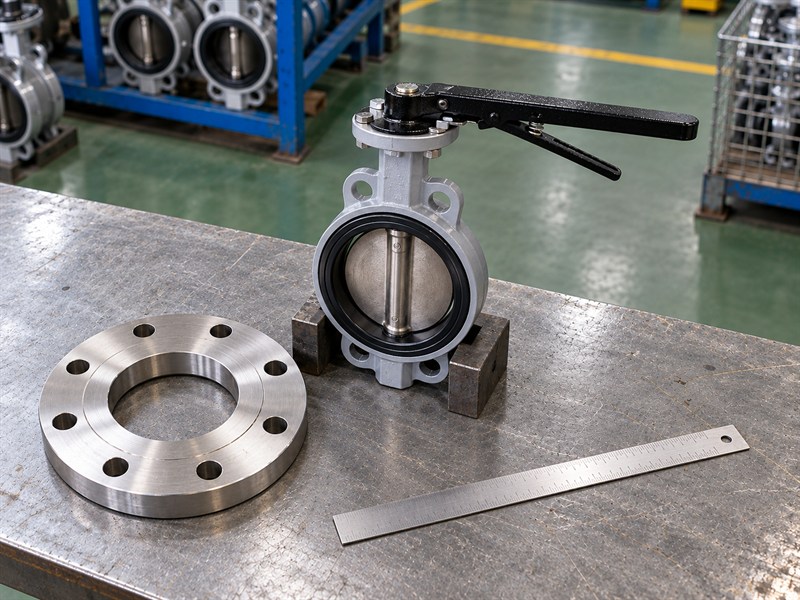
A JIS 10K butterfly valve fits PN flanges only when the supplier has approved that exact combination. Similar class names cannot establish mechanical interchangeability. Check the applicable flange standard, facing, bolt circle, hole count, hole diameter, and pipe bore for the actual nominal size.
Some wafer bodies have centering arrangements intended for more than one flange pattern. That feature still needs size-specific confirmation. A statement covering one small valve does not establish compatibility for the supplier's entire diameter range. Lugged bodies also need the correct thread, bolt length, and engagement for each side of the connection.
What should you send for an existing installation?
Provide a marked flange drawing or a measured survey, along with clear photographs of the installed connection. Record dimensions rather than relying on the appearance of an old nameplate.
- Identify flange material, standard, class, and facing.
- Measure the bolt circle and count the holes.
- Confirm the internal bore and adjacent pipe wall.
| Connection detail | Check against |
|---|---|
| Bolt pattern | Offered valve's approved interface drawing |
| Sealing face | Seat manufacturer's installation arrangement |
| Bore | Required disc sweep clearance |
Reject an unresolved interface mismatch instead of planning to force fasteners or redrill parts during installation.
4. How do you check JIS 10K butterfly valve disc clearance?
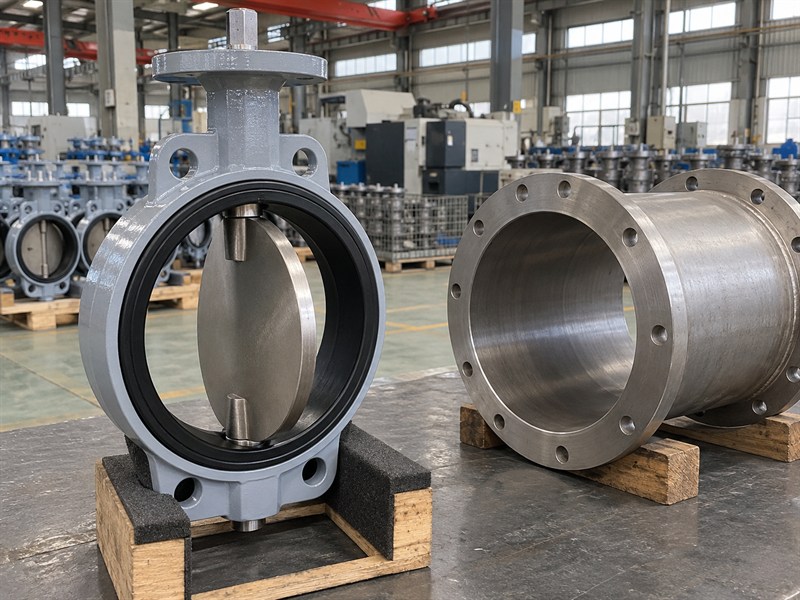
Check a JIS 10K butterfly valve by comparing its full disc sweep with the actual bore of both mating connections. A butterfly disc rotates through the flow passage and may extend beyond the wafer body's faces. Body face-to-face length therefore cannot describe the whole clearance requirement.
Restrictions can come from thick-walled pipe, internal linings, flange necks, reducers, or nearby fittings. An installer can bolt a valve into place and discover the interference only while opening it. Request a drawing that shows the disc envelope and required unobstructed bore before selecting the mating components.
Which dimensions belong on the replacement survey?
Separate nominal size, actual flow opening, body length, and operator envelope. Each answers a different fit question.
- Record the available installation gap.
- Measure the bore at both sides of the valve location.
- Note internal lining thickness and nearby restrictions.
| Measurement | What it protects |
|---|---|
| Face-to-face gap | Fit between the existing flanges |
| Clear bore | Free disc travel |
| Operator envelope | Access for operation and maintenance |
Check full travel under the approved isolated assembly procedure before commissioning. Do not use actuator force to clear an obstruction.
5. Which JIS 10K butterfly valve materials suit your duty?
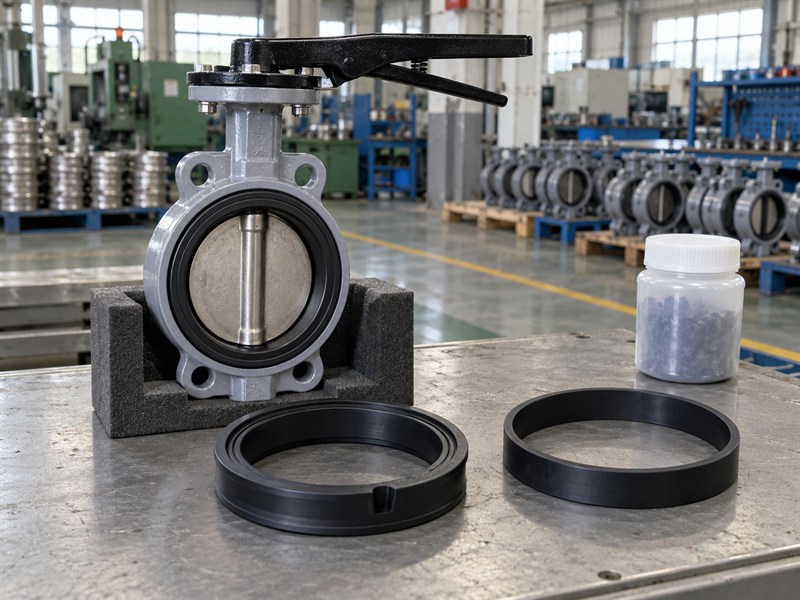
Select JIS 10K butterfly valve materials from the complete fluid composition and operating conditions. Body material alone cannot establish suitability. The disc, shaft, seat, auxiliary seals, coating, and any lining can each contact the fluid or affect sealing performance.
For a cooling circuit, state the glycol type and concentration, additives, temperature range, and cleaning conditions. For an oil line, identify the actual oil and additive package. RUITO's documented water-service EPDM and oil-service NBR configurations have separate application limits. Neither configuration establishes JIS connection compliance without the corresponding drawing and approval.
How do you avoid an uncontrolled seat substitution?
Specify the required compound and its supplier-approved service limits in the material list. A black ring in a photograph cannot prove whether the compound is EPDM, NBR, or another elastomer.
- Require a complete wetted-parts material schedule.
- State cleaning media and occasional exposure conditions.
- Define how proposed material changes will be approved.
| Duty detail | Material review question |
|---|---|
| Fluid composition | Are all wetted components compatible? |
| Highest temperature | Does the selected seat retain its rating? |
| Cleaning cycle | Are seals and coatings suitable throughout exposure? |
Keep the approved material schedule with the purchase order and incoming inspection record.
6. How do you size a JIS 10K butterfly valve operator?
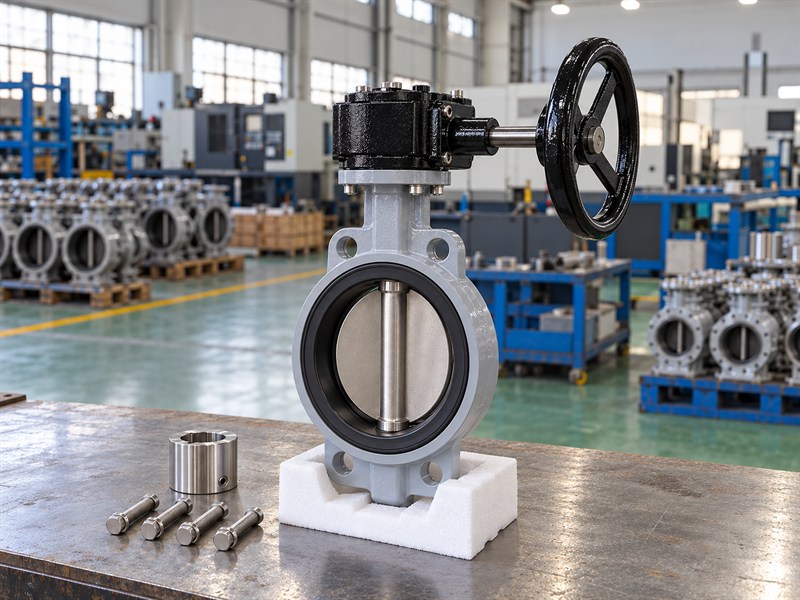
Size a JIS 10K butterfly valve operator from the manufacturer's torque requirements at the specified duty. Include breakaway, running, and seating conditions. A handwheel or actuator that fits the mounting holes can still have unsuitable output, travel settings, coupling engagement, or operating duty.
For an automated assembly, request a valve actuator sizing review using the minimum available drive supply and the maximum required valve torque. Confirm the selected margin and the allowable loads through the stem, coupling, and bracket. Excess output can damage components when the drive settings or assembly are wrong.
Which operating details change the selection?
Define how frequently the valve moves and what it must do after a supply failure. Manual, electric, and pneumatic drives answer those requirements differently.
- Specify cycling frequency, travel time, and control mode.
- Confirm position indication and required feedback.
- Identify the required failure action and its energy source.
| Operator check | Required confirmation |
|---|---|
| Output | Adequate throughout the required travel |
| Mechanical interface | Approved stem, coupling, and bracket |
| Controls | Correct supply, signal, feedback, and failure response |
Record the approved assembly and settings so replacement operators receive the same engineering review.
7. What JIS 10K butterfly valve site checks prevent rework?
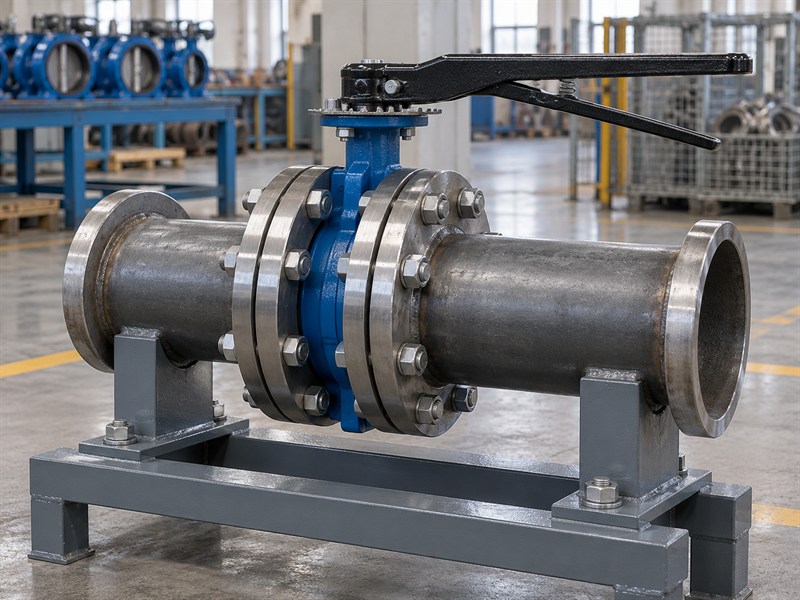
A JIS 10K butterfly valve needs aligned pipework, suitable supports, clear operator access, and correct assembly hardware. Check those conditions before the installation outage. A dimensional fit alone cannot establish that a person can reach the lever or remove the gearbox later.
Follow the selected manufacturer's installation instructions for disc position, seat protection, gasket use, and tightening. Some resilient-seat arrangements seal against the mating flange without an additional gasket. Adding a gasket without approval can change seat compression or introduce interference. Keep welding heat and debris away from the installed seat and disc.
What should the installation team verify before pressure returns?
Use an agreed inspection sheet covering the actual valve and installation. Isolate and depressurize the line before opening any pressure boundary.
- Confirm identity, flow-direction requirements, and orientation.
- Check centering, bolt engagement, and free disc travel.
- Verify stops, indication, and safe operating access.
| Site condition | Practical check |
|---|---|
| Pipe alignment | No forced movement through the valve body |
| Hardware | Correct fasteners and approved tightening procedure |
| Operation | Full unobstructed travel and reliable indication |
Investigate any increase in operating resistance after tightening before proceeding with commissioning.
8. How should JIS 10K butterfly valve tests be recorded?
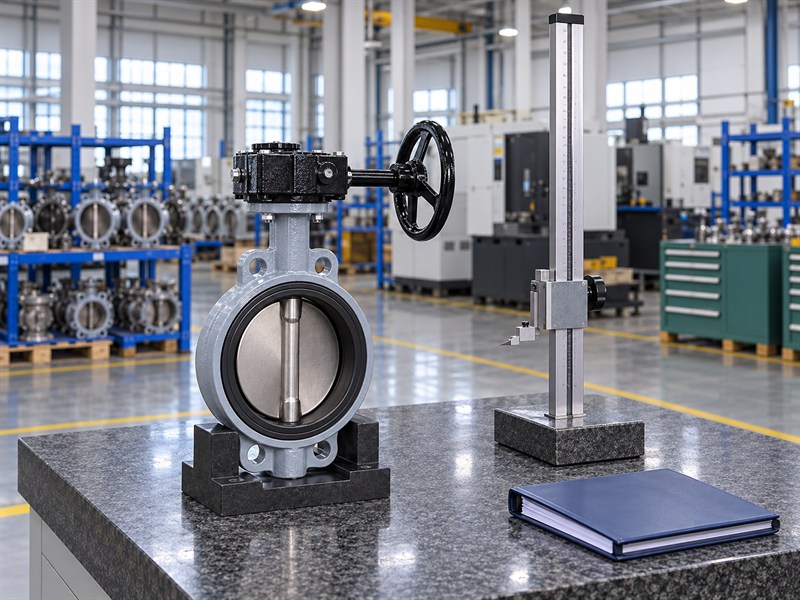
Record JIS 10K butterfly valve tests against the agreed standard, configuration, and acceptance criteria. A shell test addresses the pressure boundary, while a seat test addresses leakage under stated conditions. Functional and dimensional inspections cover different requirements and need their own results.
Specify pressure, medium, duration, direction, and leakage acceptance in the inspection plan. Do not copy test pressures from a different valve class or material. Where gas tightness, reverse pressure, vacuum, or another duty needs separate evidence, agree the applicable procedure before manufacture rather than adding a broad claim to the final certificate.
Can the report be traced to the delivered assembly?
Check the product identifier, drawing revision, material configuration, and inspection date. A report for a similar-looking valve cannot establish acceptance of your order.
- Match the tested size and supplied material configuration.
- Record instrument identification and calibration status.
- Separate required criteria from actual measured results.
| Record | What you need to identify |
|---|---|
| Pressure test | Conditions, method, direction, and result |
| Dimensional inspection | Drawing and measured acceptance |
| Functional check | Travel, stops, and operating arrangement |
Retain the completed records with the shipment documents and site commissioning file.
9. What should a JIS 10K butterfly valve order freeze?
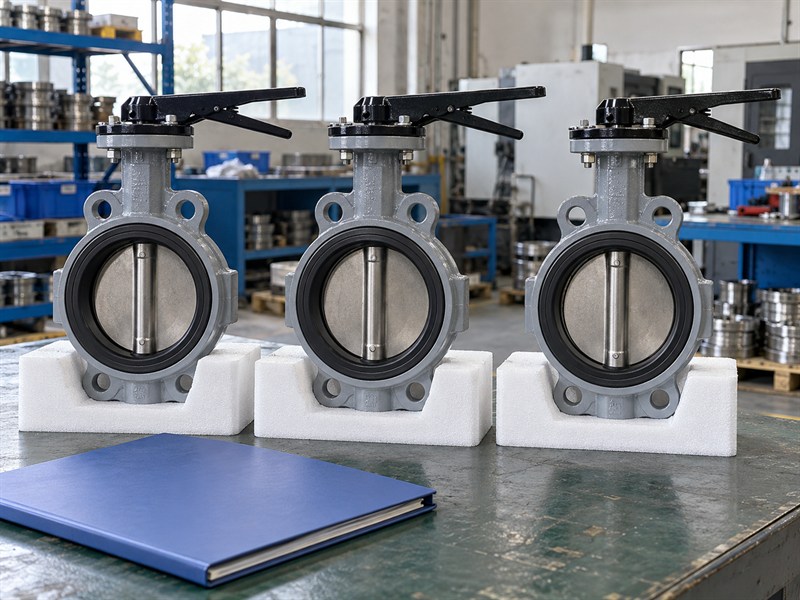
A JIS 10K butterfly valve order should freeze the approved drawing, materials, operator arrangement, and acceptance documents. Name the permitted alternatives and the person responsible for approving changes. This gives the supplier and your receiving team the same definition of an acceptable delivery.
For an OEM order, identify which interfaces affect assembly fixtures, pipe spools, actuator wiring, and spare parts. A changed lever envelope or coupling detail can disrupt assembly even if the replacement valve still carries the requested nominal class. Require notice and approval before a supplier changes those frozen details.
Which delivery conditions belong beside the technical requirements?
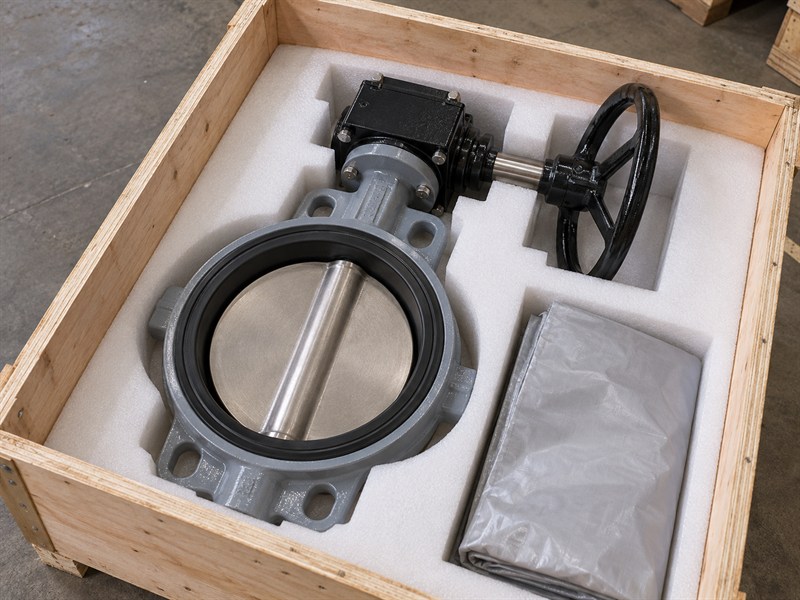
State quantities, packing requirements, inspection hold points, document dates, and the shipping destination. Distinguish factory release from transport and customs clearance.
- Identify approved drawing and material revisions.
- Define inspection and document release requirements.
- Request suitable packing and an agreed spare-parts list.
| Frozen item | Change that needs review |
|---|---|
| Connection drawing | Bore, drilling, body length, or facing |
| Material schedule | Seat, disc, shaft, coating, or seals |
| Drive arrangement | Operator, coupling, bracket, or feedback |
Send the service data and mating flange drawing when you contact RUITO so the proposed configuration can be reviewed before you approve the order.
10. What JIS 10K butterfly valve questions do buyers ask?
Q1: Can I fit a 10K valve between 5K flanges?
Use a JIS 10K butterfly valve with the proposed flange only after approving the exact combination. Check drilling, facing, disc clearance, and the allowable service limits of every connection component. The valve's designation cannot raise a lower-rated flange's permitted duty.
Q2: How do I know if a quotation covers the complete valve?
Check the drawing and supplied-parts list. Confirm the seat, operator, mounting hardware, required accessories, inspection records, and packaging. Ask the supplier to identify exclusions rather than assuming a short product description includes everything.
Q3: Can I select the actuator using valve size alone?
No. Use the required torque at the specified fluid, pressure, temperature, and cycling conditions. Check output at the minimum available supply and confirm the mechanical drive path, travel stops, controls, and failure action.
Q4: Can I identify the seat material from a photo?
No. Similar-looking elastomers can have different compounds and application limits. Confirm the material schedule and traceable product documentation. Request approval for a substitute compound before accepting it.
Q5: What's the best check before ordering a replacement?
Compare an approved valve drawing with a measured installation survey. Close the interface, service, material, operation, and document requirements in writing. Then compare quotations for that same configuration.