
You avoid JIS butterfly valve buying mistakes by checking the specified standard, flange connection, pressure at operating temperature, seat material, and installation drawing together. A replacement can match the nominal pipe size yet foul a flange bore or carry the wrong seat. Use the checks below before you approve a quotation or release a purchase order.
1. What does a JIS butterfly valve specification cover?
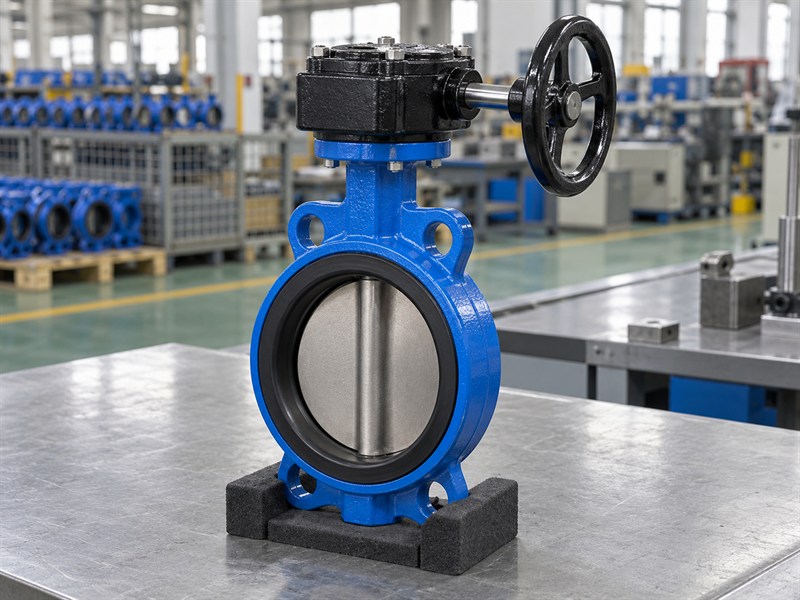
A JIS butterfly valve specification identifies the standards and configuration required for a particular valve. JIS means Japanese Industrial Standards. Buyers often use the phrase for valves intended for JIS flanges, but that description leaves several questions unanswered. A flange drilling claim does not establish the valve's design standard, inspection method, permitted service, or certification status.
For general facilities, JIS B 2032:2024 addresses wafer type rubber-seated butterfly valves. Its scope excludes shipboard and water service facility valves covered by other standards. A marine procurement specification therefore needs its own applicable requirements. You can check the published scope in the Japanese Standards Association's standard listing.
Which documents answer different questions?
Ask the supplier to separate these declarations rather than writing “JIS standard” across a quotation.
- Design requirements identify the applicable valve construction.
- Connection requirements identify mating flange dimensions.
- Inspection requirements identify test methods and acceptance criteria.
| Document | What you check |
|---|---|
| Valve data sheet | Model, size, service, materials, and ratings |
| General arrangement drawing | Interfaces and installation envelope |
| Inspection plan | Test conditions and acceptance criteria |
A written deviation list makes an incomplete compliance claim easier to resolve before manufacture.
2. How do you check JIS butterfly valve pressure ratings?
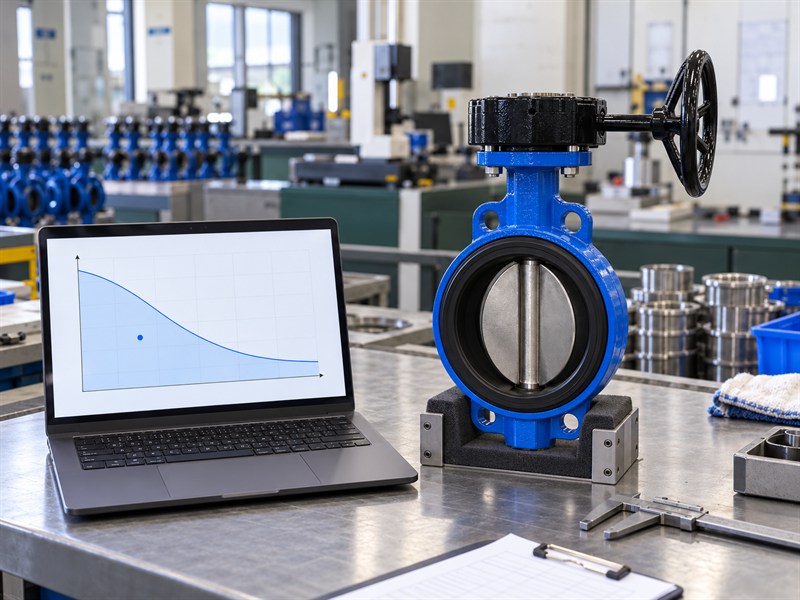
Check a JIS butterfly valve against its approved pressure–temperature limits and permitted closing differential pressure. A 5K or 10K designation names a pressure class; it does not provide a complete operating limit for every material, temperature, or connection. Read the selected model's data rather than converting the class label into a universal working pressure.
Suppose your process operates at 7 barg and 50°C. Record those conditions alongside pump shutoff pressure, expected transients, minimum downstream pressure, and maximum closing differential. The supplier must confirm each condition for the offered assembly. This is a worked selection scenario, not a statement that every 10K valve can handle that service.
Which limit controls the assembled connection?
Compare the approved ratings of all pressure-retaining components. A valve body with a higher rating cannot increase the rating of a lower-rated mating flange or connection.
- State whether pressures are gauge or absolute.
- Identify continuous and occasional temperatures separately.
- Confirm both flow directions if reverse pressure can occur.
| Requirement | Evidence to request |
|---|---|
| Operating pressure at temperature | Approved model-specific rating |
| Closing differential | Directional seat rating |
| Surge allowance | Project transient assessment |
Keep shell test pressure in a separate field; a proof test does not define continuous operating pressure.
3. Will a JIS butterfly valve fit your existing flanges?
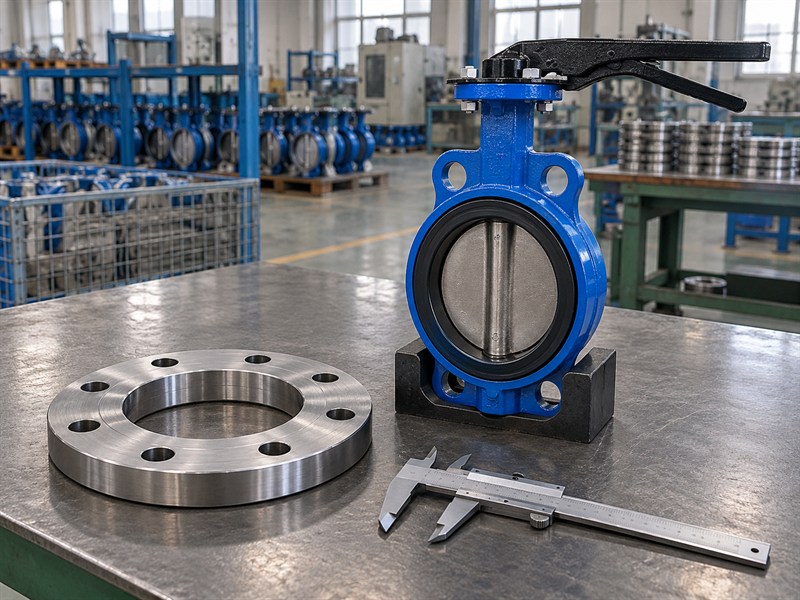
A JIS butterfly valve fits only when the approved valve and mating flange dimensions agree. Confirm the flange standard, pressure class, nominal size, facing, bolt circle, hole count, and bore. JIS B 2220 covers steel pipe flanges; JIS B 2239 covers cast iron pipe flanges. State the applicable standard and edition in the purchase specification.
An apparently suitable bolt pattern can still hide a bore clearance problem. Butterfly valve discs sweep beyond the body faces as they open. Thick pipe walls, internal linings, flange necks, or nearby fittings can obstruct that movement. A multi-standard wafer body also needs size-specific confirmation of each claimed connection.
What should you measure on a replacement job?
Give the supplier the installed connection details and usable photographs. Ask for a marked drawing showing the disc clearance envelope.
- Measure bolt circle and count the holes.
- Record the actual flange and adjacent pipe bore.
- Identify the flange face and any existing lining.
| Check | Failure it can prevent |
|---|---|
| Hole pattern | Bolts that cannot pass freely |
| Bore clearance | Disc contact during opening |
| Facing and seat arrangement | Uneven seat compression |
Do not enlarge flange holes or force bolts into position to rescue an unapproved fit.
4. Which JIS butterfly valve dimensions need approval?
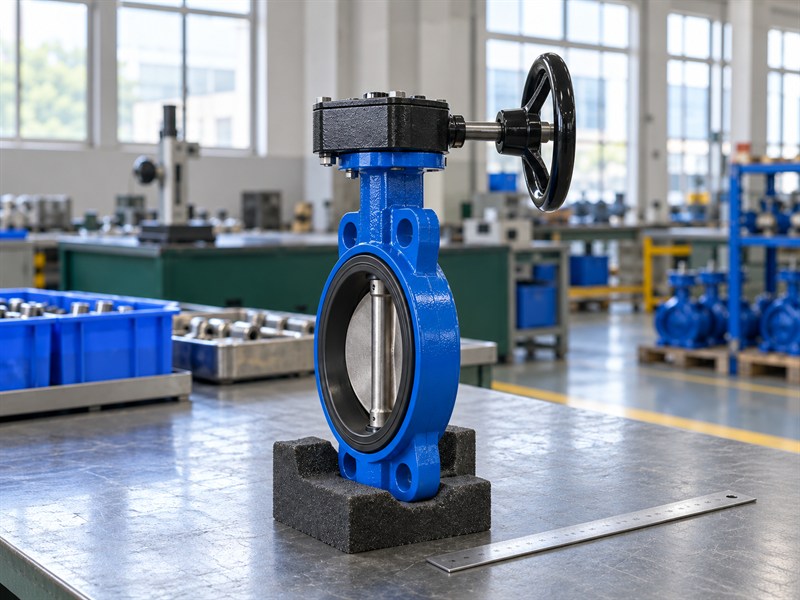
A JIS butterfly valve needs approved face-to-face length, connection dimensions, disc clearance, and operating space. Nominal diameter describes a size designation rather than every physical measurement. Two valves with the same nominal size can have different body lengths, neck heights, shaft interfaces, and operator envelopes.
Use a dimensioned general arrangement drawing for the exact size and configuration. Where a specified face-to-face series applies, have the supplier identify it explicitly. A wafer valve, a lug valve, and a double-flanged valve should never inherit one another's installation dimensions merely because their bores share a nominal designation.
Can the operator still reach the handwheel?
Check the assembly inside the actual plant layout. Pipe insulation, adjacent equipment, structural steel, and a valve pit cover can restrict access even when the valve body fits.
- Check space for complete lever or handwheel operation.
- Leave access for fasteners and shaft seals.
- Confirm actuator removal and lifting space.
| Drawing item | Site information to compare |
|---|---|
| Face-to-face length | Available installation gap |
| Overall height | Obstructions and insulation |
| Operator envelope | Safe operating and service access |
Approve the drawing revision with the purchase order so later substitutions require a documented review.
5. How do you select a JIS butterfly valve seat?
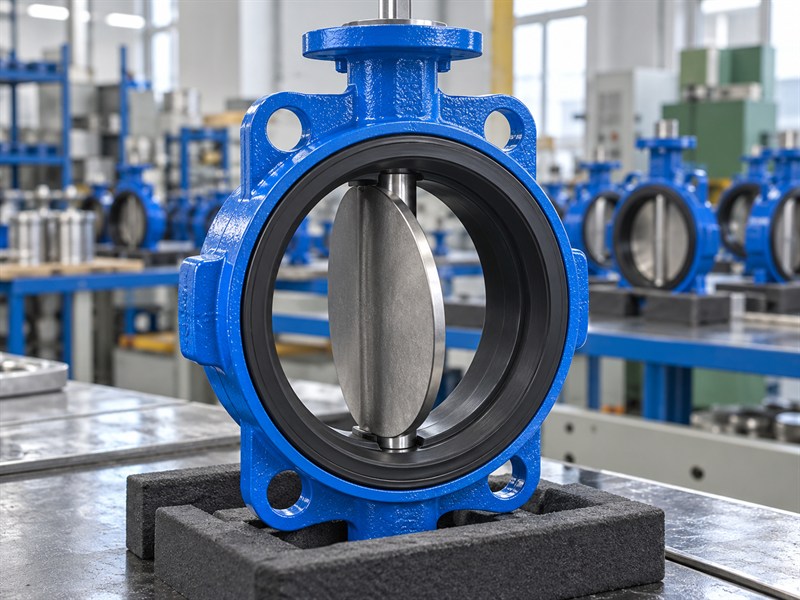
Select a JIS butterfly valve seat using the complete fluid composition, temperature, pressure, and cleaning conditions. EPDM, NBR, and fluoropolymer materials serve different duties. The material name alone does not establish compatibility with a particular concentration, additive package, or temperature cycle.
For RUITO's documented water-service configurations, EPDM selection stays within the stated model and application limits. Oil service uses a separately assessed NBR configuration. Chemical service requires review of the complete wetted construction, including shaft seals and any lining or backing material. Those product limits do not establish JIS compliance for an alternative connection.
What information changes the material decision?
Send a fluid data sheet instead of a broad description such as “chemical water.” Include cleaning fluids and any conditions that differ from normal operation.
- Identify concentrations, additives, and contaminants.
- State normal, maximum, and cleaning temperatures.
- Record vacuum or minimum absolute pressure where relevant.
| Service information | Selection question |
|---|---|
| Water or glycol solution | Is the specified elastomer compatible? |
| Mineral oil | Has the complete oil mixture been assessed? |
| Chemical solution | Are all wetted parts compatible? |
Ask the supplier to list the actual disc, shaft, seat, and auxiliary seal materials in the quotation.
6. How should you operate a JIS butterfly valve?
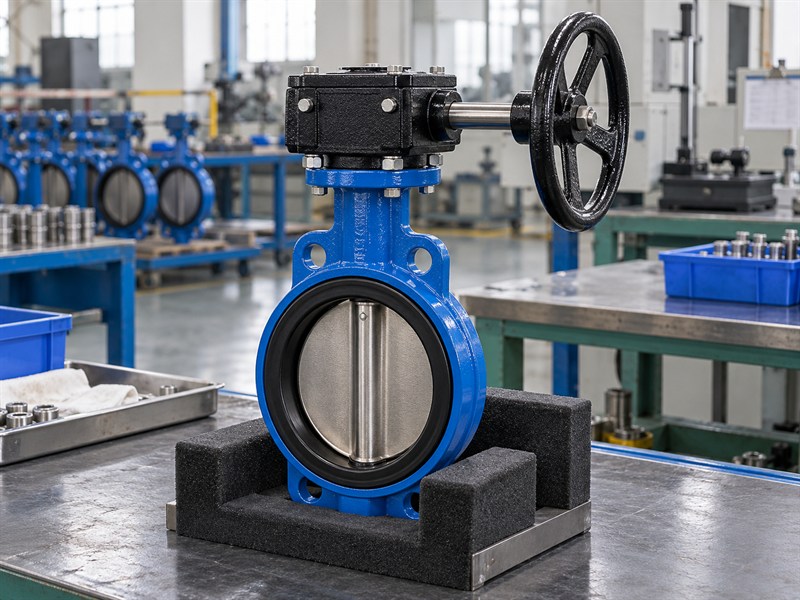
Operate a JIS butterfly valve with a lever, gearbox, or actuator selected for the valve's required torque and duty. Nominal diameter alone cannot size an actuator. Seat friction, closing differential pressure, fluid properties, cycling frequency, and the valve's mechanical limits all affect the selection.
For pneumatic operation, compare the valve torque requirements with actuator output at the minimum available air pressure. For electric operation, check supply voltage, duty rating, travel time, control signal, enclosure, and required failure response. A standard electric actuator does not automatically return to a safe position after power loss.
Which checks belong on the assembly drawing?
Confirm the entire drive path from actuator to disc. A matching mounting flange does not prove that the coupling, bracket, shaft engagement, and torque capacity are suitable.
- Record breakaway, running, and seating torque conditions.
- Check the coupling and bracket load capacity.
- Specify indication, feedback, and required failure action.
| Operator | Information you need |
|---|---|
| Hand lever | Operating effort and sweep clearance |
| Worm gearbox | Output capacity, stops, and access |
| Actuator | Output across the required travel and supply range |
Use the approved assembly settings during commissioning; do not increase actuator torque to overcome unexplained binding.
7. How do you install a JIS butterfly valve correctly?
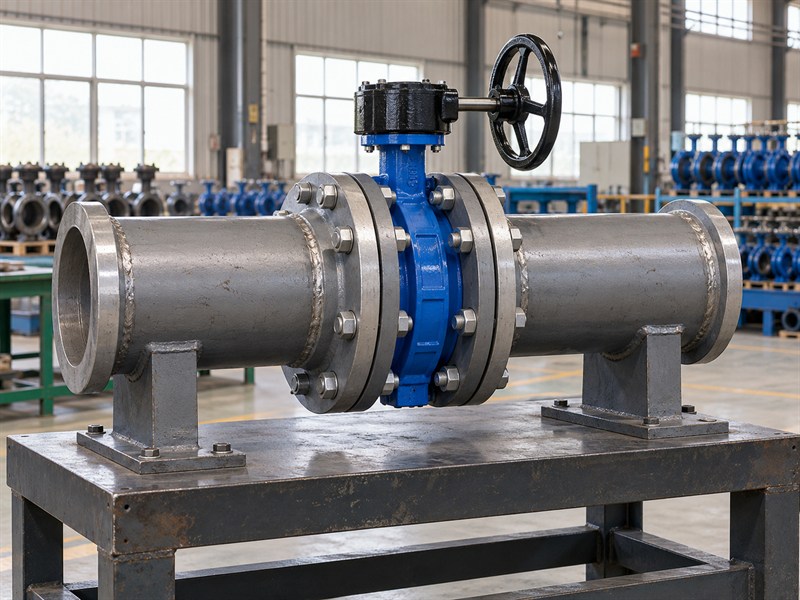
Install a JIS butterfly valve between aligned, supported pipe connections using the selected model's installation instructions. Isolate and depressurize the system before opening the line. Verify the valve identity and inspect the seat, disc edge, and sealing faces before installation.
Follow the manufacturer's specified disc position while inserting the valve. Keep the disc clear of the seat edges and adjacent pipe bore. Bring the flanges together evenly without using the valve to pull misaligned pipework into place. Extra gaskets can distort some resilient-seat designs; use them only where the approved installation arrangement requires them.
What should you check before applying pressure?
Check the complete disc travel using the approved safe procedure while the assembly remains isolated. Follow the specified fastener sequence and torque rather than applying a generic number from another valve size.
- Confirm valve centering and disc clearance.
- Check fastener length and thread engagement.
- Verify stops, position indication, and operator access.
| Installation check | Acceptance evidence |
|---|---|
| Pipe alignment | No forced displacement through the valve |
| Disc movement | Free travel within the approved envelope |
| Bolting | Correct hardware and documented tightening |
If movement changes after tightening, investigate alignment, seat compression, and clearance before commissioning.
8. What tests should a JIS butterfly valve receive?
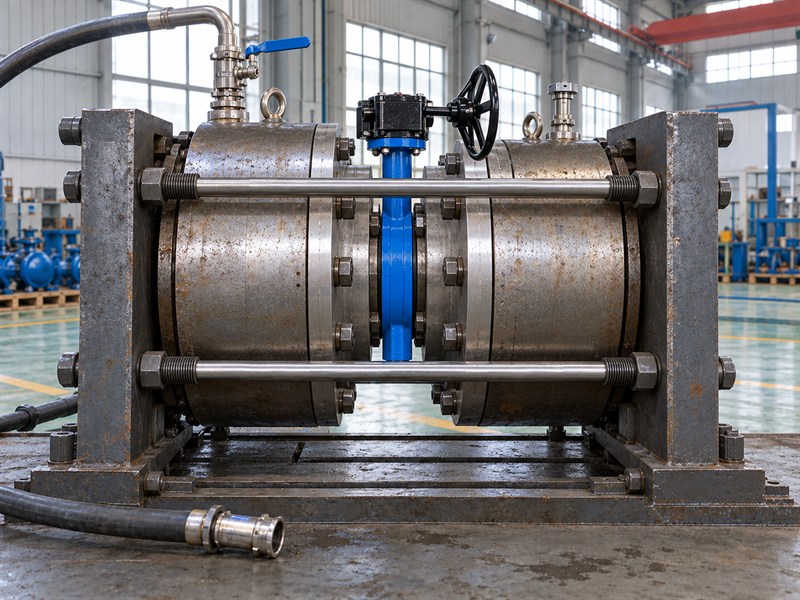
A JIS butterfly valve should receive the inspections and tests defined by its applicable standard and approved purchase specification. Agree on the inspection plan before production. Shell integrity, seat leakage, functional travel, dimensions, and identification answer different acceptance questions.
Specify the test medium, pressure, duration, direction, leakage criterion, and instrument requirements. A report that says “pressure tested” leaves those conditions unknown. If your service requires gas tightness, reverse-pressure performance, or end-of-line use, obtain evidence covering that exact configuration and duty. A standard water-service test cannot establish all of those capabilities.
How do you connect reports with delivered valves?
Use a product identifier or batch reference that links the valve, drawing revision, material records, and inspection results. Keep acceptance criteria separate from the measured results.
- Match the tested size and material configuration.
- Confirm instrument identification and calibration status.
- Record the inspection date and acceptance decision.
| Inspection | What its record should establish |
|---|---|
| Dimensional check | Agreement with the approved drawing |
| Shell test | External pressure-boundary integrity under test conditions |
| Seat test | Leakage performance under the specified conditions |
A passed factory test supports release against that inspection plan; it does not replace site commissioning.
9. What belongs in a JIS butterfly valve quotation request?
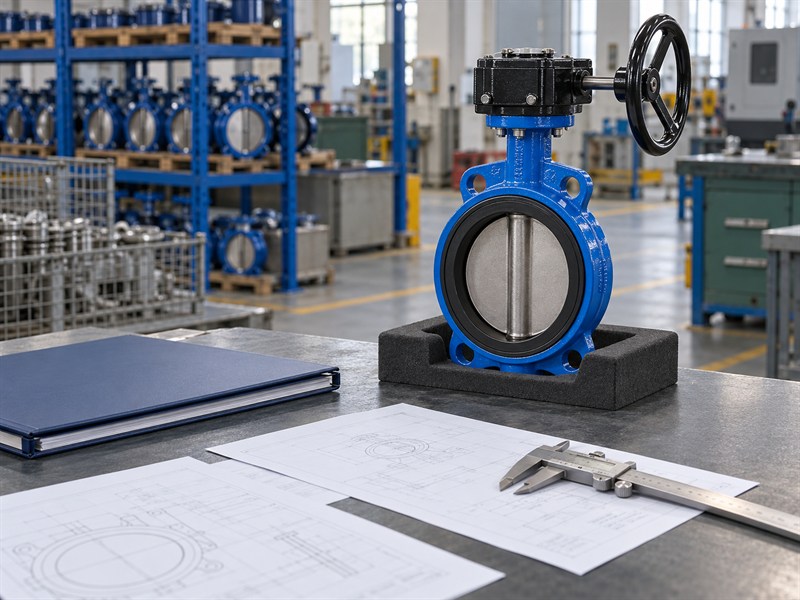
A JIS butterfly valve quotation request should define the service, interfaces, materials, operation, and acceptance documents needed for comparison. Put those requirements in one data sheet. Suppliers can then identify compliance and exceptions against the same requirements instead of quoting different products under a shared description.
Include nominal size and quantity alongside operating pressure and temperature, maximum closing differential, fluid composition, mating flange details, and required operation. State whether you need a replacement, a new installation, or a production assembly. Delivery planning also needs the destination, packaging requirements, inspection hold points, and requested document dates.
Which commercial details depend on engineering approval?
A firm delivery commitment needs a defined configuration and an agreed approval process. Distinguish factory release from international transport and customs clearance.
- Request a completed compliance and deviation schedule.
- Identify drawing and sample approval responsibilities.
- Agree spare parts and change-control requirements.
| RFQ attachment | Purpose |
|---|---|
| Service data sheet | Defines the operating duty |
| Connection drawing | Defines the installation interface |
| Inspection and document list | Defines the release requirements |
Send your service data and flange drawing when you contact RUITO. Request confirmation of the proposed configuration and any JIS-specific requirements before ordering.
10. What do buyers ask about a JIS butterfly valve?
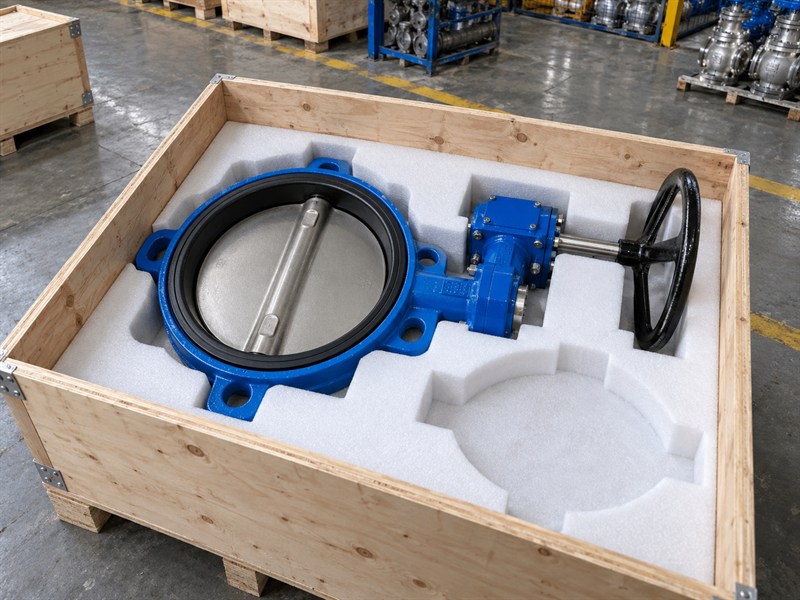
Q1: Can I replace a PN valve with a JIS butterfly valve?
A JIS butterfly valve needs an interface and service review before it can replace a differently specified valve. Compare the flange standard, drilling, facing, face-to-face length, bore clearance, and pressure–temperature limits. A shared nominal size or similar pressure description cannot establish interchangeability.
Q2: How do I know if a 5K or 10K valve suits my line?
Check the approved ratings for the exact assembly at your operating temperature. Include maximum closing differential, possible surges, flow direction, and the mating connection. Ask the supplier to identify any limitation in writing.
Q3: Can I use an EPDM seat for an oil application?
Do not assume compatibility. Select materials for the complete oil composition and operating conditions. RUITO's documented oil-service butterfly valves use a separately assessed NBR configuration rather than inheriting the water-service EPDM selection.
Q4: Can I use a wafer valve for end-of-line isolation?
Use only a configuration explicitly approved for that duty. Removing downstream pipework changes restraint and pressure loading. Obtain the stated size range, differential pressure, hardware requirements, and supporting test evidence before specifying end-of-line service.
Q5: What's the best way to compare supplier quotations?
Compare completed data sheets and documented exceptions. Check the exact construction, materials, drawings, ratings, tests, and document package before comparing price. Resolve a missing requirement with the supplier before you approve the purchase order.