
You apply a JIS butterfly valve standard correctly by identifying the required valve design, connection, dimensions, inspection, and marking requirements separately. A quotation that says “JIS 10K” cannot answer all five questions. Build the specification around the actual duty and construction so the supplier can confirm compliance or identify a deviation before you order.
1. What does a JIS butterfly valve standard claim mean?
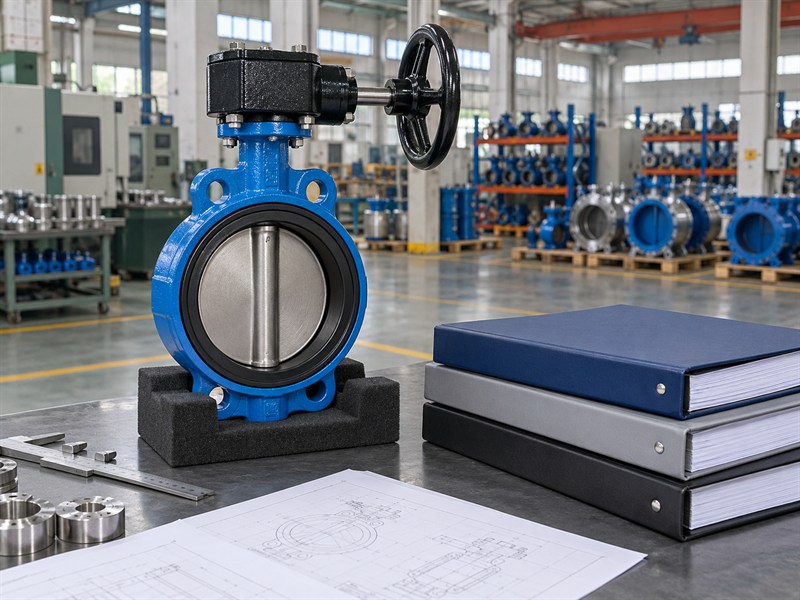
A JIS butterfly valve standard claim describes compliance with identified requirements, not a complete product specification on its own. Ask which standard, edition, construction, size range, and supplied configuration the claim covers. “JIS” without a number leaves the acceptance basis unclear.
A purchasing request can contain several independent requirements: a wafer valve design, a JIS flange interface, a specified body length, and agreed pressure tests. One supplier's design declaration might answer only part of that request. The remaining items need their own confirmation rather than an assumption that one label covers the entire assembly.
What should the supplier put in writing?
Request a completed compliance schedule against your specification. Each answer should identify the relevant document or an explicit exception.
- Name the applicable standard and edition.
- Identify the exact valve construction and configuration.
- List any requirement that needs a separate approval.
| Requirement group | Supporting evidence |
|---|---|
| Design | Configuration-specific compliance declaration |
| Interface | Approved connection and assembly drawing |
| Acceptance | Agreed inspection and document schedule |
Resolve an incomplete claim before treating the quotation as technically approved.
2. Which JIS butterfly valve standard covers rubber-seated wafers?
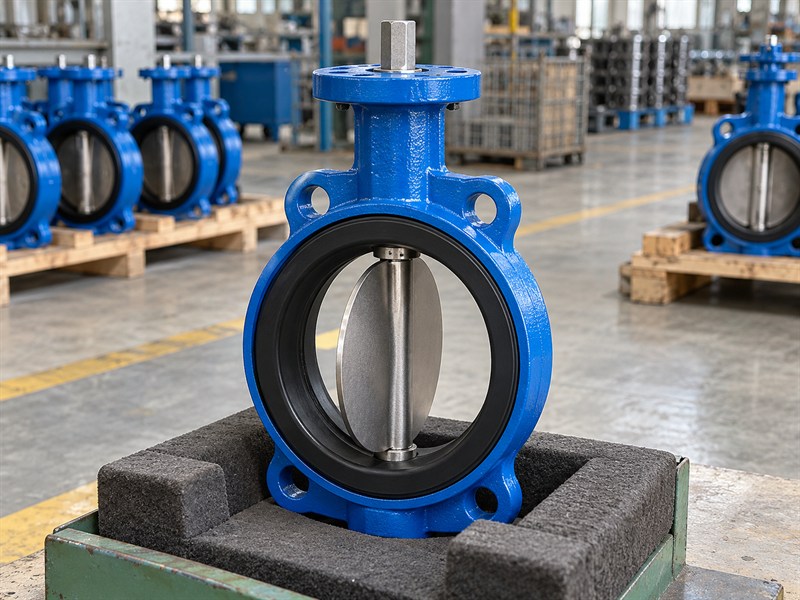
JIS B 2032:2024 is the JIS butterfly valve standard addressing wafer type rubber-seated butterfly valves for general facilities. Its published scope includes piping for equipment, building services, and water treatment. It excludes shipboard and water service facility valves covered by other standards, so application-specific requirements need separate review.
Check the scope in the Japanese Standards Association's published listing. Do not extend a wafer rubber-seat specification to every flanged, metal-seated, lined, marine, or waterworks valve merely because the product is called a butterfly valve. The selected construction and service must fit the agreed specification route.
How do you check that the offered construction matches?
Read the drawing and material schedule alongside the declaration. Product photographs can help identify broad construction, but they cannot prove conformity.
- Confirm the body and seat arrangement.
- Identify the intended service and any special approval.
- Request clarification of every scope mismatch.
| Check | Question to close |
|---|---|
| Construction | Is this the valve type covered by the requirement? |
| Service | Do additional application requirements apply? |
| Configuration | Does the declaration match the offered assembly? |
Keep the agreed scope with the purchase record so it remains visible during inspection.
3. Which JIS butterfly valve standard defines the flange interface?
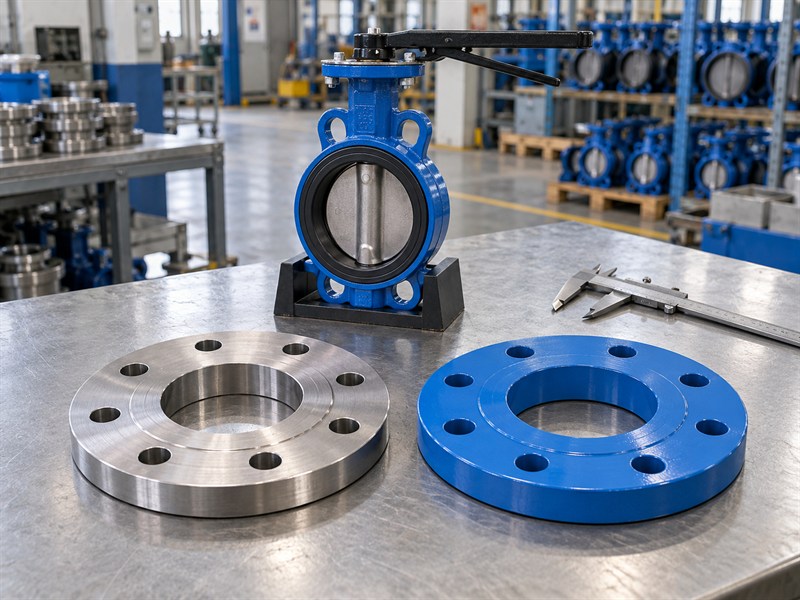
A JIS butterfly valve standard review must identify the mating flange requirements separately from the valve design. JIS B 2220 concerns steel pipe flanges and JIS B 2239 concerns cast iron pipe flanges. Confirm the applicable document, edition, class, facing, and size in the project specification.
Then compare the actual interface drawing: bolt circle, hole count, bore, facing, and fastener arrangement. A supplier may offer a wafer body intended for several flange patterns, but compatibility still needs confirmation for your size and mating connection. A lugged body also introduces thread and bolt-engagement requirements.
What can a pressure-class label leave unanswered?
The label cannot show the installed geometry or establish that a rotating disc clears the adjacent bore. Ask for the dimensions needed to approve the connection.
- Identify both mating flanges and the adjacent pipe bore.
- Check fastener paths, lengths, and engagement.
- Confirm the required seat or gasket arrangement.
| Interface field | Record on the approved drawing |
|---|---|
| Flange designation | Standard, class, size, and facing |
| Drilling | Circle, hole count, and hole dimensions |
| Bore | Clearance for the selected disc envelope |
Do not approve a connection solely because bolts appear to align in a photograph.
4. Which JIS butterfly valve standard controls body length?
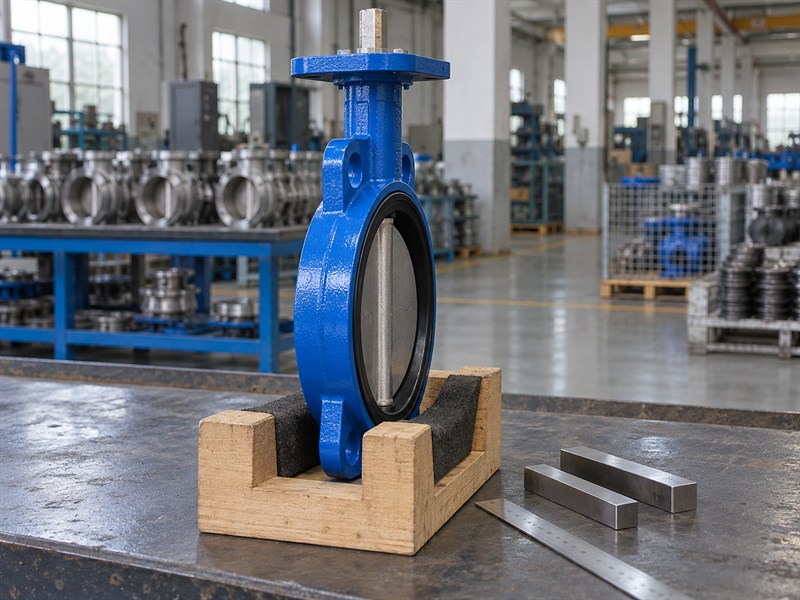
A JIS butterfly valve standard specification should identify the applicable dimensional requirements and the selected model's face-to-face length. JIS B 2002 addresses valve face-to-face and end-to-end dimensions. The drawing must still identify the relevant construction, dimensional series, nominal size, and tolerances.
Replacing a valve involves the actual installation gap as well as the nominal designation. Changing body style or supplier can change the fit. Operator height, disc projection, mounting interfaces, and maintenance access also need drawing approval, even when a specified face-to-face length matches.
What should control a replacement order?
Compare an approved assembly drawing with a measured site survey. Record the source and datum of every dimension rather than mixing catalogue and measured values without explanation.
- Confirm body length and tolerance.
- Check disc clearance and the actual pipe bore.
- Review the full operator and maintenance envelope.
| Dimensional item | Acceptance reference |
|---|---|
| Body length | Agreed series and approved drawing |
| Disc envelope | Model-specific clearance requirement |
| Overall assembly | Site layout and operating access |
Freeze the approved drawing revision so repeat orders use the same interface baseline.
5. How does a JIS butterfly valve standard address inspection?
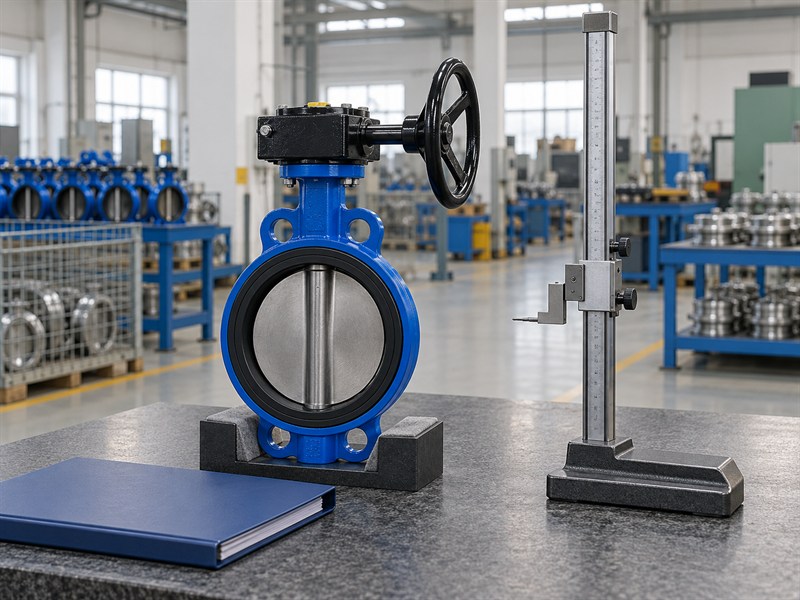
A JIS butterfly valve standard inspection plan must identify the required methods and acceptance criteria for the selected product. The current association list identifies JIS B 2003:2024 for valve inspection and JIS B 2004:2024 for marking. Confirm the applicable editions and their role in the agreed purchase specification.
The Japanese Valve Manufacturers' Association listing helps you check the published references. Older online summaries can contain earlier editions. Use the contractually agreed requirements and the supplier's approved inspection plan, rather than copying an old test pressure or marking list into a new purchase order.
Which records need separate acceptance criteria?
Dimensions, shell integrity, seat leakage, functional travel, and identification answer different questions. Define how each will be checked before production begins.
- Specify the relevant test conditions and acceptance limits.
- Identify required witness or hold points.
- Link results with the delivered product and configuration.
| Inspection area | Record to agree |
|---|---|
| Pressure and leakage | Method, conditions, direction, and acceptance |
| Dimensions and function | Drawing, travel, and measured results |
| Identification | Required markings and traceable product reference |
Retain the completed records with the approved technical documents for the order.
6. Does a JIS butterfly valve standard make 10K universal?
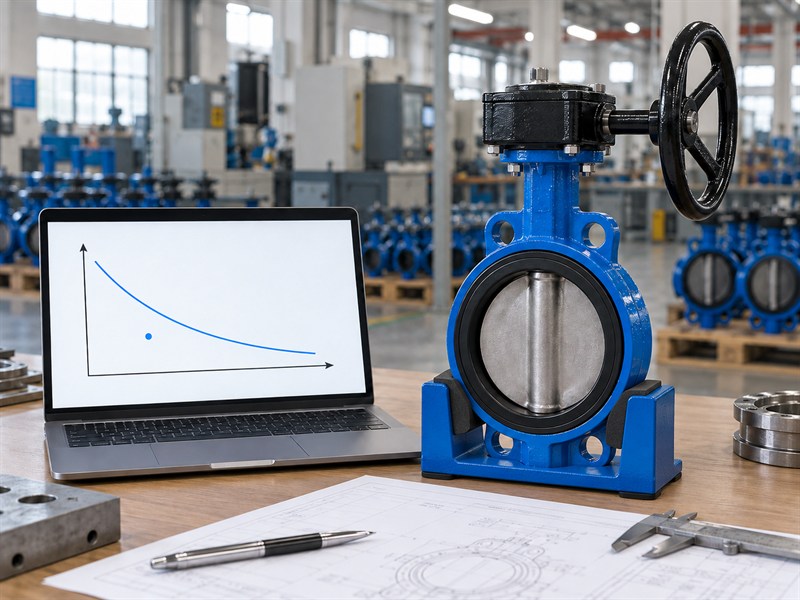
A JIS butterfly valve standard or a 10K designation does not establish one universal operating limit for every valve. Check the selected model's pressure–temperature limits, seat differential rating, materials, and mating connection. Keep normal duty, occasional conditions, and factory proof tests in separate fields.
For a water system, the purchaser should identify operating temperature, maximum pressure, pump shutoff conditions, possible transients, and maximum closing differential. The supplier must confirm the offered assembly against those conditions. A pressure test report cannot turn an unsuitable seat, connection, or application into an approved service configuration.
Which component can limit the assembly?
The allowable duty depends on the approved limits of the complete connection and valve. A stronger body cannot increase the permitted duty of a lower-rated mating component.
- State gauge and absolute pressures clearly where needed.
- Identify continuous and occasional temperatures separately.
- Confirm any required reverse-pressure capability.
| Pressure field | Purpose |
|---|---|
| Operating pressure at temperature | Defines the service requirement |
| Closing differential | Defines the seat and drive duty |
| Test pressure | Defines an inspection condition |
Request written confirmation of the actual service envelope instead of converting the class label into a blanket guarantee.
7. Can one JIS butterfly valve standard cover every application?
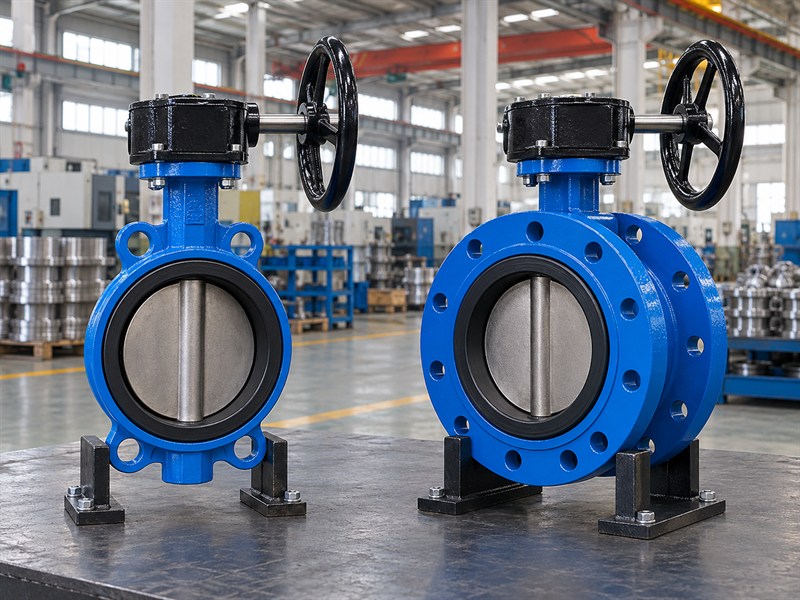
A JIS butterfly valve standard cannot replace every application-specific requirement. Marine service, waterworks, drinking-water contact, fire protection, chemical service, and automated systems can introduce additional approval and technical conditions. Identify the destination, service, and project requirements before selecting the product route.
An approval for one material, size, temperature range, or configuration does not automatically cover another. RUITO's documented application limits are configuration-specific, including separate material choices for water, oil, clean gas, and lined chemical service. A connection-standard request still needs its own review against the proposed drawing and acceptance documents.
What should you add to a general valve data sheet?
Describe the actual fluid and duty, then identify required approvals and their scope. Avoid broad descriptions such as “suitable for all water and chemicals.”
- State the complete fluid composition and operating range.
- Identify purpose-specific approvals and covered configurations.
- Review installation and butterfly valve orientation requirements.
| Application requirement | Evidence to check |
|---|---|
| Contact approval | Exact materials, size, and temperature scope |
| Special service | Configuration-specific technical assessment |
| Automation | Drive, controls, and required failure response |
Keep each approval linked to the product configuration it actually covers.
8. How does a JIS butterfly valve standard relate to EN or API?
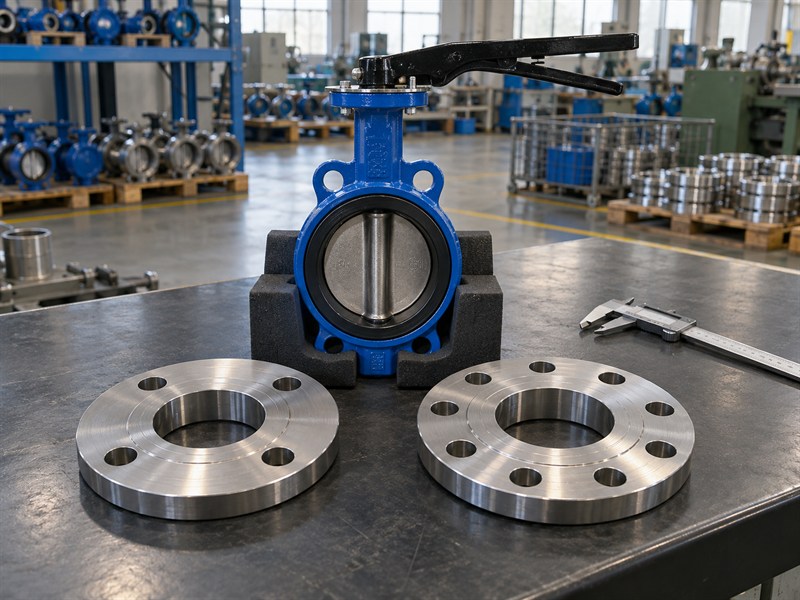
Compare a JIS butterfly valve standard with an EN or API requirement by reviewing their applicable scopes and the project specification. A shared product name does not establish full equivalence. Design, body length, flange connection, materials, inspection, and marking can follow different agreed documents.
A supplier may propose an EN 593 design with a JIS mating interface, for example. That proposal needs a clear compliance and deviation schedule covering the entire request. It should not be accepted merely because the valve is available with a familiar flange class or because a catalogue lists several standards together.
What should a mixed-standard specification say?
Identify the requirement governing each part of the valve and connection. Resolve conflicts through the project's approved technical process before ordering.
- Name the design and dimensional requirements.
- Specify the mating flange interface separately.
- Agree inspection methods, criteria, and required evidence.
| Specification area | Requirement to identify |
|---|---|
| Valve construction | Applicable design route and scope |
| Installation interface | Dimensions, facing, drilling, and clearance |
| Acceptance | Required tests, markings, and documents |
Use a written technical decision for any proposed substitution; a standards list on a sales page is insufficient.
9. How do you document a JIS butterfly valve standard requirement?
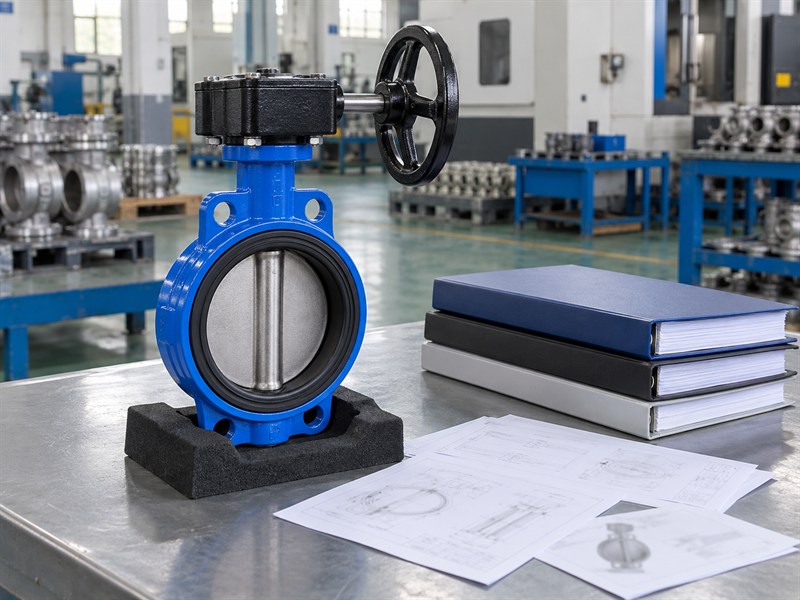
Document a JIS butterfly valve standard requirement in a line-by-line purchase specification and compliance schedule. Tie it to the actual fluid, duty, construction, size, materials, and operator arrangement. Ask the supplier to reference the drawing or record supporting each answer and to identify every exception.
After approval, freeze the document revisions and define how changes will be handled. A revised seat compound, flange pattern, body length, or operator can affect the accepted configuration. Repeat orders need the same control, even when the commercial description and nominal size remain unchanged.
What should the receiving team be able to trace?
The product identifier should connect the delivered valve with its approved drawing, material schedule, inspection plan, and completed records. Keep commercial delivery conditions alongside that technical baseline.
For repeat orders, retain the accepted revisions and any concessions with the product record. Ask the supplier to identify changes before using a previous approval as the basis for a new shipment.
- Identify the controlling standards and editions.
- Record approved drawings and deviations.
- Define inspection, document, packing, and release requirements.
| Purchase record | What it controls |
|---|---|
| Compliance schedule | Requirements and agreed exceptions |
| Approved document list | Configuration and revision baseline |
| Inspection records | Acceptance of the supplied items |
Send the project specification and service data when you contact RUITO to review the proposed configuration before placing an order.
10. What JIS butterfly valve standard questions do buyers ask?
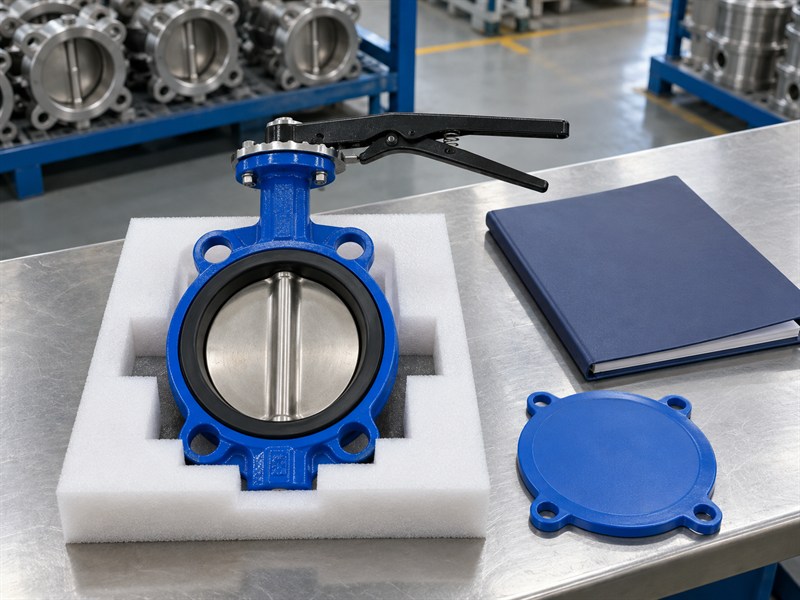
Q1: Can I specify only “JIS 10K” on a purchase order?
A JIS butterfly valve standard order needs construction and acceptance requirements beyond that short description. Add the applicable standards, materials, service conditions, connection drawing, operation, inspections, and documents needed for the actual installation.
Q2: How do I know whether a standard edition is current?
Check the issuing organization's published record or the relevant standards association listing. Then identify the edition agreed for your project. An older online summary cannot establish the current publication status.
Q3: Can a flange declaration prove the whole valve complies?
No. Flange compatibility answers an interface question. Valve design, materials, pressure–temperature suitability, inspection, marking, and application approvals need their own relevant evidence.
Q4: Does a pressure test establish chemical compatibility?
No. A pressure test checks performance under specified test conditions. Chemical suitability requires review of the complete fluid composition, operating conditions, and wetted material configuration.
Q5: What's the best way to resolve mixed-standard requirements?
Use a written compliance and deviation schedule. Identify the governing requirement for each specification area, review conflicts with the responsible project authority, and approve the final configuration before purchase.