
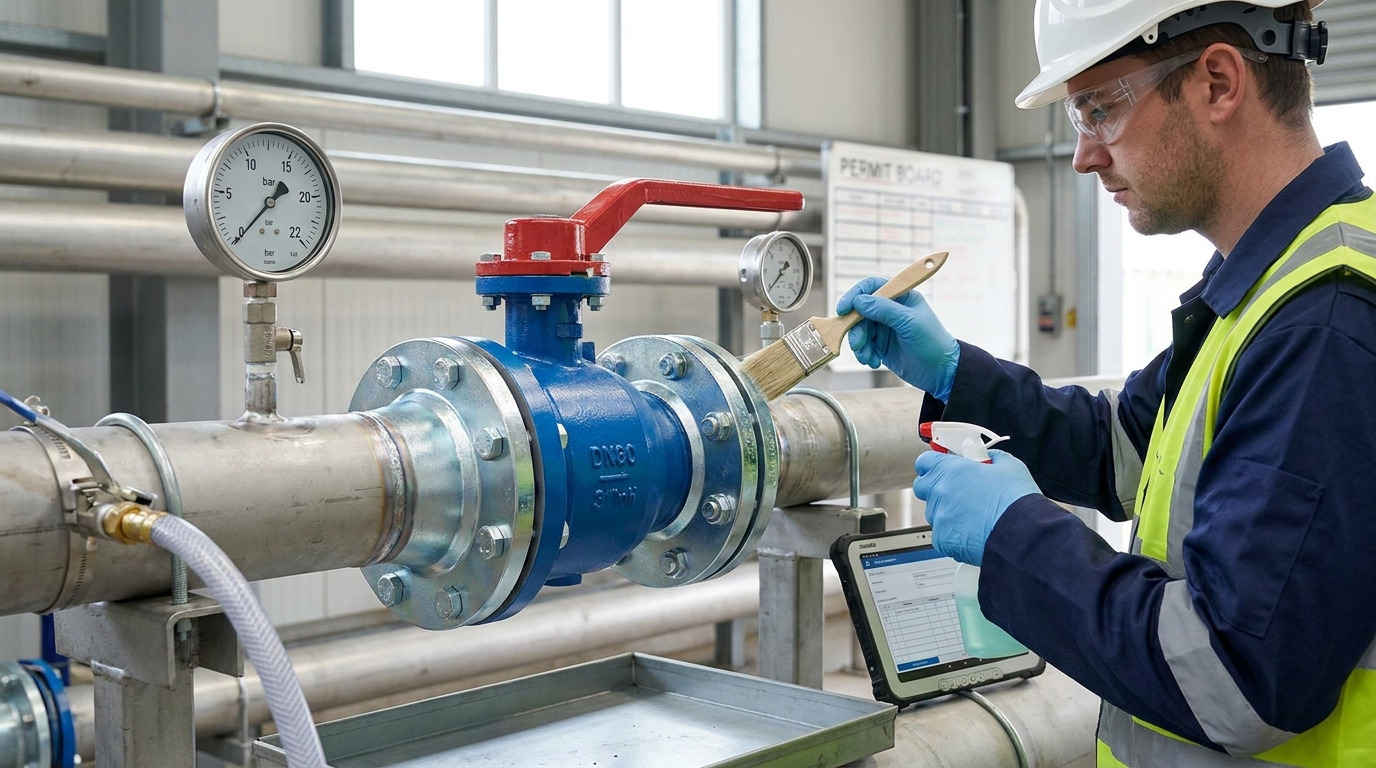
Replacing a ball valve in industrial piping is not just removing one component and fitting another; it is a controlled workflow of isolation, specification checking, removal, installation, and testing. A typical trigger may be a seized handle, stem leakage, seat damage, corrosion, or a valve that no longer matches the operating conditions of the line. The risk is that a fast like-for-like swap can repeat the same failure, damage pipe connections, or introduce a valve with the wrong pressure-temperature rating, material, bore, or end connection.
Before selecting a new industrial ball valve, confirm whether the original valve failed because of normal wear, incorrect application, poor installation, incompatible media, or an underspecified design. This guide is written for maintenance planners, piping engineers, purchasing teams, and project managers who need a practical replacement path without turning the article into a field repair service promise.
When Replacing a Ball Valve Is the Right Move
Replace the valve when the body, ball, stem, seat system, or end connection can no longer perform reliably under the actual line conditions. If the problem is limited to adjustment, packing, handle hardware, or a cleanable obstruction, a ball valve repair assessment may be a better first decision than ordering a complete replacement.
Replace or Repair Based on Failure Mode
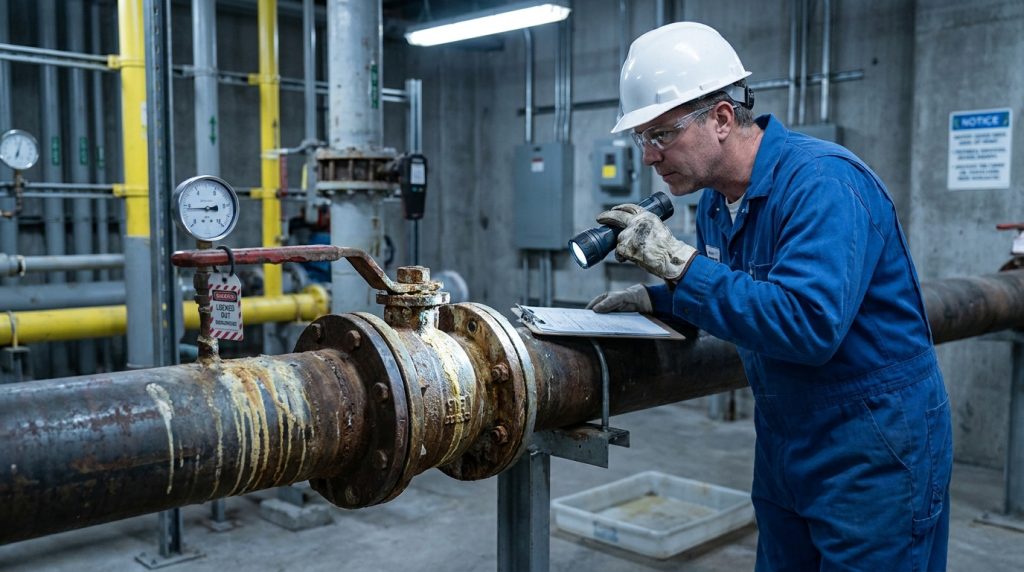
Full replacement is usually justified when the valve body is cracked, the threads or flange faces are damaged, the ball is deeply scored, the seat no longer seals after reasonable service actions, or corrosion has changed the valve’s mechanical integrity. In these cases, repairing one visible symptom may leave the root risk inside the valve.
Repair may be practical when leakage is isolated to a serviceable stem packing area, the handle assembly is loose, or a soft component can be replaced under the manufacturer’s maintenance instructions. The decision should consider downtime, safety classification, fluid hazard, access, spare parts, and whether the valve has already failed more than once.
Correct a Wrong Original Specification
Like-for-like replacement is only sensible if the old valve was correctly specified. If the previous valve failed because of wrong material, incompatible seat selection, excessive operating temperature, unsuitable pressure class, or poor flow sizing, copying the old description can lock the same weakness into the next shutdown cycle.
From a valve manufacturer’s perspective, the most useful replacement question is not only “What valve is currently installed?” It is also “What service condition caused this valve to become unacceptable?”
Isolate the Line Before Any Removal Work
A controlled approach to replacing a ball valve starts with isolation, depressurization, drainage, and verification under the plant’s approved safety procedure. In U.S. general industry, OSHA’s lockout/tagout overview describes 29 CFR 1910.147 as the standard for controlling hazardous energy during servicing and maintenance of machines and equipment; outside the U.S., the equivalent site, national, or project safety rules should govern the same basic risk.
Lockout, Depressurize, Drain, and Verify
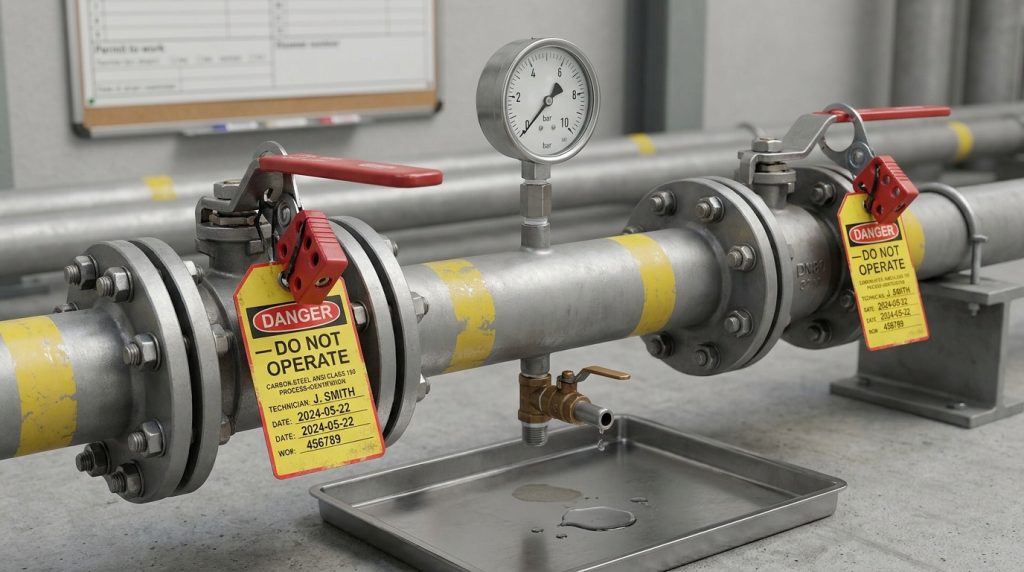
Do not rely on handle position as proof that the line is safe. Close and lock the relevant isolation points according to the site procedure, relieve trapped pressure, drain retained fluid where practical, and verify zero pressure using suitable instrumentation before loosening any joint.
For hazardous, hot, cryogenic, toxic, flammable, or high-pressure media, replacement planning should include permits, PPE, ventilation, spill containment, and disposal steps. Those controls belong to the facility procedure and applicable regulations, not to the valve supplier’s product description alone.
Control Trapped Fluid and Thermal Risk
Ball valves can retain fluid in the body cavity, especially if the valve has been closed against pressure or exposed to viscous media. Slowly cracking a safe drain or vent point, when the piping design provides one and the site procedure permits it, helps avoid unexpected discharge.
Temperature also matters. A valve that looks depressurized may still present burn, cold-contact, vapor, or expansion risks if the line has not returned to a safe maintenance condition.
Record the Existing Valve Specification
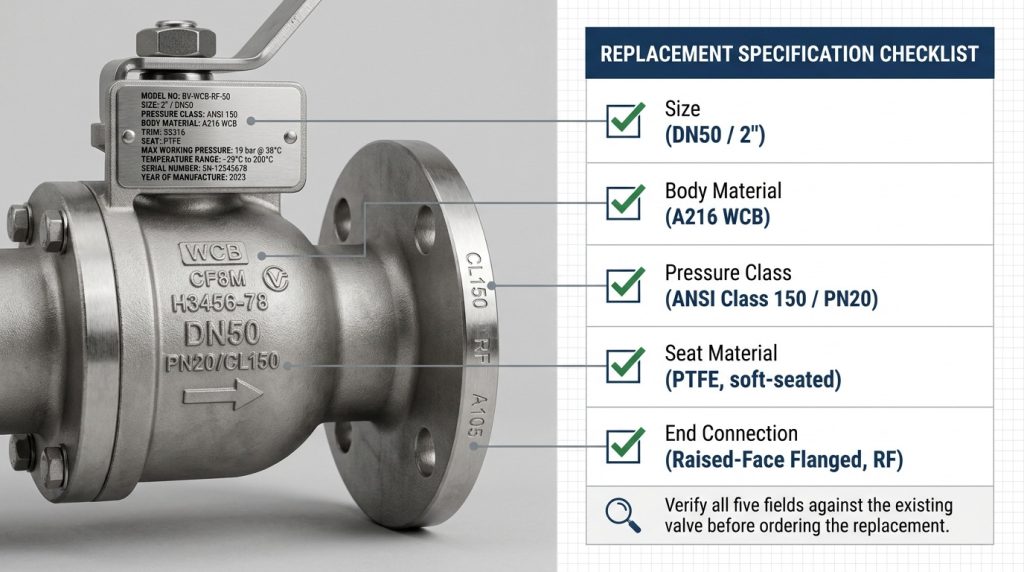
The replacement specification should be built from markings, drawings, operating data, and failure evidence rather than from pipe size alone. Ball valve nameplates and body markings may provide material, pressure class, size, flow direction if applicable, heat identification, or standard references, but worn or painted markings should be verified against project documents.
For industrial metallic valves, ASME B16.34-2025 applies to new construction valves and covers pressure-temperature ratings, materials, dimensions, tolerances, testing, marking, and related requirements for flanged, threaded, welding-end, wafer, and flangeless valves. That matters because a pressure class is not a single universal pressure number; material and temperature conditions affect the usable rating.
Use the following checklist to turn a failed valve into a clear replacement inquiry.
| What to Confirm | Why It Matters | Useful Standard or Document |
|---|---|---|
| Valve type, size, bore, and operation | A full-bore and reduced-bore valve can affect flow loss, pigging, and system performance differently | Project specification and valve drawing |
| Body, ball, stem, seat, and seal materials | Media compatibility and temperature exposure can decide whether the new valve lasts or repeats the same failure | Project material standard and manufacturer data |
| Pressure-temperature rating | The replacement must match the actual operating envelope, not only the nominal pipe size | ASME B16.34-2025 |
| Flange size, class, face, and bolt pattern | Flanged valves must match the piping interface before installation can be reliable | ASME B16.5-2025, which covers NPS 1/2 through NPS 24 flanges and flanged fittings |
| Inspection and pressure test expectations | Test requirements should be agreed before purchasing, especially for regulated or critical service | ISO 5208:2015 or project-specified API testing requirements |
The table is not a substitute for the project code or the manufacturer’s datasheet. It helps prevent the common mistake of treating “same size ball valve” as a complete specification.
Remove the Old Valve Without Damaging the Line
Removal should protect the piping as much as the valve. The old valve may already be scrap, but the pipe threads, flange faces, weld ends, supports, and adjacent equipment usually need to remain usable.
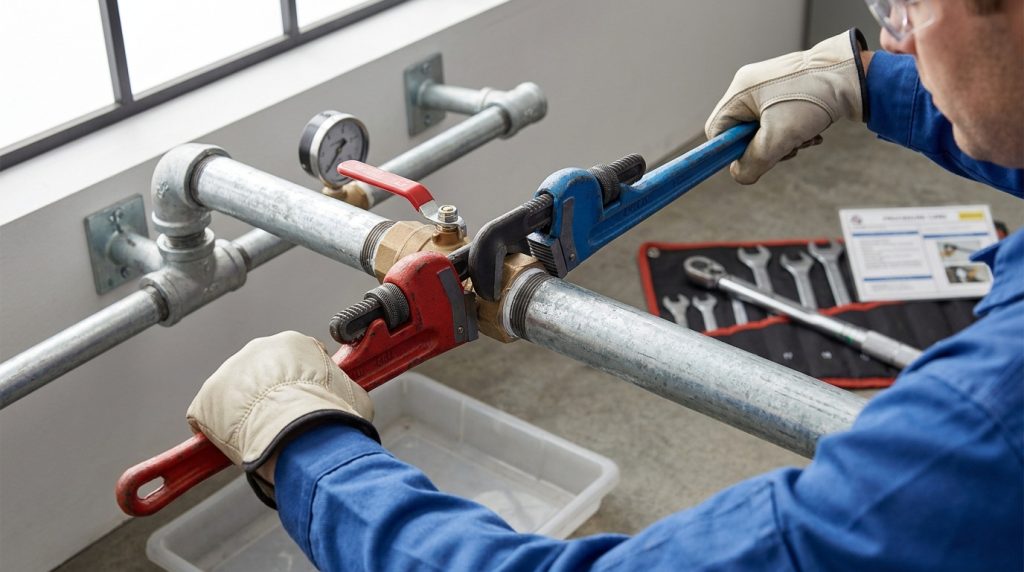
For threaded or union-end valves, support the pipe and counterhold the valve near the joint being loosened. Twisting the opposite end of the body can stress the body-cap joint, distort fittings, or transmit force into nearby pipe supports.
For flanged valves, loosen bolts in a controlled sequence after confirming the line is safe. If the joint sticks, avoid prying against sealing faces that must be reused. Remove gasket material carefully, inspect the raised face or flat face condition, and keep debris out of the line.
For welded-end valves, the removal method belongs to the approved welding, cutting, and hot-work procedure. The replacement decision should consider whether the surrounding pipe needs trimming, whether heat-affected areas require inspection, and whether the new valve should be supplied with the same end preparation.
Install the Replacement Valve by Connection Type
Installation depends on the connection design, but the core rule is the same: align the valve without forcing the pipe, protect sealing surfaces, and keep foreign material out of the bore and seats. Understanding the quarter-turn ball valve mechanism also helps explain why debris left in the line can damage seats during the first operation.
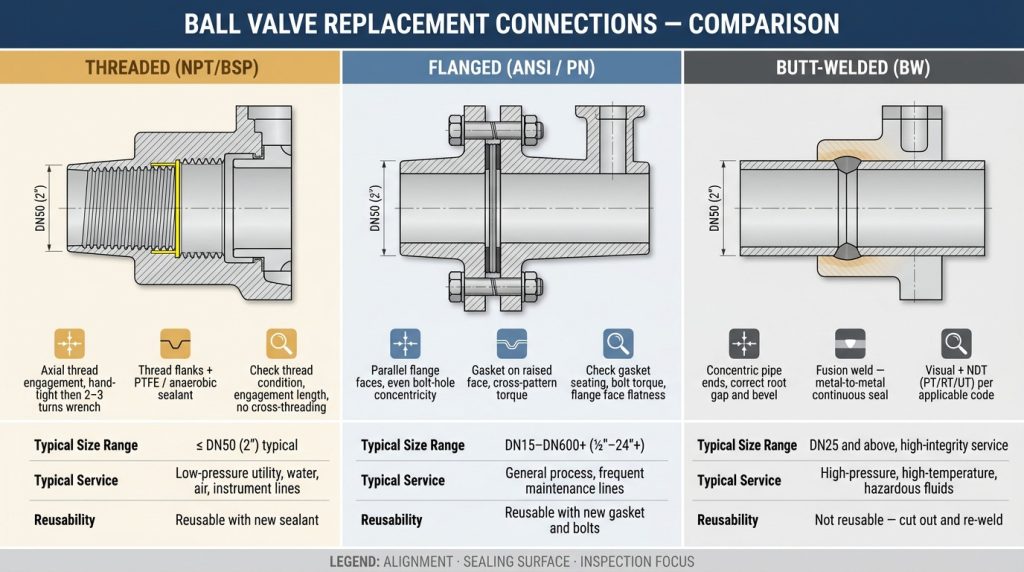
Threaded and Union-End Valves
For threaded valves, clean the male and female threads, inspect for galling or deformation, and use only a compatible thread sealant or tape method for the fluid and temperature. Keep sealant away from the flow path because loose material can score seats or block downstream components.
For union-end valves, check that the sealing components are correct for the valve design and that the pipe is not pulling the union out of alignment. A union connection can simplify future removal, but it does not compensate for poor support or pipe strain.
Flanged Valves
For flanged lines, verify flange class, face type, bolt pattern, gasket type, and face-to-face requirements before installation. The ASME B16.5 page notes that the 2025 edition covers pressure-temperature ratings, materials, dimensions, tolerances, marking, testing, and designation methods for pipe flanges and flanged fittings, including common class designations from 150 through 1500 in NPS 1/2 through NPS 24.
A flanged ball valve for industrial service should be selected with the line’s pressure class, media, gasket practice, and installation space in mind. During assembly, tighten bolts using the project-approved pattern and torque method, not guesswork or one-sided tightening.
Welded or Soldered-End Valves
For welded valves, confirm the valve position, seat protection requirements, heat input controls, and post-weld inspection expectations from the manufacturer’s instructions and project procedure. Soft seats and seals may be sensitive to excessive heat, so the work plan should protect internal components and avoid thermal damage.
Soldered or brazed connections are more common in smaller utility or building-service systems than in heavy process lines, but the same caution applies. Heat should be controlled, nearby materials protected, and the valve allowed to cool before operation or testing.
Test, Return to Service, and Prevent Repeat Failure
Testing should prove the valve, joints, and operating function before the line returns to normal service. A replacement that looks correct externally can still fail if the seat is contaminated, the flange gasket is misaligned, the stem packing is disturbed, or the wrong pressure test method is used.
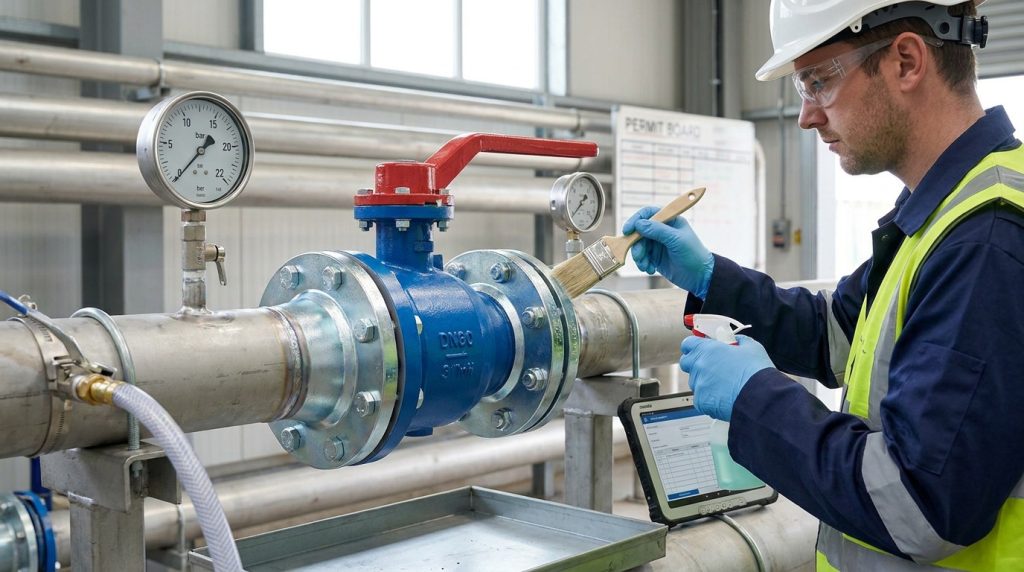
Inspect Joints Before Full Restart
Start with visual checks: valve orientation, handle clearance, actuator alignment if fitted, support condition, flange gasket position, thread engagement, weld cleanliness, and drain or vent closure. Then operate the valve through its intended travel before full process conditions are restored.
ISO 5208:2015 specifies examinations and tests used to establish pressure boundary integrity, verify closure tightness, and confirm structural adequacy of the closure mechanism for industrial metallic valves. It also states that the product standard requirements apply where they differ, so the test method should follow the valve standard, project code, and purchaser specification.
Avoid Repeating the Cause of Failure
A successful replacement should remove the old valve and the reason it failed. If the original issue was stem leakage, check whether the valve design, packing material, cycling frequency, actuator load, or installation stress contributed to the problem. Where leakage is concentrated around the stem, the ball valve stem packing should be reviewed before assuming every future case needs full replacement.
For energy, petrochemical, or other specified industrial projects, API documents may also enter the purchasing language. API’s source-inspection guidance describes API Std 598 as covering inspection, examination, pressure test medium, and requirements for valve types including ball valves, with tests such as shell, backseat, low-pressure closure, high-pressure closure, and visual casting examination. The key is to name the required test basis before the valve is purchased, not after the shipment arrives.
Conclusion
Replacing a ball valve well means isolating the system, understanding why the old valve failed, confirming the specification, installing by connection type, and testing before return to service. The strongest replacement decisions come from operating conditions, not from copying a damaged part number in isolation.
RUITO’s practical position is that replacement valves should be selected around real service conditions: media, pressure, temperature, material compatibility, end connection, bore, seat design, actuator needs, and required testing. If you are comparing replacement options for an industrial line, RUITO can review your application details and discuss suitable valve configuration when you share your operating conditions and replacement requirements.
FAQ
Can I replace a ball valve with the same size valve?
Not by size alone. The replacement should also match pressure-temperature rating, body and trim materials, seat and seal materials, bore type, end connection, face-to-face dimensions, and any project testing requirements.
Should the valve be open or closed during replacement?
The safe position depends on the valve design, removal stage, and site procedure. Isolation, depressurization, drainage, and verification must happen first; handle position should never be treated as the main safety control.
Can a leaking ball valve be repaired instead of replaced?
Yes, if the leak is limited to a serviceable component and the body, ball, seats, stem, and connections remain suitable. If the body is cracked, the ball is damaged, the seat cannot seal, or the material is wrong for the media, replacement is usually the more reliable route.
What information should I send for a replacement inquiry?
Send the media, operating pressure and temperature, valve size, pressure class, body and seat materials, end connection, bore type, actuator requirement, photos of markings, drawings if available, quantity, and any inspection or testing standard required by the project.
Is pressure testing needed after replacing a ball valve?
Usually yes, but the method and acceptance criteria should come from the applicable code, project procedure, valve standard, and site safety rules. At minimum, the installation should be checked for joint leakage and correct operation before returning to service.