
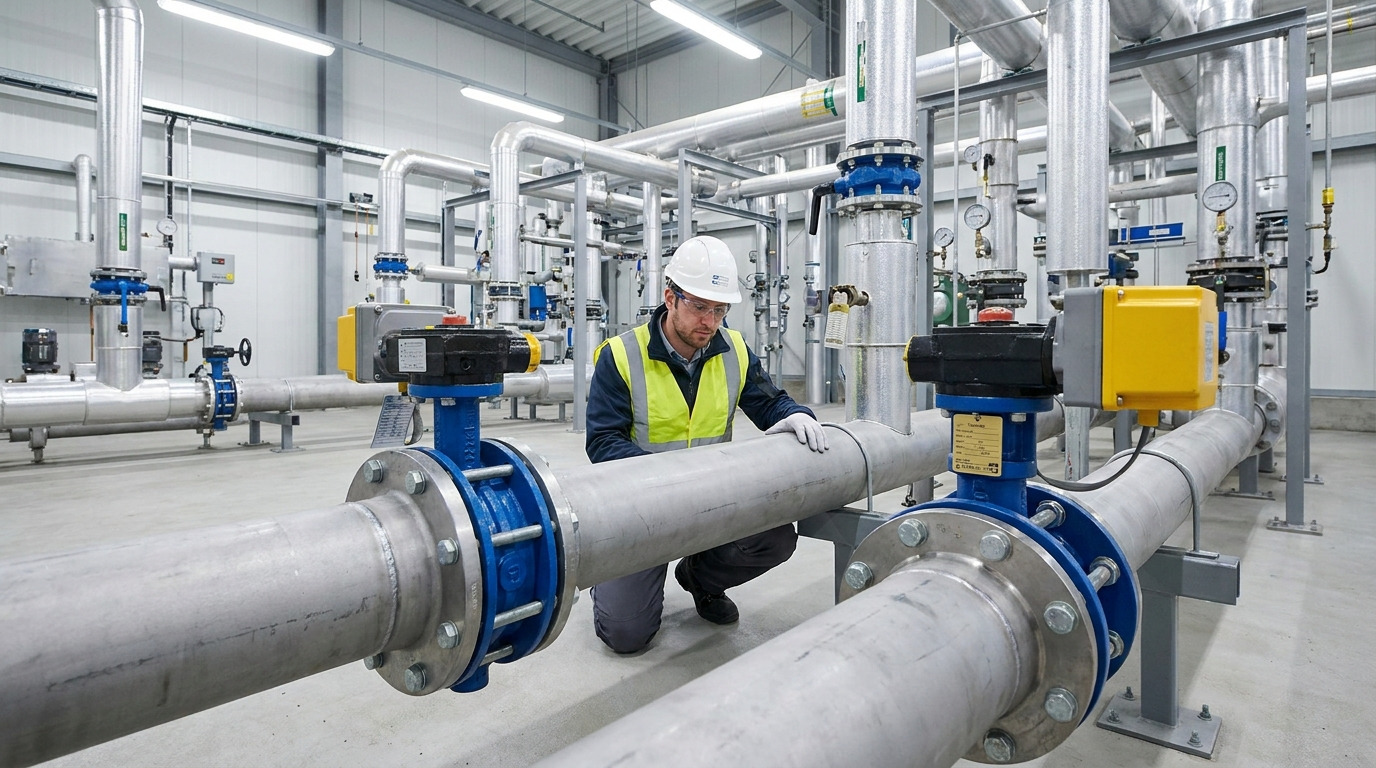
The main difference between a wafer butterfly valve and a lug butterfly valve is that the wafer version is clamped between two flanges using long through-bolts, while the lug version features threaded bolt holes (lugs) that connect directly to each flange. When you are managing high-pressure industrial pipelines, even a minor specification error in your wafer valve vs butterfly valve setup can disrupt your entire fluid control network. Choosing the wrong connection style can lead to catastrophic flange leaks, sudden pressure blowouts, and expensive emergency shutdowns that threaten worker safety. Fortunately, our high-performance fluid control solutions are engineered to prevent these system failures, ensuring perfect alignment and maximum pressure containment.
How does wafer valve vs butterfly valve design differ?
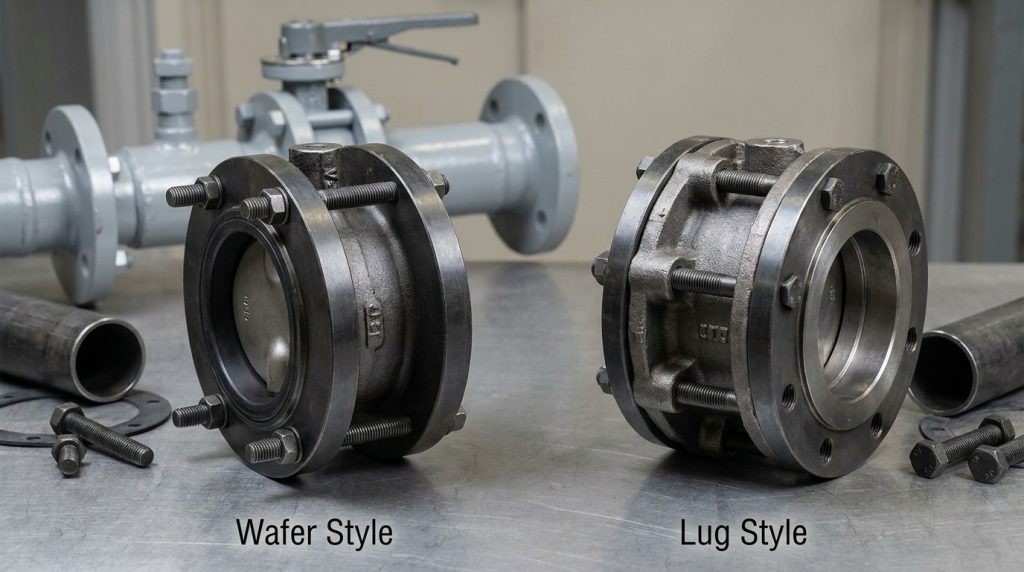
The physical construction of a wafer valve vs butterfly valve design differs primarily in how each body sits between pipeline flanges. Wafer valves are designed without protruding ears, meaning they must sit clamped between two pipe flanges. Conversely, lug designs feature threaded metal lugs around their perimeter that connect directly to the bolts. This subtle difference impacts your entire installation process.
What makes wafer bodies unique?
Wafer bodies are compact and lightweight because they do not have heavy external ears. This minimalist profile reduces the space required within your piping setup.
Think about this:
- Reduced metal volume lowers total shipping and fabrication costs.
- Slender design fits tight spaces where larger valves cannot fit.
How do lug bodies differ?
Lug bodies feature heavy ears with threaded bolt holes running along the casing. This design allows you to bolt either side of the pipe individually.
Here is why:
- Threaded ears simplify alignment during installation.
- Rigid design supports structural stress in heavy pipelines.
Key Takeaway: Choosing the correct body design ensures your piping network has the proper mechanical support and fitment.
| Design Aspect | Wafer Style | Lug Style |
|---|---|---|
| Outer Body | Smooth, lugless | Threaded lugs |
| Flange Connection | Clamped | Direct bolt-in |
Evaluate your piping system layout carefully before selecting your next valve body style.
What is wafer valve vs butterfly valve bolted joint design?
The bolted joint configuration of a wafer valve vs butterfly valve dictates how safely your pipeline holds tension. Wafer joints require long through-bolts that stretch across the entire width of the valve body. Lug joints utilize shorter, independent bolts that thread directly into each side of the valve body. This difference heavily affects long-term joint integrity.
How do wafer bolts secure the joint?
Wafer joint bolting relies on continuous studs to compress the valve between two pipeline flanges. This clamping pressure holds the entire joint together as a single unit.
Keep this in mind:
- Longer bolts can stretch under extreme temperature variations.
- Incorrect bolt torque can cause joint leaks on both flanges.
How do lug bolts secure the joint?
Lug joint bolting utilizes separate short bolts that thread directly into the body’s ears. This layout prevents physical loads from transmitting across the entire valve.
Here is the deal:
- Shorter bolts minimize the risk of thermal elongation.
- Independent bolting protects the valve seat from crushing.
Key Takeaway: Shorter independent bolts on lug designs provide better joint stability and leak protection.
| Joint Aspect | Wafer Bolting | Lug Bolting |
|---|---|---|
| Bolt Type | Long through-studs | Short dual bolts |
| Threaded Body | No | Yes |
Ensure correct torque is applied to avoid gasket issues.
When is wafer valve vs butterfly valve standard selected?
Selecting the engineering standard for a wafer valve vs butterfly valve depends on your specific pressure classes and regional piping codes. Wafer designs usually comply with standard low-pressure utility codes. Lug valves meet identical base certifications but are approved for more rigorous high-pressure testing. Knowing these specifications prevents expensive compliance violations.
Which standards govern wafer designs?
Wafer standards focus primarily on common low-pressure utility operations. They conform to typical face-to-face and testing specifications.
Here is why:
- Complies easily with basic API 609 Category A standards.
- Matches standard ANSI Class 150 configurations.
Which standards govern lug designs?
Lug standards cover high-pressure pipelines that must withstand harsh environmental stresses. These standards require strict compliance with severe industry testing.
But that’s not all.
- Complies with rigorous API 598 testing protocols.
- Meets the criteria for high-pressure Class 300 designs.
Key Takeaway: Aligning your system with the correct engineering standards prevents installation inspection failures.
| Standard Parameter | Wafer Compliance | Lug Compliance |
|---|---|---|
| Pressure Class | Class 150 | Class 150 & 300 |
| API 609 Category | Category A | Category A & B |
Verify your local regulatory requirements early in the project lifecycle.
How does wafer valve vs butterfly valve pressure rating work?
Understanding how the pressure rating of a wafer valve vs butterfly valve operates prevents catastrophic seal blowouts. Wafer valves are generally limited to lower operational pressures due to their clamped design. Lug valves regularly manage much higher differential pressures because their threaded ears anchor the body. Choosing the right rating safeguards your facility against hazardous leaks.
What are wafer pressure limits?
Wafer pressure limits are restricted because long bolts can stretch under intense operational pressure. This stretching can compromise the internal rubber seal.
Think about this:
- Clamped installation limits total sealing capabilities.
- Pressure spikes can warp the elastic valve seat.
What are lug pressure limits?
Lug pressure limits are significantly higher because the bolted ears absorb piping loads directly. This structural reinforcement prevents the valve body from shifting.
Here is the deal:
- Direct threading resists extreme upstream pressures.
- Rigid body prevents seat deflection during pressure cycles.
Key Takeaway: High-pressure operations always require the robust, direct-bolted construction of lug valves.
| Pressure Metric | Wafer Rating | Lug Rating |
|---|---|---|
| Max Operating Pressure | PN16 (Typical) | PN25 to PN40 |
| Body Deflection Risk | Moderate | Extremely Low |
Always check the maximum pressure spikes of your system before purchasing.
Why does wafer valve vs butterfly valve weight matter to you?
The total physical weight of a wafer valve vs butterfly valve impacts your supporting structures and shipping budgets. Wafer valves are significantly lighter because they lack thick metal lugs. Lug valves add more dead-weight to your piping system. Selecting the appropriate weight protects your pipeline from structural sagging.
Why are wafers the lighter option?
Wafer weight is minimized by removing all unnecessary outer metal during the manufacturing process. This makes the valves easy to transport and install.
Here is why:
- Lower raw material weight reduces initial purchasing cost.
- Simplifies manual handling for your onsite installation crew.
How does lug weight affect systems?
Lug weight is considerably higher due to the extra metal ears cast around the body. This added mass requires stronger pipe supports to prevent stress.
Keep this in mind:
- Heavier valves increase structural pipe hanger requirements.
- Additional weight increases your international shipping freight fees.
Key Takeaway: Utilize lightweight wafer valves to minimize structural support expenses in overhead runs.
| Weight Aspect | Wafer Valve | Lug Valve |
|---|---|---|
| Weight Comparison | Light (up to 30% less) | Heavy |
| Structural Support | Minimal hangers | Heavy-duty hangers |
Examine your pipeline’s load-bearing limits before installation.
Which is easier in wafer valve vs butterfly valve maintenance?
Deciding on the maintenance procedures for a wafer valve vs butterfly valve depends on your system’s isolation needs. Wafer valve maintenance is more complex because it requires shutting down the entire line. Lug valve maintenance is highly efficient since you can isolate specific piping segments. Selecting the correct style limits your unscheduled plant downtime.
Why is wafer maintenance slow?
Wafer maintenance requires de-pressurizing and draining your complete pipeline before servicing can begin. Removing the clamping studs releases both pipe ends.
But that’s not all.
- Requires full facility shutdowns to change a single seal.
- Increases labor hours for basic internal valve inspections.
Why is lug maintenance faster?
Lug maintenance is simplified because you can unscrew one side of the pipeline safely. The remaining bolts keep the valve body sealed.
Here is the deal:
- Enables safe servicing of downstream equipment under pressure.
- Eliminates complete pipeline shutdowns for gasket changes.
Key Takeaway: Lug valves are the superior choice if you require routine maintenance without full shutdowns.
| Service Metric | Wafer Style | Lug Style |
|---|---|---|
| Line Shutdown | Complete line | Downstream only |
| Maintenance Labor | High | Low |
Calculate the cost of downtime when deciding on a valve connection.
What are wafer valve vs butterfly valve cost differences?
The capital investment for a wafer valve vs butterfly valve system depends on your project’s physical requirements. Wafer valves are highly cost-effective because they require less raw metal during casting. Lug valves represent a higher upfront purchase cost. Balancing upfront savings against maintenance costs ensures better financial efficiency.
Why do wafer valves cost less?
Wafer costs are lower because the simplified body profile requires less raw material. This reduces the initial capital expense of your project.
Think about this:
- Simplified casting minimizes production time and labor.
- Requires fewer specialized bolts for installation.
Why do lug valves cost more?
Lug costs are elevated because they require detailed machining for the threaded ears. This extra manufacturing step increases the final pricing.
Here is why:
- Higher metal volume increases base casting expenses.
- Threading multiple bolt holes adds processing costs.
Key Takeaway: Wafers offer exceptional upfront savings for systems that do not require isolation.
| Cost Component | Wafer Style | Lug Style |
|---|---|---|
| Initial Price | Low | High |
| Machining Cost | Minimal | Premium |
Look at lifetime maintenance costs when comparing these options.
Why is wafer valve vs butterfly valve dead-end service safety different?
The safety protocols for a wafer valve vs butterfly valve in dead-end service are completely different due to their structural designs. Wafer valves are extremely dangerous to use in dead-end situations. Lug valves are specifically engineered to handle terminal pressure safely. Choosing the right valve ensures compliance with strict occupational health rules.
Why are wafers dangerous for dead-ends?
Wafer safety in dead-end setups is nonexistent because the valve will blowout immediately if one flange is removed. The lack of independent bolting makes them unsafe.
Keep this in mind:
- Removing one flange releases all clamping force.
- High pipeline pressures will eject the valve instantly.
Why are lugs safe for dead-ends?
Lug safety in dead-end setups is excellent because the valve bolts directly to the upstream flange. This keeps the valve securely shut under full pressure.
Here is the deal:
- Threaded ears keep the valve body anchored safely.
- Operators can service terminal lines without fluid risk.
Key Takeaway: Specify lug valves for dead-end service to protect your technicians from catastrophic blowouts.
| Service Capability | Wafer Valve | Lug Valve |
|---|---|---|
| Dead-End Service | Dangerous / Prohibited | Safe / Recommended |
| Structural Hold | Dual flange clamping | Independent bolt threading |
Never use wafer models for terminal line isolation tasks.
Which is best for wafer valve vs butterfly valve municipal use?
Deciding on a wafer valve vs butterfly valve for municipal networks depends on where you install the equipment. Wafer valves are standard choices for long municipal distribution mains to save budget. Lug valves are preferred inside municipal pumping plants where frequent servicing occurs. Matching the valve to the facility type optimizes utility spending.
Why use wafers in mainlines?
Wafer municipal installations are highly popular in flat water mains where budget constraints are tight. These lines rarely undergo modifications.
Think about this:
- Saves thousands of dollars on large diameter mains.
- Fits easily inside standard pre-cast valve vaults.
Why use lugs in treatment plants?
Lug municipal installations are mandatory in complex pump stations and filter plants. This enables municipal operators to maintain pumps safely.
Here is why:
- Simplifies regular backwash pump maintenance.
- Prevents flooding of municipal mechanical rooms.
Key Takeaway: Use cost-effective wafers for long underground runs and flexible lugs inside municipal treatment buildings.
| Municipal Application | Wafer Suitability | Lug Suitability |
|---|---|---|
| Distribution Mains | High | Medium |
| Treatment Facilities | Low | High |
Consult municipal engineering guidelines before deciding on valve styles.
How does wafer valve vs butterfly valve sealing mechanism compare?
The sealing mechanisms of a wafer valve vs butterfly valve compare closely in operation but vary in resilience. Both valves use a central disc that rotates against a soft elastic seat to prevent fluid flow. However, pipeline alignment stress affects wafer seals more than lug setups. Selecting the stronger body prevents premature seal degradation.
How do wafer seals perform?
Wafer sealing performance depends entirely on equal pressure from both pipeline flanges. Any slight alignment error can distort the rubber seating.
But that’s not all.
- Uneven bolt torque causes immediate seal leakage.
- Heavy thermal cycling can warp the seat.
How do lug seals perform?
Lug sealing performance is highly stable because the rigid body does not warp under pipe stress. This ensures long-term bubble-tight isolation.
Keep this in mind:
- Rigid body resists pipeline bending stress.
- Dual-flange design supports bidirectional sealing.
Key Takeaway: Rigid lug designs protect the internal seal from vibration and piping distortion.
| Sealing Aspect | Wafer Seal | Lug Seal |
|---|---|---|
| Deflection Resistance | Low | High |
| Torque Sensitivity | High | Low |
Ensure correct pipeline alignment to prolong seat service life.
How to select the perfect butterfly valve for your system
Selecting the wrong butterfly valve can lead to high-pressure leaks, costly pipeline shutdowns, and dangerous operating environments. We solve these critical issues by manufacturing fully certified, high-reliability wafer and lug valves that guarantee zero-leakage performance under the most challenging conditions. Our engineering team is dedicated to safeguarding your projects with worry-free fluid control solutions designed to withstand extreme duties. We invite you to experience the reliability of our premium industrial valves. Please contact us today for a comprehensive technical consultation and a tailored quotation that matches your exact specification.
Frequently Asked Questions
Can I use a wafer butterfly valve for dead-end piping service?
No, you cannot. Wafer butterfly valves rely on the compression force of flanges on both sides to stay secure, meaning removing one side will cause the valve to blowout.
What’s the best butterfly valve type for high-vibration systems?
The lug butterfly valve is the best option. Its independent threaded ears secure the valve tightly to the pipe flanges, resisting vibration and preventing seat distortion.
How do I know if my pipeline pressure requires a lug valve?
You should verify your maximum system pressure and thermal conditions. If your system exceeds PN16 pressure ratings or undergoes thermal cycling, a lug valve is required to ensure safe operations.
Can I install a wafer valve with standard bolts?
No, you cannot. Wafer valves require extra-long through-bolts or studs that span the width of both flanges, while lug valves require standard short bolts.