
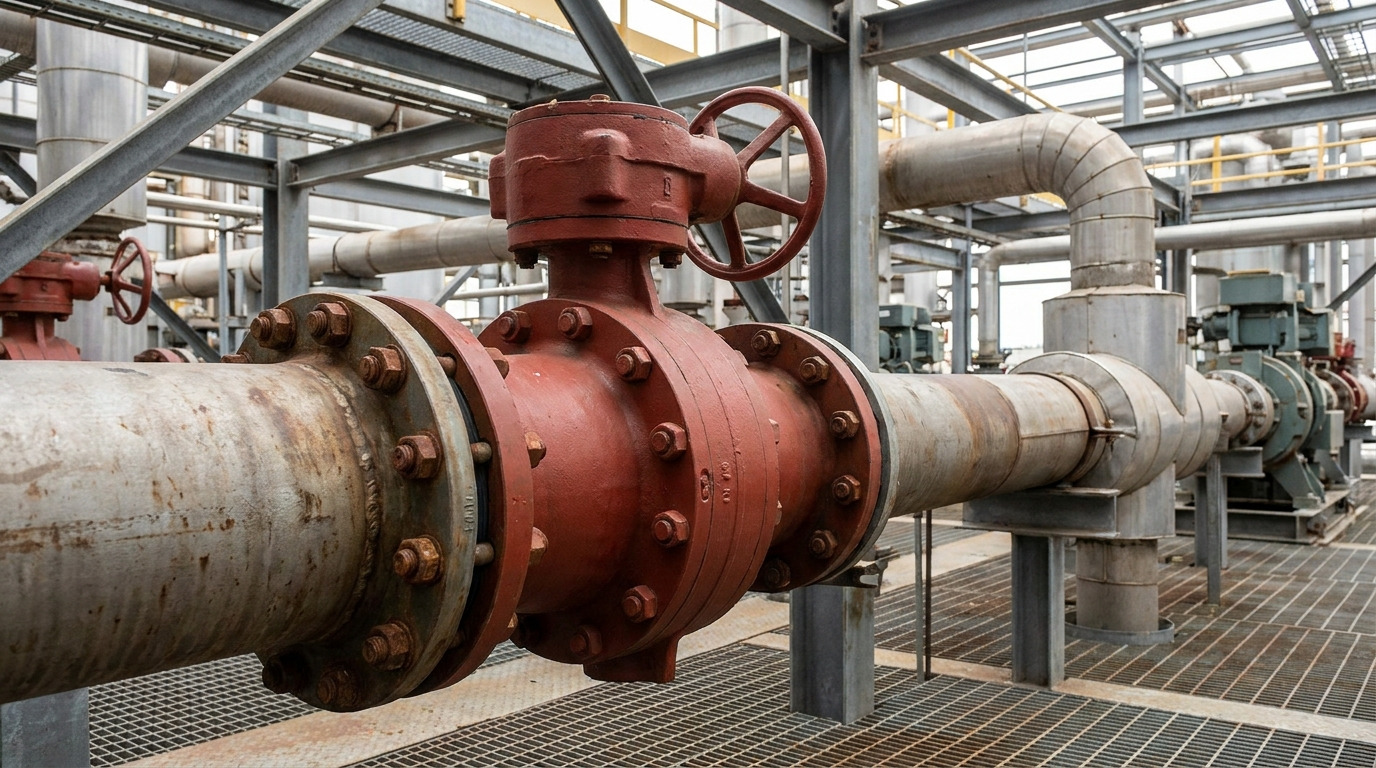
Selecting the proper butterfly valve flange type is key to preventing system leaks, ensuring worker safety, and maintaining structural integrity across your pipeline. When systems fail due to bad connections, operations stop and repair costs skyrocket. This guide explains how wafer, lug, semi-lug, and flanged designs prevent these costly issues.
Choosing the wrong valve setup creates high mechanical stress and dangerous leaks. We provide the clear details you need to choose the best style for your project. This simple choice saves time and budget.
How does butterfly valve flange type select affect pipeline safety?
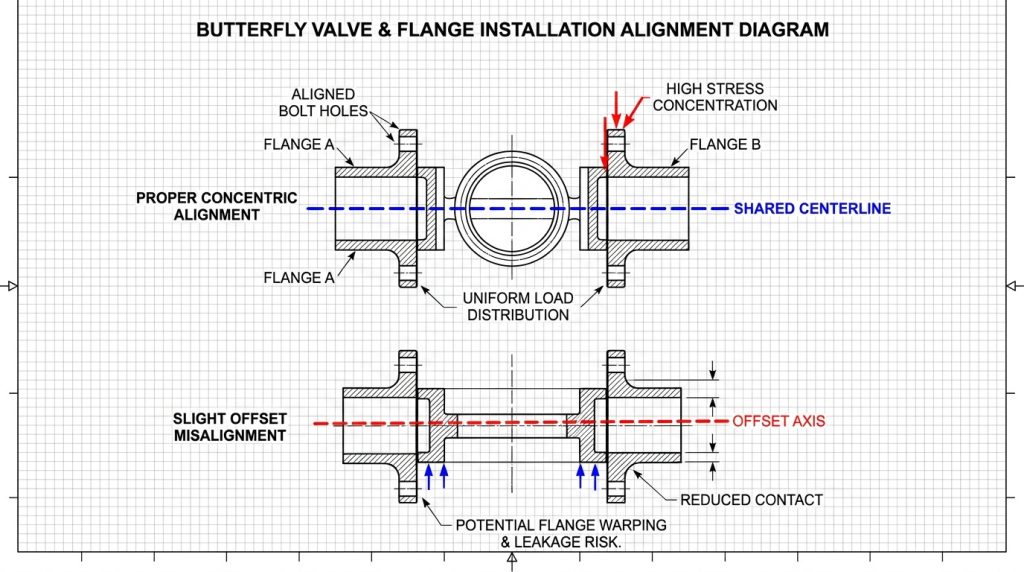
Selecting the correct butterfly valve flange type is paramount to preserving structural integrity across your entire piping network. The wrong choice can lead to catastrophic failure under intense pressure. You must analyze operating conditions before deciding on a style.
Why pressure limits dictate body thickness?
High-pressure lines exert substantial outward forces on valve bodies, requiring heavy casting thickness to prevent mechanical cracking. Standard wafer bodies are slim, while flanged bodies provide heavy-duty reinforcement.
- Thicker bodies prevent outer metal deformation.
- Cast integrity limits structural cracks.
What happens when misalignment occurs?
Misalignment shifts the central axis, which unevenly distributes mechanical load and damages internal seats. This results in localized stress peaks and premature seal deterioration.
Let’s look closer:
When bolts are tightened unevenly, the disc can scrub the seat during operation. This ruins the sealing face and can seize the actuator.
How flange standards govern dimensions?
Flange standards like ASME B16.5 and EN 1092 specify precise dimensional patterns for bolt circles and holes. These specifications guarantee that the valve aligns perfectly with adjacent piping.
| Flange Standard | Bolt Circles |
|---|---|
| ASME B16.5 | 190.5 mm |
| EN 1092-1 | 180.0 mm |
Reviewing these specifications ensures alignment is perfectly achieved.
Key Takeaway: Matching standard flange ratings precisely avoids mismatch issues and guarantees leak-free joints.
Why is wafer butterfly valve flange type widely used?
The wafer butterfly valve flange type is favored in modern piping due to its lightweight design and extremely small physical footprint. This configuration sandwiches between two pipe flanges using long stud bolts. It reduces material costs significantly compared to other styles.
How the compact sandwich style operates?
The wafer valve is clamped directly between the pipe flanges, relying entirely on surrounding pipe tension for its structural hold. This design requires long, continuous bolts passing from one flange to another.
- Sandwiched installation eliminates integrated valve flanges.
- Through-bolts evenly clamp the assembly.
What are weight and space benefits?
Wafer valves weigh significantly less than flanged designs, making them easy to install without heavy machinery. This lower mass reduces overall line stress.
Think about it:
This low mass reduces overall line stress and allows installation in very tight spaces.
How wafer gaskets compress under load?
Wafer gaskets depend on the compression force generated by the long through-bolts to maintain a tight seal. This compression must be perfectly uniform to prevent localized weeping.
| Gasket Style | Max Torque |
|---|---|
| EPDM Rubber | 45 Nm |
| PTFE Seal | 55 Nm |
Reviewing these specifications ensures alignment is perfectly achieved.
Key Takeaway: Utilizing the compact wafer style saves valuable line space and keeps project material costs low.
When is a lug butterfly valve flange type required?
A lug butterfly valve flange type is required when your pipeline needs downstream system isolation or end-of-line service. Unlike wafer styles, the lug design features independent threaded bolt holes. This allows you to disconnect one side of the line safely.
Why threaded holes enable single side service?
Threaded metal lugs allow independent flange bolts to be tightened directly into the valve body from both sides. This lets you disconnect downstream piping while keeping the upstream side fully operational.
- Threaded lugs receive independent flange bolts.
- One side remains secure when servicing.
How independent bolting protects workers?
By securing each flange independently, this design prevents sudden valve movement during downstream pipe maintenance. It creates a highly secure physical barrier that keeps the active side fully sealed.
Here is the critical part:
Workers can safely modify downstream equipment without draining the entire pressurized upstream system.
What is dead end service capability?
Dead-end service requires a valve to hold full line pressure without any downstream pipe attached. Lug valves excel here because their body lugs can handle full differential pressure.
| Setup Type | Safe Rating |
|---|---|
| End-of-Line | 10 Bar |
| Mid-Line | 16 Bar |
Reviewing these specifications ensures alignment is perfectly achieved.
Key Takeaway: Lug configurations provide superior on-site safety by allowing system maintenance without plant shutdowns.
How does semi lug butterfly valve flange type align?
The semi lug butterfly valve flange type aligns precisely during installation by using unthreaded positioning guide lugs. These lugs help installers center the valve body quickly without the extra cost of full threading. They provide a cost-effective alternative to full-lug designs.
What defines a hybrid bolt guide design?
A semi-lug body features unthreaded protruding lugs around its outer circumference, usually located at the top and bottom. These lugs act as guides for through-bolts, offering quick alignment assistance without the extra manufacturing cost of threads.
- Smooth unthreaded holes guide long bolts.
- Combines wafer weight with lug alignment.
Why positioning lugs ease site installation?
Positioning lugs prevent lateral movement during commissioning, protecting the seat from uneven wear. They ensure the disc opens without catching on the adjacent pipe.
Let’s look closer:
These guides eliminate visual centering guesswork, ensuring the disc opens without hitting the pipe.
What limits semi lug pressure ratings?
Because semi-lug bodies lack threaded holes, they cannot support one-sided line isolation under full pressure. Their mechanical pressure limits are closely tied to the surrounding pipe flanges.
| Feature Type | Semi-Lug Limit |
|---|---|
| Alignment Ease | High |
| Dead-End Duty | Not Rated |
Reviewing these specifications ensures alignment is perfectly achieved.
Key Takeaway: Semi-lug connections simplify valve alignment during fast field installations while keeping procurement costs low.
Where is flanged butterfly valve flange type best?
The flanged butterfly valve flange type is best suited for large-diameter, heavy-duty industrial pipelines. This design features integrated cast flanges that bolt directly to pipe flanges, ensuring absolute structural stability under heavy loads.
Why double flange construction is robust?
Double-flange construction utilizes two distinct flange faces cast directly onto the outer valve body. This solid, heavy body resists extreme piping loads, bending forces, and thermal expansion stresses.
- Dual integrated flanges provide extreme rigidity.
- Thick castings resist structural deformation.
How heavy duty applications withstand shock?
Industrial systems rely on flanged bodies to absorb severe line vibrations and sudden fluid surges. The rigid flanged joint prevents gasket blowout during dangerous water hammer events.
But that is not all:
The rigid flanged joint prevents gasket blowout during dangerous water hammer events.
What are large diameter bolt circles?
Large diameter systems require broad bolt circles to distribute sealing torque evenly across large surface areas. Flanged valves provide a large contact area that guarantees a secure seal under heavy loads.
| Valve Diameter | Bolt Holes |
|---|---|
| DN600 | 20 Holes |
| DN1200 | 32 Holes |
Reviewing these specifications ensures alignment is perfectly achieved.
Key Takeaway: Double-flanged valves provide unmatched structural strength and leak prevention for major municipal infrastructure projects.
How does dual plate butterfly valve flange type work?
A dual plate butterfly valve flange type utilizes an offset double eccentric shaft design to reduce mechanical friction. The two plates swing open and closed smoothly, reducing wear on the sealing seat and maximizing service life.
Why eccentric shaft offsets reduce wear?
The double offset shaft design lifts the disc off the seat immediately upon opening, preventing seat rubbing. This reduces friction and extends the lifespan of the valve.
- Offset shafts minimize mechanical wear.
- Low operation torque saves actuator costs.
How double offset geometry improves seal?
Double offset geometry creates a continuous cam-like sealing action that compresses the seat evenly for tight shutoff. This geometry ensures tight, uniform contact around the entire circumference.
Let’s look closer:
This precise alignment ensures a highly reliable seal even in severe chemical applications.
What pressure levels suit dual plates?
Dual plate designs handle high working pressures because mechanical loads are split across two distinct plates and a central hinge pin. This allows them to function efficiently in demanding high-pressure environments.
| Design Type | Max Pressure |
|---|---|
| Concentric | PN16 Rating |
| Double Offset | PN40 Rating |
Reviewing these specifications ensures alignment is perfectly achieved.
Key Takeaway: Dual plate double offset valves extend system lifetime by eliminating seat friction during operation.
What is triple offset butterfly valve flange type?
The triple offset butterfly valve flange type is an advanced metal-to-metal sealing valve engineered for high-temperature service. It features three distinct offsets that eliminate friction throughout disc travel, ensuring bubble-tight shutoff.
Why the third offset prevents friction?
The third offset features an inclined, conical sealing axis that lets the disc close without sliding friction. The disc only makes contact at the final point of closure.
- Conical seat profile prevents rubbing.
- Frictionless stroke extends service life.
How metal-to-metal seating seals tight?
Laminated stainless steel seals directly against a metal seat to handle extreme temperatures and abrasive fluids. The contact stress increases as pressure rises, tightening the seal.
But that is not all:
The contact pressure increases as line pressure rises, making the seal tighter under load.
Where high temperature duty is crucial?
Refineries, chemical plants, and steam lines require metal seats to survive extreme thermal cycling and shock. They remain operable and secure under extreme thermal shocks.
| Body Material | Temp Limit |
|---|---|
| Carbon Steel | 425°C Max |
| Stainless Steel | 600°C Max |
Reviewing these specifications ensures alignment is perfectly achieved.
Key Takeaway: Triple offset connections provide bubble-tight mechanical sealing in severe high-temperature environments where elastomers fail.
How to match your butterfly valve flange type?
Correctly matching your butterfly valve flange type to your piping standards avoids costly leaks and mechanical mismatch. You must match dimensions, bolt circles, and pressure classes to ensure structural integrity.
How standard ratings match pipe classes?
Each valve rating must correspond with your pipeline’s design class to prevent joint blowouts and leaks. A mismatched rating can lead to joint failures and dangerous pressure releases.
- ANSI Class 150 matches Class 150 pipe.
- PN16 standard matches PN16 metric flanges.
What dimensions ensure perfect sealing?
Flange pitch circle diameters must align perfectly to prevent skewed installations and uneven seat wear. Even a minor millimeter offset can distort the seat and cause leaks.
Think about it:
An off-center installation causes localized stress that rapidly destroys the valve seat.
Why gasket selection affects bolt torque?
Harder gasket materials require much higher bolt torque to compress and form a secure seal. Applying the correct torque secures the seal without damaging system components.
| Gasket Type | Target Torque |
|---|---|
| EPDM Rubber | 40 Nm |
| Spiral Wound | 120 Nm |
Reviewing these specifications ensures alignment is perfectly achieved.
Key Takeaway: Matching standard flange ratings and gasket torque limits prevents field complications and ensures zero leaks.
Which butterfly valve flange type prevents leaks?
The flanged butterfly valve flange type is the absolute best option for preventing leaks in high-pressure pipelines. Its dual-flange design uses short bolts to deliver highly uniform clamping force across gaskets.
How clamping forces prevent face leakage?
By securing independent flanges directly, short bolts minimize bolt stretch and maintain constant gasket load. This holds the gasket face firmly in place, even when the pipe expands.
- Short bolts minimize thermal stretch.
- Direct clamping prevents flange bending.
Why concentric designs suit simple lines?
Concentric valves are economical and provide reliable zero-leak performance in simple water and utility applications. They offer reliable sealing at a lower cost, provided the line pressure is low.
Here is the critical part:
They must use premium elastomer seats to handle repeated cycles without losing shutoff integrity.
What is the risk of seat deformation?
Over-tightening through-bolts on wafer bodies can compress the elastomer seat inward, deforming the seal face. This deformation can damage the disc edge during operation.
| Valve Type | Deformation Risk |
|---|---|
| Wafer Style | Moderate |
| Double Flanged | Low |
Reviewing these specifications ensures alignment is perfectly achieved.
Key Takeaway: Using a double-flanged style prevents seat deformation and eliminates external face leaks in critical systems.
How does butterfly valve flange type affect cost?
The butterfly valve flange type you choose dictates both initial hardware procurement price and long-term operating costs. While wafer designs are cheapest upfront, they can increase maintenance costs.
Why upfront hardware price is deceptive?
Wafer bodies are lightweight and inexpensive, but require long stud bolts that add to overall hardware costs. You must include the cost of all fasteners when comparing connection options.
- Wafer has lowest body manufacturing cost.
- Long through-bolts add extra hardware expense.
How installation speed alters labor fees?
Aligning wafer valves requires manual adjustments, which increases on-site installation time and labor fees. Lugs and flanged valves align rapidly, lowering contractor labor costs during installation.
Think about the long-term:
Lugs and flanged valves align rapidly, lowering contractor labor costs during installation.
What are long term maintenance costs?
Replacing a wafer valve requires a full plant shutdown, while lug valves allow localized system servicing. Lug and flanged valves allow localized isolation, keeping other parts of your plant running.
| Body Type | Plant Shutdown Cost |
|---|---|
| Wafer Style | High (Full Line) |
| Lug Style | Low (Isolated) |
Reviewing these specifications ensures alignment is perfectly achieved.
Key Takeaway: Choosing a lug or flanged configuration reduces maintenance downtime, saving significant operational budget.
Ensuring Long Term Pipe System Reliability
This article solved the complex challenge of selecting the correct valve connection by comparing wafer, lug, semi-lug, and flanged designs. Ruitoflow provides custom-engineered, premium industrial valves designed to fit your unique pipeline specifications perfectly. We help eliminate costly installation reworks and secure absolute system safety.
Our ultimate vision is to power modern industrial infrastructure with zero-leak, zero-maintenance flow control solutions. If you need expert guidance or custom-matched flange designs, contact us today to speak with our engineering team.
Common Questions About Butterfly Valve Connection Types
Can I use a wafer type butterfly valve for dead end service?
No, you should never use a wafer style valve for dead end service. Wafer valves rely on equal clamping force from both sides to maintain a tight seal. Removing the downstream flange releases this pressure, leading to sudden seal blowout and dangerous leaks.
What’s the best flange type for high vibration systems?
A double-flanged body is the optimal choice for high vibration systems. This robust design features integrated cast flanges bolted with short, independent fasteners. It offers superior resistance to bending loads and pipeline vibrations, preventing bolt stretch and external leakage.
How do I know if my pipeline requires custom flange matching?
You will need custom flange matching if you are connecting pipeline components that use different international standards. For example, joining a DIN standard valve to an ANSI standard line requires customized bolt-hole patterns. Ruitoflow manufactures custom-drilled flange options to eliminate on-site alignment rework.